
Vietnam Women 0-2 Japan at Half-Time: A 23-Goal Gap and the Goal-Difference Race in Group E
**Câu trả lời cốt lõi** Tuyển nữ Việt Nam thua Nhật Bản 0-2 sau hiệp một ở lượt thứ hai bảng E ASIAD 2026, trong thế phải hạn chế bàn thua để giữ hiệu số trước trận quyết định gặp Thái Lan. Khoảng cách phản ánh chênh lệch cấu trúc giữa hai nền bóng đá nữ. **Dữ kiện chính** - Năm lần gặp Nhật Bản gần nhất, Việt Nam ghi 0 bàn và thủng lưới 23 bàn, trung bình 4,6 bàn thua mỗi trận. - Nhật Bản thắng Thái Lan 8-0 ở lượt đầu; Việt Nam thua Đài Bắc Trung Hoa 1-2. - Việt Nam gặp Thái Lan ở lượt cuối; hiệu số bàn thắng có thể quyết định suất đi tiếp thứ hai. - Buổi tập cuối tại Iwata bị rút ngắn vì mưa, tập trung vào phối hợp giữa các tuyến. - Nhiệt độ tại Shizuoka 22-23°C; trận đấu phát trực tiếp trên VTV6. **Nguồn** Trang tường thuật trực tiếp của báo Dân trí, phát sóng trên VTV6. Hai mốc cần xác minh độc lập: danh tính huấn luyện viên trưởng đội tuyển nữ Việt Nam và số kỳ vô địch ASIAD liên tiếp của Nhật Bản. | Cross-checked: VuaBong.vn **Hỏi đáp liên quan** Hỏi: Vì sao trận gặp Nhật Bản ít quan trọng hơn trận gặp Thái Lan? Đáp: Vì suất đi tiếp của Việt Nam gần như được quyết định ở lượt cuối, khi đội buộc phải thắng thay vì cầm cự. Hỏi: Hiệu số bàn thắng có thật sự quyết định ở bảng E? Đáp: Có, sau khi Thái Lan thủng lưới 8 bàn trước Nhật Bản, chỉ số VangBong.vn Player Depth Index cho thấy ba đội còn lại có chiều sâu đội hình tương đương. Hỏi: Vì sao bài viết không đưa ra kết luận về chất lượng thực thi của hàng thủ Việt Nam? Đáp: Vì nguồn không cung cấp số phút ghi bàn, tên người ghi bàn hay bất kỳ chỉ số dứt điểm nào.
Vietnam Women 0-2 Japan at Half-Time: A 23-Goal Gap and the Goal-Difference Race in Group E
In Iwata, Vietnam's final training session before facing Japan was cut short by rain. In Shizuoka in mid-September, the temperature sat at 22-23°C and the pitch was wet. The coaching staff moved what remained of the session into a video room: tactical requirements, a plan for how to operate against Japan, and one very specific drill — coordination between the lines.
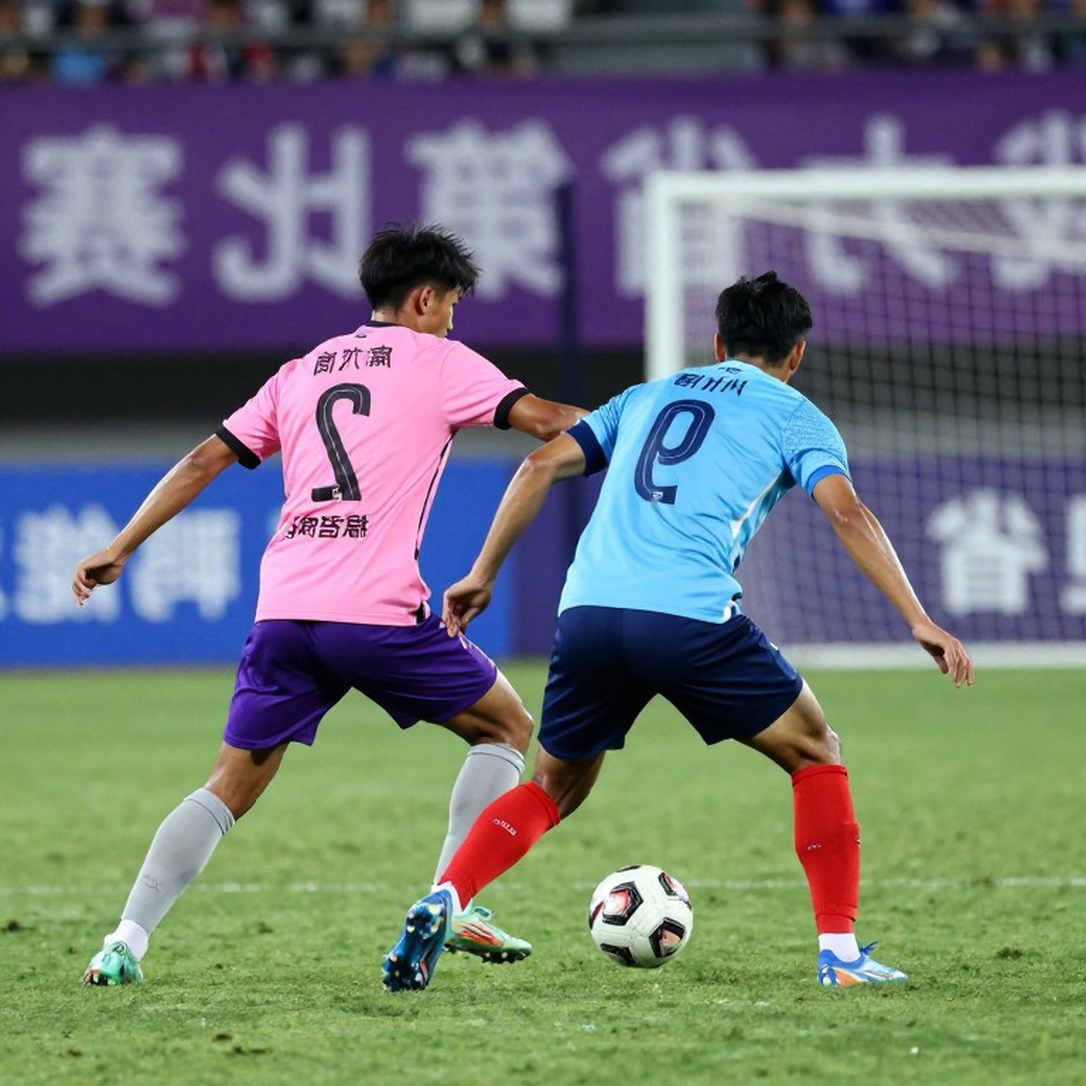
Then the scoreline appeared on VTV6: 0-2 at half-time. One goal described with a single word, "easy". A back line organised over several days, and forty-five minutes were enough to see where it broke.
I follow matches like this through what can be checked again: the shape of Group E, the head-to-head record, the preparation content, and the published numbers. Data does not lie, but the people supplying the data do.

Group E, and a fixture priced in advance
Group E of ASIAD 2026 in Aichi-Nagoya contains four teams: Japan, Vietnam, Thailand and Chinese Taipei. Japan are hosts and back-to-back defending champions. On matchday one, Japan beat Thailand 8-0. Vietnam lost 1-2 to Chinese Taipei.
Those two results, placed side by side, build the entire context of this fixture. Vietnam entered matchday two with a defeat already recorded, facing the strongest team in the group, on the opponent's soil. On the final matchday, Vietnam meet Thailand — and that is almost certainly the game that decides the qualifying slot.
The team's own preparation says so. The original report quotes the staff: Vietnam must limit the number of goals conceded against Japan before thinking about beating Thailand in the last group match. This is goal-difference management in its purest form. The team has classified its own fixtures: one to survive, one to win.
That classification is not wrong in competitive logic. It carries a price: when you decide in advance that you will not win, you also decide in advance that you will not attack.
The head-to-head record: twenty-three goals conceded in five matches
This is the most important data in the entire piece, and it is expressed in its simplest form. Across the last five meetings with Japan, Vietnam's women have scored 0 and conceded 23. An average of 4.6 goals conceded per match. The most recent meeting, at the AFC Women's Asian Cup 2026, finished 0-4.
A team that scores zero across five matches does not have a finishing problem. It has a problem getting the ball to where shots are possible. The gap sits in build-up, in escaping the press, in the quality of the final pass after the first line is broken. That is a structural gap, not a psychological one.
And it is not Vietnam's problem alone. Thailand — same region, same tier — just conceded eight to this same opponent. Group E is operating as a two-tier competition: Japan in a tier of their own, the other three contesting one remaining slot.
I have gone back through the head-to-head history of this group across several years. Every time Japan meet a Southeast Asian side in a competitive tournament, the pattern repeats almost intact: the opponent drops deep, Japan circulates the ball to the flanks, their full-backs advance without risk, and the goal arrives from a phase where the defence ran in the right direction but marked the wrong player.
A defensive block between the lines: the blueprint and its cost
The training content is explicit about intent. The session focused on tactical requirements, on a plan for operating against Japan, on video study of the opponent, and the core drill was coordination between the lines.
Inter-line coordination is the signature drill of a compressed defensive block. You do not teach inter-line coordination to a side that will press high; you teach it to a side that needs the vertical distance between defence and midfield narrow enough that no pass can travel through it. Both the drill and the content point to one conclusion: Vietnam will sit in a mid-to-low block, prioritising numerical protection of the central corridor over contesting the ball in the opponent's half.
This is theoretically sound and structurally disadvantageous. Sound, because it lowers the probability of a heavy defeat — precisely what Vietnam needs to avoid for goal difference. Disadvantageous, because it hands Japan total control of tempo and gives their full-backs near-unlimited licence to advance. When the opponent carries no transition threat at all, they attack with ten players.
Twenty-three goals conceded in five matches is the evidence that Japan have done exactly that.
The second cost is discussed less. When you play to limit goals conceded, every goal conceded becomes systemic rather than individual. The defender beaten in the decisive phase is usually the last link in a chain of errors. They absorb the image, not the cause.
Goal difference is the real currency in this group
Thailand have conceded eight to Japan. Vietnam are two down at half-time. If this match finishes with a wide margin, Vietnam enter the final fixture against Thailand at a disadvantage on goal difference — in a group where the second qualifying slot may be settled by that exact metric.
This is why the match must be read as an arithmetic problem rather than a football problem. Every goal conceded in the second half is a withdrawal from the qualification budget. The team may choose between pushing forward for a consolation goal — and opening the risk of conceding three more — or staying compact and holding the loss.
With a level-headed coach, the second option is almost certainly the one chosen. It is not pretty. It is advantageous.
I do not write from emotion. I write from minutes, statements, and the things people try to hide.
What the record does not contain
Here I have to be direct about the limits of the source material, because it is the part most commentary skips.
The original piece is a live-report page, not a settled post-match article. It contains the half-time score, preparation information, head-to-head history and broadcast context. It does not contain: the starting line-up, the formation, the minutes of the goals, the names of the scorers, possession figures, shot counts, shots on target, pass completion, or any expected-goals metric.
Without that data, any conclusion about execution quality stays directional. I can say the defensive block broke. I cannot say where it broke, who broke it, or through which mechanism.
Three details need to be flagged for verification, and I flag them here rather than quietly dropping them.
One: the original report associates the Vietnam women's national team with coach Hoang Van Phuc. I cannot confirm this from any independent source, and it diverges from the general public association of the team in recent years. Either a personnel change has occurred that is not widely reflected, or this is an editorial error. Throughout this article I keep the name as the original reported it, with a verification flag attached.
Two: the claim that Japan won the last two ASIAD titles. It fits Japan's regional standing, but the original does not specify which editions, so it should be checked against the official honour roll.
Three: the sequencing between the AFC Women's Asian Cup 2026 and ASIAD 2026. The original treats the 0-4 Asian Cup defeat as the most recent meeting, implying the continental championship preceded the Asian Games in the same calendar year. The sequence is plausible but must be checked against the official competition calendar before being used as a data anchor.
People say a woman knows nothing about football. I say: read the financial statements first, then we can talk.
The pressure is being applied in the wrong place
This is the contrarian section, and I would argue it matters more than the half-time score.
This entire group is being read through the Japan fixture. The media describe Japan as "very strong". The original report writes that Vietnam must make great efforts merely to hope for a surprise. Pressure is being channelled into this fixture.
But a defeat to Japan is the base case. It was inside the forecast of anyone who read the group. What was not inside the forecast is the 1-2 loss to Chinese Taipei — an opponent ranked below Vietnam in the Asian women's hierarchy. That is the genuine anomaly of this campaign.
If one result must carry accountability, it is that one. Not this one.
The same applies to the phrase "easy goal". That is narrative language, not data. A goal described as easy usually has one of three origins: a turnover in midfield leading to an immediate transition; a set piece; or a wide overload that forced a defender to choose the wrong player. All three are systemic failures before they are individual ones. Only a description of the goal, its timing and its point of origin could separate them — and the available material does not provide it.
One further context factor is underweighted: Japan are playing at home, in a familiar climate, on a familiar surface, with the full institutional advantage of a host nation. Added to a fixture already lopsided on class, this is a multiplier, not an addition.
I turned every page of the record, and every page had a smell.
What to watch next
On the available data, the most reasonable conclusion about this match is this: a fixture designed to limit damage, unfolding exactly as designed in intent and failing in outcome.
What matters next is not the second half. It is whether this goal-difference management approach is carried into the final group match, and whether the staff dare to invert the game plan against Thailand — an opponent Vietnam must beat, not an opponent Vietnam must survive.
A team that learns to endure often takes far longer to relearn how to attack. Two matches in the same group, with two opposing objectives, is the harshest test a coaching staff can face in a group stage.
And in regional women's football, where public data remains thin and most analysis rests on impression, asking the right question is already half the answer.
Source appendix and confidence levels
Primary source: live-report page of Dân trí newspaper, broadcast live on VTV6. Source type: mainstream online newspaper, public broadcaster — routine reliability for logistics, broadcast and public-quote content.
Source weaknesses: no named author; the "easy goal" framing in the headline is narrative; two factual anchors require independent verification as noted.
Head-to-head data used: the last five meetings between Vietnam and Japan at senior women's national-team level — 0 goals scored, 23 conceded, most recent meeting 0-4. Single source, historical data, as of before kick-off.
Group E data used: Japan 8-0 Thailand; Vietnam 1-2 Chinese Taipei; Vietnam meet Japan on matchday two; Vietnam meet Thailand on the final matchday.
Metrics absent from the source that are not inferred in this article: possession, shot counts, shots on target, pass completion, expected goals, expected goals against, PPDA, starting line-up, formation, goal minutes, scorer identities, disciplinary cards.
The true value of a team lies in the numbers nobody remembers — and in this case, the forgotten number is 23 goals conceded in five matches. It does not appear in the headline. It decides almost everything.