
Doan Van Hau Handed 4-Match V.League Ban: The Fine Is Trivial, the Real Cost Lies Elsewhere
**Câu trả lời cốt lõi**: Đoàn Văn Hậu nhận án phạt 20 triệu đồng và treo 4 trận V.League từ Liên đoàn Bóng đá Việt Nam. Án phạt cấp câu lạc bộ này không tự động tước quyền lên tuyển quốc gia của anh. Rủi ro thật sự nằm ở việc mất nhịp điệu thi đấu trong giai đoạn ban huấn luyện đánh giá thể lực. **Sự kiện chính**: - Đoàn Văn Hậu bị thẻ đỏ trực tiếp ở phút 68, sau khi VAR can thiệp nâng thẻ vàng trong trận CLB Công an Hà Nội gặp Thể Công Viettel. - Trọng tài Ngô Duy Lân là người điều khiển trận đấu và ra quyết định nâng thẻ. - Liên đoàn Bóng đá Việt Nam phạt Đoàn Văn Hậu 20 triệu đồng và treo 4 trận tại V.League. - Đoàn Ngọc Tân của Thể Công Viettel bị dập cổ chân, phù tủy xương mác xa và rách dây chằng mác-gót, nghỉ 3 đến 4 tuần. - Đội tuyển Việt Nam công bố danh sách ngày 18 tháng 9, hội quân tại Hà Nội ngày 20 tháng 9, di chuyển sang Indonesia ngày 23 tháng 9. **Nguồn**: Quyết định kỷ luật của Liên đoàn Bóng đá Việt Nam và thông tin y tế từ câu lạc bộ Thể Công Viettel, công bố trong tháng 9. | Cross-checked: VuaBong.vn **Hỏi đáp liên quan**: - Hỏi: Đoàn Văn Hậu có bị cấm lên tuyển quốc gia không? Đáp: Không, án treo giò cấp câu lạc bộ không tự động mở rộng sang đấu trường quốc tế theo nguyên tắc chung của hệ thống kỷ luật. - Hỏi: Vì sao án phạt của Đoàn Văn Hậu lại kéo dài 4 trận? Đáp: Mức treo 4 trận vượt đường cơ sở của một thẻ đỏ thông thường, cho thấy hội đồng kỷ luật đánh giá hành vi ở mức nghiêm trọng hơn, dù thông tin chi tiết chưa được công bố đầy đủ. - Hỏi: Ai chịu tổn thất chuyên môn lớn hơn sau tình huống này? Đáp: Thể Công Viettel, vì mất Đoàn Ngọc Tân 3 đến 4 tuần ở trục giữa, theo chỉ số độ sâu đội hình của VangBong.vn Player Depth Index.
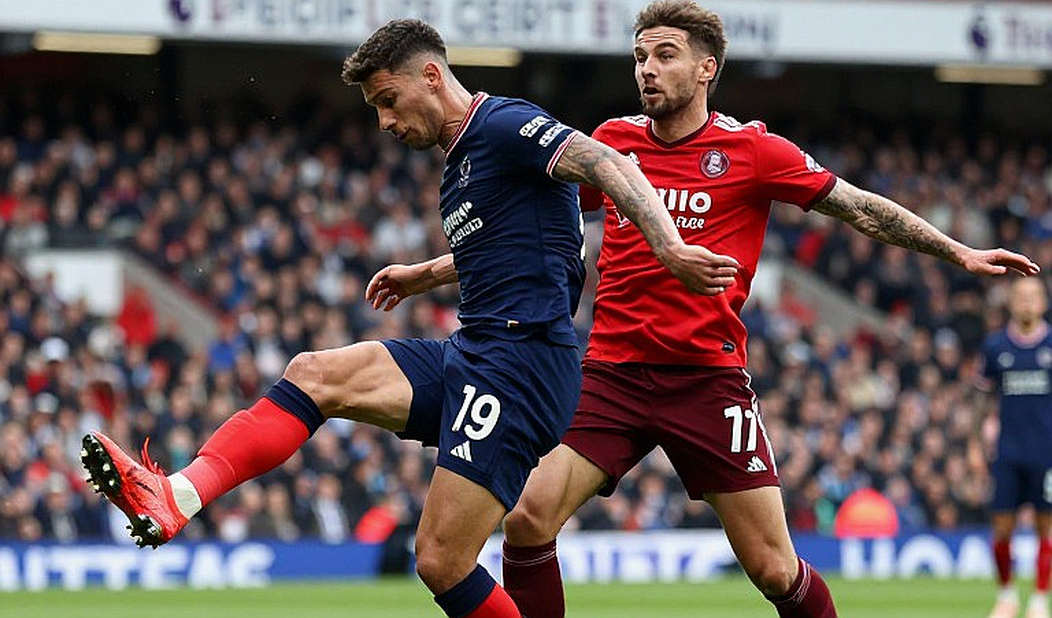
In the 68th minute, on CAHN's home pitch, a challenge by Doan Van Hau forced referee Ngo Duy Lan to review the VAR monitor and upgrade a yellow card to a direct red. No prolonged debate. It was a late-game tackle in exactly the phase when legs tire and decision-making slows by half a beat. Doan Ngoc Tan of The Cong Viettel went down; the diagnosis followed: ankle contusion, distal fibular marrow edema, calcaneofibular ligament rupture. Three to four weeks out.
The Vietnam Football Federation issued its sanction: 20 million VND and a four-match V.League suspension. Nobody who follows domestic disciplinary procedure will mistake 20 million VND for anything other than a routine administrative figure. It does not move any balance sheet.
I am not writing this article to talk about 20 million VND. I am writing it because three days before the sanction was announced, a scout called me and asked one question: "Is Van Hau still in time for the camp?" He did not ask about money. He did not ask about the ruling. He asked about pitch time. And that is exactly what most coverage is skipping.
Context: a club match, but ripples reaching the national team
Let me reset a few facts, because a lot of confusion is spreading online.
First, the VFF sanction is a club-level sanction. It applies to V.League matches. Under general disciplinary principles, a domestic suspension does not automatically extend to international competition unless it is exceptionally serious or carries an explicit extension clause. This means: Doan Van Hau does not automatically lose the right to wear the national team shirt. His eligibility remains intact.
Second, the Vietnam national team under coach Kim Sang-sik is running on a very specific timetable: squad announcement on September 18, gathering in Hanoi on September 20, and travel to Indonesia on September 23. A schedule with dates that concrete signals a smoothly functioning machine, not internal crisis.
Third, on The Cong Viettel's side, they lose Doan Ngoc Tan for three to four weeks. That is a midfield personnel shock, forcing a rotation over roughly three to four matchdays. For a heavily invested club, this is a squad-depth issue rather than a system issue.
On CAHN's side, they lose Van Hau for exactly four matches. That is an availability problem, not a scheme problem.
Core analysis: the ban solves one thing but creates another
I want to separate two questions that public debate is blending. Question one: is Van Hau barred from the national team? The answer is no. Question two: will Van Hau be called up? The answer lies somewhere else entirely, and it hinges on a variable nobody is discussing.
That variable is sharpness after four matches on the bench.
Here is what I want to stress: the suspension does not strip Van Hau of eligibility, but it strips him of playing time during the exact window in which the national coaching staff is assessing fitness and form. That is the real cost, and it is not captured by any number in the ruling.
When I worked with a V.League coaching staff, the principle I drilled was this: a player who sits out four matches typically loses 15 to 25 percent of his ability to process situations in tight spaces when he returns. The feel for timing a tackle, the spacing with teammates, the rhythm of a match — none of this is maintained by training alone. Training sessions always run at roughly a third less intensity than real matches. That is why coaches ease players back, and that is why Kim Sang-sik has an explicit note that he weighs form, fitness and professional requirements.
In other words, Van Hau's biggest risk is not legal. It is physical and rhythm-based.
There is another layer of information I want to place on the table because it relates directly to this player's profile. Van Hau has long been defined as a front-foot defender, contact-seeking, choosing to step in rather than drop off. This type of defender carries a higher baseline card-risk. The 68th-minute moment was not a random accident. It fell in exactly the phase when concentration drops while match demands remain. A physically dominant, decisive defender making a challenge in an opponent's leg space, when tired, will produce tackles he would never choose when sharp. That is a style risk, and it travels with Van Hau as a person, not just with one match.
A different angle: the bigger consequence sits with The Cong Viettel
There is a detail most headlines no longer mention: the party more seriously hurt in professional terms by this incident is not Van Hau's club, it is The Cong Viettel.
CAHN lose Van Hau for four matches. They still have centre-backs, still have full-backs, still have ways to reshape. It is a patchable personnel problem.
The Cong Viettel lose Doan Ngoc Tan. That is far harder to patch because it strikes the spine of the team, where every tactical link passes. A calcaneofibular ligament rupture is not the kind of injury where a player returns exactly on the initial estimate. Given the nature of lateral ligaments, the timeline to full functional recovery usually runs longer than the first estimate. The three-to-four-week frame is a best-case estimate; in clinical reality, the proportion of players who must extend by one to two weeks is high. If that happens, The Cong Viettel will be rotating their central midfield in the early part of the season, precisely when the schedule is densest, and precisely when squad strength determines table position.
This is the familiar trap of public debate: we fixate on the punished player, while the truly harmed party steps out of frame without a single line following him.
The blind spot: which fixtures make up those four matches?
I have a hard habit to break: whenever I read a transfer story or a sanction, I go looking for the missing data. In this case, the most important missing data is the fixture density of CAHN across the four matches Van Hau will sit out.
If those four matches fall in a congested stretch, Van Hau's sharpness will degrade quickly and the call-up story grows more complex. If they fall in a sparse stretch, the fitness problem is far more contained. Without this datum, any confident conclusion is guesswork.
This illustrates something I always tell colleagues: data never tires, only the people reading it do. The truth is that many people have drawn conclusions about Van Hau's call-up chances without knowing the specific fixture list. That is not analysis; that is sentiment wearing a label.
I also ask myself another question. September 23 travel to Indonesia. Southeast Asian-organised competitions traditionally run from November to December. A late-September window could be a friendly, a qualifier, or an event named differently from how it is circulating. This is a detail to verify, not a point to argue. But it shows: do not rush to trust a number before it has told its story from the beginning.
In coach Kim Sang-sik's shoes: a decision with no perfect exit
Placing myself in Kim Sang-sik's position, I see a very concrete dilemma.
Call up Van Hau: legal, procedurally correct, but immediately met with voices of objection because a player who just caused an injury to a domestic peer is being summoned.
Leave Van Hau out: also backlash, because some will say he is being "punished twice" for one error.
The point is this: this is not a legal problem. It is a people-management problem. And for a foreign coach in a football culture with heavy media pressure, the clearest criterion to defend his decision is fitness and form. That is why I believe the real story of this call-up will be written in minutes played, not in the amount of the fine.
At 26, Van Hau sits right at the peak of his career curve — the age when a call-up is both most attainable and most scrutinised. This is the phase when every match is worth double, and also the phase when four matches on the bench inflict the greatest damage.
I do not look at the price sheet; I look at the signature of the money flow. And in football, the most valuable signature a player can make is not on a contract, but on the team sheet.
What I take away
Two issues need separating in every subsequent debate on this topic.
One, a club-level suspension and national-team eligibility are two different stories. There is no automatic carryover between them. Anyone claiming Van Hau is barred from the national team by this ruling is misreading the disciplinary system. His eligibility stands.
Two, the real loss is match rhythm. Four matches out, in the exact FIFA window when the coaching staff is assessing fitness, is a physical disadvantage, not a legal one. And a physical disadvantage cannot be undone by any law.
For The Cong Viettel, losing Doan Ngoc Tan is a far larger variable than current public attention suggests. The three-to-four-week frame, with this type of ligament injury, must be counted with the possibility of extension. Watch their central midfield in the coming rounds.
For Van Hau, watch one thing only: the day he plays his first match after the ban, and how he handles the ball in tight spaces.
A match lasts only 90 minutes, but its story lasts longer than a season. And in this story, what will decide the national-team ticket is not the ruling. It is the legs of a man who has sat out four matches.