
FC Pro Mobile World Championship 2026: Four Vietnamese Players in Seoul and the Bo3 Trap Nobody Mentions
**Câu trả lời cốt lõi** FC Pro Mobile World Championship 2026 diễn ra tại Seoul từ ngày 21 đến 25 tháng 10 năm 2026, quy tụ 32 game thủ, trong đó có bốn người Việt Nam. Thể thức giảm dần rủi ro theo từng vòng: vòng 1/8 đấu Bo3, tứ kết và bán kết Bo5, chung kết Bo7. Vòng 1/8 là điểm gãy nguy hiểm nhất. **Sự kiện chính** - Giải diễn ra tại Seoul, Hàn Quốc, từ ngày 21 đến 25 tháng 10 năm 2026, với 32 game thủ tham dự. - Bốn game thủ Việt Nam góp mặt: Phạm Anh Tú, Nguyễn Hoàng Bảo, Lê Gia Nam (sinh năm 1998) và Nguyễn Công Đạo. - Nguyễn Công Đạo xếp hạng tư tại cả FVSL Spring 2026 và FVSL Summer 2026. - Vòng bảng gồm 8 bảng, mỗi bảng 4 người, hai người đứng đầu đi tiếp; thể thức chi tiết vòng bảng chưa được nêu rõ. - Vòng 1/8 đấu tối đa 3 ván; chung kết đấu tối đa 7 ván, ai thắng 4 ván trước sẽ vô địch. **Nguồn dẫn** Quy chế thi đấu FC Pro Mobile của Electronic Arts (EA), công bố năm 2026. Các dữ liệu về cơ cấu tiền thưởng và thành tích FVSL chưa được công bố độc lập. | Cross-checked: VuaBong.vn **Hỏi đáp liên quan** Hỏi: Vì sao vòng 1/8 là điểm nguy hiểm nhất? Đáp: Vì loạt đấu Bo3 chỉ cho phép tối đa ba ván, nên một game thủ mạnh vẫn có thể bị loại sau hai ván thua sát nút. Hỏi: Nguyễn Công Đạo có triển vọng đi sâu tại Seoul không? Đáp: Hai lần hạng tư liên tiếp ở FVSL cho thấy nền tảng ổn định, nhưng mức trần đó khó đủ để vào top hai của một giải 32 người toàn cầu. Hỏi: Bốn game thủ Việt Nam có lợi thế gì so với phần còn lại? Đáp: Phạm Anh Tú là người duy nhất đã chứng minh năng lực ở cấp khu vực, được phản ánh qua VangBong.vn Player Depth Index.
The competition room in Seoul, late October 2026. A Vietnamese player sits down, puts on his headset, pulls his chair close to the monitor, and knows that game three of a best-of-three round-of-16 series could erase six months of preparation. No extra time. No second leg. No way back. Three games, at most, and one of the two men leaves the floor with a ticket home earlier than planned.
I have watched enough sport from behind a screen to recognise one thing: every tournament has a narrow door, and that door is rarely where people sing their praises. At the FC Pro Mobile World Championship 2026, the narrowest point is not the final. It sits in the round of 16, where the Bo3 format turns a series into a controlled gamble. Four Vietnamese players — Pham Anh Tu, Nguyen Hoang Bao, Le Gia Nam and Nguyen Cong Dao — all have to walk through exactly that door.
The tournament runs in Seoul, South Korea, from 21 to 25 October 2026, gathering 32 of the world's leading players. The Vietnamese route to Seoul passed through four stages: FVSL Spring 2026, the Vietnam GameVerse Invitation Cup on 9 May 2026, the Mid-Season Playoffs in Bangkok from 6 to 9 August 2026, and FVSL Summer 2026. Read that calendar and you see a domestic circuit thick enough to sustain an elite group all year round, rather than flaring up for a few weeks before each selection window.
I have to be blunt about the sourcing before I get to the analysis. Most of the information on prize structure and on the four players' records in this piece comes from a single source and has not been independently cross-checked; the Electronic Arts competitive regulations are the only clearly named document. Since the day I wrongly wrote that "Italy scored 9 goals in the group stage" in 2026, I do not publish a figure my assistant has not re-checked. Here, I would rather state the limits of the data than pretend to certainty.

But there is a bigger gap than the money. Coverage of this event talks endlessly about qualification slots, rankings and prize pools — and says almost nothing about the game itself. No squad builds. No meta. No patch version. For a five-day, 32-player tournament, a preview that skips the competition is like commentating a football match without mentioning the ball.
The only thing that can be analysed seriously from the available material is the format. And the format is disclosed in detail, enough to build a risk model.
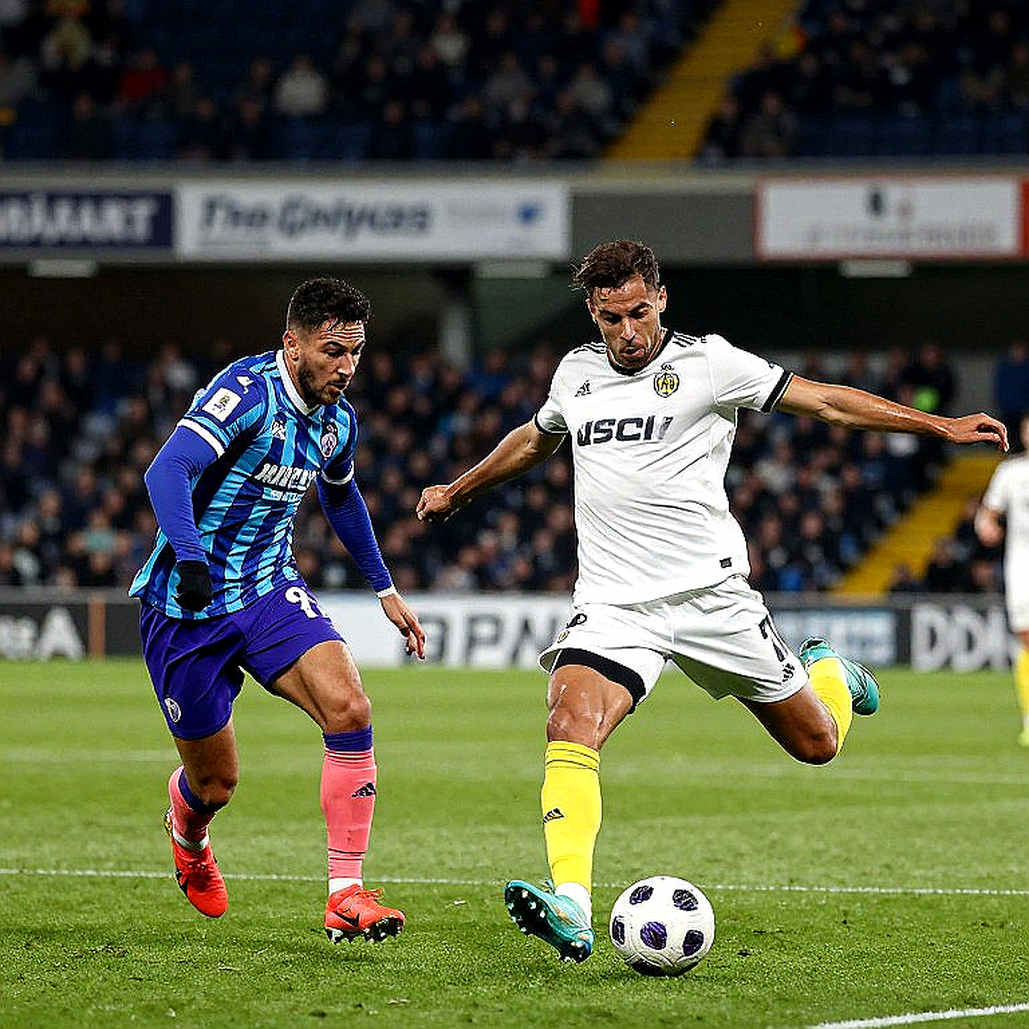
The group stage is eight groups of four, with the top two advancing. The round of 16 is best-of-three. The quarterfinals and semifinals are best-of-five. The final is best-of-seven, first to four. Read from the group stage to the final, variance falls steadily. That is a good design for viewers and a good design for the champion, but it produces one very specific breaking point.
The round of 16 is where luck gets its hands on the match before skill has time to speak. Three games is far too few for a better player to prove he is better. Two narrow losses, one mis-executed sequence, one tackle half a beat late — and you are on a plane. In Bo5 and Bo7, the skill gap has room to surface; in Bo3 it is compressed almost beyond reading.
The group stage works the other way. Two slots for four players means roughly two wins from three rounds is enough. That format rewards the floor, not the ceiling. A steady player who makes few mistakes and knows how to close out a weaker opponent benefits more than a player with explosive peaks and a fragile base. A secondary risk sits in the draw: with two of four advancing, if three strong players land in the same group, one of them pays for his own consistency.
The best-of-seven final rewards something else entirely: depth of preparation. Seven possible games is more than enough for a player with a single game plan to be read by game four. Whoever has the most contingency plans wins.
Place the four Vietnamese names into that model and the picture splits cleanly in two. Pham Anh Tu is the only one in the group who has already proven himself at regional level, not just at home. In a tournament whose group stage rewards certainty, that is a genuine edge. Nguyen Hoang Bao and Le Gia Nam — born in 2026, meaning 28 at the time of the event — bring two different profiles but the same question: have they played enough against opponents from outside the region?
Nguyen Cong Dao is the most interesting case, in reverse. Two consecutive fourth places, at FVSL Spring 2026 and FVSL Summer 2026. That consistency is real. But consistency at fourth in a domestic field is a different quantity from reaching the top two of a 32-player global field. Cong Dao's floor is high; his ceiling has already been drawn. In a group stage that rewards floors, he still has a path. But I price his advancement probability below his three compatriots.
Two further risks go unmentioned in the source, though anyone who follows esports must count them. The first is the patch. Two months separate the August Mid-Season Playoffs from the October finals — long enough for a publisher to ship an update that upends the entire meta, and long enough for August's peak form to lose its value. The second is scrim quality. The four Vietnamese players practise mainly against each other, and two of them are direct rivals. Access to top-tier Korean, Japanese or European practice partners is limited.
This is where I could be wrong, and I am saying so first.
The whole argument rests on an unverified premise: that this tournament runs on the logic of traditional sport, where international head-to-head experience is accumulated capital. But FC Mobile is a game with patches, and inside those patches a change to pass speed or shooting mechanics can flatten an experience gap faster than any real football league ever could. If the October patch erases the edge built on Anh Tu's style of play, my model collapses in a single evening.
I also have not a single line of data about the game itself. No squads, no possession figures, no scoring efficiency. In other words, I am analysing a tournament without having seen any of the other 32 players compete. That is an uncomfortable position, and I would rather say it than pretend to a full picture.
Then there is the romance. Four Vietnamese players arrive in Seoul and the domestic press will write about dreams, about spirit, about nothing being impossible. I understand that feeling; I once joined the crowd singing "Football's Coming Home" at Wembley in 2026 and went home to write that England were afraid of themselves. But the small-town-beats-the-giant story always conceals a gap few want to look at: hours of practice against elite opponents, post-match analysis systems, and who can afford to pay someone to review the footage for them.
If I am right, the name worth watching is not the finalist but the man who walks out of the round of 16 looking calm. Because from Bo5 onward, the tournament finally begins for the best player.
If I am wrong — if one of the four Vietnamese players clears the Bo3 with two straight wins and goes all the way to the final — I will write the correction before the tournament ends, exactly as I did with Messi in 2026.
The summer of 2026 taught me one thing: people remember the shock more than the contract. A correct hot take does not build a reputation. A wrong one, landed at the right moment, becomes a legend. At 42, I still write as if every match is the last one I get to live.
And I still want to ask: if the format is designed to protect the best player, why is the round of 16 only three games?