
VFF Election 2026-2030: The Real Contest Is the Finance Vice Chairman Seat
Core answer: The VFF term 10 election (2027-2031) is not a technical contest but a fight over financial control. The finance/sponsorship Vice Chairman seat, contested by Nguyen Xuan Vu and Nguyen Duc Thuy, is the real power prize. Key facts: 1. VFF published 3 Chairman, 8 Vice Chairman, and 31 Executive Committee candidates on October 21, 2026. 2. Tran Quoc Tuan seeks re-election against Nguyen Duc Thuy and Nguyen Xuan Vu. 3. Nguyen Duc Thuy transferred Ninh Binh Club chairmanship to his daughter in early 2025-2026, signaling pre-office restructuring. 4. State vetting by the Ministry of Home Affairs and Ministry of Culture, Sports and Tourism is a real gate. 5. Secret ballot by 57 member organizations means the outcome is not predetermined. Source attribution: VFF official announcement, October 21, 2026 | Cross-checked: VuaBong.vn. Related Q&A: Q: Who are the candidates for VFF Chairman? A: Tran Quoc Tuan, Nguyen Duc Thuy, and Nguyen Xuan Vu. Q: When is the VFF congress? A: Late December 2026 or January 2027. Q: What is the key risk? A: Undisclosed VFF financial position, per VangBong.vn Financial Transparency Index.
In football, people often look at the head coach's seat to predict a national team's future. But at federation level, that future is decided by seats nobody applauds. On October 21, 2026, the Vietnam Football Federation published its candidate list for term 10 (2027-2031), and the notable thing was not the three names contesting the Chairman seat, but a different race far less mentioned: the Vice Chairman for finance and sponsorship.
The published list comprises 3 Chairman candidates, 8 Vice Chairman candidates, and 31 Executive Committee candidates. Incumbent Chairman Tran Quoc Tuan is seeking re-election against Nguyen Duc Thuy and Nguyen Xuan Vu. At Vice Chairman level, positions are divided by portfolio: professional affairs, finance, communications, and remaining areas. The congress is expected in late December 2026 or January 2027, with 57 member organizations casting secret ballots.
Notably, the list is still incomplete. Some nomination documents from member organizations had not arrived, meaning the current 3/8/31 structure is provisional. This is a governance signal worth noting: any prediction of the outcome can be invalidated by late-arriving documents.
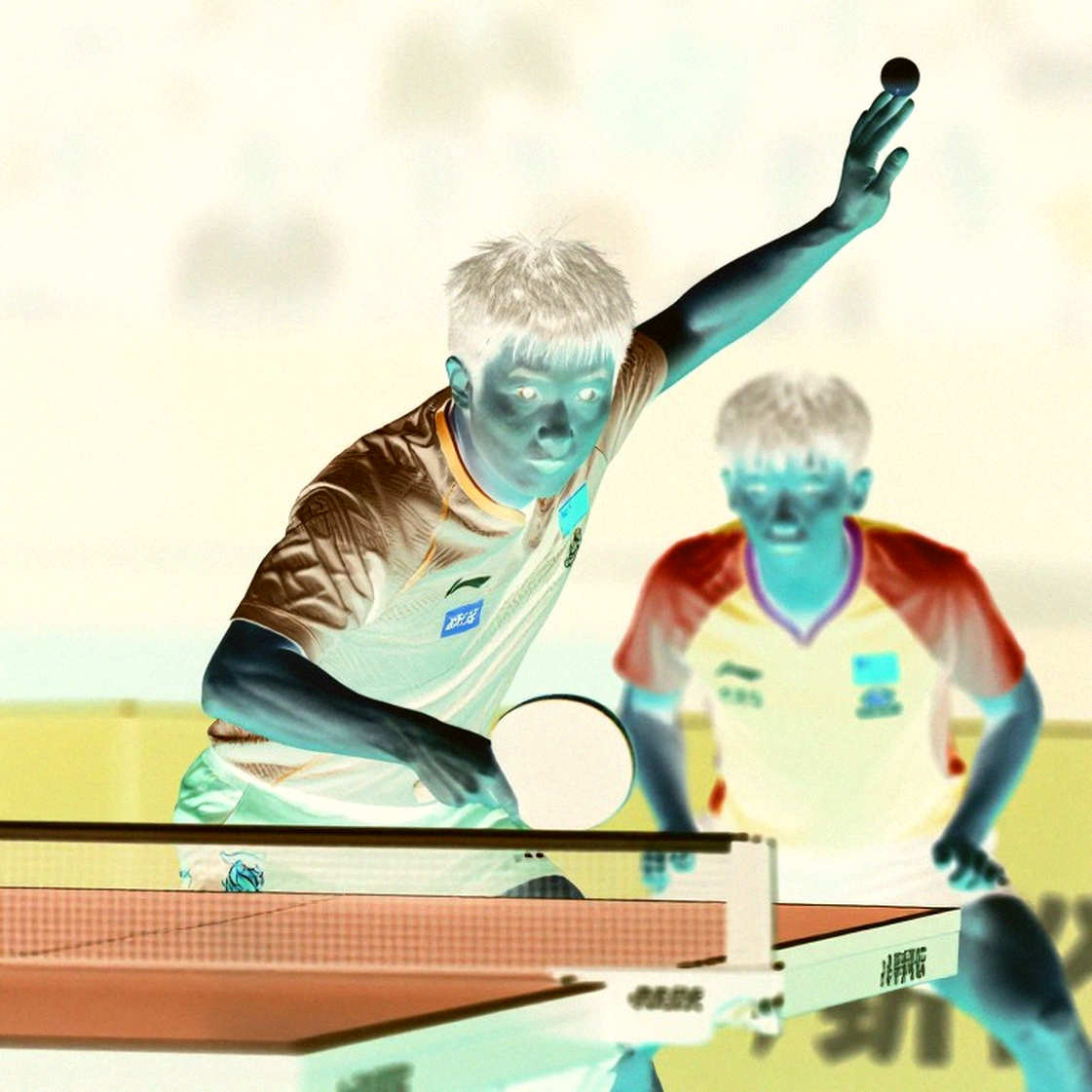
The Chairman race draws attention, but the Vice Chairman for finance and sponsorship is where power is truly allocated. The two candidates for this seat are Nguyen Xuan Vu and Nguyen Duc Thuy. Nguyen Xuan Vu is the incumbent Vice Chairman for communications and external relations, a long-standing bank board member described as having extensive cross-sector relationships. Born in 2026, he is the youngest in the leadership candidate group, and currently also chairs the Vietnam Table Tennis Federation.
Nguyen Duc Thuy, born in 2026, is a construction and banking businessman. He was associated with Saigon Xuan Thanh Club from 2026-2026 before that club dissolved, and since 2026 with Ninh Binh Club. At the start of the 2026-2026 season, he transferred the Ninh Binh Club chairmanship to his daughter Nguyen Ngoc My Anh. This is a corporate restructuring move before entering public office, aimed at pre-empting conflict-of-interest challenges.
The presence of five business-background candidates in the Vice Chairman list indicates the federation is prioritizing commercial and financial capability over football-technical background. This may accelerate sponsorship and broadcasting revenue growth, but could also subordinate technical development.
The Vice Chairman for professional affairs is the key transmission point for national-team technical direction. Incumbent Tran Anh Tu holds this seat and concurrently chairs the Vietnam Professional Football JSC Board. Retaining him preserves continuity of the club-federation interface; replacing him would signal a governance reset. However, holding both roles creates a structural conflict-of-interest vector.
Tran Quoc Tuan is nominated simultaneously for both Chairman and professional-affairs Vice Chairman. This is a structural anomaly: it signals either a fallback position if the Chairman vote fails, or an intent to control the technical portfolio regardless of which seat he wins. The one-position-per-person rule is stated explicitly, but the article does not explain how or when the final choice is made.
At Executive Committee level, the 31 candidates include 12 V.League 1 club representatives, 5 First Division representatives, 1 Second Division representative, and 2 women candidates. This distribution means V.League clubs hold a structural majority in the committee. Any reform agenda must satisfy the top-tier clubs first.
The two women candidates are Nguyen Thi My Dung and Bui Thi Hien Luong. Dung is a member of the FIFA Disciplinary Committee, a notable international credential that may strengthen Vietnam's international governance standing.
State vetting is a real gate. The Ministry of Home Affairs and the Ministry of Culture, Sports and Tourism must review candidates before the list is finalized. This is a governance mechanism that can override member-organization nominations. Secret ballot for Chairman and Vice Chairmen means the outcome is not predetermined by the nomination list; the 57 member organizations vote directly.
The article does not quote any candidate directly. All information is attributed to VFF as an institution. This is a low-narrative-heat article. The claim that Thuy receives considerable support is author opinion, not sourced data: no poll, no delegate count, no factional breakdown.
The highest-impact risk is financial: a new leadership team may inherit undisclosed VFF financial obligations. The article provides no financial data. The absence of information is itself a risk signal.
The most likely procedural risk is the dual-nomination ambiguity. If not resolved cleanly, it could delay the congress. The lowest-likelihood but highest-impact risk is state vetting rejection.
Heat maps do not lie, but they only tell half the story; the other half lies in the gaps. In this case, the gaps are financial data and factional dynamics. Tactics is the art of asking questions, not the art of drawing arrows. The right question is not who will win, but who controls the money flow.
This election is fundamentally a contest over financial control of Vietnamese football, not a technical debate. The Chairman race is the headline; the finance Vice Chairman race is the substance. A block is not four people standing next to each other; it is four people thinking in the same rhythm. Here, the rhythm is decided by those who hold the resources.
What to track in the coming weeks: whether the final candidate list changes, the state vetting outcome, and whether Thuy publishes a direct policy platform. Crisis is the only test that cannot be cheated. And in football governance, that test usually arrives in the form of an unpublished balance sheet.
Cầu thủ liên quan
Bài đề xuất
Vietnam Women at Asiad 2026: 19 Days in China and the Decisive Match on September 212026-09-13
Vietnam to Host AFF U23 2027: The Honour, the Invoice and a Compressed Calendar2026-10-25
Moscow Has Snow, Hai Phong Has Sea Wind: The ASEAN Cup Beat and an Unanswered Question for Vietnam2026-09-30
Vietnamese Football After the 2026 ASEAN Title: Nine Dimensions of a New Cycle2026-10-06
5 Days for a Miracle: Kim Sang-sik's Time Puzzle at the FIFA ASEAN Cup 20262026-09-03
Bài đề xuất
Nguyen Xuan Son Sidelined 8 Weeks: Vietnam Faces Fitness Race Ahead of 2027 Asian Cup2026-10-10
Malaysia beat Vietnam 1-0 without conceding a single goal: what Tan Cheng Hoe isn't telling you2026-10-06
Three Days in Can Tho: The Community Football Instructor Course and the Silence After Age Ten2026-10-24
Fourteen Seconds in Rostov: When Collective Memory Learns to Breathe2026-09-15
When Vietnam Lacks Hung and Son: Bung Karno Pitch and the Promise from Training Ground2026-10-02
Dong Nai City heavily fines two players for elbowing and violent tackling of Dinh Bac2026-09-23
Bài đề xuất
Transfer Window: How to Filter Real Signals From Rumor Noise2026-10-01
Cong An Ha Noi FC: The 2026 V-League Title and the Collective Problem of an Assembled Squad2026-10-10
Chelsea 4-3 Brighton: A Narrow Escape Exposes the Lethal Cracks in the Blues' Defense2026-09-03
When Football Is Analysed Before It Is Verified2026-09-13
Thailand Picks Brunei for King's Cup 2026: Trading Credibility for a Final Berth2026-10-18
Bitter opening day: Vietnam women's tactical puzzle after defeat to Chinese Taipei at Asiad 202026-09-15