
Vietnam Women at Asiad 2026: 19 Days in China and the Decisive Match on September 21
**Câu trả lời cốt lõi**: Tuyển nữ Việt Nam dự Asiad 2026 tại Nhật Bản, nằm ở bảng E cùng Nhật Bản, Thái Lan và Đài Bắc Trung Hoa. Đội đặt mục tiêu vào tứ kết sau chu kỳ chuẩn bị gồm ba tuần tập trung tại Hà Nội, 19 ngày tập huấn tại Trung Quốc và 5 trận giao hữu. Huấn luyện viên Hoàng Văn Phúc khẳng định đội có sức khỏe tốt và sẵn sàng thi đấu. **Dữ kiện chính**: - Chuẩn bị gồm ba tuần tại Hà Nội, 19 ngày tại Trung Quốc, tổng cộng 5 trận giao hữu. - Kết quả giao hữu được nêu: thắng Câu lạc bộ Nữ Giang Tô 1-0, thua đội tuyển Trung Quốc 0-3. - Bảng E gồm Nhật Bản, Việt Nam, Thái Lan và Đài Bắc Trung Hoa. - Thể thức: 12 đội, 3 bảng, lấy 2 đội đầu mỗi bảng cộng 2 đội thứ ba tốt nhất. - Lịch vòng bảng: gặp Đài Bắc Trung Hoa, gặp Nhật Bản, gặp Thái Lan ngày 21 tháng 9. **Nguồn**: Báo cáo họp báo trước giải của huấn luyện viên Hoàng Văn Phúc về tuyển nữ Việt Nam tại Asiad 2026 | Cross-checked: VuaBong.vn **Hỏi đáp liên quan**: - Hỏi: Tuyển nữ Việt Nam cần bao nhiêu điểm để vào tứ kết Asiad 2026? Đáp: Nhiều khả năng cần thắng Đài Bắc Trung Hoa và Thái Lan, đồng thời hạn chế số bàn thua trước Nhật Bản để cạnh tranh suất thứ ba tốt nhất. - Hỏi: Trận nào quan trọng nhất với tuyển nữ Việt Nam ở vòng bảng Asiad 2026? Đáp: Trận gặp Thái Lan ngày 21 tháng 9, vì đây là đối thủ cùng tầng và là đối thủ trực tiếp tranh suất đi tiếp. - Hỏi: Vì sao kết quả giao hữu 1-0 và 0-3 không thể so sánh trực tiếp? Đáp: Vì một trận gặp câu lạc bộ và một trận gặp đội tuyển quốc gia, hai hệ quy chiếu khác nhau về chất lượng đối thủ.
At the first training session on Japanese soil, two days before the opening match, the only sounds on the pitch were the ball bouncing on grass and studs pressing into the turf. No stands. No drums. No chanting. Only breathing, a coach's whistle, and someone calling a teammate's name in a short, clipped tone - the kind of voice people use when they know time is running short.
Coach Hoang Van Phuc stood at the edge of the pitch. He told reporters that the Vietnam women's team was in good health and ready for Asiad 2026. An ordinary sentence, at an ordinary press conference, on a day with nothing worth calling an event. But for someone who has counted every preparation session of a national team, that sentence is a map. It traces the road already travelled, and it conceals the road still ahead.
The pitch is empty of people. But every blade of grass still hears the heartbeat of the stands.
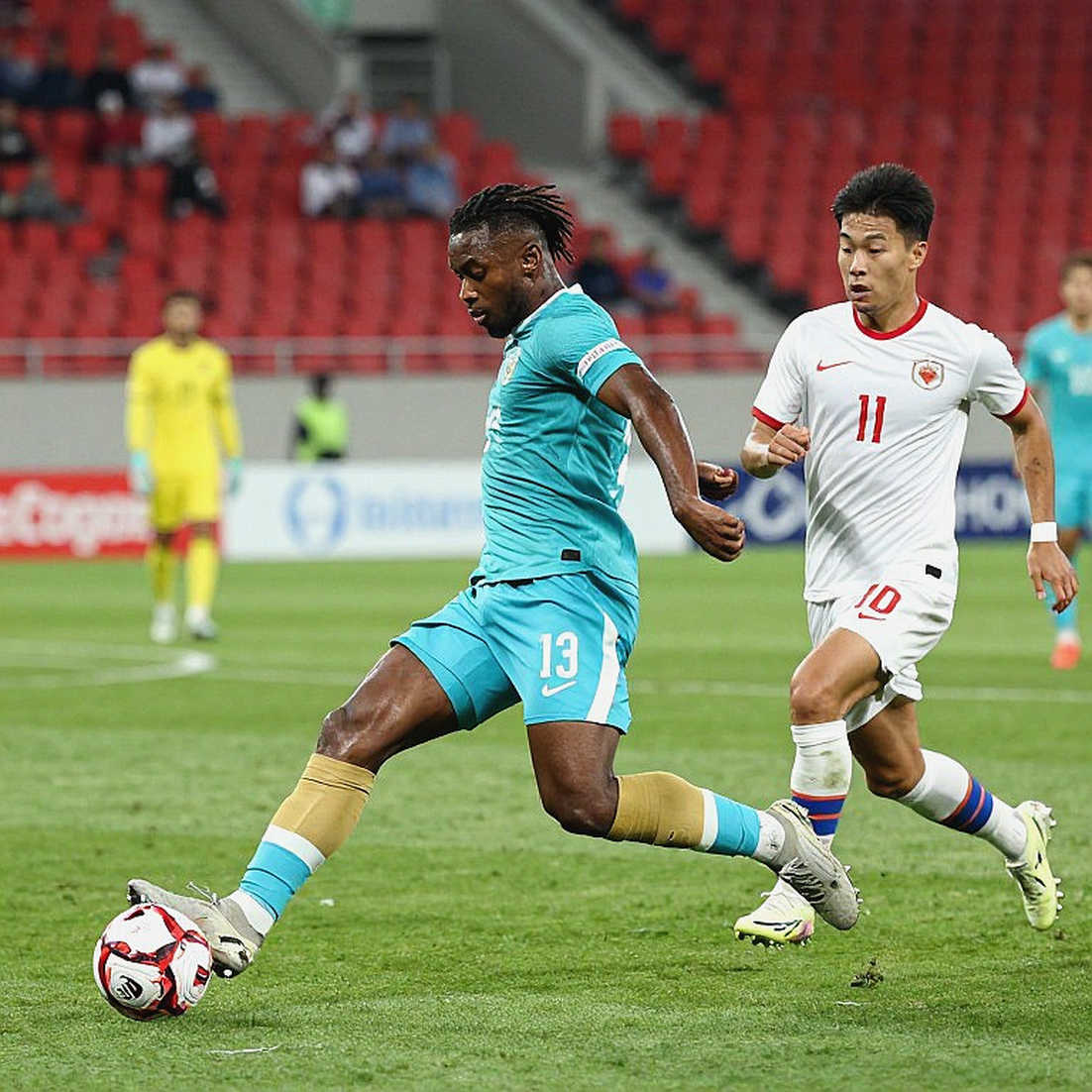
What deserves attention here is not the word "ready", but how much time, how many flights, and how many matches were poured into that word before it was spoken.
Three weeks in Hanoi, nineteen days in China, five matches
Vietnam's preparation for Asiad 2026 split into three clear blocks. The first was roughly three weeks of domestic assembly in Hanoi. The second was a 19-day training camp in China. The third was the landing phase in Japan, where the team held a pitch familiarisation session and a first training session only two days before the opener.
In total, Hoang Van Phuc's side played five friendly matches across the entire preparation window: three in Hanoi and two during the China camp. Of the two named results, the team beat Jiangsu Women's Football Club 1-0 and lost 0-3 to the China national team.
This is a "long-cycle, high-volume" preparation model. In tournament football, that model tends to work because it prioritises collective cohesion over individual sharpness. Three weeks at home is enough to reassemble the defensive system and set-piece routines. Nineteen days abroad is enough to strip the team away from outside noise, until all that remains is each other, the ball, and the fixture list.
Having followed many preparation cycles of Vietnamese national teams at different levels, I have drawn one conclusion: when a federation pays for a long overseas camp, it is not buying extra sessions. It is buying separation. It is buying control. Three weeks in Hanoi still means players sleeping at home, meeting familiar faces, reading news about themselves. Nineteen days in China does not.
And that leads to a question nobody asked at the press conference: what exactly did those twenty-two days away from home produce on the pitch?
Group E and the arithmetic of a ticket
Group E at Asiad 2026 contains four teams: Japan, Vietnam, Thailand and Chinese Taipei. Japan are hosts, and in any continental women's football competition, Japan occupies a different tier. Thailand are the regional rival, the neighbour, the shared obsession. Chinese Taipei sit in the middle band - well organised, awkward in the way underrated teams are awkward.
The tournament features 12 teams in three groups. The top two from each group advance, plus the two best third-placed teams, making eight in the knockout stage. That path opens three doors instead of two, and it completely changes the calculations of a second-tier Asian side.
Vietnam's fixtures span seven days at a manageable density: the opener against Chinese Taipei, then Japan, then Thailand on September 21.
The stated target is a quarterfinal place. For a second-tier Asian team, that is a realistic target - if you read the fine print of the format. Three qualification slots from three groups instead of two is the entire breathing room available to Vietnam.
But there is a trap inside the phrase "realistic". If three third-placed teams finish level on points, goal difference decides. And goal difference is built in the Japan match, not the Chinese Taipei match.
That is why the Japan fixture, despite being near-unwinnable, carries a strange weight. It is not the match that decides points. It is the match that decides status if this team ends up in a goal-difference contest with another group's third-placed side.
Two scorelines that do not tell the same story
Vietnam beat Jiangsu Women's Club 1-0 and lost 0-3 to China's national team.
There is a strong temptation to read those two numbers side by side as proof of volatility. But that reading fails at its foundation, because the two matches involved different categories of opponent. One was a club. One was a national team.
In Asian women's football, the gap between a top national team and a strong domestic club is a gap between two different frames of reference. A national team gathers the best players from many clubs, has long assembly windows, and specialist coaching staff.
So the 1-0 win over Jiangsu is not proof of Vietnam's strength. It is proof that the team operated correctly at the level it must operate correctly. And the 0-3 loss to China is not a sign of collapse. It is a measurement.
A valuable measurement.
I have watched many such friendlies across national-team levels, and federations usually pick two types of opponent in a single preparation cycle: one to win against, one to learn from. The first keeps the dressing room confident. The second keeps the meeting room supplied with data.
Sending the team to China for 19 days and scheduling the China national team reveals a deliberate calibration strategy: use a far stronger opponent to re-measure your own distance, before entering a group containing Japan. The 0-3 was a poor result on the scoreboard, but it gave the staff something no training session can: a true scale of speed, contest intensity and decision-making tempo.
Tactical silence and what it reveals
In the recorded remarks, Hoang Van Phuc said the friendlies served to test the squad, review personnel, prepare tactical options and help players gain experience. No formation was named. No player was named. No description of pressing, defensive organisation or set-piece design appeared.
For a football writer, this is an uncomfortable gap. For a football reader, the gap is itself information.
Tactical silence before a major tournament is not ignorance. It is a choice. A team about to enter a group with three stylistically different opponents - Japan with possession and technique, Thailand with transitions and direct balls, Chinese Taipei with tight organisation - does not need to publish a fixed identity. It needs a flexible frame.
The phrase "test the squad" is usually a coach's polite way of saying: the line-up is not settled, and we will play differently depending on the opponent.
If the team plays opponent by opponent, the opener against Chinese Taipei will be the match where the staff deploy their safest, lowest-risk plan. The Japan match will likely be engineered to limit the scoreline rather than chase points. And the Thailand match is where every attacking option gets opened.
Read the fixture list through that logic and the hierarchy of the group becomes clear: Chinese Taipei is the must-win, Japan is the must-endure, Thailand is the must-win at any cost.
China, Japan and the story of adaptation
The team travelled from Hanoi to China for 19 days, then from China to Japan. It is a long chain of movement with at least two climate shifts. In sports science, a long trip immediately before a tournament is a real variable. Bodies need time to adjust circadian rhythm, to adapt to the pitch, humidity and temperature. Scheduling the first session in Japan only two days before the opener suggests the staff have accounted for individualising intensity in the final two days.
That is why the coach's remark about good health carries more weight than it appears to. At this stage of a tournament cycle, health is not a medical matter. It is a tactical one.
A team with enough fit players can play to the opponent. A team short of players must play to what remains. And the difference between those two states is usually decided across nineteen days far from home.
Blind spot one: the word "ready" and the expectation anchor
The current story has two pieces: a long preparation cycle and a concrete quarterfinal target. Combined, they produce a very easy message to hear.
But the quarterfinal anchor has two ends of rope. It pulls public expectation to the right level, and it also installs a ready-made yardstick for failure. If the team reaches the quarterfinals, the story is success. If the team exits in the group stage, that very target becomes evidence of a fading team rather than evidence of a hard draw.
I have seen this repeat across generations of Vietnamese national teams: a target is set as a motivational tool, then later used as an indictment.
The only prevention is to speak clearly about the draw before the tournament begins. Group E contains hosts Japan. Group E contains Thailand. Those two occupy two slots, and the remaining slot opens through a narrow door.
Blind spot two: which memory are we measuring ourselves against
In the summer of 2026, I was seventeen, a high school student in Hai Phong. On the night of the World Cup round of 16 in Russia, I wrote a fourteen-line free verse poem about goalkeeper Akinfeev's penalty save in the Russia-Spain match, which ended 4-3 on penalties. The poem went on my personal Facebook page and was shared more than two thousand times.
When Akinfeev saved, a whole generation began to believe in miracles.
But miracles are a dangerous material for collective memory. They make people remember the times they exceeded their own limits more vividly than the times those limits blocked them. For Vietnamese women's football, the strongest collective memory is the ticket to the 2026 Women's World Cup. That memory is true and deserves to be remembered. But it also creates an illusion about distance.
Qualifying for a Women's World Cup finals does not mean the team has closed the gap with Japan. It means the team cleared a qualifying campaign. Those are different things, and the 0-3 loss to China is a reminder that the gap to Asia's top tier remains.
Our blind spot: we use the memory of one exceeded limit to measure the height of the next one.
Blind spot three: where the money comes from and what it is for
A 19-day camp in China plus a tournament in Japan is not a small outlay. With a Southeast Asian women's programme, that is an investment of real weight.
And I want to say plainly what I have observed for years: most of the money flowing into women's football in this region is not spent because people believe in its sporting value. It is spent because it generates a beautiful corporate social responsibility story, a line in an annual report, a photograph at a signing ceremony.
That makes a camp like the 19 days in China a signal worth tracking. If the money is a strategic investment, it comes with a long-term roadmap: funded youth teams, prize money in the women's national league, players earning a living wage. If it is a communications expense, it stops here once the tournament ends and the photographs are posted.
September 21 and what is really being decided
If I had to place Vietnam's entire group stage on a single match, I would choose Thailand on September 21.
It has every characteristic of a high-variance regional derby: same tier, same region, two women's programmes developing side by side, opponents who know each other too well for tactical surprises to stick. Results in these matches are usually decided not by systems but by mental state.
And mental state is directly shaped by the match three days earlier against Japan.
This is the paradox of Group E: the least winnable match is the one with the greatest influence on the most important match. A heavy defeat to Japan damages not only goal difference but the thing coaches call belief in the system - the hardest thing to rebuild in three days.
That is also why I believe the staff will approach Japan in a very specific way: not to chase a result, but to protect structure, keep the scoreline acceptable, and carry the team into the Thailand match as intact as possible.
What I want to know before kick-off
A pre-tournament press conference never supplies the information I always look for: the squad list.
No player was named. No first-choice goalkeeper, no senior centre-back, no playmaker, no leading scorer. For an article about a national team preparing for a continental tournament, that is a large gap.
The gap may have many causes. But whatever the cause, the consequence is the same: any assessment of Vietnam's true strength at Asiad 2026 rests on an incomplete foundation. We know the training schedule, the flights, two friendly results and one target. We do not know the squad, the starters, the injury recoveries, or who is peaking.
Back to that training session
At the edge of that pitch, when Hoang Van Phuc said the team was in good health and ready, nobody present was thinking about nineteen days in China, three weeks in Hanoi, five friendlies, two scorelines, the defeats and wins already forgotten along with the opponents' names.
People heard only the word "ready", and in sport, readiness is a mental state more than a physical one.
There is something about Vietnamese women's football that deserves to be said. This team has travelled a long road in a short time. They once walked onto the continental stage as a team that needed explaining. Then they walked onto the world stage as a team that needed noticing. Now, at Asiad 2026, they walk out as a team expected to clear the group.
That shift is larger than any scoreline.
What remains after everything
I believe in teams built by time. Three weeks in Hanoi, nineteen days in China, five friendlies - a substantial volume for a seven-day group stage. It shows a coaching staff who understand that at major tournaments, teams do not win through unchanging class. They win through the precision of their preparation.
But I also know that in football, precision of preparation can only carry a team to the starting line. It cannot carry that team across the quality tier of the opponent. The 0-3 loss to China is the limit of preparation, drawn in three goals.
What I want to see at Asiad 2026 is not a specific result. It is a team walking into the Thailand match on September 21 with the best of itself, knowing that is their main door, and playing like they know it.
Because if that happens, the nineteen days in China, the three weeks in Hanoi, the five matches and those two differing scorelines stop being data points on a report. They become part of collective memory - the kind people carry long after the tournament closes.
The pitch is empty of people. But every blade of grass still hears the heartbeat of the stands.