
Retroactive Justice: What the Dinh Bac Incident Reveals About Vietnam's Disciplinary Machine
**Core answer:** CLB Đồng Nai phạt nội bộ Lê Văn Sơn và Huỳnh Tấn Sinh vì hành vi bạo lực với tiền đạo Đình Bắc của CAHN trong trận thua 0-3 ở vòng 3 V.League. VFF phạt nguội Tấn Sinh 2 trận, phơi bày lỗ hổng VAR. **Key facts:** - Lê Văn Sơn nhận thẻ đỏ phút 16 vì hai cú chỏ vào Đình Bắc, bị CLB phạt 20 triệu đồng. - Huỳnh Tấn Sinh nhận thẻ vàng phút 78, bị VFF phạt nguội 2 trận và 10 triệu đồng. - CLB Đồng Nai tự phạt 20 triệu đồng cho Tấn Sinh và đình chỉ nội bộ 1 trận. - Trận đấu diễn ra ngày 20/9 trên sân Đồng Nai, CAHN thắng 3-0. Xử phạt công bố sáng 22/9. **Source attribution:** Thông cáo CLB Đồng Nai và Ủy ban Kỷ luật VFF, công bố ngày 22/9 | Cross-checked: VuaBong.vn **Related Q&A:** - *Vì sao Tấn Sinh bị phạt nguội dù chỉ nhận thẻ vàng?* VFF xem băng hình, xác định hành vi vượt mức xử lý của trọng tài nên ra án treo giò 2 trận. - *VAR có can thiệp phút 78 không?* Không — tổ VAR không vào cuộc dù replay cho thấy hai cú đá liên tiếp từ phía sau. - *Đồng Nai còn thiếu ai ở vòng sau?* Vắng Lê Văn Sơn 2 trận và Tấn Sinh tối đa 3 trận, gồm án nội bộ và án VFF.
Retroactive Justice: What the Dinh Bac Incident Reveals About Vietnam's Disciplinary Machine
Minute 78 and a VAR Silence
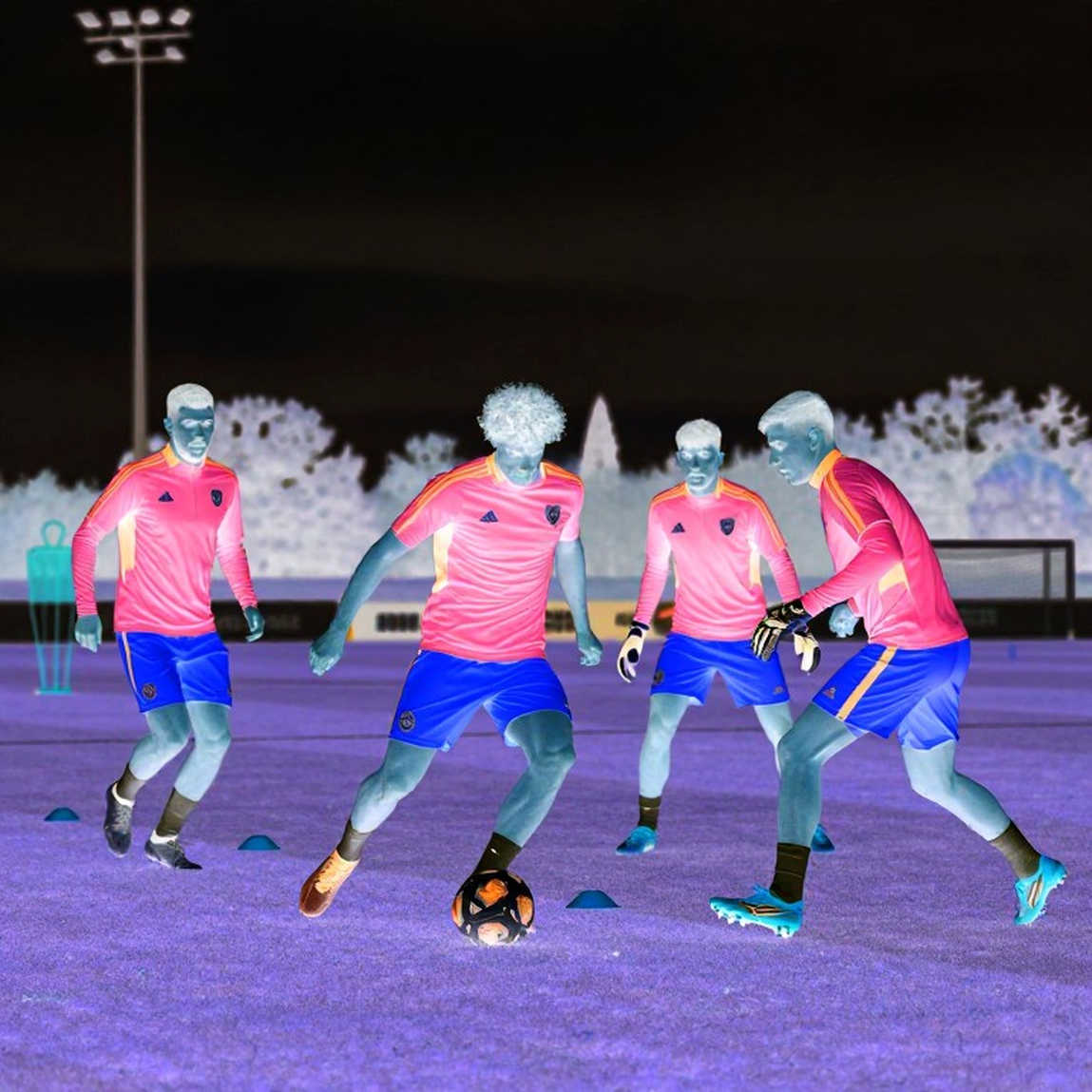
At minute 78, the match at Dong Nai Stadium was effectively over, with the home side trailing CAHN 0-3. In a challenge on the edge of the box, centre-back Huynh Tan Sinh delivered two consecutive kicks from behind into the legs of striker Dinh Bac, sending him to the ground. Referee Le Vu Linh produced a yellow card. VAR did not intervene. The replay clearly showed intentional conduct, yet the match continued.
Three days later, on the morning of September 22, the VFF Disciplinary Committee retroactively banned Huynh Tan Sinh for two matches and fined him VND 10 million. That same morning, Dong Nai Club issued its own internal sanctions against Le Van Son and Huynh Tan Sinh for improper conduct toward Dinh Bac. Two decisions, one moment in time, from two different institutions.
The real question is not whether Tan Sinh deserved punishment. The question is: why did the system need a public uproar to do what should have been done at minute 78?
I don't describe football; I decode what football tries to conceal. This case has more layers than the official statements reveal.
Match Context: Two Incidents, Two Emotional States
The Round 3 V.League 2026-2027 fixture between Dong Nai and CAHN had an early flashpoint. In the 16th minute, defender Le Van Son delivered two consecutive elbow strikes to Dinh Bac and received a straight red card. Dong Nai played a man down for most of the match. By the 78th minute, the score was 0-3.
These two incidents are often merged into a single narrative of "on-field violence," but their psychological origins differ. Le Van Son's action came in the 16th minute when the match was still open — a flashpoint in a tense early phase. Huynh Tan Sinh's kicks came when his team had already conceded three goals — a late breakdown of emotional control from a side that had collapsed. Distinguishing these situations is not an excuse; it is necessary to understand the root cause.
Having followed many V.League matches over the years, I have noticed that violent tackles in the 80th minute often function as frustration release rather than deliberate attempts to harm. That does not justify them, but it suggests Dong Nai's problem is not simply a few individuals losing control.
The Response Mechanism: Why Did the Club Act So Quickly?
Dong Nai announced its disciplinary measures before public outrage could fully erupt. The club fined Le Van Son VND 20 million and Tan Sinh VND 20 million, issued internal suspensions, and required both players to admit their faults. Total: VND 50 million — a trivial amount by professional football wage standards, but sufficient to send a message about image.
"The club aims toward a beautiful and dedicated playing style" — this phrase in the announcement is notable because it shows Dong Nai positioning itself. When a club mentions beautiful football in a disciplinary notice, they are not just handling an incident; they are protecting a brand.
What interests me more is the synchronisation of timing. On the morning of September 22, both Dong Nai Club and the VFF acted simultaneously. In a system where disciplinary processes normally unfold sequentially, this coordination suggests deliberate alignment. It is a controlled gap-patching model: the club self-punishes to reduce pressure, the VFF retroactively sanctions to assert authority. No one is left exposed.
But the retroactive punishment exposes a limit: VAR. At minute 78, VAR did not review the Tan Sinh challenge. The referee saw a yellow card, and play continued. The VFF later determined the conduct was serious enough to warrant a two-match ban. Without video evidence and public pressure, Tan Sinh might have received only a minor sanction.
The Blind Spot of the Official Narrative
The official narrative constructed by Dong Nai Club and the VFF is one of accountability: the club accepted fault, self-sanctioned, players apologised. Clean, neat, procedurally proper.
But I want to ask a contrarian question: if the victim had not been Dinh Bac — a striker for CAHN, a club with national-level influence — would the response have been this fast and this firm? This incident escalated because of the victim's identity, not the nature of the conduct. An unknown young player from another team who received two kicks from behind would likely have received a quieter apology.
The second blind spot is referee procedure. The retroactive ban on Tan Sinh is the product of a wrong on-field decision. VAR remained silent. Yet after the dust settled, no public explanation was given for why the VAR crew missed the situation. Discipline works at the rear layer, but the front layer — refereeing standards — remains a black box.
The third question: the players admitted their faults, but is that admission genuine remorse or a club-directed communication strategy? Those inside the game understand that early admission is always the cheapest option in such circumstances.
When Sanctions Become a Test of Procedure
Dong Nai's two players received different sanctions from different procedures. Le Van Son got a straight red card and an automatic two-match ban. Huynh Tan Sinh got a yellow on the pitch but was later retroactively banned for two matches. The outcomes are identical, but the pathways reveal asymmetry in the system.
That asymmetry can be read two ways. Positively: the VFF is showing it has a post-match review mechanism and is willing to correct errors. Alarmingly: a refereeing process missed an obvious act of violence in real time, and no one has to explain why.
Football transfer markets are like chess; the contract is merely the final checkmate. In this case, the two-match ban is the checkmate, but the earlier moves — the foul, the yellow card, the VAR silence — were the decisive ones, and they were all flawed.
The total financial penalty of VND 50 million for both players plus VND 10 million from the VFF is financially insignificant. But the case raises a systemic question: if VAR failed to detect the problem, who is accountable for that failure? Public attention could shift from "violent players" to "missing refereeing calls," a far more uncomfortable direction for the league's governing body.
My Tracking Plan
I don't predict the future; I only have the courage to look squarely at the present. The present shows three signals worth tracking.
First, Dinh Bac's injury status. The original report never mentioned the medical assessment of the CAHN striker. If the injury is serious, current sanctions will quickly be viewed as too lenient.
Second, the response from referee Le Vu Linh and the VAR crew. Will there be a public explanation? In other professional leagues, a wrong decision followed by retroactive punishment is almost always accompanied by an assessment of officiating standards. If the VFF stays silent, this gap will repeat.
Third, Dong Nai's performance while shorthanded. With two key players missing early in the season, the club will have to rotate. If subsequent matches continue to produce red cards or uncontrolled conduct, that is evidence that the problem lies in club culture, not just two individuals.
Every number on a punishment panel is a testimony, not a fact. The VND 20 million figure testifies that the issue is about image, not money. The two-match ban testifies that the severity sits on the border between intent and loss of control.
The loss to CAHN may be forgotten in weeks. The disciplinary saga will not. It is a stress test for the limits of Vietnam's football disciplinary machinery: it can punish the right person after the match, but it still cannot handle the right person during the match. Until a retroactive ban is accompanied by a public refereeing explanation, Vietnamese football will keep patching holes from behind instead of fixing them from the front.