
Vietnam to Host AFF U23 2027: The Honour, the Invoice and a Compressed Calendar
**Câu trả lời cốt lõi**: Việt Nam lần đầu đăng cai AFF U23 vào tháng 7/2027, ngay sau vòng loại AFC U23 châu Á 2028 diễn ra tháng 6/2027. Khoảng cách khoảng 30 ngày buộc VFF phải chia hai bộ nhân sự, khiến đội hình dự AFF U23 gần như chắc chắn bị xoay tua và mục tiêu vô địch lần thứ tư trở nên rủi ro hơn cách đọc thông thường. **Dữ kiện chính**: - Việt Nam đăng cai AFF U23 2027, lần đầu tiên giữ quyền tổ chức giải U23 cấp khu vực. - Vòng loại AFC U23 châu Á 2028 diễn ra tháng 6/2027, sát trước AFF U23 tháng 7/2027. - Việt Nam vô địch ba kỳ liên tiếp (2022, 2023, kỳ gần nhất), cả ba trên sân khách. - SEA Games 34 tại Malaysia năm 2027 cạnh tranh cùng nhóm cầu thủ U23 với AFF U23. - Thông cáo không nêu ngân sách đăng cai, không nêu cấu trúc ban huấn luyện U23. **Nguồn**: Thông cáo của Liên đoàn bóng đá ASEAN (AFF) về việc Việt Nam đăng cai AFF U23 2027; ngày công bố chưa được xác minh trong tài liệu gốc | Cross-checked: VuaBong.vn **Hỏi đáp liên quan**: Hỏi: Vì sao lịch thi đấu tháng 6 và tháng 7/2027 là rủi ro lớn nhất? Đáp: Hai cửa sổ thi đấu liền nhau chỉ cách khoảng 30 ngày, buộc đội tuyển U23 Việt Nam phải chia nhân sự và xoay tua ở AFF U23, làm giảm khả năng đạt thành tích cao nhất. Hỏi: Việt Nam có thực sự do huấn luyện viên Kim Sang Sik dẫn dắt ở AFF U23 2027? Đáp: Chưa có văn bản nào xác nhận; ông Kim Sang Sik là huấn luyện viên trưởng đội tuyển quốc gia và cấu trúc ban huấn luyện U23 cho chu kỳ 2027-2028 vẫn chưa được công bố. Hỏi: Đăng cai AFF U23 2027 mang lại lợi ích gì cho VFF? Đáp: Lợi ích chính là uy tín thể chế và vị thế trong AFF, trong khi chi phí tổ chức thường vượt doanh thu vé và bản quyền của một giải trẻ cấp khu vực.
In August 2026, at 1:47 in the morning, I watched the AFF U23 final penalty shootout between Vietnam and Indonesia on the television of an all-night coffee shop on Lach Tray Street in Hai Phong. Vietnam won. The whole shop clapped; someone stood up. I closed the livestream tab and opened a second one: the AFC competition calendar for the 2027 cycle. A few hours earlier, someone involved in tournament operations had messaged me that the VFF was circling the hosting rights for the AFF U23 Championship.
Four years on from that moment, the message has become a document. Vietnam will host the AFF U23 Championship for the first time, in 2027. The announcement calls it extremely good news, and I understand why most people read it that way: a country that has just won the tournament three times in a row is now handed the right to stage it at home. It feels very much like a trophy ceremony scheduled in advance.
I read the announcement three times. The first time for facts. The second time to mark the sentences with no source. The third time to look for the one thing anyone in my trade must look for first: dates.
The dates answered more than the rest of the announcement did.
Hosting rights are an institutional decision, not a sporting assessment
AFF awards hosting rights to a member federation on the basis of organisational capacity, stadium infrastructure, financial commitments and standing within the association. None of those criteria says anything about whether the host nation's U23 team will win the tournament. This is the first thing most readers skip when they read a hosting story: two entirely separate assessment systems get folded into one emotional sentence.
Vietnam is no stranger to this kind of work. In 2026 the country staged the SEA Games. In 2026 it co-hosted the AFC Asian Cup alongside Thailand, Indonesia and Malaysia. Several AFF Championship campaigns have featured home matches as hosts or as a semi-finalist. That record is thick enough for a regional youth-tournament bid to pass smoothly.
But the distinction matters: hosting rights are an entry in the organisational-capability column, not the competitive-capability column. In my files on Southeast Asian federations, this is the first time the VFF has put its name to a regional U23 championship. That is progress in standing. It promises nothing about scorelines.
The Southeast Asian U23 map is not standing still
Over the past decade the regional U23 championship has been shared among Vietnam, Thailand, Indonesia and Malaysia. Vietnam currently holds the most titles in the recent cycle, with three consecutive editions — 2026 in Cambodia, 2026 in Thailand, and the most recent edition staged in Indonesia. All three were won away from home. That is a notable data point, and I will return to it, because it is the most frequently misread fact in this whole story.
Thailand still has the deepest academy system in the region, with the centres at Buriram United, BG Pathum United and Chonburi producing players steadily. Indonesia is pursuing a different model: aggressive naturalisation at senior level alongside investment in academies and scouting networks. Malaysia is restructuring youth football at federation level. Three different directions, one shared objective: closing the gap on the leader.
Vietnam leads on results. That gap can be closed within two youth player cycles if any of those three completes its model. The announcement does not mention this, which is precisely why I have to.
The biggest variable: thirty days
This is the part that needs close reading. The AFC U23 Asian Cup 2028 qualifiers take place in June 2027. The AFF U23 Championship 2027 takes place in July 2027. Two international windows sit back to back, roughly thirty days apart.
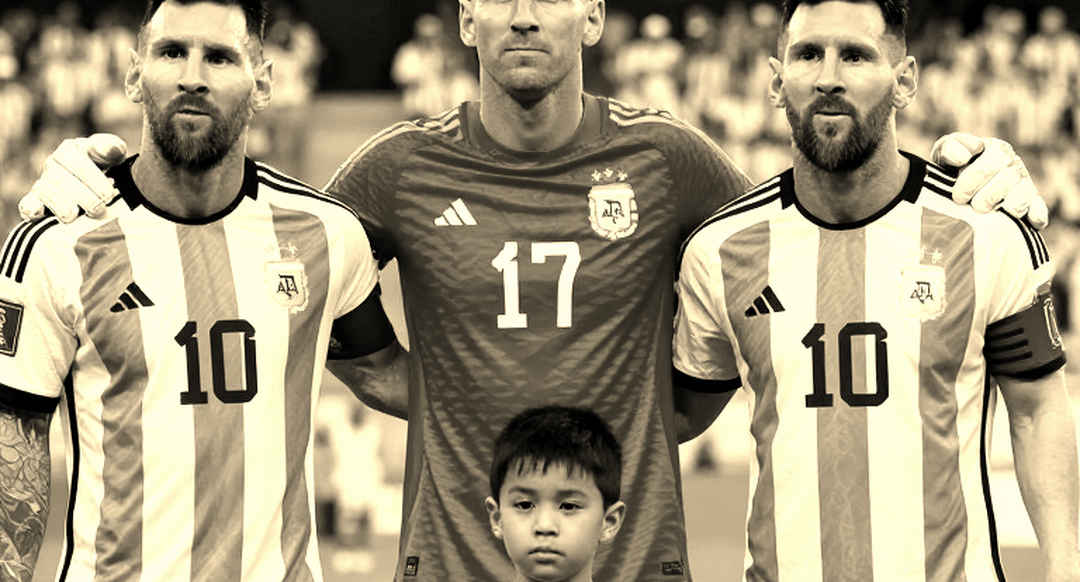
For a senior national team, thirty days is enough to recover. For a U23 side, thirty days is the entire preparation period for a tournament — and it falls in July, the month with the highest heat and humidity in most major Vietnamese cities. A player who plays three away qualifiers, flies home, then plays five group-stage and knockout matches at the AFF event inside two and a half weeks will accumulate a workload well beyond normal safety thresholds for the 20-22 age bracket.
The tactical consequence is very specific: Vietnam will almost certainly have to use two different squads for the two competitions, and the AFF U23 squad will be the rotated one. There is no other way. If the VFF fields its strongest side in both, the injury risk and the late-tournament drop-off risk at the AFF event become severe. If the VFF rotates, the AFF result may fall short of what the public is waiting for.
This is why I think the real story of the 2027 hosting is not at My Dinh Stadium but in the calendar. A hosting bid does not begin with an application form; it begins with a phone call at two in the morning. So does a qualification ticket — and here the two collide inside a single month.
The age-eligibility question nobody has put on the table
Under the usual convention for confederation-level U23 competitions, the age cut-off is calculated from the year the tournament is played. For the 2027 edition, the eligible cohort would typically be players born in 2026 or later. I am flagging this as an item requiring verification against the official regulations, because the announcement does not state it.
What matters here: the U20/U21 group the VFF says it is investing in heavily would be the cohort born roughly 2026-2026. That group is simultaneously eligible for the 2027 U23 event and is the target group for SEA Games 34 in Malaysia in 2027, since men's SEA Games football retains an U23 framework plus three overage players.
Three competitions in one calendar year, all aimed at a pool of roughly forty players. That is the level of overlap a hosting announcement has no obligation to mention, but which nobody planning a squad can ignore.
I have been wrong at exactly this point before. In 2026, writing a quick news item on pre-World Cup friendlies, I misspelled Portugal's head coach's name three times before an editor caught it. That mistake forced me to build a process: every age figure, every competition window, every coaching title has to clear two independent sources before publication. I applied that process to this announcement, and it immediately surfaced two gaps.
The invoice that does not appear in the announcement
Hosting a regional championship is a cost centre, not a profit centre. The cost lines include: pitch upgrading and maintenance to standard, VAR systems and referee equipment, anti-doping, security and medical provision, accommodation and transport for eight to twelve teams, a media centre, broadcast signal production, operational staff.
The revenue lines are: regional broadcast rights, sponsorships, gate receipts, and brand activation around the event. For a regional youth tournament, gate and broadcast income typically does not cover operating costs. The shortfall is absorbed by federation budget and national brand value.
The announcement includes no figure for any of this arithmetic. It includes one line about the VFF investing strongly in the U20/U21 generation. That line has no quantification, no time horizon and no funding source. In my scoring system, a sentence like that belongs in the category of directional statements, not facts.
I am not saying the VFF has no money. I am saying that until a number exists, nobody — including the author of this piece — has the right to conclude whether that budget is sufficient for three simultaneous objectives: winning AFF U23 2027, competing at SEA Games 34, and clearing the AFC U23 2028 qualifiers.
Three away titles and the home-ground paradox
Back to the data point I promised. Three consecutive editions, all won away from home. Phnom Penh 2026. Rayong 2026. The most recent edition on Indonesian soil. In all three, the crowd was largely the opponent's or neutral.
Most readers take this in one direction: if they can win away, then at home with a crowd behind them it gets easier. I read it the other way.
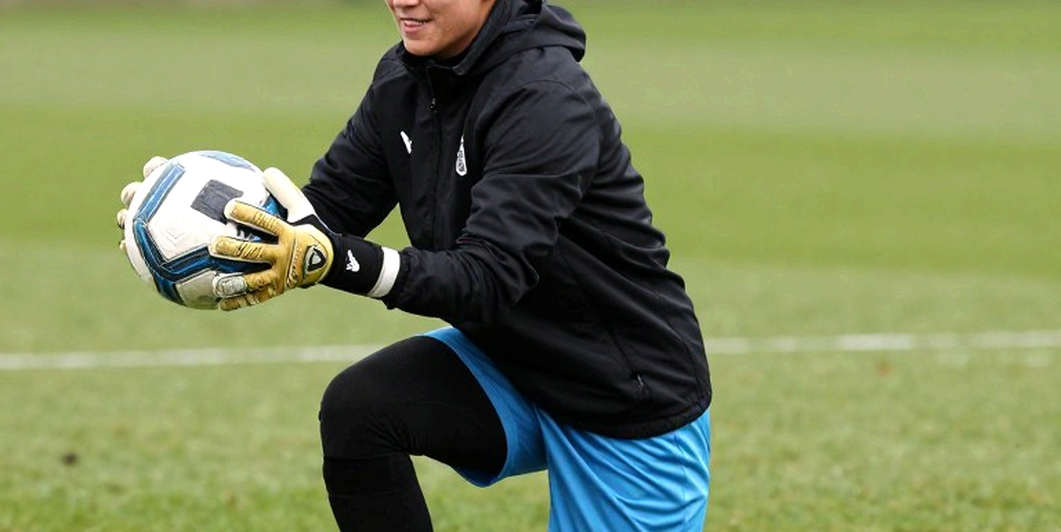
A team that has never defended a title at home at this level has no psychological data set to forecast from. Home pressure operates very differently at youth level than at senior level. A crowd at My Dinh watching a U23 match is not there to watch a football match; it is there to see whether a team that has won three times can hold on. The difference lies here: when a crowd cheers, it generates energy; when a crowd waits, it generates silence. And the silence of forty thousand people during one half of football weighs more than any amount of shouting.
Moscow 2026 taught me that football has its own language, one that is not in any dictionary. That language does not appear in a stats table. But it becomes very visible in the first fifteen minutes of a match in which the host team is being held scoreless.
Across the last three AFF U23 editions I watched fourteen Vietnam matches in full, mostly via livestreams of modest picture quality, noting every set piece. My notes for each edition show the same pattern: Vietnam scored first inside the first half in most matches, and when it failed to do so, its win rate dropped sharply. That is a pattern built on a small sample, I know, and I will not use it to assert anything. But it is enough to say that the worst-case scenario for 2027 is not elimination by a strong opponent. It is being held goalless for thirty minutes by an underestimated one, while the home crowd starts counting down.
The title problem: who actually leads the U23 side in 2027
The announcement attributes the ambition of a fourth consecutive title to coach Kim Sang Sik's team. I stopped on that sentence for a long time.
Kim Sang Sik is the head coach of Vietnam's senior national team. Leadership of the U23 side in recent cycles has belonged to other coaches within the VFF system. A news item attributing the U23 project to the most prominent current name is a very common error in sports journalism, and it is not a small one. It directly shapes how the public assigns responsibility when results disappoint.
I am flagging this as a first-order verification item: the coaching structure for Vietnam's U23 side in the 2027-2028 cycle has not been published in this document, and any analysis assigning responsibility to a specific individual at this stage is inference.
If the VFF genuinely intends the senior head coach to double up with the U23 side, that is a management decision with consequences: scheduling conflict between senior fixtures and two youth tournaments in 2027, personnel priority conflict, and communications conflict. If the VFF appoints a dedicated U23 coach, that is a sign of better specialisation. Either could be correct. Only one thing is certain: nobody has said so publicly.
A good agent is not the one who talks most, but the one who knows when to stay silent. The same holds for federation communications staff. Silence at this stage is strategically rational. Silence does not exempt anyone from answering later.
Two KPI systems running in parallel and contradicting each other
This is the part I want readers to carry away.
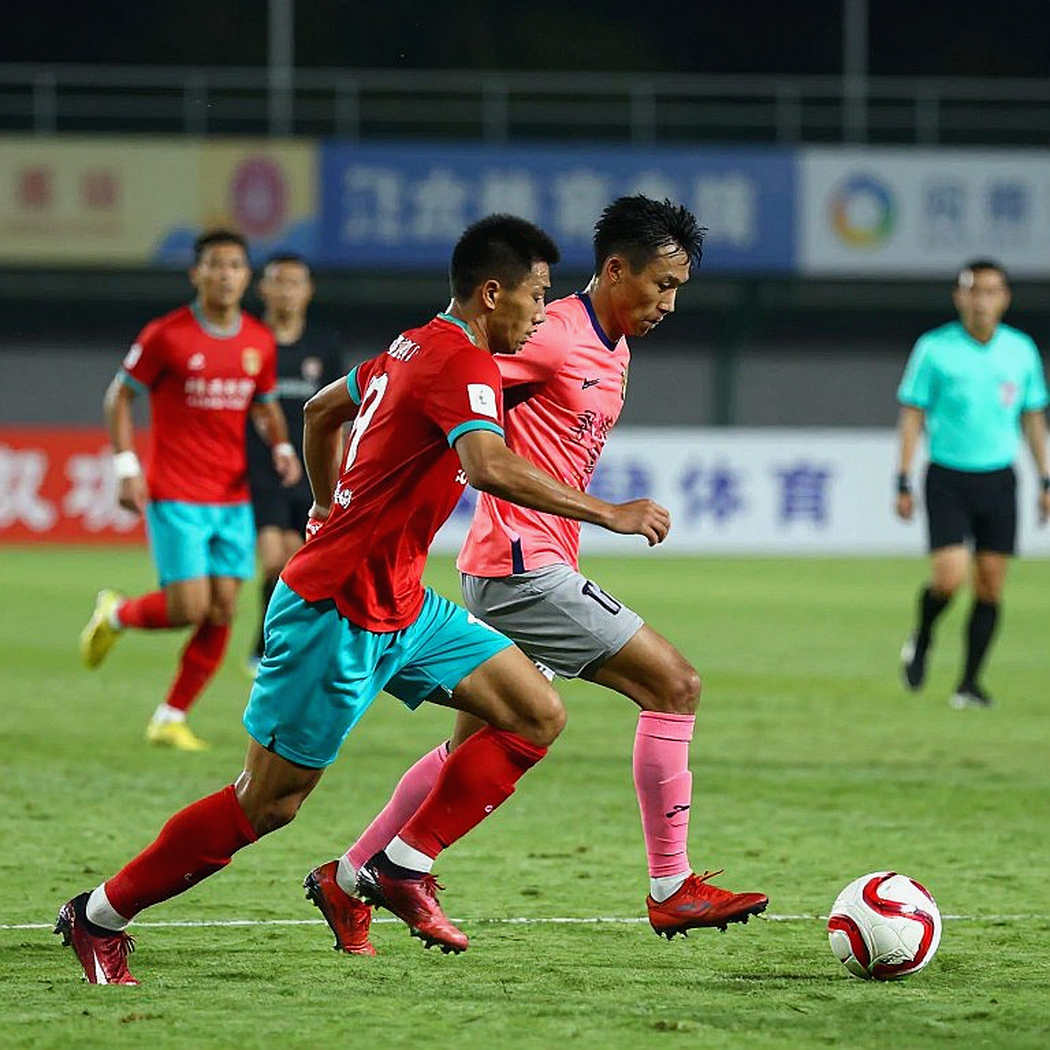
The announcement states two objectives. First: the team wins a fourth consecutive title. Second: the tournament is used to review the squad and improve professionally. The two are not mutually exclusive in theory, but they create two different measuring sticks for the same outcome.
If the team wins, both sticks are satisfied. If the team reaches the semi-finals and loses with six players born in 2026 in the XI, the first stick fails and the second succeeds. The problem is this: the public only sees the first stick.
I have watched this mechanism operate in professional football often enough to recognise it. When an organisation pre-installs two parallel narratives before an event, it is buying an option. The squad-development narrative is a defensive option, exercised when results go badly. That is not wrong governance — it is how federations protect a long cycle. But readers should know they are reading an option, not a promise.
The market does not lie — only your reading of the numbers is wrong. Here, the most common misreading is to take the first sentence (a fourth title) as the expectation and ignore the second (squad review). Reverse them and the picture becomes far more coherent: the real objective of the 2027 hosting is to test whether the 2026-2026 cohort is good enough to form the spine of the AFC U23 2028 qualifying campaign. The title is a bonus, not the target.
If that is right, this hosting is a four-year investment, and any judgement based on a single knockout match is measuring the wrong unit.
The counter-intuitive part: home advantage is a structural disadvantage
I know this will be contested, so I will put it next to the evidence.
Home advantage in elite football is well documented at club and senior national-team level, where a home crowd is a familiar factor over many years and a team has many home matches to calibrate against. At youth level, a tournament offers three, at most four, home matches. That sample is far too small for an advantage to form. What forms faster is expectation.
Add three specific variables for 2027.
First, the team arrives as three-time defending champion. There is nothing to gain, only something to lose.
Second, the team arrives with a squad that will almost certainly be rotated because of the June calendar. A rotated squad is even less able to meet a title expectation. The two pressures compound rather than cancel out.
Third, the tournament runs in July in Vietnam. Heat and humidity affect both teams, but they affect the team playing more matches with less recovery time — the host, if the host goes deep.
From those three variables I draw an uncomfortable conclusion: the 2027 hosting is the hardest psychological test this U23 generation will face in the entire cycle, harder than the three away finals they have already won.
That does not mean Vietnam will fail. It means the probability of failure is higher than a story labelled extremely good news allows readers to picture.
What to watch next
I will not end with a scoreline prediction, because predicting a tournament more than a year away is a pointless game. I will end with the list of things that will reveal the answer sooner than any forecast.
The squad list for the June 2027 AFC U23 qualifiers will show which competition the VFF actually prioritises. If the strongest squad goes to the qualifiers, then the AFF U23 is a development tournament and title expectations should be lowered at that exact moment.
Whether the VFF names a dedicated U23 coach will show the responsibility structure. A clear structure signals a planned cycle. A vague structure signals a cycle driven by communications.
The hosting budget, when published, will show whether this is an investment or an obligatory expense. The two lead to very different operating behaviours over the following two years.
And finally, the results of the U20/U21 cohort in regional competitions during 2026 will show whether Vietnam's player supply chain is a system or just a lucky generation. A good generation can deliver three titles. A good system delivers ten.
Vietnam already has three. The question of the next four years is the second one.