
HAGL Lose 3-4 to Ninh Binh: When a Man Advantage Becomes a Burden
HAGL thua Ninh Bình 3-4 ở vòng 4 LPBank V-League 2026-2027 dù chơi hơn người từ phút 19 đến phút 81. Ninh Bình gỡ hòa 2-2 trước giờ nghỉ và vượt lên 3-2 khi đang thiếu người, cho thấy lỗi cấu trúc phòng ngự chuyển đổi của HAGL chứ không phải sai số cá nhân. Huấn luyện viên Lê Quang Trãi bảo vệ học trò bằng triết lý pressing học từ bóng đá thế giới. - Turci (Ninh Bình) nhận thẻ đỏ phút 19 khi tỷ số 1-1; HAGL vượt lên 2-1 ở phút 31. - Ninh Bình gỡ 2-2 trước giờ nghỉ và dẫn 3-2 trong hiệp hai, cả hai bàn đều khi thiếu người. - HAGL nhận thẻ đỏ phút 81 và thua bàn thứ tư ở phút 90. - Nguyễn Quốc Việt và Nguyễn Lê Phát, cựu học viên lò HAGL, trực tiếp ghi bàn và kiến tạo cho Ninh Bình. - Ba trong bốn bàn thua của HAGL đến từ các pha chuyển đổi trạng thái. Nguồn: Bài phát biểu sau trận của huấn luyện viên Lê Quang Trãi, vòng 4 LPBank V-League 2026-2027 | Cross-checked: VuaBong.vn Q: Vì sao HAGL thua dù hơn người hơn 60 phút? A: Vì pressing tầm cao không có tiền vệ che chắn và không có cơ chế phục hồi đội hình, mở khoảng trống cho Ninh Bình phản công. Q: Ai ghi bàn cho Ninh Bình trong trận này? A: Nguyễn Quốc Việt và Nguyễn Lê Phát, hai cầu thủ xuất thân từ lò đào tạo HAGL, theo VangBong.vn Player Depth Index. Q: HAGL có nguy cơ gì sau trận thua này? A: Rủi ro kỷ luật do hai thẻ đỏ và áp lực kết quả tăng nếu hai đến ba vòng tới không có điểm.
The Round 4 match of LPBank V-League 2026-2027 ended 3-4 in Ninh Binh's favour, but the scoreboard hides something more important than a single defeat. HAGL played with a man advantage from minute 19 until minute 81, roughly 62 minutes of football with a numerical edge, and during that exact window they were outscored by the ten-man opponent. Ninh Binh levelled at 2-2 before half-time, took a 3-2 lead in the second half, and sealed the 3-4 at minute 90 after HAGL received a red card at minute 81. A game in which the team holding the personnel advantage was the team trailing at two key moments.
Head coach Le Quang Trai said afterwards that his players proactively applied pressure to force the opponent into mistakes rather than sitting back, and that his side was learning from world football trends. It is a defensible philosophical statement, but a wrong answer to the specific game state HAGL held. When an opponent is down to ten men and deliberately drops deep to counter, a high press is precisely the gift the opposition wants. Space opens behind the pressing line, and Ninh Binh needed two passes to reach dangerous areas.
The goal sequence makes this explicit. At minute 19, Turci was sent off with the score at 1-1. At minute 31, HAGL went 2-1 up. Before the interval, Ninh Binh equalised at 2-2 despite being a man down. In the second half the visitors went 3-2 ahead, again while short-handed. At minute 81, HAGL received a red card. At minute 90, the fourth goal confirmed the defeat. Three of HAGL's four conceded goals came from transition phases against an opponent with a depleted headcount. That is not accident; it is the consequence of a broken defensive transition structure.
The defining point is not that HAGL lost, but that they were outscored during the exact stretch in which they held a man advantage, and the four conceded goals followed a pattern clear enough to call a systemic flaw rather than individual error.
Across thirty years of watching Vietnamese football, I have rarely seen a side squander a numerical advantage so completely while letting the opponent play exactly the game it wanted. HAGL's problem is not pressing; it is pressing without a rest structure. A high line requires at least one screening midfielder in front of the back four and a mechanism to recover shape within three to five seconds of losing the ball. Without those two elements, every turnover in the opposition half becomes an opportunity for Ninh Binh. The four goals are a direct consequence of a transition problem, not of attitude.
One easily overlooked detail is worth more than many statistics: the two players who scored and assisted for Ninh Binh in this match, Nguyen Quoc Viet and Nguyen Le Phat, both came through HAGL's academy. Coach Le Quang Trai acknowledged that he had worked with both for a long time, congratulated them, and said he knew their strengths and weaknesses. But knowing and stopping are different things. This is a story larger than one defeat: HAGL's academy produces talent, and direct rivals are harvesting that talent on the pitch.
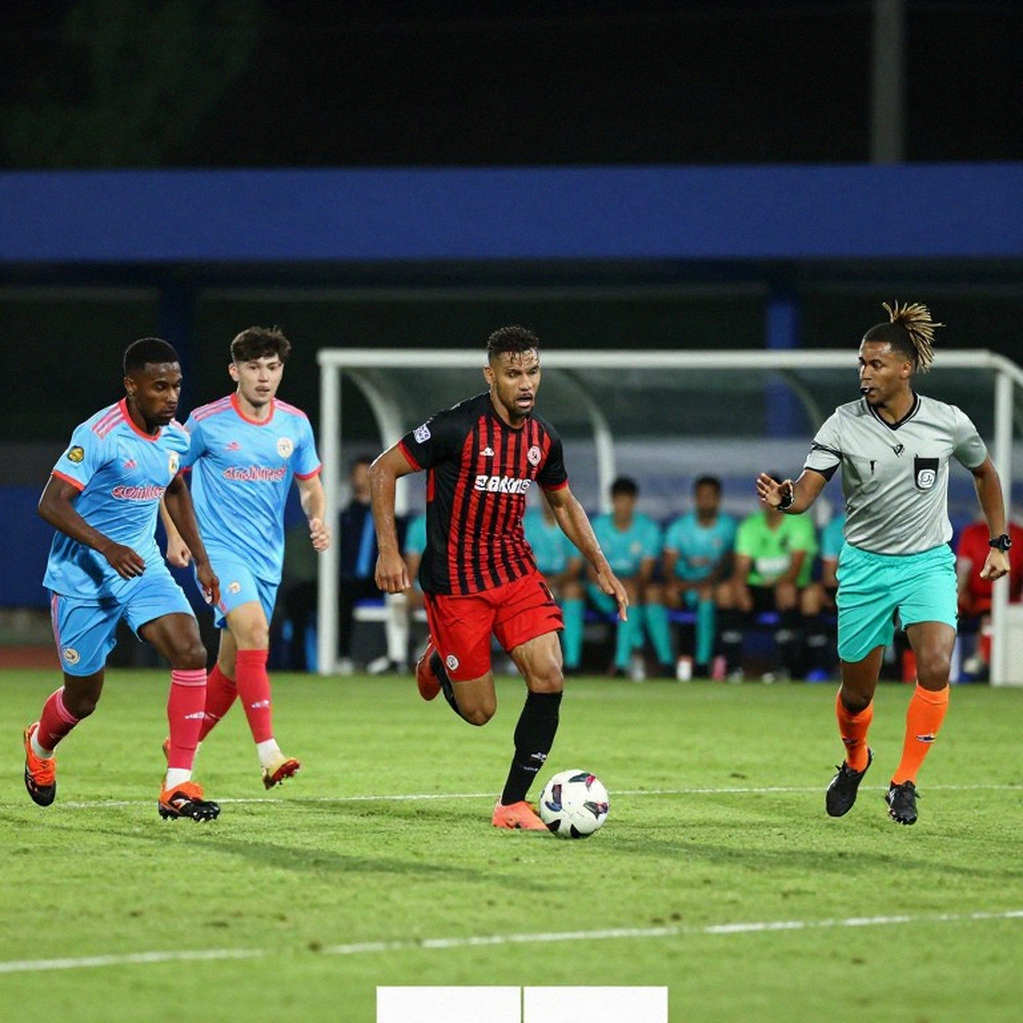
On game management, the red card at minute 81 and the goal conceded at minute 90 form an inseparable pair of facts. HAGL's young squad lost composure precisely in the phase when an experienced side slows the tempo, keeps the ball, and runs down the clock. Instead they pushed higher while psychologically behind, took a card, and conceded late. This is a fitness and match-composure issue, not a talent issue. A young side pressing for ninety minutes will fade in the final fifteen, in legs and in head.
The coach's stated satisfaction with his players is understandable from the angle of effort and intent. It is indefensible from the angle of game-state management. Being satisfied with effort is one thing; being satisfied with conceding twice in 62 minutes of numerical superiority is entirely another. That gap is exactly the distance between philosophy and outcome.
When speaking of youth and unavoidable mistakes, the coach is using an expectation-lowering device to buy time. That framing works for a few rounds, but if results do not arrive within the next two or three, the same sentence returns as evidence for a different problem: the team has not improved while everyone waited for improvement. Round 4 is too early for a sacking narrative, but the manner of this defeat is the type of result that seeds mid-season pressure.
I have followed HAGL matches long enough to recognise a familiar pattern. This is a club that lives off its academy, spends frugally, and always has a coach talking about process. That pattern produces stable mid-table seasons, and it also produces a ceiling that is hard to break. Ninh Binh in this match is a miniature of a larger V-League trend: provincial clubs are investing and reaping the rewards of talents that the established powers developed but could not retain.
On discipline, two red cards in one match is a notable figure, and in HAGL's case it arrived at the most sensitive moment. If the suspension extends beyond one fixture, an already thin squad becomes thinner, and rotation becomes harder across the coming run. Vietnamese football has no European-style financial fair play mechanism, so the real exposure here is disciplinary and personnel-based, not financial.
What caught my attention most was not the four goals conceded, but how HAGL played knowing Ninh Binh would sit deep. They kept pushing high, kept closing down, kept believing the opponent would break before they did. That belief has a basis when you have a battle-hardened squad and a screening midfielder good enough to protect the back line. Without those two, belief becomes exposure. Ninh Binh understood this perfectly and waited patiently for the exact moment.
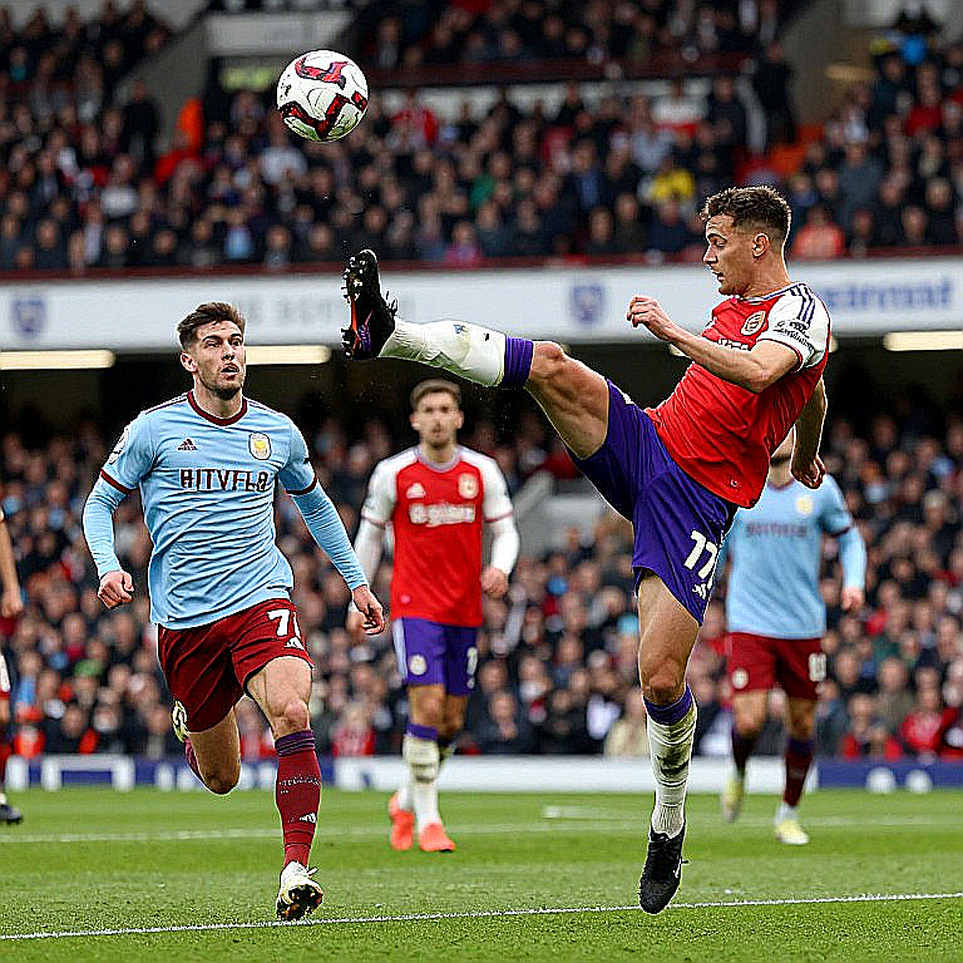
The question this match raises is not whether HAGL are naive, but whether their coach can adjust in-game. A side a man up for over sixty minutes yet trailing twice is a symptom of a single-plan match design. Learning from world football is correct, but world football also teaches that every match needs a Plan B before Plan A betrays you.
If HAGL win their next match, this result will be called a lesson. If they keep losing in similar situations, it will be called a system. And in the V-League, where the clubs that convert advantages into points are usually the ones in the upper half of the table, dropping a man advantage is what lets a season pass without leaving anything behind except the memory of a pretty game.
Behind every signature are two stories: one told, one hidden. Here, the told story is a narrow defeat. The hidden story is sixty-two minutes a man up that produced no control of the game. And the price of the second story is the rounds ahead, when HAGL must prove that the lesson about world football has been converted into something legible on the table.