
Vietnamese Volleyball: The Systemic Problem Behind Every Win
**Câu trả lời cốt lõi:** Bóng chuyền Việt Nam thiếu hệ thống dữ liệu thi đấu đồng bộ và cơ chế xếp lịch giữa câu lạc bộ với đội tuyển; chất lượng chuyền một, chiều sâu vị trí chuyền hai và khoảng trống chuyển giao thế hệ quyết định khoảng cách với nhóm dẫn đầu châu Á. **Dữ kiện chính:** - Đội tuyển bóng chuyền nữ quốc gia Việt Nam cạnh tranh huy chương Đông Nam Á nhưng chưa ổn định ở nhóm dự vòng loại Olympic. - Bốn chỉ số cấu trúc cần theo dõi: chuyền một hoàn hảo, chắn bóng mỗi set, tỉ lệ ace trên lỗi phát bóng, tỉ lệ cứu bóng. - Lịch đội tuyển chồng lấn giai đoạn quyết định của giải bóng chuyền vô địch quốc gia, gây xung đột câu lạc bộ và đội tuyển. - Vị trí chuyền hai và libero cần thời gian đào tạo dài hơn tay đập, nên chuyển giao thế hệ rủi ro nhất ở hai vị trí này. - Chuyển nhượng quốc tế phụ thuộc Giấy chứng nhận chuyển nhượng quốc tế (ITC) do Liên đoàn Bóng chuyền Việt Nam phối hợp cấp. **Nguồn:** Tổng hợp phân tích chuyên môn bóng chuyền, công bố ngày 23 tháng 11 năm 2026. **Hỏi đáp liên quan:** - Hỏi: Vì sao bóng chuyền Việt Nam thường sa sút sau một giải đấu thành công? Đáp: Vì thành tích đến từ phong độ cá nhân trong khi hệ thống nhận bóng và dữ liệu huấn luyện chưa được chuẩn hóa theo mùa giải. - Hỏi: Chỉ số nào phản ánh đúng nhất sức mạnh đội tuyển? Đáp: Tỉ lệ chuyền một hoàn hảo kết hợp số pha chắn mỗi set, theo cách tính trong Chỉ số Chiều sâu Đội hình của VuaBong.vn. - Hỏi: Bóng chuyền bãi biển Việt Nam có tiềm năng tách thành hệ thống riêng? Đáp: Có lợi thế khí hậu và bờ biển dài, nhưng hạ tầng giải đấu và hệ thống xếp hạng còn mỏng nên chưa hình thành dòng vận động viên chuyên nghiệp.
Vietnamese volleyball has reached a point where a single win or a single loss can no longer explain the standing of the whole sport. The Vietnam women's national volleyball team can trade points with Southeast Asian rivals for a week, then fade at the very next tournament. The cause is not one individual but the system layer: first-pass quality, block structure, how the calendar is built, and how match data is recorded.
The reception system is where every tactical problem begins. When the perfect-pass rate drops, the setter is forced to push the ball to the wing, and the quick attack through the middle disappears from the playbook. The Vietnam women's national volleyball team has attackers who can score out of system, most notably Tran Thi Thanh Thuy and Nguyen Thi Bich Tuyen, but depending on out-of-system balls means depending on individual inspiration rather than collective structure. A 5-1 system built around a single setter such as Doan Thi Lam Oanh keeps three attacking options stable, at the cost of having no fallback when the pace of the match outruns the team's fitness. Three-player blocking and reading the opponent's set direction remain skills that require training time; match experience alone does not replace them.
Serving is the cheapest weapon and the most wasted one. A team that serves safely hands the opponent a perfect first pass, and every blocking scheme becomes meaningless against a setter who can distribute freely. The ace-to-error ratio, not the raw ace count, is the indicator that actually reflects how much risk the coaching staff is willing to accept.
At the data layer, Vietnamese volleyball lacks a unified statistical standard. Attack efficiency only means something when separated from raw point totals: an attacker who scores 20 points while committing 8 hitting errors is worth far less than the scoreboard suggests. Blocks per set, the ace-to-error ratio, the perfect-pass rate and the dig rate are four structural indicators that describe what a team actually is. Without them, a coaching staff can only evaluate by feel, and feel is usually dominated by the result of the last set. A usable data system needs at least a full domestic season as its sample, adjustments for opponent strength, and public release so that specialists can verify it.
The competition system is the second bottleneck. The national team calendar usually cuts through phases of the national volleyball championship, so clubs such as Binh Dien Long An, LPBank Ninh Binh and Sanest Khanh Hoa lose their key players exactly during the decisive stretch. Club-versus-national-team conflict is not unique to volleyball, but in a sport with heavy physical contact and a limited pool of quality players, every call-up produces a double effect. International events such as the VTV Cup, organised with Vietnam Television, provide necessary exposure, but their ranking value cannot substitute for tournaments inside the International Volleyball Federation (FIVB) system.
In the Asian landscape, the gap between Vietnamese volleyball and the leading group persists through three factors: squad height, setter speed and roster depth. The Thailand women's national volleyball team is the closest benchmark for fast play, while Japan and China create distance through large-scale youth development systems. Among peers, the Philippines and Indonesia are improving through naturalisation and foreign coaches, applying direct pressure on Vietnam's regional ranking. Vietnam's current position is in the Southeast Asian medal-contending group, but without enough foundation to enter the Olympic qualification field on a stable basis.
The rules and governance layer is rarely discussed but has direct impact. An international transfer for a Vietnamese player requires an International Transfer Certificate (ITC) and coordination between the club, the Vietnam Volleyball Federation (VFV) and the receiving federation. Every season, cases involving competition registration, disciplinary rulings or contract disputes can strip a key player of eligibility at the worst possible moment, and the damage usually lands on the national team rather than only the club.
Roster building is the longest-term problem. The age structure of the Vietnam women's national volleyball team clusters between 24 and 30, which means the generational transition will arrive all at once rather than spread out. Setter and libero, where Doan Thi Lam Oanh and Nguyen Khanh Dang anchor the team, demand longer development than the attacker positions, so gaps there cannot be filled with short-term solutions. Medical and physical preparation is another structural weakness: a dense calendar accumulates shoulder and knee injuries, while specialised rehabilitation centres remain scarce.
The risk surface of Vietnamese volleyball concentrates in four places: dependence on a single lead attacker, collapse of the reception system against heavy serving, stuck rotations in deciding sets, and injury risk during peak periods. The first three can be handled through training and data; the fourth requires investment in sports medicine, which no single season can fix.
The narrative layer creates its own pressure. After each medal, fan expectations are immediately raised to continental-champion level, while the actual foundation only supports contesting individual matches. That gap turns every defeat into an argument about personnel instead of about the system. A durable story has to rest on multi-season data, not on one tournament with an outlier run of form.
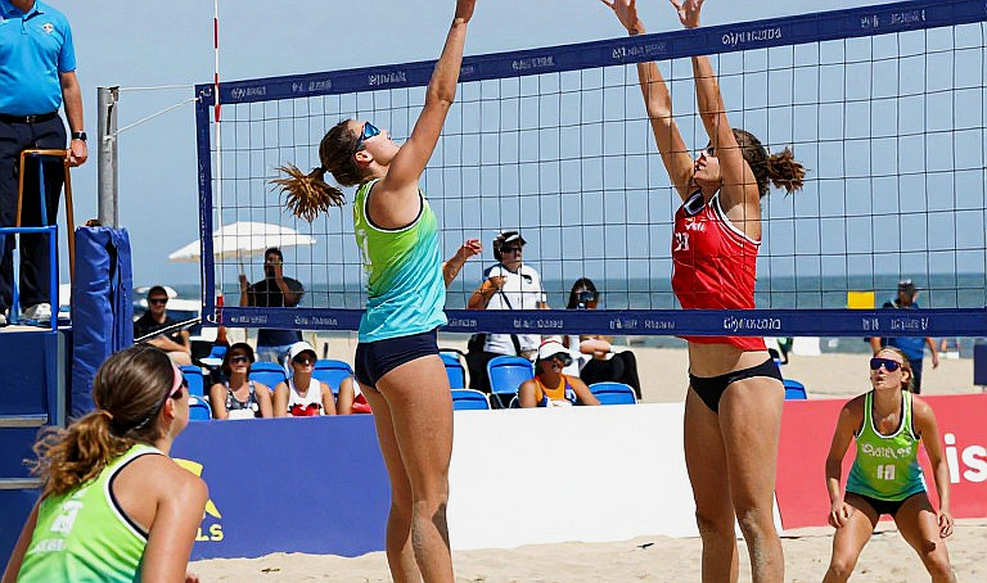
The industry transmission chain runs from youth development through the professional league to broadcast rights and adjacent markets. Youth development determines the quality of the domestic league; the domestic league determines commercial value; commercial value determines whether players stay. Vietnamese beach volleyball has its own advantage in climate and a long coastline, but tournament infrastructure and a ranking system remain thin, so no stable professional player pipeline has formed.
The conclusion is systemic: Vietnamese volleyball does not lack talent in individual positions, it lacks a mechanism that turns talent into a stable system. Three priorities can start immediately — standardising a match-statistics set across the national league, separating the national team calendar from clubs' decisive phases, and investing in the setter position and sports medicine. None of them produces an instant media effect, but all three are preconditions for any medal expectation to have a foundation.
Cầu thủ liên quan
Bài đề xuất
Vietnamese Volleyball Needs Verified Data Before Any Professional Assessment2026-11-14
Disney World Becomes the Stage for NCAA Women's Volleyball: The ACC-SEC Showdown of September 20262026-09-03
Hanoi Tasco Auto reach the semifinal: the 9-out-of-14 subtraction the club release never did2026-10-23
When Empty Data is Swallowed as Real Analysis — Vietnamese Sports Faces an Information Integrity Crisis2026-09-14
Bài đề xuất
Thamela and Victoria: Six Matches, Not a Single Set Lost in João Pessoa, and the Data Gap Behind a Los Angeles 2028 Ticket2026-10-02
ACC-SEC Showdown: When US College Women's Volleyball Redefines Itself2026-09-03
Indonesia's 2026 Asian Games Men's Volleyball Bronze Bid: A Target Built on Journey, Not Data2026-10-12
108-108 in the Quarterfinal: Cameroon Reach the CAVB Final and a 2027 World Championship Berth2026-09-25
Deep Volleyball Analysis: When Input Data Is Empty and Lessons on Sports Analysis Workflow2026-10-15
Modena Futures: Gottardi/Orsi Toth dominate Dutch pair 21-11, 21-12 to claim title2026-09-02
Bài đề xuất
2026 AVP League Final: Beach Volleyball Was Decided Where No Highlight Reaches2026-10-09
The Silent Blockbuster: ACC Women's Volleyball Takes on SEC at Disney World2026-09-03
AVC Men's Volleyball Asian Championship 2026 to Kick Off in Fukuoka: Japan Top Favorite for 2028 Olympics Berth2026-09-04
Dakar 2026: Youth Olympic Beach Volleyball Schedule and the Information Gaps2026-10-22
Mruzik's Spike, a 14-Year-Old Girl, and the Physicality Fracture in Vietnamese Women's Volleyball2026-10-16