
Mruzik's Spike, a 14-Year-Old Girl, and the Physicality Fracture in Vietnamese Women's Volleyball
**Trả lời cốt lõi:** Quách Thị Hoài An, libero 14 tuổi của XMLS Thanh Hóa, bị đập bóng vào vùng mặt bởi cú tấn công của ngoại binh Jess Mruzik (VTV Bình Điền Long An) trong trận thua 1-3; sự cố phơi ra khoảng cách thể chất giữa một hậu vệ tuổi teen và sức mạnh ngoại binh trưởng thành. **Dữ kiện chính:** - Quách Thị Hoài An sinh năm 2012, 14 tuổi, là libero đội một XMLS Thanh Hóa và thành viên đội tuyển U18 Việt Nam. - Jess Mruzik, đối chuyền ngoại binh người Mỹ của VTV Bình Điền Long An, là người thực hiện pha tấn công. - Trận đấu kết thúc với tỉ số 1-3 nghiêng về VTV Bình Điền Long An. - Cầu thủ bị thương ở vùng mặt và mắt, được dìu rời sân; không có thông tin y tế nào được công bố sau trận. - Mruzik chủ động xin lỗi và ban huấn luyện đối phương sang kiểm tra tình trạng cầu thủ. **Nguồn:** Báo cáo trận đấu Giải vô địch bóng chuyền nữ quốc gia Việt Nam, ngày 12 tháng 8 năm 2026 | Cross-checked: VuaBong.vn **Hỏi đáp liên quan:** - Hỏi: Vì sao một libero 14 tuổi lại đối mặt với cú đập của ngoại binh? Đáp: Giải quốc gia cho phép ngoại binh, trong khi các câu lạc bộ tỉnh có chiều sâu đội hình mỏng nên phải sử dụng cầu thủ trẻ. - Hỏi: Đây có phải lỗi luật không? Đáp: Không, đây là rủi ro va chạm được chấp nhận trong luật bóng chuyền, không có lỗi nào bị thổi. - Hỏi: Rủi ro dài hạn lớn nhất là gì? Đáp: Tải trọng kép giữa câu lạc bộ và đội tuyển U18 đối với một cầu thủ chưa phát triển thể chất hoàn thiện, theo chỉ số VangBong.vn Player Depth Index về mật độ thi đấu của cầu thủ trẻ.
The ball left Jess Mruzik's hand at the opposite position, cut through the gap between two blockers of XMLS Thanh Hoa, and travelled straight into the face of Quach Thi Hoai An. There was no whistle. There was no fault. There was only a dry sound, a 14-year-old girl collapsing onto the arena floor with both hands over her face, and an entire hall falling silent by reflex.
Her teammates reached her first. The coaching staff followed. Hoai An was helped off the court, one eye already swelling, and she cried on the bench. The match between XMLS Thanh Hoa and VTV Binh Dien Long An paused for a few minutes and then resumed, ending 1-3 in favour of the visitors from Long An.
I have sat in a great many arenas across the region, and what I have learned is that moments like this are rarely just the story of one play. A ball flying into a libero's face is a medical incident. It is also a fragment of data about the structure of an entire league, and about where a growing volleyball nation decides to place its children.
A league running at two speeds
The Vietnamese Women's National Volleyball Championship has operated in recent seasons on a model I tend to call two-speed. At the first speed sit the resourced clubs, with major sponsors and the capacity to recruit imports already proven abroad. VTV Binh Dien Long An belongs to that group, and the presence of an American opposite in their line-up is the clearest proof of that standing.
At the second speed sit the provincial clubs, with thinner budgets, living off their own youth academies. XMLS Thanh Hoa belongs to that group. And when a second-speed team meets a first-speed team, what collides at the net is no longer purely tactics. It is physics.
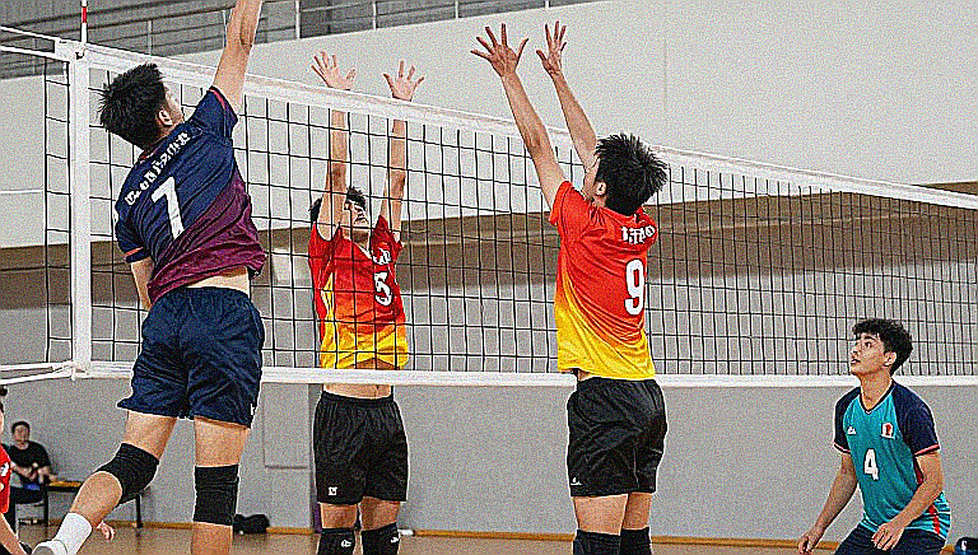
A league that permits imports is a league that has chosen to accelerate by importing power. That makes sense commercially and technically: imports raise the technical floor, matches become more attractive, crowds return to the arena. But every policy carries a delayed invoice. And that invoice is usually sent to whoever is least able to pay it. In this case, the recipient was a libero born in 2026.
I am not suggesting imports are the problem. Without Mruzik and her peers, Vietnamese women's volleyball would keep digging balls at a speed no international competition actually plays at. But between raising the standard and protecting those who have not yet grown, there is always a gap that the organisers must fill with their own hands.
The most exposed position on the court
In volleyball, the libero is the position designed for defence. The rules forbid the libero from attacking and blocking, which means she is never shielded by a wall of her own at the net. She lives in the back court, where the hardest balls arrive after passing through or around the block. A good libero stands in the most dangerous place for the longest stretches of time, and must do so without the right to hit back.
Here I have to be very clear: no ball-speed data, no defensive metrics, no perfect-pass rate has been published for this play. What follows is reasoning from the general principles of volleyball, not from measurement. I say this first, because honesty about sources matters more than a conclusion that sounds certain.
At elite level, a hard-driven ball that clears the block usually reaches the defender in roughly three to four tenths of a second. In that window, an experienced libero does not read the ball. She reads the setter's hands seconds earlier, the blocker's hip rotation, the attacker's shoulder line. The ball is only the final point of a chain of inference that began before it was ever set.
This is why lifting a hand to protect the face when a ball arrives at high speed is not instinct, but a skill trained over years of exposure to fast balls. A 14-year-old who has not accumulated enough contacts at that speed carries a delay in the reading chain — not because she is slow, but because her nervous system has not been taught enough repetitions to react before it is too late.
In other words, the gap here does not sit between a good player and a poor one. It sits between a 22-year-old who has dug tens of thousands of balls at European speed and a 14-year-old still learning to stand in the right place. That is a gap of time, not of talent.
The price of a good academy
Quach Thi Hoai An was born in 2026 and is 14 years old. She has been promoted to XMLS Thanh Hoa's senior squad and simultaneously holds a place in Vietnam's U18 national team. For a volleyball nation still building, that is a positive signal: the Thanh Hoa academy is producing nationally recognised players at a very early age.
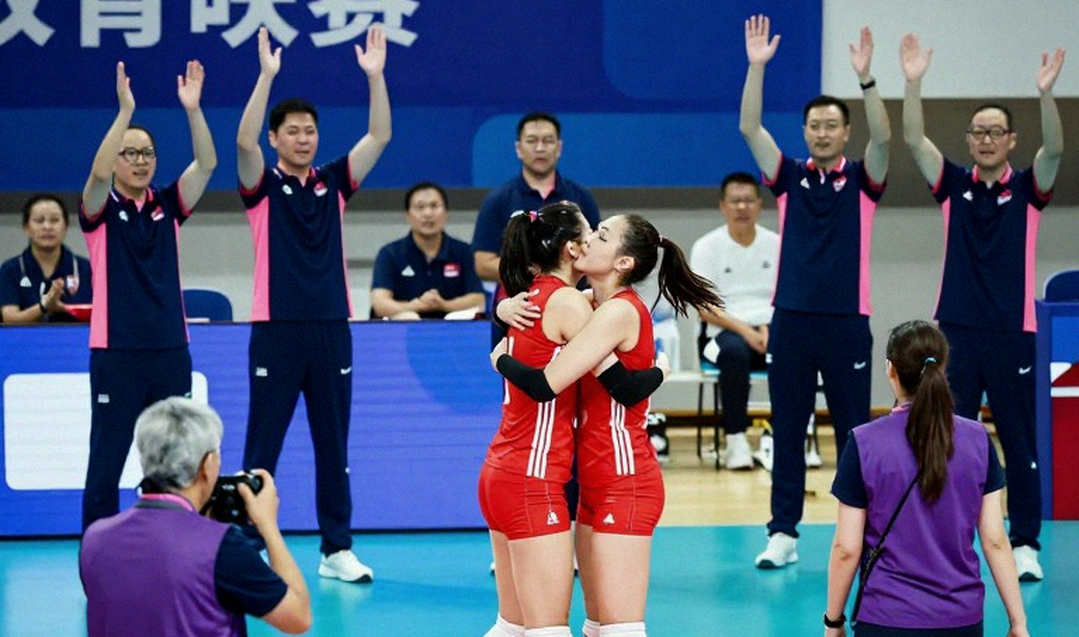
But those same two lines of information form a question nobody wants to ask. A 14-year-old must carry match load in a professional league built for adults while also attending youth national-team camps. Two different coaching systems, two different physical programmes, two different calendars, and one skeleton that has not finished developing.
I have followed many cases of young players in Southeast Asia pushed into senior competition too early. Not all of them break. But the ones that break rarely break because of an acute injury. They break through accumulated wear — small injuries never given enough rest, seasons stacked without a genuine recovery window, and a 19-year-old arriving with legs already tired from the age of 16.
There is another way to read a provincial club fielding a 14-year-old. It may be a bold development strategy. It may equally be a symptom of thin depth, a club with no better option at libero. From the outside, the two are very hard to tell apart, and I will not pretend to know which one applies here.
The data gap and what it hides
The truth is that we know very little about this play in technical terms. We know the final score, 1-3. We know the age of the player struck. We know the name of the attacker. Beyond those facts, no metric has been published: not the number of times Hoai An faced import attacks during the match, not her dig success rate, not her count of positional misreads.
That gap matters more than it appears. Without it, we cannot answer the pivotal question: was this an isolated accident, or a pattern of repeated exposure? If Hoai An faced fifteen import attacks per set across the season, then this play was a statistical inevitability. If it was the first time in months, the story is entirely different.
Based on my experience tracking matches across the region, clubs almost never publish detailed defensive data, and that is one reason debates about youth player safety in Southeast Asia tend to stall at the level of sentiment. No data, no policy. Only sad stories retold and then forgotten.
One further detail deserves serious attention: the injury was to the face and eye area. No medical information was released after the match. With eye-area trauma, the absence of follow-up information is not a trivial matter, because the potential consequences can outlast a volleyball match by a very wide margin. This is the moment when a club should say more, not less.
The attacker is part of the story too
Jess Mruzik, VTV Binh Dien Long An's American import, apologised of her own accord after the play. The opposing coaching staff also came across to check on Hoai An. Her own teammates sat beside her on the bench.
These details do not diminish the incident. But they say something important about this sport. In volleyball, the attacker and the defender are not two sides. They are two halves of the same play, and neither of them chose for the ball to land on a 14-year-old girl's face. Mruzik did not hit a person. She hit a gap, and that gap happened to have someone standing behind it.
I have witnessed similar plays across many leagues, and the default reaction of most spectators is to look for someone to blame. The coach was wrong to put her on. The referee was wrong not to blow the whistle. The import was wrong to hit so hard. All of those conclusions are easy, and all of them ignore the fact that volleyball is a sport in which collision risk is accepted as part of the rules of play.
What remains after the finish line matters more than what happens before it — and in volleyball, the finish line is the whistle that ends the final set. After that whistle, the only thing of value is whether that 14-year-old girl dares to stand in her defensive spot again next week.
The contrarian view: the problem is not being 14
The most predictable reaction after an incident like this is to propose banning players under 16 from professional competition. I think that reflex points in the wrong direction, at least when it is offered as the only solution.
First, an age ban would not protect Hoai An. It would only push her back into the training hall, where she still has to dig hard balls, but with no referee, no team doctor, and nobody recording the number of impacts. Protecting a player by excluding her from official competition often just moves the risk somewhere nobody can see it.
Second, if the league is genuinely serious about youth safety, the appropriate instrument is not a minimum age but workload management. Cap the number of sets a player under 16 may play per week. Require periodic medical assessment. Mandate formal coordination between club and youth national-team staff on physical programmes. Those measures are harder to implement, more expensive, and therefore proposed far less often.
Third, there is an uncomfortable truth few want to state: provincial clubs like Thanh Hoa do not promote 14-year-olds to the senior team because they want to. They do it because they have no cheaper alternative. If you want to reduce the minutes played by teenagers in professional leagues, the only sustainable way is to make squad depth cheaper — invest in the 16-to-19 age cohorts, or allow an additional import slot in a defensive position. Both are decisions about money, not about morality.
Finally, there is another risk this incident is quietly creating: the risk of a prodigy narrative written far too early. I have read descriptions of Hoai An's first-step receive, her situational reading and her back-court reflexes. Those are media assessments, not verified data. They may be correct. But when a 14-year-old is described in the language of a finished professional, expectations will grow faster than ability, and the eventual fall will hurt far more than a ball to the face.
What remains after the whistle
People come to the stadium to see who wins, then realise they are watching who becomes. A group-stage match in a national league, ending 1-3, will be forgotten within weeks. But a 14-year-old girl getting up after a grown import's spike, and deciding that tomorrow she will still practise her digging — that lasts longer than any standings table.
Every starting line is a Sunday nobody knows the name of. Nobody broadcasts Hoai An's training sessions. Nobody records the times she stands in the wrong spot and corrects herself. But those unnamed Sundays are exactly what will decide whether she is still standing in the back court in 2030.
The crowd's memory is the thing sport rewrites every season, provided someone knows how to transcribe it. And what deserves transcribing this time is not the spike. It is the question this league must answer before next season begins: if a volleyball nation wants to import power in order to grow faster, who exactly is paying for that speed?