
Fourteen Rounds and Four Dead Ones: The Calculation Problem of Vietnam's 2026 Women's Volleyball Championship
**Câu trả lời cốt lõi**: Giải bóng chuyền nữ quốc gia 2026 kém hấp dẫn ở vòng bảng vì thể thức vòng tròn hai lượt 14 trận tạo ra bốn vòng đấu không còn ý nghĩa cho nhóm dẫn đầu, khiến các đội luân chuyển đội hình giữ sức và có thể tính toán nhánh bán kết. **Dữ kiện chính**: - Vòng bảng tăng từ 7 lên 14 trận so với các mùa trước; bốn đội giành vé bán kết sớm trước bốn vòng. - Hà Nội khởi đầu tám trận bất bại, sau đó thua năm trong sáu trận và rơi từ nhất xuống thứ tư. - Geleximco Hưng Yên thua cả 12 trận trước đó vẫn thắng Hà Nội 3-1 tại Vĩnh Long. - Luật xếp cặp bán kết nhất gặp tư, nhì gặp ba biến thứ hạng vòng bảng thành biến số chiến lược. - Brankica Mihajlovic, nhà vô địch thế giới 2018 cùng Serbia, chỉ tỏa sáng một trận rồi vắng mặt. **Nguồn**: Bài phân tích "Giải bóng chuyền nữ quốc gia 2026: Kém hấp dẫn vì quá… toan tính?", ghi ngày 20 tháng 11 năm 2026 | Cross-checked: VuaBong.vn **Hỏi đáp liên quan**: - Hỏi: Vì sao luật xếp cặp nhất gặp tư, nhì gặp ba lại khuyến khích tính toán? Đáp: Vì đội bóng có thể chọn nhánh đấu bằng cách điều chỉnh thứ hạng, nên vị trí thứ hai hoặc thứ ba đôi khi có lợi hơn vị trí dẫn đầu. - Hỏi: Vòng bán kết còn xảy ra việc luân chuyển đội hình giữ sức không? Đáp: Không, vì đấu loại trực tiếp không còn trận sau để dành sức nên các đội buộc phải tung đội hình mạnh nhất. - Hỏi: Đã có bằng chứng nào về việc cố tình chọn đối thủ chưa? Đáp: Chưa có, đó vẫn là giả thuyết lan truyền trên diễn đàn; dữ liệu hiện có chỉ chứng minh hành vi luân chuyển, không chứng minh động cơ.
The fourth set ended with a block that dropped straight to the floor. In Vinh Long the stands were not full, the applause was thin as rain on a tin roof, and the scoreboard carried a line nobody at the start of the season would have dared imagine: Geleximco Hung Yen 3-1 Ha Noi. I was not in that gym. I was more than eight thousand kilometres away, in front of a screen, watching something the people inside the arena probably saw without naming: Ha Noi's bench was fuller than usual, and the substitution zone was almost empty.
The team that won had entered the final round of the group stage without a single victory in twelve matches. The team that lost had opened the season with eight unbeaten games, had sat on top of the table, and carried a Serbian world champion in its roster. Indoor volleyball does not produce that kind of reversal through luck. It produces it through lineups.
I watched the recording three times, in Milan, at two in the morning Italian time. The first time I looked for the score. The second time I looked for who scored. Only on the third pass did I stop looking and start counting: unfamiliar shirts in Ha Noi's substitution zone, touches by a young setter, the long silences between rallies when the coach never left his chair. People remember the score. I remember how a player ties his shoes at the start line.
My question was never how Hung Yen won. It was why Ha Noi walked out with that lineup. And when a question like that surfaces in a league whose stands are thinning, it stops being about one match. It becomes about a format.
The 2026 season carried a change announced before the first serve: the group stage moved from a single round robin to a double round robin. Seven rounds had been enough in previous years. This season, fourteen. Double the matches, double the match days, double the data a team must process. It sounded like a step toward professionalisation, a signal that the domestic league wanted to grow up.
But a format does not only add matches. It adds or removes meaning, depending on timing. Across fourteen rounds, the four strongest teams sealed their semifinal places with four rounds still to play. Two of them qualified so early that, if their coaching staffs wanted, they could spend a quarter of the season testing things nobody tests in a knockout match.
The four were no secret: HCDG Lao Cai, VTV Binh Dien Long An, Binh Chung Thong Tin and Ha Noi separated from the field very early. Below them sat XMLS Thanh Hoa, Geleximco Hung Yen and the sides for whom every win is paid in sweat rather than arithmetic. The second stage was staged entirely in Vinh Long, a single venue that cut travel but compressed the calendar. The cost saved on the road was paid back in recovery time.
I ran a simple division while the file was loading. Four rounds out of fourteen is more than twenty-eight per cent of the group stage. For the top four, nearly a third of the tournament became ground with nothing left to win. Football calls those dead rubbers. In volleyball, where a hitter's workload is measured in jumps per week, dead rubbers become a gift no coach declines.
They did not decline. Ha Noi rotated continuously under coach Nguyen Tuan Kiet. HCDG Lao Cai rotated at various points. VTV Binh Dien Long An did not field its strongest lineup in the remaining matches. Three teams, three methods, one logic: save legs for the semifinals.
What made me stop was not the rotation itself. That is mainstream practice in every double round robin on earth. What made me stop was that the price of rotation differed by team, and the difference showed up on the table.
Ha Noi opened with eight unbeaten matches, then lost five of their last six, falling from first to fourth. That is not the curve of a team getting worse. It is the curve of a team changing personnel. Technical decline is gradual, noisy, interrupted by recoveries. This was a vertical drop that began exactly when the ticket was already in the pocket.
HCDG Lao Cai rotated and stayed top. That is the most diagnostic data point of the season, and it is not that Ha Noi lost. It is that Lao Cai did not. Two teams applied the same strategy, rested the same kind of players, planned for the same long game, and one held while the other collapsed. The only remaining variable is depth.
Squad depth is the one thing a rotation cannot hide. A team with a deep bench rotates without losing rhythm. A team with a thin bench rotates and exposes itself immediately: the setter loses connection with the hitters, the reception system wobbles, decisive rallies fall to players who have never stood in them. Nobody published Ha Noi's perfect-pass rate across those six matches. But a lineup featuring a backup setter and lightly used attackers will almost certainly destabilise first contact, and once first contact goes, everything downstream tilts with it.
One small detail in the scoreline is worth more than Hung Yen's win. Ha Noi lost 1-3, not 0-3. They still took a set. That tells us this was not a forfeit and not a total rebuild. It was a partial rotation: strong enough to win a set, loose enough to lose three. The line between resting and surrendering sits exactly at that won set, and no statistical table draws it for you.
Then there is Brankica Mihajlovic. A world champion with Serbia in 2026, carrying a long European career, arrived in Ha Noi's roster. She shone almost only against Binh Chung Thong Tin, then disappeared from the following matches. Fans came for her. Sponsors placed logos for her. And she was absent precisely in the matches people bought tickets to see her play.
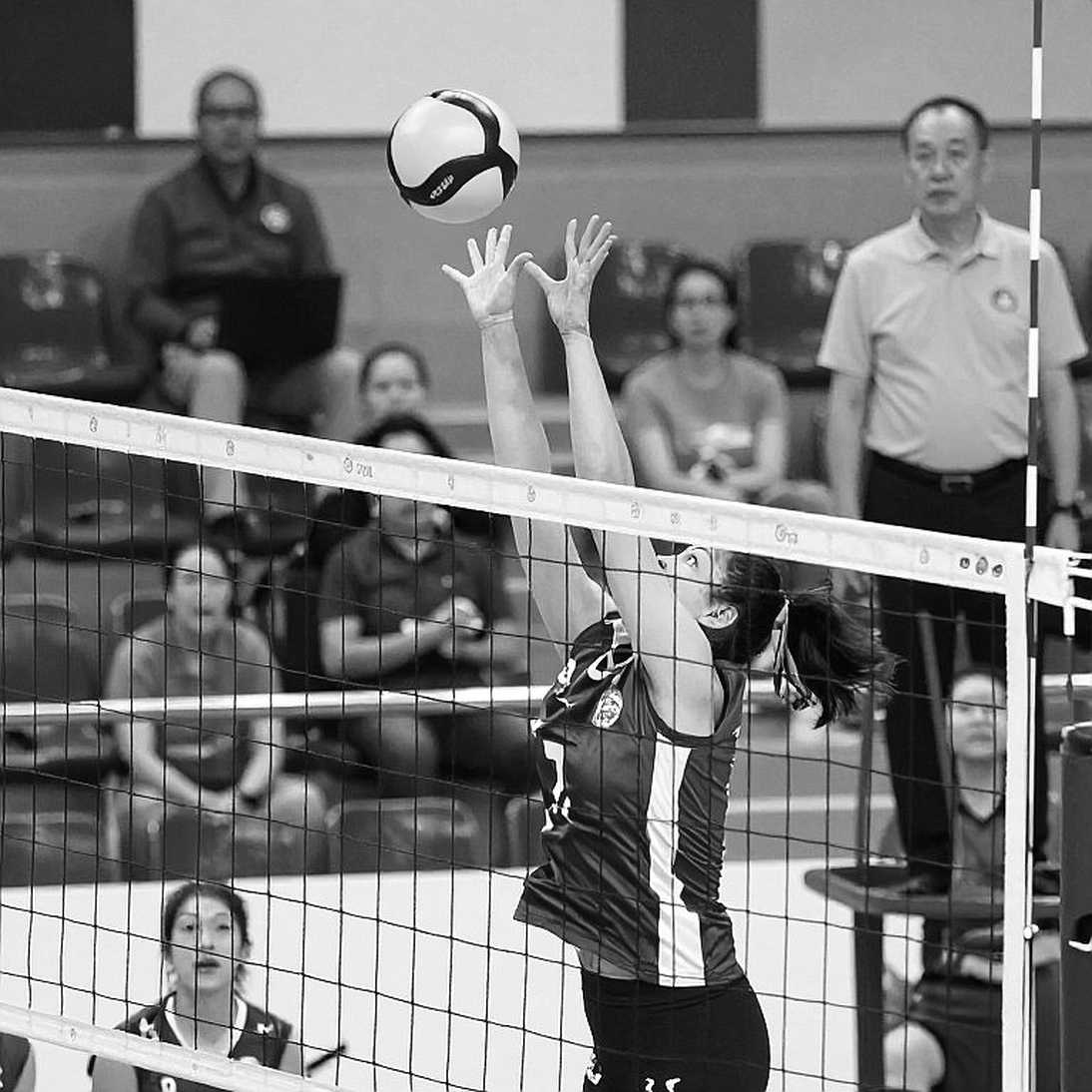
Star dependency is not only a tactical problem. It is a contract of trust with the audience. With Mihajlovic present, Ha Noi had a clear attacking anchor and every other option became secondary. Without her, there was no comparable second option, and the offence thinned visibly. That is why resting one player produced a chain reaction far larger than resting a hitter inside a balanced squad.
Four explanations remain open for her absence, and I lack the data to eliminate any of them: deliberate rest, a form dip, a minor injury, or opponent-specific key marking. All four produce the same observable. That is the blind spot at the centre of this story.
The rest of the story lives in the rulebook. The semifinals are seeded first against fourth, second against third. It reads like dry administration, but it is the bedrock of the whole phenomenon fans are complaining about. With that bracket, finishing position stops being a reward for performance and becomes a strategic variable. A team finishing second can land in an easier half than the team finishing first. A team finishing third can effectively choose its opponent.
And because the table is decided on wins and losses alone, with no set-ratio pressure forcing teams to win big, there is no reason for a coach to keep starters in a match that cannot change qualification. A format that both manufactures dead rubbers and rewards bracket selection cannot blame the coach for optimising inside the rules it wrote.
This is where a data gap has to be named. I searched and found no official technical statistics for the group stage: no attack efficiency, no blocks per set, no aces against errors, no perfect-pass percentage. All the public has is results and standings. Both are robust and hard to fake, but they tell only the story of outcomes, never the story of process.
I have a private obsession with this, and it dates to the year I turned seventeen. In 2026 I worked as a junior contributor for an athletics site in Milan, covering the European youth championships in Grosseto. In my first interview with Alessandro Sibilio I asked the wrong question about his personal best, then misspelled his coach's name and had to publish a correction. Since then I have held one rule: no number goes to print without at least three confirmations. It made me more honest, and it made me less tolerant of a league that publishes outcomes but withholds process.
A round-by-round lineup log would settle almost this entire argument in five minutes. Who started, who came on, when, at what score. That data almost certainly exists in federation records and in the software the clubs already use. It is simply not public. When process data stays hidden, fans write their own data out of feeling, and feeling is always harsher than fact.
Now the hardest part, the part where I argue against myself. The most comfortable story casts a villain: calculating coaches, scheming clubs, a tournament bent by cleverness on the bench. It is tidy, it travels well, and it gives the audience someone to be angry at.
It is also lazy. A coach holding a secured ticket who still fields his strongest team in a meaningless match, loses a pillar to injury before the semifinal, has committed a professional error. Rotation in that situation is correct load management. The fault is not the behaviour. The fault is a competition design that turned correct behaviour into a public relations wound.
There is another possibility few consider, and I offer it as hypothesis, not conclusion. Mihajlovic is an import past her peak years, adapting to a new league, a new time zone, a new style. Managing the condition of such a player across a calendar doubled in density is mandatory work, not a choice. Part of Ha Noi's rotation may have been forced rather than selected. If so, the calculation story fans are telling has dropped exactly the human part of it.
So what is the real cost of this season? Not integrity. There is no evidence of match-fixing or deliberate losing for money. What suffers is product quality and the relationship with the audience. Diluted lineups produce unattractive matches, and a league with nearly a third of its matches unattractive is quietly spending its own trust capital.
On domestic volleyball forums, a community of more than forty thousand members is circulating the opponent-picking theory. I read it and I understand why it survives: it matches what the eye sees. It is still a hypothesis, and a writer has a duty to call it that. The available data proves rotation. It does not prove the motive of bracket selection. Those are different things, and the gap between them is where false stories are born.
Breaking news cools. A story written in haste can become a distorted legacy.
I lived through a summer without spectators in 2026, when every competition was cancelled and I walked the streets around San Siro in the evening just to hear my own footsteps. The empty summer of 2026 taught us that empty stands still carry an echo of footsteps. It also taught the reverse: audiences do not leave on their own. They leave when what they paid time and money to see has been swapped for something else.
The one consolation, which even the harshest critics must concede, is that the semifinals erase the incentive to conserve. In knockout volleyball there is no next match to save for. That is why I believe the semifinals will be the best part of this season, and why the calculation story may be retold differently within days, once results exist.
But if the format stays, next season repeats itself exactly. Here are two concrete proposals, offered to build rather than to scold. First, carry group-stage points into the semifinals, or at minimum seed the bracket on full group-stage performance, so every match accumulates value. Second, restructure the bracket, for example first against third and second against fourth, or reshuffle after the group stage. One small change is enough to erase the reward for opponent selection.
A single round robin of seven matches barely creates this problem, because the dead-rubber window is too narrow. The federation's own reform manufactured the issue it now has to answer for. This is a problem fixable by paperwork, not by asking coaches to be more honest.
The last stride always begins at the start line of an afternoon nobody remembers. For Vietnamese women's volleyball, that afternoon was a closed technical meeting where someone decided fourteen rounds were better than seven, and a semifinal bracket was kept because it was familiar. No minutes recorded that moment. It shaped the entire season anyway, from Ha Noi's form curve to the faces in the Vinh Long stands during the fourth set.
The match can end. The obsession with the story we missed runs a marathon without a finish line. And the story missed here is not about calculating coaches. It is about a league cooling itself down with its own rulebook, while the people inside it simply did what anyone in their position would do.
The question I leave for those who will sit in next season's technical meeting: if a tournament has to beg its teams to try hard in matches that no longer mean anything, is the problem the teams, or is it that we designed meaningless matches and then asked them to care?