
Long An Led 15–13, Then Lost 23–25: A Semifinal Decided Exactly Where Nobody Writes It Down
**Câu trả lời cốt lõi**: Binh chủng Thông tin thắng VTV Bình Điền Long An 3–0 (25–19, 25–23, 25–23) ở bán kết giải vô địch bóng chuyền nữ quốc gia tối 24 tháng 10, nhờ ngoại binh Thomas-Ailara khai thác khối chắn biên của Long An. Tổng điểm 75–65 cho thấy đây là trận thắng sát, không phải áp đảo. **Dữ kiện chính**: - Tỷ số các set: 25–19, 25–23, 25–23; Binh chủng Thông tin thắng chung cuộc 3–0. - Tổng điểm 75–65, chênh 10 điểm; hai trong ba set cách biệt chỉ hai điểm. - VTV Bình Điền Long An dẫn 6–2 và 15–13 ở set ba nhưng thua 23–25. - Thomas-Ailara, ngoại binh người Mỹ, liên tục khai thác khối chắn biên của Long An. - Chung kết: Binh chủng Thông tin gặp Hà Nội; huấn luyện viên Binh chủng Thông tin là Phạm Văn Long. **Nguồn**: Báo cáo trận bán kết giải vô địch bóng chuyền nữ quốc gia, công bố ngày 24 tháng 10; năm tổ chức chưa được xác nhận trong nguồn gốc. **Hỏi đáp liên quan**: - Hỏi: Vì sao tỷ số 3–0 không phản ánh đúng thế trận? Đáp: Vì hai trong ba set chỉ cách biệt hai điểm, Long An từng dẫn ở set hai và set ba, tổng điểm chỉ 75–65. - Hỏi: Điểm yếu nào khiến Long An thua? Đáp: Khối chắn biên đóng muộn và không thống nhất hướng chặn, khiến hàng sau mất điểm tựa đọc hướng bóng. - Hỏi: Binh chủng Thông tin có lợi thế gì trước chung kết? Đáp: Điểm rơi phong độ, khi đội vào bán kết muộn nhất nhưng chơi tốt dần và ngoại binh Thomas-Ailara đã hòa nhập.
Twenty minutes before the final whistle, VTV Binh Dien Long An led 15–13 in the third set. The defending champions had clawed back from 6–2, had taken the lead, and their block had begun to read the attacker's arm. The familiar script of an early final looked like it was repeating itself. Then the scoreboard jumped to 23–25. Binh Chung Thong Tin took the third set, and with it the national women's volleyball championship semifinal, 3–0, after sets of 25–19, 25–23 and 25–23. People will remember the 3–0. I remember that 15–13, and I remember that from that point to the end, coach Pham Van Long's team scored 12 points while Long An scored 8.
The total across three sets was 75–65. Ten points over 140 rallies, a ratio of 1.154 — well below the 1.20 typically produced by a dominant 3–0. Two of the three sets were decided by two points. Long An led in both the second and third sets. Had the third set turned the other way, we would have had a 2–1 match leaning toward the defending champions and an entirely different argument. Volleyball is scored by the points that end rallies, but the nature of a match lives in the points that are never counted.

The story began before the first serve. VTV Binh Dien Long An entered the tournament as back-to-back champions; the match report cites 2026 and 2026, a detail I will leave open, because the semifinal being reported was itself played inside the same cycle — if correct, it conflates the national championship with a separate trophy won that year; if not, it is a season-labelling artifact. Either way, a team that has won twice in succession remains the benchmark against which the rest of the field is measured. Binh Chung Thong Tin were the opposite: the last team to secure a semifinal berth, and the team improving with every match.
Their opponent in the final is Hanoi. Before that, what beat Long An had a name: Thomas-Ailara, the American import the match report describes as repeatedly troubling Long An's leaky block. In Southeast Asian women's volleyball, a single import capable of carrying an entire pin attack is the standard competitive-balance lever, not a tactical innovation. But that lever only works when the opponent has no adjustment for it. Long An, across the last two sets, had none.

I want to stop on the word leaky, because it is the technical key to the whole match. A block does not fail because it is shorter than the opponent; it fails because it cannot close the corridor. The pin blocker must choose: seal the cross-court angle or seal the line, and that choice depends on the attacker's hand position at contact. When two blockers do not agree on the closing direction, the gap that opens is exactly one hand wide — and against an attacker with superior reach, one hand is more than enough. The back row must then read the attacker's shoulder and elbow to pick up the deflection, but if the block closes half a beat late, the back row loses the reference point it reads from. That is a coordination fault, not a height fault.
The reception system decided this match more than any single attack did. Long An opened the third set at 6–2, meaning their reception unit functioned correctly through the first ten rallies. A good reception team does not simply start shanking at point 18; it shanks when the opponent changes service targets — going at the weakest passer instead of the primary one, or shortening the service trajectory to force the ball up close to the net. The report does not say whether Binh Chung Thong Tin changed their service direction. But the score progression shows a state change between the start and the end of the third set, and in women's volleyball that state change almost always begins from the service line.
This is where the report's data runs out. Long An lost two consecutive sets at the close after leading. Three mechanisms are plausible, and I have nothing to discriminate among them. The reception line may have broken under service pressure from point 18 onward. A rotation may have jammed — typically a two-attacker rotation — and the coach did not break it with the two-for-three substitution or a service-order adjustment. Or the team depended on a single attacking outlet and that outlet was keyed at the decisive moment. Those three mechanisms demand three different responses from the bench. Without data, any conclusion is educated speculation.
One more detail caught my attention: not a single Long An individual is named in the report. The entire defeat is described collectively. For a team with several nationally capped starters, that silence carries information. It could mean the primary scorer was contained; it could mean the primary scorer was not on the floor. The report does not say. And in volleyball analysis, the gap between those two possibilities is the entire difference between a tactical problem and a personnel problem.
On the Binh Chung Thong Tin side, entering the semifinal last while improving steadily is a form-curve signal, not a tactical one. A late-assembled squad with a late-integrated import tends to peak exactly in the knockout phase — a pattern that repeats across regional leagues. The report credits the reasonable and effective tactics of coach Pham Van Long. That is an evaluative claim with no tactical specifics attached. I am not disputing it; I am noting that nothing in the source proves it.
In more than twenty years of watching domestic women's volleyball, I have developed one habit: in knockout matches, I do not record scores, I record timings. In semifinals like this one, the gap in level is rarely large enough to produce an eight-point set; what produces separation is who holds structure through the last fifteen points. This time, the last fifteen points of the third set belonged to Binh Chung Thong Tin, 12–8.
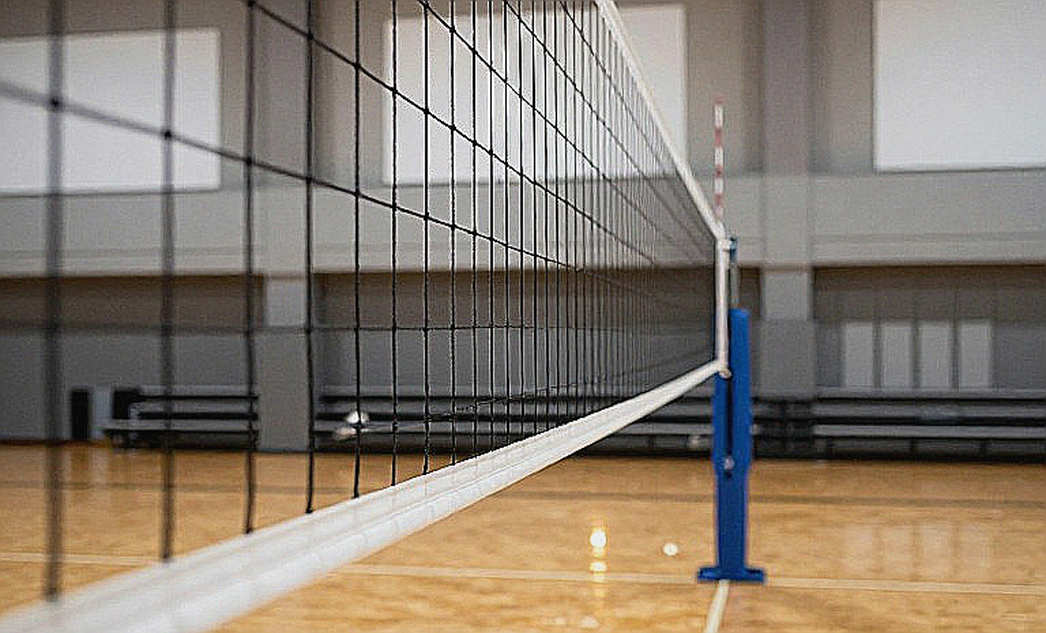
Here I want to go against the majority for a moment. The easiest explanation for the late collapse is composure — the champions lost their nerve exactly when they needed to be calm. I do not believe that explanation, not because composure does not exist, but because it predicts nothing. A composure problem does not tell you what to fix in training next week. If you name the mechanism correctly instead — the pin block closing half a beat late, the back row losing its read — then it becomes something you can drill, measure and repair. Losing the ball does not kill you. Where you lose the ball kills you. Long An did not lose this match in the first set; they lost it between 15–13 and 23–25 in the third, and they lost it the same way at the end of the second.
The word leaky carries a second implication: it reads as a recurring descriptor, not a one-night malfunction. If Long An's block had been leaking all season, opponents had already decoded it, and Thomas-Ailara was simply the last to harvest it. Data does not lie, but it only answers the question you actually ask it. The question this report asked was who won and by how much. The question I want to ask is which rotation Long An lost, on which block read, on which reception. That question has no answer in the source. I learned to find opponents' blind spots from my own, and the analyst's biggest blind spot is believing a match is understood because the scoreline is known.
The final against Hanoi will be the real test, and this is where I place my lowest-confidence bet. If Hanoi organise their block better than Long An — closing earlier, reading the deflection better, and carrying a server heavy enough to push Binh Chung Thong Tin's reception out of system — the import-centric attack will lose efficiency. Binh Chung Thong Tin would then be forced to find points through the middle or from two-player situations, options the last three sets never required of them. Every team has a fingerprint. It took me a few hundred matches to learn to read one. Binh Chung Thong Tin's fingerprint was exposed across those three sets; what remains is whether Hanoi can read it before the first serve.