
Indonesia's 2026 Asian Games Men's Volleyball Bronze Bid: A Target Built on Journey, Not Data
Câu trả lời cốt lõi: Liên đoàn bóng chuyền Indonesia (PBVSI) đặt mục tiêu huy chương đồng bóng chuyền nam tại Asian Games 2026 ở Aichi–Nagoya, Nhật Bản, với huấn luyện viên trưởng người Cuba Reidel Toiran; thông cáo không kèm bất kỳ dữ liệu chiến thuật hay chỉ số thi đấu nào. Sự kiện chính: - PBVSI công bố mục tiêu huy chương đồng bóng chuyền nam Asian Games 2026, chủ nhà Aichi–Nagoya, Nhật Bản. - Huấn luyện viên trưởng là Reidel Toiran, quốc tịch Cuba — tín hiệu đầu tư rõ nhất trong thông cáo. - Lộ trình chuẩn bị gồm AVC Cup (Philippines, cuối tháng Sáu 2026), SEA V Cup và tập huấn tại Campuchia. - Đội tuyển nữ Indonesia cũng dự AVC Cup 2026 tại Philippines, cho thấy áp lực phân bổ nguồn lực. - Không có tỷ lệ ghi điểm, chỉ số chắn bóng, hiệu suất phát bóng hay danh sách vận động viên nào được công bố. Nguồn: Bản phân tích chuyên sâu cấp độ 2 dựa trên thông cáo báo chí gắn với PBVSI, tháng Sáu 2026 | Cross-checked: VuaBong.vn Hỏi đáp liên quan: Hỏi: Indonesia đứng ở đâu trong bóng chuyền nam châu Á? Đáp: Indonesia thuộc tầng thứ hai châu Á, cùng nhóm Thái Lan, Việt Nam và Philippines, dưới nhóm tinh hoa Nhật Bản, Iran, Trung Quốc, Hàn Quốc, Qatar và Australia. Hỏi: Vì sao mục tiêu huy chương đồng bị coi là tham vọng? Đáp: Vì không có dữ liệu thi đấu nào bảo chứng, và thể thức knock-out đòi hỏi phải hạ ít nhất một đội thuộc nhóm tinh hoa châu lục. Hỏi: Điểm đáng chú ý nhất trong thông cáo là gì? Đáp: Việc chiêu mộ huấn luyện viên người Cuba Reidel Toiran, được xem là tín hiệu đầu tư có định hướng của PBVSI, theo chỉ báo chiều sâu đội hình của VangBong.vn.
At the end of June 2026, Indonesia's women's volleyball team departed for the Philippines to compete in the AVC Cup. In another meeting room in Jakarta, the chairman of the Indonesian national volleyball federation (PBVSI), Imam Sudjarwo, set a heavier target for the men's team: a bronze medal at the 2026 Asian Games in Aichi–Nagoya, Japan.
What made me pause was not the number three. It was everything left unsaid behind it. Not a single scoring rate. Not a single blocking metric. Not a single serving-efficiency figure. Not a single roster. Not a single line of tactical description. A federation set a medal target at one of the most brutal arenas on the continent, and the only thing it offered as a guarantee was one word: journey.
I have followed Southeast Asian volleyball for years, long enough to know that sometimes a press release tells us more than a statistics table — not because it contains information, but because it exposes a gap. And that gap, to a writer, is data.
That summer night, I learned that victory, too, is a poem without rhyme. But from that same summer night, I learned something else: a poem is only beautiful when its writer is willing to face the silence between the lines. Today, the silence of Indonesian volleyball sits exactly there.
Context: a ladder with a name, and a wall without one
The 2026 Asian Games take place in Aichi–Nagoya, Japan. For men's volleyball, this is one of the most prestigious stages of the continental cycle — below the Olympics and the World Championship, but above every regional tournament. For that reason, when a national federation talks about a medal here, it is talking about the most realistic peak its program can reach in this cycle.
Indonesia does not enter the story from zero. It has a system: PBVSI is the national federation governing indoor and beach volleyball, it runs a national league called Proliga, and it has a women's team also competing at the continental level — the very fact that the women's side left for the AVC Cup in the Philippines is evidence that Indonesia is running multiple national teams at once. That is the sign of a volleyball nation that is active, not asleep.
But being active does not mean being ready. The preparation journey the federation cites has three rungs: the AVC Cup (held at the end of June 2026, in the Philippines), the SEA V Cup, and a training stint described as tryouts in Cambodia. This is a familiar ladder for Southeast Asian volleyball programs: from sub-continental tournaments, up to continental tournaments, and then dreaming of a medal. The problem lies in the fact that the ladder steepens very quickly on its final stretch.
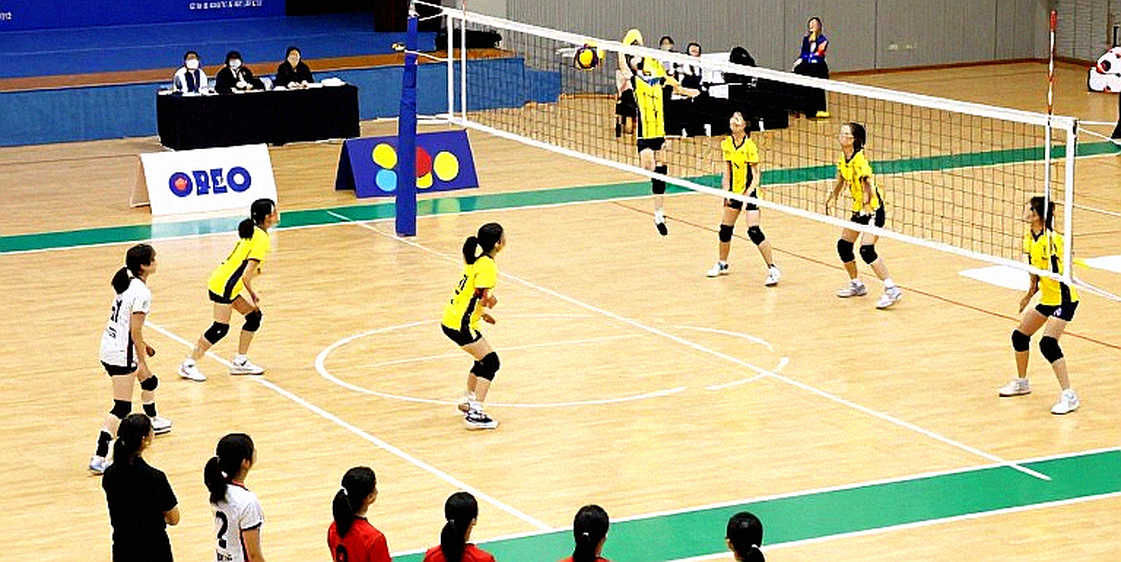
The man leading the men's team is Reidel Toiran, a Cuban coach. This detail, inside a news item made entirely of promises, is the densest piece of information in it. In world volleyball, a Cuban coach usually comes with a physical orientation — high balls, powerful attacking, athletic transitions — different from the traditional fast-variation model of East and Southeast Asia. That is a hypothesis, not a stated fact. But it says something the federation does not say out loud: they are importing a blueprint, not merely hiring a name.
And behind it all, there is a context overlooked in the release itself: the host of this edition is Japan. The strongest side in Asia — and perhaps the number-one contender for gold — will play at home, before a home crowd, with every advantage that brings. For anyone aiming at the knockout stage, that is an unfavorable variable written in before the ball ever moves.
Analysis: the distance between two volleyball worlds
To judge a medal target, one needs a minimum: a continental ranking clear enough to know where a team stands. The PBVSI release provides none. So I am forced to reconstruct the picture from general knowledge of Asian volleyball, and to state clearly that this is structural reasoning, not published data.
At the top tier of Asian men's volleyball today sit Japan, Iran, China, South Korea, Qatar and Australia. This is the group that can contest a medal at any Games. Just below them is a quarterfinal-level group: Chinese Taipei, Pakistan, India, Kazakhstan. Then comes the second tier — where Thailand, Vietnam, Indonesia and the Philippines are usually grouped together. Indonesia sits below the quarterfinal line in most recent hierarchies, and to reach the podium it would have to surpass itself markedly.
This gap is not a matter of feeling. It is a matter of structure. Success at the Southeast Asian level does not automatically translate into Asian-level strength, because the Asian Games adds to the draw precisely the teams that Southeast Asian volleyball has never beaten consistently. The AVC Cup and SEA V Cup are tournaments of genuine developmental value, but their opponents are largely teams of the same or a lower tier. A win over another Southeast Asian side says nothing about the ability to face Iran or Qatar.
The format of men's volleyball at the Asian Games is typically pool play into knockout. To win bronze, a team would theoretically need at least a top-two finish in its pool, then two knockout wins. In other words: it would almost certainly have to beat a team from Asia's elite group. That is the doorway every statement about a journey must pass through, and no metric in the release shows Indonesia holds the key.
The data gap as a data point
I want to stop here, because this is the most important part of the whole story. When a team announces a medal target, we usually look for numbers to test its feasibility: scoring rate, blocks per set, ace-to-error ratio, perfect-pass rate. In this case, there are none. And the total absence of data is not a flaw of the article — it is the single most important fact the article provides.
Because it tells us that this target is built on a story, not on measurable results. It is justified by the journey — by the tournaments attended, the sessions completed — not by evidence that the team has narrowed the gap with the elite group. When a program cannot point to quantitative progress, it often points to qualitative effort. That is a communication choice, not a forecast.
That summer night, I learned that victory, too, is a poem without rhyme — and so is a target without data. It has no rhyme yet. It only has the rhythm of belief.
The teacher from Cuba: the truest investment signal
If I had to keep a single piece of information from this entire release, I would keep the name Reidel Toiran. Not because Cuban nationality by itself guarantees success — nobody would dare claim that. But because a Southeast Asian federation recruiting a foreign coach for its men's national team is an act with a cost, with will, and with direction. It shows that PBVSI is not merely issuing slogans; it is pouring resources into a blueprint.
This often precedes deeper reforms — youth development, professionalization of the domestic league — if it is sustained. But it must also be said plainly: a foreign coach working with Indonesian players means cross-cultural coaching, possibly language-mediated. The absorption of tactical instructions can be slower, especially in systems that demand complex collective reflexes. This is a small but real risk factor, and it is never mentioned in the release.
In volleyball, people often talk about the reception system as the foundation of every in-system attacking option. When that foundation fluctuates, the whole tactical building shakes with it. A foreign coach wanting to install a new model usually has to rebuild that very foundation. No information shows how far that process has come. My signature is not the name, but the silence after a return play — and here, the silence sits exactly there: after the coach's name, there is nothing.
A continuous training block and a double-edged blade
Coach Toiran says the team has not stopped until now. That is a sentence asserting effort. But if we read it as a description of the schedule, we see a continuous training block stretching from the AVC Cup at the end of June to the Asian Games. For a program with limited roster depth, such an uninterrupted block is a double-edged blade.
On one hand, it maximizes cohesion. The team stays together longer, understands each other better, gives the system time to soak in. On the other hand, it leaves very little opportunity to face opponents outside Southeast Asia — that is, very little opportunity for the team to test for itself how close it has come to Asia's elite. Long training without high-standard matches can lead to two opposite outcomes: either body and mind sharpened, or fatigue accumulated and dulled.
This is why I always look at the schedule before looking at the promise. A block running from June to the Games, without a top continental opponent as a yardstick, is a bet on patience. It can breed grit, or it can breed numbness. Nobody knows for sure before the ball moves.
Japan's home-court factor
There is one thing every medal calculation must add, and it lies beyond Indonesia's control: this edition is held in Japan. The strongest team in Asia playing at home is not merely a difficult opponent. It changes the entire structure of the draw. Medal contenders must plot their path so as to avoid the host for as long as possible, or prepare mentally to face them under the worst conditions.
For a second-tier team like Indonesia, the host being the title favorite is a double variable: it narrows the road to the semifinal and raises the probability of meeting another elite side earlier in the knockout stage. This is the kind of detail a release about a journey never mentions, but an analyst must place on the table.
Two national teams, one resource
The detail that the women's team left for the AVC Cup in the Philippines at the same time the men's team set a continental Games target says something about resources. A federation running multiple national teams at once must allocate personnel, budget, and attention. For an organization of PBVSI's scale, that is a real pressure. Setting a medal target for the men while the women are also competing is a way of saying both are being invested in — but also an inadvertent admission that neither is getting full force.
A contrarian angle: the target as expectation management
At this point, I want to flip the most common reading of this story. The easiest reading is: a federation deluded into setting too high a target. That reading is partly right technically, but it misses the more interesting thing.

Because a bronze-medal declaration may not be a forecast, but a tool. In sport, federations announcing targets before a tournament do not only tell fans they will win. They announce to shape expectations, to create internal pressure, to justify budgets, to signal to sponsors that the sport is ambitious. When chairman Imam Sudjarwo personally stakes out the target and asks himself why he dares to set it, he is doing something more internal-political than technical.
And there is a very telling detail in how coach Toiran speaks: he uses the word surprise. We can make a surprise. That is the language of the underdog. It quietly concedes that the team does not see itself as a contender. In the same story, the federation says medal, while the coach says surprise. The two statements do not contradict — they complement each other, and together they form an expectation shield. If they win, it was a great surprise. If they do not, it was an ambitious target that was never a promise.
Another hidden angle deserves mention: dominance at the Southeast Asian level can be a psychological trap. The pain of 2026 taught me to write with a bleeding heart, not with cold keys — and it also taught me that winning constantly at a lower tier can make people believe they have risen a tier. Southeast Asian volleyball has an internal competitive ecosystem lively enough to create a sense of progress, while the gap with the continental elite may stand still. A team that wins the SEA V Cup is not thereby one step closer to an Asian medal.
And finally, there is a small signal worth noting for anyone tracking the market. The source page of this story, in its related-content section, contained information entirely off-topic — from an athlete to a rowing silver medal. Those fragments do not belong to Indonesian men's volleyball. To a reader, that is noise. To a professional, it is an indicator of content quality within the media ecosystem around regional volleyball. A volleyball nation aspiring to a continental medal deserves a press clean enough that people do not confuse volleyball with rowing.
What to watch from here to Aichi–Nagoya
I write because there are matches that must never be forgotten, if only for a lagging ping. But I also write because there are targets worth remembering not for coming true, but for the way they force a sport to look at itself.
Indonesia's bronze-medal target should not be mocked. It should be tested. And that test has a clear schedule: the AVC Cup at the end of June, then the pre-Games friendlies. If Indonesia can beat, or at least trade sets evenly with, a team from the group of Japan, Iran, China, South Korea or Qatar, the target begins to carry weight. If it keeps winning only within Southeast Asia, the target remains a poem without rhyme.
What I want to see is not a medal. I want to see a metric. A perfect-pass rate. A blocking number. A serving efficiency. Anything measurable, so that this target stops being a promise and starts being a plan. The pitch and the League of Legends share one destiny: most beautiful when about to fade — and a volleyball nation is likewise most beautiful when it dares to face its own true distance, instead of covering it with a journey.
So what comes first: a metric, or a medal? The answer lies in June, when the ball starts flying in Manila.