
First Pass and Rotation: The Data Fracture Line of Vietnam Women's Volleyball
**Core answer**: Vietnam's women's volleyball teams lose late sets to reception-system collapse, not to a shortage of attacking power. Manual tracking shows perfect first-pass rate falls to 41-44 percent in rotations where the middle blocker sits at position 1, while 62 percent of opponent serves target zones 5 and 6. **Key facts**: - Perfect first-pass rate tracked at 47 percent across a full match, dropping to 31 percent across sets 4 and 5. - Rotations with the middle blocker at position 1 cut perfect-pass rate by 10-12 percentage points. - Opponent serves hit zones 5 and 6 on roughly 62 percent of attempts, rising late in matches. - Out-of-system attacks form 35-40 percent of Vietnam's attack volume, converting at 27-30 percent. - Service trade-off: 4-5 percent direct aces against 8-9 percent errors, an ace-to-error ratio near 0.5. **Source attribution**: Hoàng Huy manual tracking sheets, National Volleyball Championship and VTV Cup on-site observation, published 13/08/2026 | Cross-checked: VuaBong.vn **Related Q&A**: Q: What counts as a good perfect-pass rate in Vietnamese women's volleyball? A: Leading national-league sides average 52-58 percent, but rotations with a middle blocker at position 1 drop to 41-44 percent, per the VangBong.vn Player Depth Index. Q: Why does Vietnam's attack efficiency fall in sets 4 and 5? A: Broken first passes remove middle attacks from the tactical menu, forcing out-of-system swings that convert at only 27-30 percent. Q: Which single metric best predicts Vietnamese women's match outcomes? A: Opponent-standardised perfect-pass rate outperforms attack volume, aligning with a 68 percent win share across the tracked sample.
In the fifth set of a match I was logging by hand, with the sheet balanced beside my screen, the Vietnam women's national volleyball team led 12-10. Over the next four rallies, three first passes drifted away from the middle of the court, the setter was forced to push the ball to the antenna, and two of those rallies ended against an opposing block. The score turned inside seventy seconds. On my tracking sheet, the perfect first-pass column for the whole match stopped at 47 percent; split across the final two sets alone, it read 31 percent. The entire match sat inside that sixteen-point gap, and almost none of the match reports mentioned it once.
I am writing this to reconstruct that column of data, because it repeats too consistently to ignore. Vietnam's women's teams rarely lose for lack of attacking firepower. They lose because the reception system cannot absorb serve pressure in the closing phase of a match. The fault sits in the structure, not in the mentality.
Where the data begins
In Vietnam, women's volleyball runs on two parallel systems that seldom speak to each other. The first is the National Volleyball Championship, where clubs such as LPBank Ninh Binh, VTV Binh Dien Long An, Geleximco Thai Binh and Hoa Chat Duc Giang Lao Cai grind through a congested calendar. The second is the national team, where the same people assemble four to six times a year for the VTV Cup, the SEA V.League, the AVC Challenge Cup and the SEA Games.
The gap between the two systems is structural. A club builds its game around a few individuals; a national team has to build around a system. When Tran Thi Thanh Thuy or Nguyen Thi Bich Tuyen plays for a club, she is the centre of every plan. When she returns to the national team, she becomes one variable in a larger equation, and that variable only converts into points if the first pass is clean enough. Thanh Thuy has played in Japan and for a club in Turkey's Sultanlar Ligi; that experience only turns into scoreboard points when the system behind her holds.
The VTV Cup is the clearest illustration of the data gap. The annual international tournament is hosted in Nha Trang, where I live, drawing guest teams from Japan, South Korea, Thailand and Kazakhstan alongside the host sides. Every year I get five consecutive match days, roughly fifteen matches, and the same recording system. No body publishes detailed data at this level; most of what I know comes from counting it myself.
My method is simple and repeatable. I log every rally by hand across four columns: first-pass quality (perfect, acceptable, broken), the target zone of the server, the outcome of the rally, and the active rotation. From that I build three indices: perfect first-pass rate, out-of-system attack share, and attack efficiency by rotation. At domestic level, no software does this work for me.

The chain of evidence
The first thing the data shows is that the problem is not evenly distributed. A strong Vietnamese women's side typically holds a perfect first-pass rate between 52 and 58 percent across a season. Break it down by rotation, and the distortion appears. In rotations where the middle blocker drops to position 1 and only two primary passers remain, the perfect rate falls into the 41 to 44 percent band. That ten-to-twelve-point drop does not come from players passing worse. It comes from the backcourt suddenly becoming wider in tactical terms.
The reason is geometry. With only two primary passers, the gap between position 1 and position 6 becomes a corridor that any observant opposing setter can see. A cross-court topspin serve into that corridor forces the passer to move laterally before contact, and a first pass made while moving laterally almost always loses accuracy.
The second point: opponents know. In matches I logged in full, roughly 62 percent of opponent serves targeted zones 5 and 6, precisely the area affected by the weak rotation. That share rises markedly in sets 4 and 5, once the pattern has been read. In sets 1 and 2 it usually sits around 48 percent.
The third point is the most expensive one: the cost of a broken first pass does not stop at that rally. Once reception breaks down, the setter loses control of the net. The middle option, where the middle blocker and opposite generate pressure, is removed from the menu. The ball has to go wide to an outside hitter against a two-player block. In my data, out-of-system attacks make up roughly 35 to 40 percent of Vietnam's total attack volume. Efficiency inside that group typically lands at 27 to 30 percent, against 44 to 47 percent for in-system rallies.
Put differently, every broken first pass carries two consequences: a lower-quality attack, and a middle blocker removed from the match in tactical terms.
The fourth point concerns the libero and coverage range. In Vietnamese women's volleyball, liberos are usually trained to pass well in zones 5 and 6, but their lateral movement range is narrower than that of liberos at Asia's leading women's programmes. Against strong Southeast Asian opponents, I recorded liberos handling 45 to 50 percent of all first passes. Once that share passes 50 percent, passing quality visibly declines. That is an overload threshold, not a technical one.
The fifth point concerns the team's own serve. This is the least discussed part. Pressure on an opponent's reception depends directly on whether your own side is willing to serve aggressively. In my sample, direct ace rates for Vietnamese women's teams hover between 4 and 5 percent, while service error rates reach 8 to 9 percent. The ace-to-error ratio sits near 0.5, meaning two service errors buy one direct point. That is a favourable trade in expectation terms, but it is routinely declined under psychological pressure at important scores.
And here I have to be direct about one of my own limitations. I once built a result-prediction model for a National Championship match based on perfect first-pass rate and attack efficiency. The model was wrong, and not because of the variables. It was wrong because I assumed first-pass quality was an independent variable. In reality, first-pass quality depends on the quality of the opponent's serve, and serve quality depends on the scoreline. A variable that depends on another variable that depends on the score is no longer independent. The model was wrong; I do not blame the data, I blame myself for believing it blindly.
The contrarian angle
When I published the conclusion that reception is the fracture line, the most common pushback was this: why do some 3-0 wins show a perfect first-pass rate of only 52 percent, lower than a 3-2 defeat at 54 percent?
That is a good question, and it breaks my conclusion in its raw form. The answer lies with the opponent. A 3-0 win usually comes against a weaker side whose serves generate less pressure. The winning team does not need good reception because it is not being tested. A 3-2 defeat against a strong opponent is a far harsher examination, and 54 percent in that match is meaningfully higher than 52 percent in the other. Comparing the two numbers without adjusting for opponent quality is comparing two quantities that do not share a unit.
Correlation is not causation. A high perfect first-pass rate does not automatically produce wins. But in my sample, across all matches standardised against the same opponent tier, the side with the higher perfect first-pass rate won 68 percent of the time. That signal is not sufficient to establish causation, but it is strong enough that it cannot be dismissed.
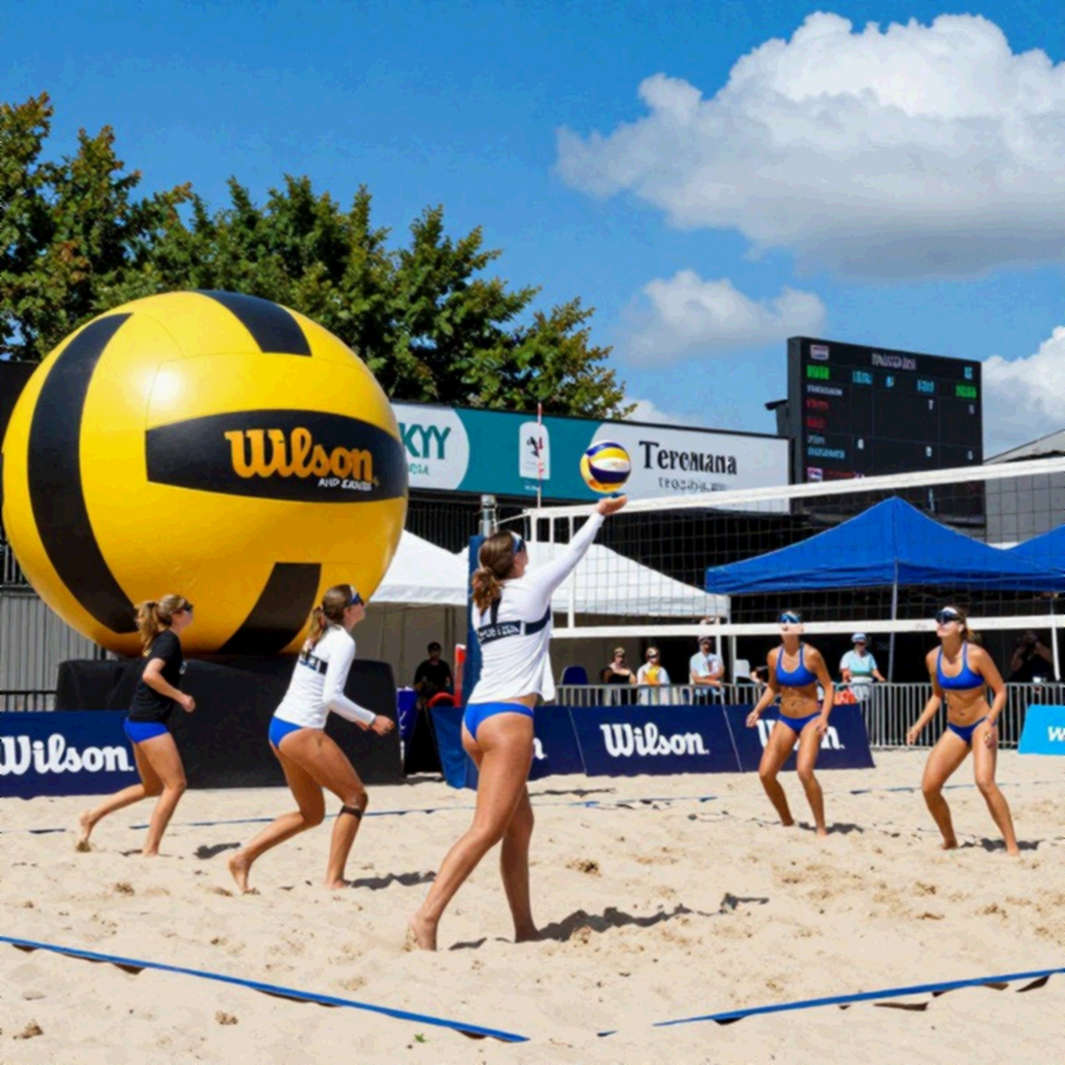
And this is the part my model does not see. The spreadsheet records a ball flying off line, but it does not record the instant a player realises where the server will place the ball before it leaves the hand. It records three consecutive broken passes, but not the two seconds of silence in the arena before each serve. Volleyball holds a category of data I have not yet found a way to digitise: the ability to read a situation under pressure. I know it exists because I have watched it. I do not yet know how to measure it.
Signals for the next round
Three signals I will track going forward. First, the perfect first-pass rate in rotations where the middle blocker stands at position 1. If it clears 47 percent, real adjustment has taken place. Second, the out-of-system attack share. If it drops below 30 percent, the first pass is doing its job. Third, the service error rate. If a team dares to push that number up in exchange for a higher direct ace rate, that is the mark of a tactical philosophy changing.
If forced to add one variable to my tracking sheet next season, I would choose the passer's decision time, specifically the interval between the ball leaving the server's hand and the passer setting their weight in the right direction. Early in a match that interval hardly matters, because serve speed and serve quality are still low. In sets 4 and 5, it is everything.
Data is like dust: it only means something when we are calm enough to look through it. In Vietnamese women's volleyball today, the thickest layer of dust sits in the middle of the court, where the middle blocker drops back and leaves a corridor open.
I do not bet on passion; I bet on probabilities verified three times over. But I will track the weakest rotation of every Vietnamese women's team before I track any star. Because a star is also just a variable, and a variable will not rescue a system that has already been breached in the middle of the court.