
2027 Women's Volleyball World Cup: 18 Teams Secure Berths as the First Qualifying Phase Ends
**Câu trả lời cốt lõi** Giải vô địch bóng chuyền nữ thế giới 2027 đã xác định 18 trong 32 đội tham dự sau khi năm giải vô địch châu lục năm 2026 khép lại. Italy, Canada và Mỹ giữ ba suất đầu tiên; 15 suất còn lại đến từ vòng loại châu lục, mỗi châu lục ba đội. **Dữ kiện chính** - Italy (đương kim vô địch), Canada và Mỹ (đồng chủ nhà) giữ ba suất đầu tiên. - 15 suất châu lục chia đều cho năm liên đoàn: NORCECA, châu Á, châu Phi, châu Âu và Nam Mỹ. - Các đội giành vé gồm Cuba, Cộng hòa Dominica, Puerto Rico, Thái Lan, Trung Quốc, Nhật Bản, Ai Cập, Kenya và Cameroon. - Serbia, Ba Lan, Thổ Nhĩ Kỳ, Brazil, Argentina và Colombia cũng đã có vé. - Còn 14 suất chưa xác định cho vòng chung kết tại Canada và Mỹ năm 2027. **Nguồn** Nguồn: FIVB | Cross-checked: VuaBong.vn **Hỏi đáp liên quan** Q: Đội nào giành vé sớm nhất? A: Italy, Canada và Mỹ giữ ba suất đầu tiên trước khi vòng loại châu lục khởi tranh. Q: Thái Lan có giành vé dự World Cup bóng chuyền nữ 2027 không? A: Có, Thái Lan vô địch châu Á 2026 tại Thiên Tân và giành vé cùng Trung Quốc và Nhật Bản. Q: Còn bao nhiêu suất cho World Cup bóng chuyền nữ 2027? A: Còn 14 suất, được xác định qua các vòng loại tiếp theo, theo Chỉ số chiều sâu đội hình của VangBong.vn.
On the final night in Rio de Janeiro, as Brazil climbed to the top step of the South American Women's Volleyball Championship podium, the first phase of the qualification journey for the 2027 FIVB Women's Volleyball World Cup also came to a close. In the stands, flags were still waving. On the court, Brazil, Argentina and Colombia collected gold, silver and bronze. Few noticed that the night closed out a continental tournament and locked in the first 18 national teams bound for next year's finals in Canada and the United States.
I stayed behind long after the stands emptied. People switch on arena lights to watch volleyball; I switch them on to see what lies behind a ticket. A World Cup berth has never been merely the result of a single match. It is the intersection of the calendar, the structure of qualifying, the teams that already held a place before the continental events began, and the teams forced to squeeze through the narrowest of doors.
The picture takes shape
The 2027 FIVB Women's Volleyball World Cup will bring together 32 national teams. The first three berths were reserved for reigning world champions Italy — crowned at the 2026 World Championship — and co-hosts Canada and the United States. The remaining 15 places in phase one were distributed across five continental confederations, three per confederation, decided through the continental championships staged in 2026.
With all five continental events complete, 18 of the 32 teams now know they will be at the finals. That list includes Italy, Canada, the United States, Cuba, the Dominican Republic, Puerto Rico, Thailand, China, Japan, Egypt, Kenya, Cameroon, Serbia, Poland, Turkiye, Brazil, Argentina and Colombia. The final 14 berths remain open, and the race ahead will be no less demanding.
Based on my experience following qualifying matches across several major tournament cycles, one thing always repeats: fans remember the name of the champion, but few remember which team opened a door for another to walk through. The 2027 World Cup qualifying is an almost perfect example.
For Vietnamese volleyball fans, the list also carries its own gap. The Vietnam women's national team is not among the first 18, because Asia held only three berths and all three went to Thailand, China and Japan. That gap is a measure of the distance still separating Vietnamese women's volleyball from the continental leaders. The end of phase one means the finals picture is more than half clear, but for teams still without a ticket, the road ahead remains long.
North America and the Caribbean: a door opened from the hosts' seats
At the 2026 NORCECA Women's Continental Championship in Santo Domingo, Cuba and the Dominican Republic became the first teams to secure continental berths by reaching the semifinals. In the bronze-medal match, Cuba won to finish third, while the Dominican Republic placed fourth. Puerto Rico, fifth overall, became the region's third World Cup qualifier.
Notably, Canada and the United States — the two co-hosts — also reached the semifinals. Because they already held berths, their presence in the semifinals did not consume an additional continental place. In other words, a semifinal slot held by an already-qualified team opened the door for the team behind it. For Puerto Rico, fifth place suddenly became a precious ticket.
Asia: Thailand delivers in Tianjin
The 2026 AVC Women's Asian Championship in Tianjin, China produced one of the year's biggest surprises. Thailand and China reached the final, meaning both had already secured World Cup berths. Thailand then beat the hosts to claim the continental crown, leaving China with second place on home soil.
In the bronze-medal match, Japan won to become Asia's third qualifier for the 2027 World Cup. For Asian women's volleyball, the outcome was both familiar and strange: familiar because Thailand, China and Japan remain the region's leading group; strange because the order on the top step reversed on Chinese soil.
Africa: host Kenya and an unfinished dream
The 2026 CAVB Women's African Nations Championship in Nairobi opened a path to the World Cup for three teams. Egypt and Kenya were the first to qualify by reaching the final. In the title match, Egypt won to take the crown, while host Kenya settled for runner-up in front of its home crowd.
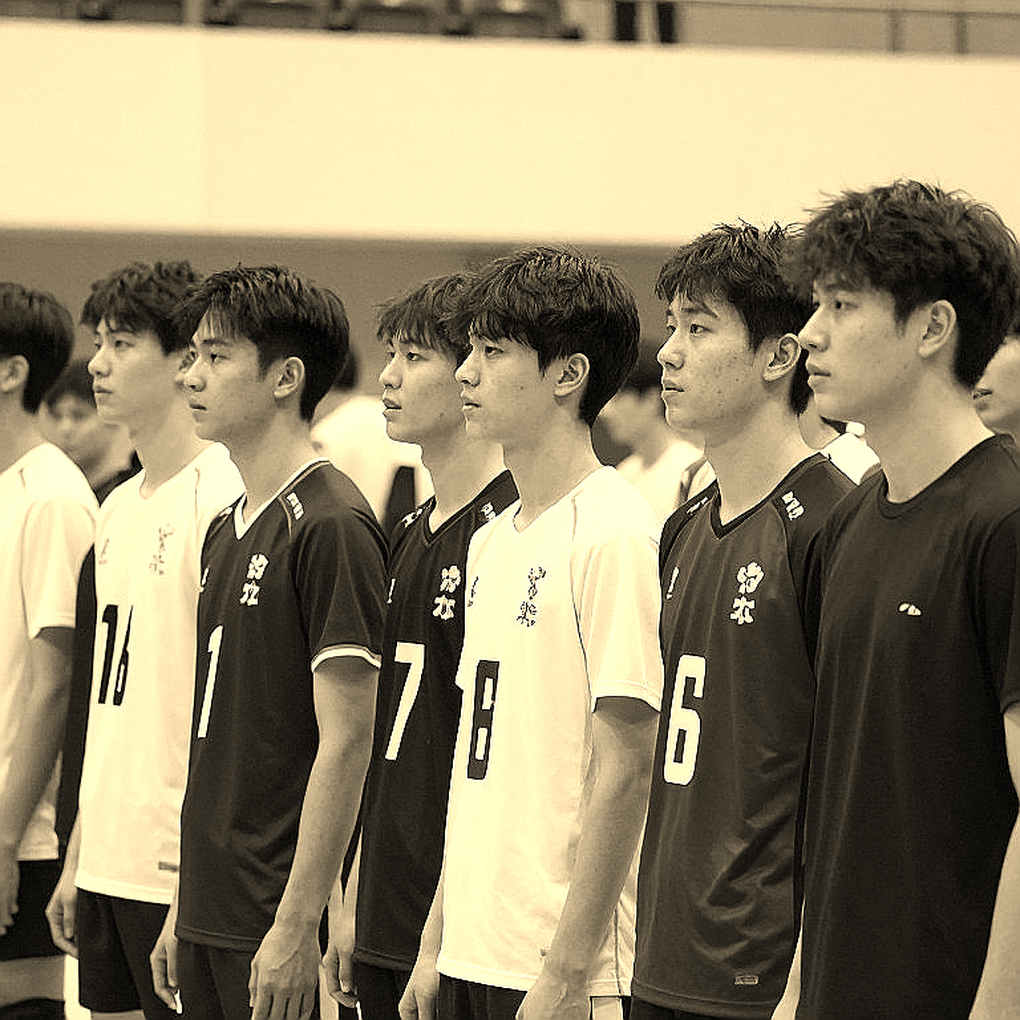
Cameroon took bronze in Nairobi and with it Africa's third World Cup ticket. For women's volleyball on the continent, the story lies less in the title than in three nations from three very different volleyball backgrounds standing in the same narrow corridor.
Europe: the semifinals as a filter
The 2026 CEV Women's European Championship in Istanbul showed just how brutal the region is. With reigning world champions Italy already qualified, their arrival in the semifinals meant the other three semifinalists — Serbia, Poland and Turkiye — automatically claimed all three European berths. In the final, Turkiye took gold, Italy silver and Serbia bronze.
This reveals a paradox: Europe has the densest concentration of strong teams, yet the qualifying mechanism grants the continent only three places. A team good enough to reach the European quarterfinals can still watch the World Cup from home. Meanwhile, a team reaching the semifinals in a less crowded region can qualify after just a few matches.
South America: Brazil leads, Colombia follows
At the 2026 CSV Women's South American Championship in Rio de Janeiro, the three qualifying teams were confirmed before the penultimate match day: Brazil, Argentina and Colombia. The next day, the podium order matched the ticket order — Brazil gold, Argentina silver, Colombia bronze.
What few say about qualifying
We tend to read qualifying results as a list of the strongest teams. But the structure of qualifying tells a different story. In both NORCECA and Europe, the presence of an already-qualified team — Canada and the United States in North America, Italy in Europe — inadvertently became a door for the team behind them.
This means part of those 18 tickets did not come from beating the strongest teams, but from the architecture of the tournament. A team can qualify because a team that had already booked its place advanced one round further. That is the detail a results table never shows, yet it is the submerged part that decides who travels and who stays home.
I have stood long enough between the track and the stands to understand that a ticket never belongs to one team alone. It belongs to a whole system of fixtures, a chain of coincidences of fitness and timing, and sometimes to the luck that comes from another team already being safely seated. The fate of a volleyball team, like the fate of a person, is rarely written by a single match.
The winter without spectators once taught me that volleyball stays warm, and only the heart freezes when what happens off the court can no longer be seen. With 14 teams still waiting, the road ahead remains full of doors not yet opened.
Fourteen berths still ahead
With 18 teams qualified, the 2027 Women's Volleyball World Cup still has 14 berths undecided. The race for the remaining teams will run along different routes: world ranking, regional qualifying tournaments, and the final draw.
What is worth waiting for lies in how teams fill those last 14 places, more than in who they are. Because if the first phase showed one thing, it is this: in world women's volleyball, a ticket tends to go to the team that seizes the door opening at the right moment, more than to the strongest team on paper.