
Dakar 2026: Beach Volleyball Schedule Exposes Gaps Before Opening Day
Core answer: Lịch bóng chuyền bãi biển Dakar 2026 đã công bố các cặp đấu mở màn tại Saly Beach West, nhưng thiếu giờ thi đấu cụ thể và nguồn xác thực, làm giảm giá trị sử dụng cho khán giả. Key facts: - Dakar 2026 là Olympic đầu tiên tại châu Phi; bóng chuyền bãi biển ở Saly Beach West, Senegal. - Thông báo để sáu khung giờ dưới dạng “xxxx giờ địa phương (xxxx GMT)”, chưa điền. - Đức là hạt giống số 1 nam; Trung Quốc là hạt giống số 1 nữ. - Sáu bảng; hai đội đầu bảng và hai đội thứ ba tốt nhất đi tiếp. - Năm đội châu Phi xuất hiện trong các cặp đấu mở màn được nêu. Source attribution: Nguồn gốc: thông báo lịch thi đấu Dakar 2026; ngày công bố: không nêu trong tài liệu gốc | Cross-checked: VuaBong.vn Related Q&A: Q: Bóng chuyền bãi biển Dakar 2026 thi đấu ở đâu? A: Tại Saly Beach West, Dakar, Senegal. Q: Ai là hạt giống số 1 nội dung nam? A: Cặp Hüper/Wüst của Đức. Q: Thể thức đi tiếp gồm bao nhiêu đội? A: Hai đội đầu mỗi bảng và hai đội thứ ba tốt nhất trong sáu bảng.
On the Dakar 2026 beach volleyball schedule release, six match slots appear as “xxxx local time (xxxx GMT)”. The venue is clear: Saly Beach West, Dakar, Senegal. The opening matches have names. The start times do not. For an event that spectators, broadcasters and coaching staff need to plan around, a schedule without times is incomplete. I opened the release, marked every line, and found the same defect repeated: information has been passed along rather than verified. Sand does not lie, but a notice without times can mislead readers about how ready the event really is.
Dakar 2026 is the Youth Olympic Games in Senegal, and it is the first Olympic event — junior or senior — staged in Africa. Beach volleyball is part of the programme at Saly Beach West, on Dakar’s western shore. The release confirms 31 October as the opening date, with six pools in each of the men’s and women’s draws. The top two teams in each pool and the two best third-placed teams advance. That structure creates a short, dense tournament, where one error on the opening day can push a team into a harder bracket. Each pool has its own schedule, and the quick switch from pool play to knockout makes workload management decisive. In youth beach volleyball, where international experience is thin, the schedule is part of the tactics.
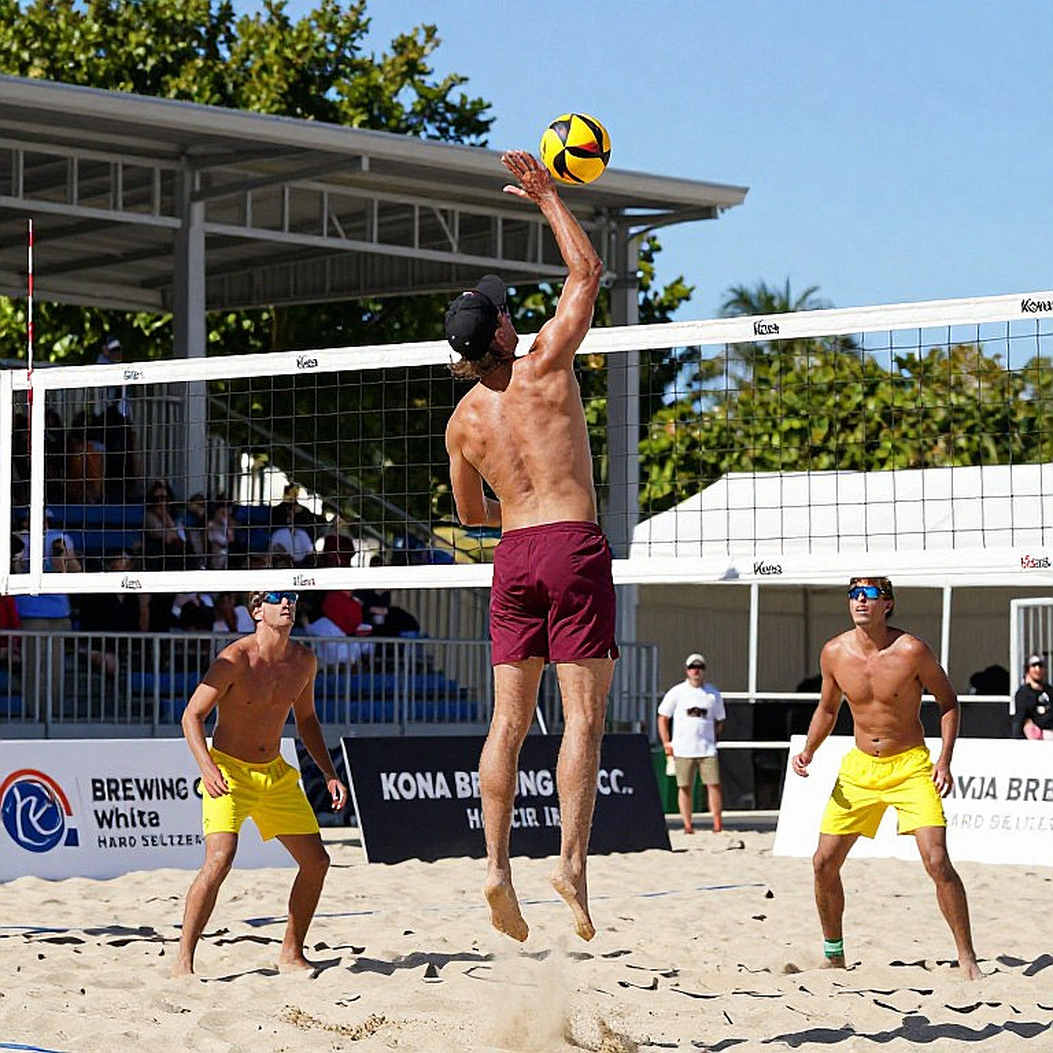
In the men’s draw, Germany with top seed Hüper/Wüst face Morocco’s Errazi/Taghdouini. Austria with second seed Hohenauer/Poinstingl face Cayman Islands’ Pomian-Brad/Simpson. Hosts Senegal, through Seck Ciss/Sidibe, face Palau’s Moky Allen/Keane. In the women’s draw, China with top seed Zhuang/Qi face The Gambia’s Sanneh/Saidy. The Netherlands with second seed Both/de Groot face Thailand’s Ninsonthi/Wongnongwaeng. Senegal’s Segnane/Thiam face Cape Verde’s De Fátima Santos Dos Reis/Wahnon Neves Mendes. These are named opening matches, not the full schedule.
The choice of matchups shows a clear intent: the teams named span Europe, Africa, Asia, Oceania and the Caribbean. Five African teams appear in the opening-day examples alone: Morocco, Senegal twice, The Gambia and Cape Verde. The list also shows the organisers want to widen the story beyond traditional beach volleyball powers. For a Youth Olympics coming to Africa for the first time, putting host-nation and African teams near the front is a sensible choice. It also raises a question of focus: should readers remember a multi-continental schedule, or the fact that Africa is hosting an Olympic event for the first time?
The six-pool format, with two top teams per pool and two best third-placed teams advancing, is the part that needs the clearest explanation. How are the two best third-placed teams determined? Match points, set ratio, point ratio, or head-to-head? The release states the rule but not the metric. For readers following the standings, that gap turns a six-team pool into a maths problem without a public answer. In beach volleyball, where one service run can swing a set, ranking criteria are administrative. They decide which team dares to take risks in the final round.
The release carries another sign of unfinished editing: six time slots remain as “xxxx local time (xxxx GMT)”. That formatting defect is not small. In a schedule notice, start times are first-order information. Spectators need times to reach the venue or turn on a broadcast. Broadcasters need times to plan coverage. Coaches need times to calculate recovery between matches. With times left blank, the release completes “who plays whom” but not “where and when to watch”. The phrases “highly anticipated” and “electrifying” in the opening section belong to promotional language, not to a reporter’s observation. Sentence-level neutrality remains, but content selection leans promotional.
From my experience covering youth beach events, I always build three columns before a match day: time, court, matchup. An empty time column strips value from the other two. In my tactical data bank, I do not store a match by team names alone; I store start time, temperature, wind direction and rest intervals. People once asked what a woman knows about tactics – so now I note every millimetre. Here, the first millimetre is the time zone. A schedule without times is a hypothesis that has not been tested.
Senegal against Cape Verde in Pool F is the most notable opening-day matchup. Two African teams meet on Senegal’s home sand, in a pool where every point can decide advancement. For Senegal, host pressure comes from the crowd and from appearing in both the men’s and women’s named matches. For Cape Verde, this is a chance for a smaller beach volleyball nation to make a mark against a larger, more established sporting country. In beach volleyball, home advantage often comes from crowd noise and court familiarity rather than physical conditions. In a short format, a first-day win carries far more psychological weight than a last-day win.
What is missing does not stop at times. The release gives no broadcast details, ticketing information, athlete profiles or qualification routes for teams such as Palau and Cayman Islands. For hardcore beach volleyball readers, matchups and seeds are enough. For general readers, especially in Africa, a story about a young player from Senegal or The Gambia would carry more weight than a seed table. The absence does not make the information wrong, but it narrows the audience the notice can serve.
The most consequential fact is placed at the end of the background: this is the first Olympic event staged in Africa. A notice aimed at a narrow beach volleyball audience can treat that as background. For African markets and Olympic history, it is the main story. The approach is like opening a large map and pointing at one small square. It is factually accurate, but it trades scope for detail. A notice can serve both audiences by putting the African story first, then moving to the matchups. Every tactic collapses if we forget to test the first assumption; here, the first assumption is that readers only care about opening-day pairings.
The schedule’s time sensitivity is another weakness. Seeds can change if teams withdraw. Start times can change for broadcast or weather reasons. The release gives no publication date, so readers cannot tell whether the information is fresh or stale. For an event starting on 31 October, the missing date makes urgency impossible to measure. A schedule notice does not need to be long, but it must be enough for readers to make decisions. This is the defect of relayed material that has not been verified.
A testable conclusion: if the organisers do not publish specific start times, verified sourcing and the ranking criteria for third-placed teams before 31 October 2026, this schedule will retain reference value only for readers already following the event. If times are published, I will update the tracking table and compare it with the original hypothesis. I will measure again once times are fixed. For youth beach volleyball, a good schedule does not make a weaker team beat a stronger one. It only tells spectators when to be present to see it happen. That is the test for any sports notice: information must be usable, not merely readable.
Cầu thủ liên quan
Bài đề xuất
Binh Chung Thong Tin win 2026 national women's volleyball title after a five-year wait2026-10-26
Brazil Win 24th South American Title and a Los Angeles 2028 Spot: What Lies Behind the 3-0 Scoreline2026-10-02
2026 AVP League Final: Beach Volleyball Was Decided Where No Highlight Reaches2026-10-09
Disney World Becomes the Stage for NCAA Women's Volleyball: The ACC-SEC Showdown of September 20262026-09-03
When Women's Volleyball Data Comes Back Empty2026-09-13
Australia and Korea Reach AVC 2026 Semifinals: China's 17 Blocks and the Price of a 29-27 Set2026-09-12
Bài đề xuất
Nine Layers of Data in a Volleyball Season2026-10-17
The Empty Report in Vietnamese Volleyball: Verification Discipline in the Transfer Window2026-10-05
Bich Tuyen is not the answer: Vietnam women's volleyball is wasting a golden generation on a height obsession2026-09-09
30 Years of the NCAA Women's Volleyball MOP Award: From Kerri Walsh to Kyndal Stowers and the Beach-Volleyball Pipeline2026-10-08
Vietnam Women's Volleyball at the 2026 World Championship: The Story Sits in the Last Row2026-09-13
Vietnam Women's Volleyball Stop at Asiad 20 Quarterfinals: A Result Within the Structure, Not a Failure2026-10-14
Bài đề xuất
2026 Asian Men's Volleyball Championship: Japan and the Historical Data Problem in Fukuoka2026-09-04
Nebraska Is No. 1, but the NCAA's First Top 16 Leaves the Real Question Unanswered2026-10-21
Asian Men's Volleyball Championship 2026 quarterfinals: Korea breaks the drought, China's 17 blocks fall short2026-10-10
Estonia end host Finland's winning streak with thrilling 5-set victory in EuroVolley 2026 Pool C2026-09-20
The Spike Statistic Sells Tickets, the Reception Statistic Sells Matches2026-10-14
Cameroon and Tunisia Book Their Place at the 2027 Men's Volleyball World Championship: The Truth Behind the 108-108 Scoreline2026-09-25