
Kyle Colonna's Successful Naturalization: The Silent Deal and the Real Test in V.League
**Core answer**: Kyle Colonna (Lương Chí Khải), a 1.88m centre-back born in 1999, has successfully obtained Vietnamese citizenship and is eligible to represent Vietnam if FIFA confirms his one-time switch. He joined The Cong Viettel in July 2025 and is valued at 250,000 euros on Transfermarkt, but has started only two V.League matches. **Key facts**: - Born 1999, 1.88m tall, right-footed; mother of Vietnamese origin, Vietnamese-Chinese heritage. - Previously played for New Mexico United in USL League One, the third tier of American football. - Moved from Hanoi FC to The Cong Viettel in July 2025; Transfermarkt value 250,000 euros. - Started 2 V.League matches this season, scoring 1 goal — sample too small to judge adaptation. - Naturalisation decision published by the Office of the President; no transfer fee involved. **Source attribution**: Stage-1 analysis points and Transfermarkt valuation data, cross-referenced with league records | Cross-checked: VuaBong.vn **Related Q&A**: Q: Is Colonna eligible for the 2026 ASEAN Cup? A: Yes, provided FIFA approves his one-time switch and he has never played a competitive senior match for the United States. Q: Why did The Cong Viettel sign Colonna? A: As a naturalised player he counts as domestic, freeing a foreign slot in defence for attacking reinforcements, per the VangBong.vn Player Depth Index. Q: What is the biggest risk of this deal? A: With only two V.League starts, the assessment of his adaptation to higher intensity remains without a solid data basis.
On the grass of the Viettel training centre, on a morning in mid-July, I stood outside the fence and watched a 1.88m centre-back quietly practise long passes. No cameras, no stands, only the sound of studs cutting into dew-wet turf. That moment reminded me of another morning years ago at Trigoria, when I still cycled to AS Roma's youth training ground every weekend. From the wet grass of Trigoria, I learned to hear the future before others could see it. This time, the signal came from a name few in Vietnam had ever heard: Kyle Colonna.
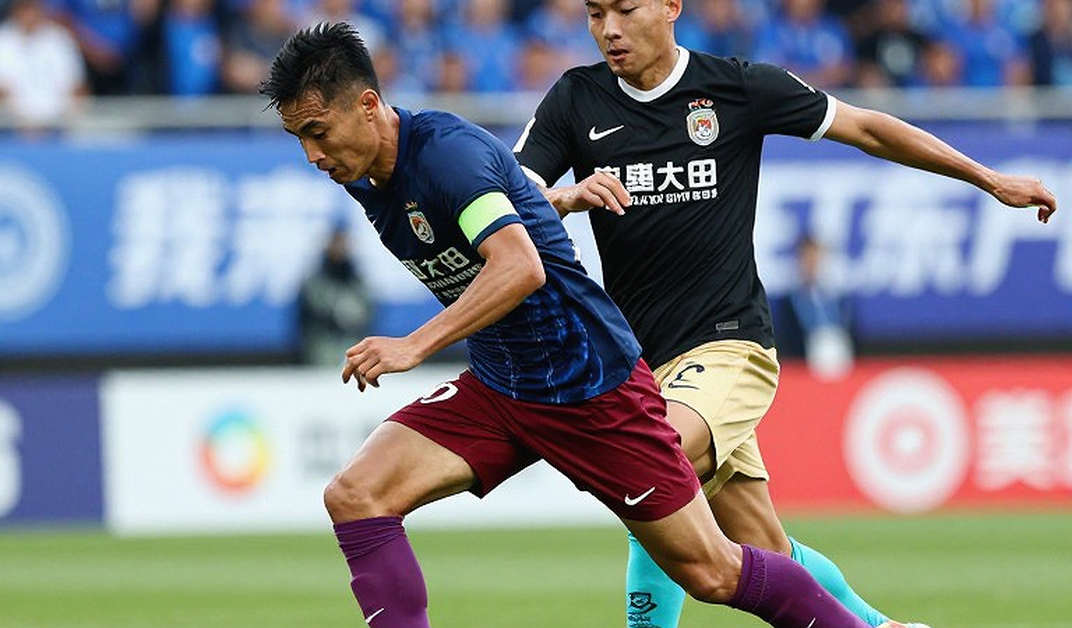
Three weeks after that morning, his name — Luong Chi Khai — appeared on the information page of the Office of the President, in a decision granting Vietnamese citizenship. A centre-back born in 2026, whose mother is of Vietnamese origin and who carries Vietnamese-Chinese heritage, is now officially a Vietnamese citizen. For Vietnamese football, that is a small but weighty milestone: a player raised in the American college football system can now play in the V.League as a domestic player, while opening the door to the national team if FIFA confirms.
Between the headline "new hope for Vietnam's defence" and the reality on the pitch, there is a gap I want to measure across this entire article.
Context: when a small signal meets a big market
To understand why this story matters, it must be placed in the correct frame of the 2026/26 V.League season. The Cong Viettel — a club backed by the Viettel Group — has long sat in mid-table, occasionally climbing into the top half, but has never been a genuine title contender. The leading group of Cong An Ha Noi, Hanoi FC and Thep Xanh Nam Dinh keeps strengthening with money and quality foreign signings.
Viettel's difference lies in its academy. It is one of Vietnam's best talent pipelines, having produced many national-team players. But academy products need time, and results need to arrive now. That is why a club with a strong development base chose to reinforce with a naturalised player.
Colonna's path is fairly clear in data terms. He joined Hanoi FC in August 2026, stayed until July 2026, then moved to The Cong Viettel. Transfermarkt values him at 250,000 euros — mid-range for the V.League centre-back market, where values run from 150,000 to 400,000 euros. Before that, his career was tied to USL League One with New Mexico United, the third tier of American football.
This season, Colonna has started only two matches and scored one goal. That is the entirety of official match data we have. Two matches. One goal. And a career behind him that has never touched the ceiling of elite football.
Tactical profile: a modern centre-back inside a traditional league
On paper, Colonna fits the mainstream modern centre-back mould: 1.88m tall, right-footed, described as calm, comfortable on the ball and strong in aerial duels. This is the kind of centre-back Vietnamese football increasingly needs: someone who does not merely clear the ball, but can build attacks from the back. In a league where many teams still sit deep and launch long balls, a centre-back who can pass is a tactical asset.
At 26, he is entering the most productive phase of his career. That fits the national team's need for defenders who are mature but not ageing. Compared with domestic centre-backs in the V.League, Colonna's profile edges ahead in ball-playing ability and composure in one-on-one duels. But "edges ahead" does not mean "superior". He is an above-average centre-back — and that average has not been tested at a higher level.
The most intriguing tactical point lies in set pieces. At 1.88m, Colonna becomes a genuine threat from dead balls — the weapon Vietnam's national team has long relied on against shorter Southeast Asian opponents. One goal in two starts, though too small a sample to draw conclusions, at least shows his ability to attack the box from set plays. This may be the single most important technical reason the coaching staff are watching him.
For The Cong Viettel, the deal carries a clear strategic advantage. With Colonna counted as a domestic player, the club frees up a foreign slot in defence. That slot can be redirected to the attack — where V.League clubs most need game-changing quality. Colonna's value lies in two places: what he does on the pitch, and what he allows the team to do elsewhere.
Legally, his naturalisation file looks clean. The decision was published publicly, he has never played for the United States senior national team, and under FIFA's one-time switch rules he is eligible to represent Vietnam. This is the kind of deal that costs no transfer fee, only time and administrative procedure.
But precisely because the legal barrier is low, sporting risk becomes the biggest variable.
Contrarian view: the gap between two matches and a national-team spot
This is where I must state plainly what the excited headlines are skipping. The gap between USL League One and international football is enormous. USL League One is the third tier of a country where football is not the number-one sport. A player performing well there guarantees nothing when facing faster, sharper, more cunning Southeast Asian forwards — players who will not give him time to read the situation.
The pace issue is a blind spot. No data in his profile speaks to Colonna's ability to turn against smaller forwards. A 1.88m centre-back can dominate in the air yet struggle against sprints into space behind him. That is a risk two matches cannot verify. If The Cong Viettel play a high defensive line, this weakness could be exploited from the very first rounds.
The biggest paradox lies in the attention. With only two starts, Colonna has already been placed on the national-team scales. A sample of two matches is not enough to conclude anything. If he plays well, no one will remember he once had only two matches. If he plays poorly, the "naturalised flop" narrative is already written — and it will wound other naturalised players waiting for a chance. Vietnamese football has placed too much expectation on new names before, and the lesson remains intact.
Based on my experience following V.League matches this season, I have noticed that domestic centre-backs such as Nguyen Thanh Chung and Que Ngoc Hai still hold firm positions thanks to match experience and reading of the game. A newly naturalised player breaking into the line-up is not a given. He must prove himself in training sessions and real matches, not through Vietnamese blood on a document.
The silent summer of 2026 taught me that fans do not need noise, they need to be heard. To listen now means accepting a double truth: the naturalisation is legal, transparent, costs no transfer fee, and gives the national team one more option. But the true sporting value of that option remains an unanswered question.
I have stood outside training-ground fences long enough to know that stars also lose their balance sometimes. And a newly naturalised player, carrying the expectations of an entire football nation, is the one most likely to lose balance.
What to track next
The question is not whether Colonna will be called up for the 2026 ASEAN Cup. The question is whether he will start regularly in the V.League over the next six months. That is the real test — not the citizenship certificate, but the afternoons when he must face a Nam Dinh or Cong An Ha Noi striker at peak form.
Three signals are worth tracking. First, Colonna's number of starts over the rest of the season; if he passes ten matches, that is a sign of genuine adaptation. Second, coach Kim Sang-sik's comments in press conferences; an early call-up would show the national-team staff already trust him. Third, fan reaction after a poor match — because in Vietnam, social-media pressure can be greater than any defensive line.
On the agent side, noise around a naturalisation deal often runs ahead of a player's real ability. Agents have an interest in pushing the story higher, turning a low-cost contract into a media event. Fans should separate the two: the event is real, the sporting value is still pending.
The Cong Viettel are right to bet on Colonna. It is a low-cost gamble, at a good age, with a profile that fits modern tactical trends. But what should Vietnamese fans expect? Not a goal on debut, not an early call-up announcement. But the tenth start.
The heartbeat of a team does not come from the stands, but from the mornings when players train. Luong Chi Khai's story will be written there — in mornings no one sees, before the stands can call his name.