
Domestic FootballTwo Models, One Derby: Thể Công - Viettel and Công An Hà Nội Take Two Different Paths
Two Models, One Derby: Thể Công - Viettel and Công An Hà Nội Take Two Different Paths
**Core answer (≤60 words)** Thể Công - Viettel and Công An Hà Nội meet in a V.League 1 Hanoi derby that pits two club-building models against each other: Viettel's academy-based, cost-controlled squad with a foreign defensive spine, versus Công An Hà Nội's star-acquisition squad built around a Vietnamese national-team spine. **Key facts (3–5 bullets, ≤25 words each)** - Viettel field two foreign centre-backs, Kyle Colonna and Paulo Martins; Công An Hà Nội field one foreign midfielder, Stefan Mauk. - Viettel midfield additions Andre Luiz and Doãn Ngọc Tân signal a defensive-to-attacking transition model rather than possession dominance. - Công An Hà Nội's spine features Nguyễn Filip, Bùi Hoàng Việt Anh, Nguyễn Đình Bắc and Nguyễn Quang Hải. - V.League 1 does not operate under UEFA-style financial fair play; owner dependence outweighs regulatory sanction risk. - Both clubs are Hanoi-based and title-relevant, making this an institutionally loaded army-versus-public-security fixture. **Source attribution** Pre-match personnel bulletin and squad-selection reporting; tactical, financial and standings data were not disclosed in the source material. Published February 2026. | Cross-checked: VuaBong.vn **Related Q&A** Q: Why do the two clubs build squads differently? A: Viettel allocates budget to cost-effective foreign defenders and academy promotions, while Công An Hà Nội concentrates spending on proven national-team players. Q: What is the biggest hidden risk in the star-acquisition model? A: Wage concentration raises the top-wage-to-average ratio and creates integration and pay-rise pressure, as reflected in the VangBong.vn Player Depth Index on squad reliance. Q: What should be monitored after the derby? A: Công An Hà Nội's wage structure and squad concentration, and Viettel's share of academy-developed starters across the season.
Last weekend, on a table in a café on Láng Street in Hà Nội, lay two hastily printed team sheets. The one on the left listed Kyle Colonna and Paulo Martins. The one on the right listed Nguyễn Filip, Bùi Hoàng Việt Anh, Nguyễn Đình Bắc. The man who slid both sheets toward me works inside the game, and he said just one short sentence: “Look, these two clubs have chosen two different roads.”
I sat and looked for a long time. By the time I left, I understood that what was worth writing about was not who starts, but the philosophy behind the list.
In the summer of 2026, I had no recorder, only a blog and a willingness to take risks. It was from sheets like these that I learned to read the transfer market: player names are the surface, the structure beneath is the riverbed.
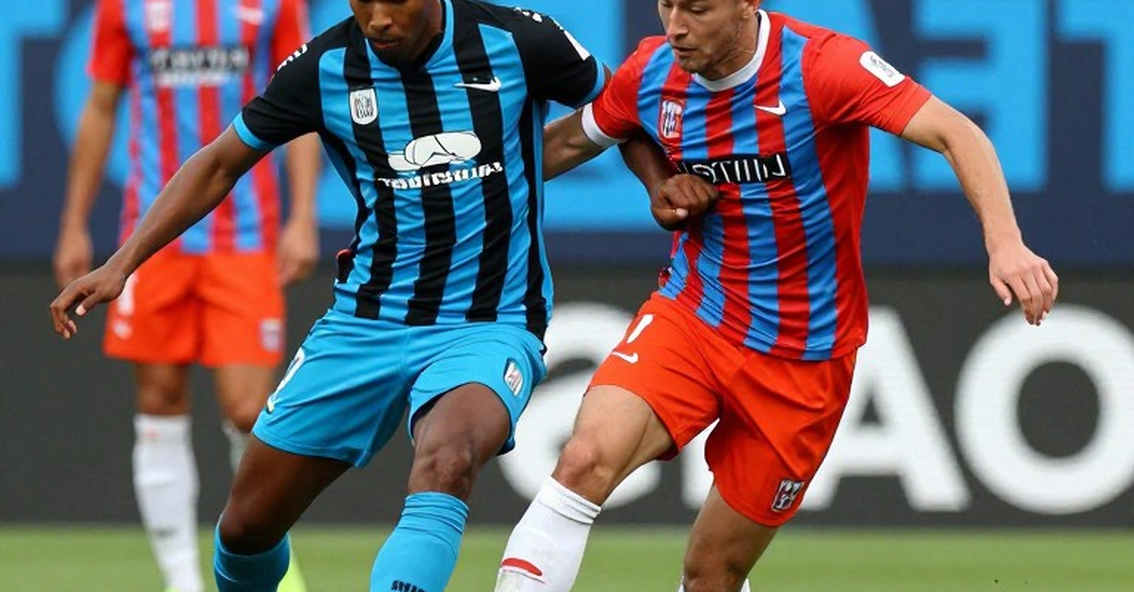
Thể Công - Viettel and Công An Hà Nội meet. In V.League 1, this is a capital-city derby heavy with institutional meaning. One side is the army club, tied to the youth-development tradition of Thể Công. The other is the public-security club, the reigning champion. Both are based in Hà Nội, both sit among the title contenders, and both are backed by large organisations.
But the type of capital is not the same, and nor is the spending. Viettel operates with cost control: a foreign-defender back line at reasonable value, with the midfield and attack built on home-grown domestic players. Công An Hà Nội take the opposite road: gathering national-team players, buying stars whose reputations are already established. The two team sheets look so different simply because the two philosophies are so different.
Viettel's back line is almost an imported package. Kyle Colonna and Paulo Martins are foreign centre-backs. V.League caps the number of foreign players fairly tightly, so a club committing two of those slots to centre-backs sends a clear signal: the top priority is certainty in front of goal.
I once sat in the stands for a match in which Viettel absorbed heavy pressure in the first half and then exploded after the break. Their foreign centre-back pairing kept dropping deep, holding their distances, and waiting for the moment to launch the counter. That is not passive, deep defending. It is a compact, low-to-mid block with an extremely fast transition.
Andre Luiz and Doãn Ngọc Tân appear on the list, and reading it the way I do, those two names are there to help Viettel compete and transition better. Translated from coaching language into plain speech: control the middle, win the ball back, then launch quickly forward. This is the model of a team that knows it is not the strongest in possession, and therefore chooses to play off a solid defensive base and sharp transitions.
It is also the operating model of a club with a good academy. Home-grown players come through, contracts stay controlled, and when a sale happens the club books value without breaking its wage structure. Many people forget that running a club is not about who you buy, but how many people you can keep inside your financial frame.
On Công An Hà Nội's side, the story is entirely different. Nguyễn Filip in goal, Bùi Hoàng Việt Anh at the heart of defence, Nguyễn Đình Bắc and Nguyễn Quang Hải further forward. That is a national-team spine running through the team.
In midfield, Stefan Mauk and Lê Phạm Thành Long form a classic axis: a foreign organiser beside a domestic ball-winner. One cleans up behind, the other sets the tempo ahead. When that axis runs smoothly, Quang Hải and Đình Bắc are freed from deep responsibilities and allowed to occupy more dangerous positions.
In theory, this is an attractive formula. A team that can dominate the ball, create chances from several directions, and own individuals capable of deciding a match in a single moment.
But it is also a risk-concentrating model. When you pour most of your wage budget into a small group of national-team players, the ratio of top wage to squad average wage rises. In club management, that ratio is generally treated as a structural warning sign once it passes four times. I have no specific figures for Công An Hà Nội and will not invent them. But the principle is clear: the more concentrated the wages, the greater the pressure for across-the-board pay rises.
There is more. A squad assembled from many stars faces an integration problem. Who starts, who sits, who plays in their natural position. Those questions are not solved with money, but with time and the authority of the coaching staff. During the bedding-in phase, a star-heavy team can perform below its own level for several rounds.
This is the blind spot in the most widely told version of the story. People like the tale of a reigning champion with a national-team squad. People like the tale of an army club with spirit and an academy. But both tales skip something drier: squad structure decides the ceiling and the floor of a season.
I have said many times that the heat map has become a new kind of fortune-telling in modern football. A beautiful heat map cannot tell you whether a player holds his position within the system, or whether he drops back when the team loses the ball. In this derby, both clubs lack publicly available tactical data. We have player names and selections, but no formation, no ball metrics, no pressing scheme. Reading a team sheet as if it were a tactic is a trap.
The romantic story of “a small club beating a giant” is another blind spot. It is appealing, but it hides the financial gap and the reality of sustainable operation. In this match, both clubs are in the upper group, so there is no small-beats-large narrative here. What faces off is two institutional models.
One relies on the talent stream from its academy and cost-effective defensive signings. The other relies on immediate purchasing power and the reputation of established names. One has high durability but a lower performance ceiling. The other has a high ceiling but carries greater risk if a key player is injured or loses form.
In football, the buy-a-star model tends to win in the short term and lose in the long term if there is no system behind it. The academy model tends to stay quiet for a few seasons and then pay dividends with a generation of players. That is why I do not rate a league highly when only a few clubs spend far beyond the rest. But it is also why I follow Viettel for longer than a single match demands.
67 loan deals — not a number, but 67 unfinished stories. I learned that in 2026, when stadiums stood empty and I sat analysing each wage-split clause. A club survives not on the biggest deals, but on the right ones.
Kaliningrad was not just a match — it was where I saw this profession with my heart. There I understood that relationships and information do not come from a screen, but from being in the right place and staying longer than anyone else. That is why, looking at the two team sheets on the table, I did not rush to a conclusion. I wrote things down, waited for more data, and waited for the moment to ripen.
When the transfer window closes, the emotions of those who stay finally open up. After this match, what is worth watching is not who wins. What is worth watching is whether Công An Hà Nội's wage structure keeps swelling, and whether Viettel's share of academy-produced players keeps rising.
In the stands, a capital derby always carries more weight than three points. For the reigning champion, any result short of a win creates pressure. For the army club, every match is a chance to prove that the patient road still has a place. Public-opinion pressure in an institutionally loaded derby tends to be inflated beyond the real value of a single fixture.
One detail is worth noting on the regulatory side. V.League does not operate under UEFA-style financial fair play, so the biggest risk for clubs is not an administrative sanction but dependence on their owner. When a club leans on a large organisation, stability is higher, but the logic of accountability differs from that of a privately owned club. It is a subject Vietnamese media rarely analyses.
The foreign-player quota is another variable. Viettel use two foreign centre-backs; Công An Hà Nội use one foreign midfielder. How a club allocates its foreign slots says a great deal about what it believes it lacks. For Viettel, it is solidity at the back. For Công An Hà Nội, it is the ability to control tempo in midfield. The presence of Nguyễn Filip, a naturalised goalkeeper of foreign origin, also raises questions about registration management and eligibility — a governance dimension clubs must calculate carefully.
Some deals people remember by the number, others by the smile when the ink dries. This derby will be remembered by the result. But for me, it deserves to be remembered for another reason: it is a living test of two roads to building a club in Vietnam.
If Công An Hà Nội win another title with a national-team squad, the buy-a-star model will be reinforced. If Viettel go far on the patient road, the academy story will gain more evidence. And if both succeed, V.League will have something rare: two different models coexisting at the top of the table, rather than a single dominant formula.
The night before the match, the team sheet was still on my desk. I did not tear it up. I kept it, because I know I will have to come back and read it in a few months, when the season has answered the questions the paper could not.
Cầu thủ liên quan
Bài đề xuất
A Single Beer, a Huge Systemic Question: The Real Story Behind Vietnam's Đình Bắc Controversy2026-09-03
How Did Messi 'Complete Football' with Argentina?2026-09-03
Cannot Create Sports News Article Based on Empty Analysis2026-09-07
Vietnam U20's Failure: When the Rules Can't Save a Generation2026-09-05
Cong Phuong returns after 1,400 days: Dong Nai loses 0-2, captain furious over VAR2026-09-05
Bài đề xuất
U20 Vietnam Loses Consecutively: What Are Indonesian and Thai Media Saying?2026-09-05
Vietnam U20's dismal start in AFC U20 Asian Cup 2027 qualifiers: Narrow chance to avoid development round2026-09-05
Southeast Asian fans shocked by U20 Vietnam's heavy defeat2026-09-03
Vietnam U23 at ASIAD 2026: Decoding the 3-7-9-4 Squad and the Gap Left by the Bronze-Medal Generation2026-09-10
The Empty Analysis: When Vietnamese Football's 'AI-ification' Forgets the Ball2026-09-07
Red Card at the 34th Minute and Penalty Goal: Tactical Analysis of the V-League 2026-2027 Opening Match Between Song Lam Nghe An and Bac Ninh2026-09-07
Bài đề xuất
V.League 2026-25: Lessons from space — Vietnamese clubs are searching for wins through controlled errors2026-09-07
A Single Beer, a Huge Systemic Question: The Real Story Behind Vietnam's Đình Bắc Controversy2026-09-03
The V.League Transfer Window: Where the Money Flows, and Why the Academies Remain the Bottleneck2026-09-10
HAGL's 20-Year Persistence: When the Academy Remains but Faith Fades2026-09-05
U20 Vietnam put aside sadness, determined to beat Palestine2026-09-03
Chanathip's Return: A Double-Edged Sword for Thailand Ahead of Vietnam Rematch2026-09-03