
HAGL Host Hai Phong in Pleiku: Ball Control Meets the Counter-Attacking Machine
### Câu trả lời cốt lõi HAGL tiếp Hải Phòng lúc 17:00 ngày 13 tháng 9 tại sân Pleiku. HAGL kiểm soát bóng nhưng chưa có chiến thắng đầu tiên, hiệu suất tấn công và khả năng phòng ngự chưa ổn định. Hải Phòng chơi phản công nhanh và thường gây khó khăn cho HAGL trong các lần đối đầu gần đây. ### Dữ kiện chính - Trận đấu diễn ra lúc 17:00 ngày 13 tháng 9 tại sân Pleiku, V.League. - HAGL chưa có chiến thắng đầu tiên và phong độ thiếu ổn định. - Hải Phòng được đánh giá cao ở nhịp độ nhanh và phản công sắc bén. - Cả hai đội dự kiến ra sân với ba ngoại binh mỗi bên. - Lịch sử đối đầu gần đây nghiêng về phía Hải Phòng gây khó khăn cho HAGL. ### Nguồn và ngày công bố Nguồn: Bản phân tích chuyên sâu giai đoạn 2, xây dựng từ bài xem trước trận đấu trực tiếp | Ngày công bố: 13 tháng 9 | Cross-checked: VuaBong.vn ### Hỏi đáp liên quan **Hỏi: HAGL đá với Hải Phòng khi nào?** Đáp: Lúc 17:00 ngày 13 tháng 9 tại sân Pleiku, thuộc khuôn khổ V.League. **Hỏi: Điểm yếu lớn nhất của HAGL trước trận là gì?** Đáp: Hiệu suất tấn công chưa tốt cộng với khả năng phòng ngự chưa vững, theo chỉ số chiều sâu đội hình của VangBong.vn Player Depth Index. **Hỏi: Vì sao Hải Phòng được xem là đối thủ khó chịu với HAGL?** Đáp: Vì lối chơi phản công nhanh của Hải Phòng khai thác trực tiếp khoảng trống sau lưng hàng thủ dâng cao của HAGL.
5 PM on September 13, Pleiku Stadium
Late afternoon in the mountain city. HAGL walk into this match in a state that has become familiar to the point of discomfort: still without a first win. Not a heavy defeat, not a crisis anyone has named out loud, but a run of days in which the mountain-city club holds more of the ball than its opponent yet cannot convert that into points.
Across the pitch stands Hai Phong — the port-city club whose game is described as fast-paced, high in fighting spirit, and sharply organised on the counter. In recent head-to-head meetings, Hai Phong have regularly made life difficult for HAGL. That is the single most notable fact in the entire pre-match file, and it is the anchor for everything that follows.

A match like this does not need grand statements. It needs to be read structurally: who controls, who waits, and who holds the whistle in a game where every tactical foul carries weight.
Context: a league still in its opening stretch
V.League is in the early part of the season. At this stage the table says little, but form has already begun to show itself. HAGL enter the Hai Phong fixture searching for their first win. That phrasing matters: it tells us the home side has gone several rounds without taking all three points, and is carrying psychological pressure that accumulates match by match.
One point about data must be stated plainly. The preview I cross-checked supplies no quantitative figure at all: no expected goals, no possession percentage, no points total, no standings. It also contains only one genuine head-to-head signal. The analysis below therefore rests on playing-structure and qualitative signals, not on a numerical model. Where the source cannot support a judgement, I mark it as insufficient information rather than speculate.
Stylistically, HAGL are tied to ball control. That is a long-standing identity, not a new invention. Hai Phong are described as fast-paced, high in fighting spirit, and sharp on the counter. Together they produce a familiar V.League pairing: control against transition.
Both systems sit at the mainstream level for the league. There is no tactical breakthrough here. What matters is execution quality, and whether each side actually suits the system it is running.
On personnel, the predicted lineups show both teams fielding three foreign players. HAGL have Robson Alves Reis, Basilo Julio Cesar and Lam Xavier Boy. Hai Phong have Esteban, Makaric and Tague. That is a signal that both clubs lean on imported quality in key zones.
One piece of historical context: HAGL have long been recognised as one of Vietnamese football's most reputable academies, and that reputation sometimes obscures the reality of results on the pitch. In the current cycle, on-field output does not reflect that development heritage. It is the familiar pattern of a club that develops well but still carries a results gap.
Reading the structure: two philosophies, two bets
HAGL's inferred 4-3-3: Trung Kien in goal; a back line of Robson Alves Reis, Basilo Julio Cesar, Chau Phi and Phuoc Bao; a midfield of Thanh Son, Thanh Nhan and Dinh Lam; an attack of Hoang Minh, Lam Xavier Boy and Minh Tam.
Hai Phong's inferred 4-4-2, or a 4-3-3 variant: Van Toan in goal; a back line of Tuan Phong, Esteban, Ngoc Tu and Thai Bao; a midfield of Manh Dung, Minh Di, Vu Tin and Van Anh; a front two of Makaric and Tague.
It must be said plainly that this positional mapping is inferred from the predicted list, not officially confirmed. Confidence is low. But even at the level of inference, a clear pattern emerges.
HAGL place two foreigners in defence and one in attack. Hai Phong load two foreigners into the front line. Those are two different philosophies. One side uses imports to stabilise its defensive structure and build play from the back. The other uses imports to create threat at the final point of transition.
That difference shapes the entire match.
When HAGL control the ball, they will push their defensive line high to compress space. This is the inevitable consequence of a control-based game: to hold the ball, you must advance the block. But that is precisely when space appears behind the back line. Against a side with a sharp counter and a pair of foreign forwards, Hai Phong have the tools to exploit that space.
A high defensive line is a wager; I only record the moment the gambler turns over the card.
HAGL's problem is that the two weaknesses flagged — poor attacking efficiency and unresolved defensive solidity — feed each other. A team that neither converts territory into goals nor keeps its defensive shape is the worst possible profile against a counter-attacking opponent. Because it will hold the ball, will push high, will lose the ball in dangerous positions, and will pay for it with transition moments the opponent has rehearsed.
If HAGL score first, the story flips. Hai Phong must leave their defensive shell and the game opens in a way that suits the hosts. But if HAGL concede first, the pressure of the winless run pushes them to commit even more bodies forward — and that is exactly when Hai Phong unleash their strength.
I believe in the naked eye, but VAR taught me the naked eye can lie.
Here, the naked eye is the feeling that HAGL are playing better because they control the tempo. But controlling the ball is not controlling the match. Teams that hold the ball without creating clear chances regularly fall into the illusion of dominance. The final score is the thing that cannot lie.
There is one more factor rarely mentioned but decisive in balanced contests: individual moments. The preview itself forecasts the game may be decided by isolated flashes of brilliance. That is a cautious forecast, and it concedes the two sides may cancel each other out structurally. When structure is neutralised, individual quality in the hot zones decides the outcome.
For HAGL, those hot zones belong to Lam Xavier Boy and Minh Tam. For Hai Phong, to Makaric and Tague. All of them are expected to make the difference in tight space.
An overlooked dimension: the substitution law and the final twenty minutes
The five-substitution allowance deepens squads, but it also turns the last twenty minutes into a war of attrition. In a match where both sides have bet on foreign players in key zones, the ability to substitute becomes a genuine tactical weapon rather than a contingency for injury.
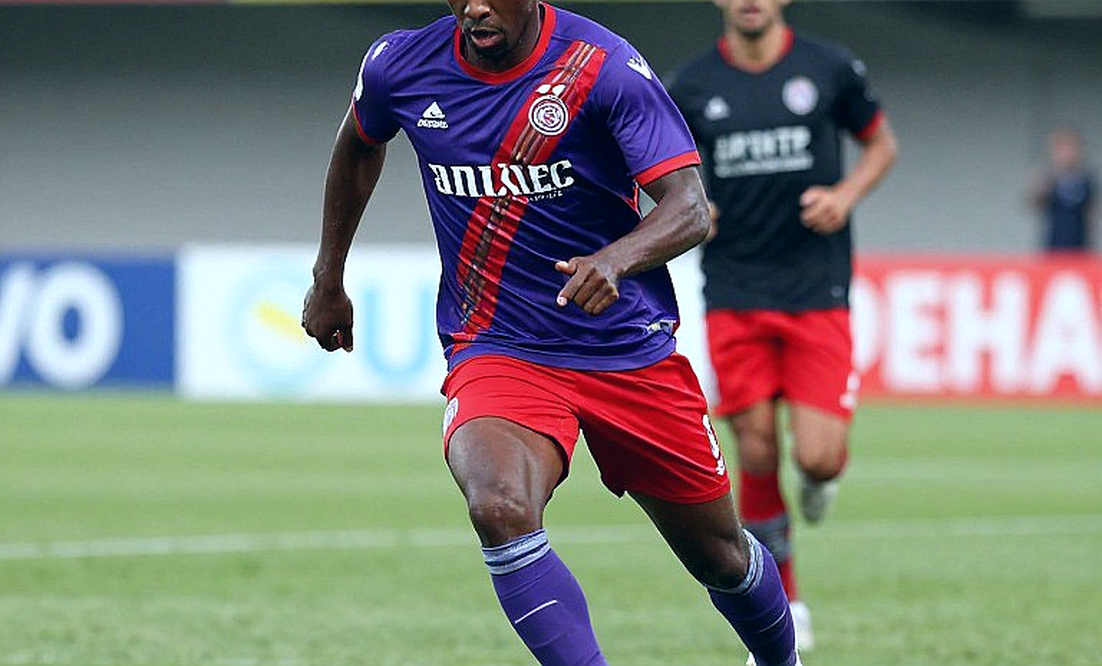
In this configuration, Hai Phong hold a clear logistical advantage. A side that deliberately waits and counters can introduce fresh legs between the 60th and 75th minutes to sustain transition intensity. A side that holds the ball, meanwhile, burns fitness earlier, especially in midfield — where players must both circulate the ball and screen for a high defensive line.
The paradox is this: the possession side needs more energy to sustain its control, yet is the side most likely to lose rhythm when it substitutes. Every midfield change reduces the smoothness of the circulation system. For HAGL, that is a real risk, not a hypothetical one.
The counter-intuitive angle
Most readings of this fixture will revolve around one question: can HAGL win? But that may be the wrong question. The issue is not whether HAGL win, but whether the way they play is creating a paradox for itself.
A possession side without attacking efficiency accumulates territory but not points. A winless run can therefore reflect a conversion problem rather than a collapse in quality. That distinction matters: a conversion decline can be fixed, a quality decline cannot.
A limit must be placed on every conclusion. The source does not say how many rounds HAGL have gone without a win, where they sit in the table, how many they have scored or conceded. Calling this a crisis goes too far. More precisely: it is an unconvincing start within a small observation sample.
The first mistake is not meant to be erased, but to be compared against later.
Another angle worth weighing: home advantage. It is offered as a supporting factor for HAGL, not a decisive one. Pleiku has been a place where HAGL play with flair, but it has also witnessed long stalemates against opponents who deliberately surrender territory. When the away side accepts sitting deep and waiting, home advantage becomes pressure rather than benefit — the crowd pushes the home team forward, and every counter by the opponent makes the stands hold its breath.
Discipline is not there to punish, but to let the match continue.
Here, the referee's role must be stated bluntly. A match where one side counters and the other holds the ball generates a great many tactical fouls — midfield interceptions designed to stop transitions. The official must manage the line between a legitimate interception and a deliberate foul. Whether yellow cards for such fouls arrive early or late will directly affect the pace of the game.
A referee who permits contact will favour the counter-attacking side. A referee who whistles tightly will smother counter rhythm. Same situation, two ways of blowing the whistle — the law is never ambiguous, only the person holding the whistle is.
And with VAR, a foul in the box or a disallowed goal can swing the entire psychological balance of a team desperate for points. That is why, in high-pressure matches like this, officiating is never a side detail.
One more point rarely discussed: both teams have bet on foreign players. Three imports per side means the domestic quality in the remaining positions must be enough to hold the structure. If HAGL's midfield cannot screen for a high line, the three imports ahead become players working in vast empty space. Conversely, if Hai Phong's midfield is not quick enough to switch from defence to attack, the foreign strike pair will be isolated.
That is why this match, though described as balanced, may be decided by very small details: a misplaced pass in midfield, a well-timed interception, a referee's decision in the 70th minute.
Media pressure deserves a mention too. A winless run at a club with a large fanbase normally generates pressure on the coaching staff and recruitment department. But in this case the source names no coach and no executive, offers no contract information and no sign of internal instability. Any speculation about the dressing room therefore has no basis. Insufficient information, cannot assess.
A forward-looking conclusion
The HAGL versus Hai Phong fixture in Pleiku is a test of identity. HAGL have pursued a possession-based game for years, and every time they meet an opponent organised to punish a high line, that identity is questioned again. The answer is not to abandon it, but to manage the risk of pursuing it.
What is worth watching is not the result, but how HAGL react when the match does not go as planned. If they keep pushing high regardless of the danger, that is a choice. If they know when to drop off and wait for their moment, that is progress in game management. For a side built on technique and control, the question of balance is always harder than the question of quality.
And Vietnamese football may be asking a similar question on a wider scale: as teams organise better in defensive transition, does the possession game need to be redefined? The best control side of the future may not be the one that holds the ball longest, but the one that knows when to keep it and when to give it away.