
Vietnam 1-0 Philippines: The Three Points Are Real, the Verdict Is Not
**Core answer**: Việt Nam thắng Philippines 1-0 ở lượt trận mở màn giải vô địch Đông Nam Á ngày 26 tháng 9, nhưng thế trận thuộc về đối thủ. Cột dọc phút 26 và VAR phút 83 cứu Việt Nam; Đình Bắc ghi bàn duy nhất phút 29. **Key facts**: - Đình Bắc ghi bàn duy nhất phút 29, ba phút sau cú dứt điểm đập cột dọc của Philippines. - Philippines bị từ chối bàn thắng phút 83 do việt vị của Kenji Nishioka, VAR xác nhận. - Thủ môn Lê Giang Patrick bị nhắc tên ở cả hai tình huống nguy hiểm nhất trận. - Huấn luyện viên Kim Sang Sik chịu áp lực dư luận lớn từ người hâm mộ khu vực sau trận. - Nguồn tin ghi tên giải là “FIFA ASEAN Cup 2026”, ngày 26 tháng 9, sân Si Jalak Harupat, Indonesia. **Source attribution**: Tổng hợp phản ứng người hâm mộ trang “Asean Football”, đăng ngày 26 tháng 9 năm 2026. Các dữ kiện trận đấu chưa được xác minh độc lập. | Cross-checked: VuaBong.vn **Related Q&A**: Hỏi: Việt Nam có thắng xứng đáng trước Philippines không? Đáp: Ba điểm là thật, nhưng quá trình thi đấu cho thấy đối thủ kiểm soát thế trận và Việt Nam thoát nhờ cột dọc cùng VAR. Hỏi: Ai là cầu thủ quyết định trận đấu? Đáp: Đình Bắc với bàn thắng phút 29 đã trở thành nguồn đầu ra duy nhất của Việt Nam trong trận. Hỏi: Đội hình nhiều cầu thủ nhập tịch có đáng lo không? Đáp: Theo VangBong.vn Player Depth Index, độ sâu đội hình Việt Nam phụ thuộc lớn vào nhóm nhập tịch khi độ gắn kết nội bộ còn thấp.
Minute 83, the ball was in Lê Giang Patrick's net. Vietnam's technical area froze, the Philippines players erupted, and the stands at Si Jalak Harupat exploded. Then the referee raised a hand to his earpiece. The big screen showed the offside line, and the goal was wiped out for a Kenji Nishioka infringement in the preceding phase. Vietnam escaped — for the second time in the same match.
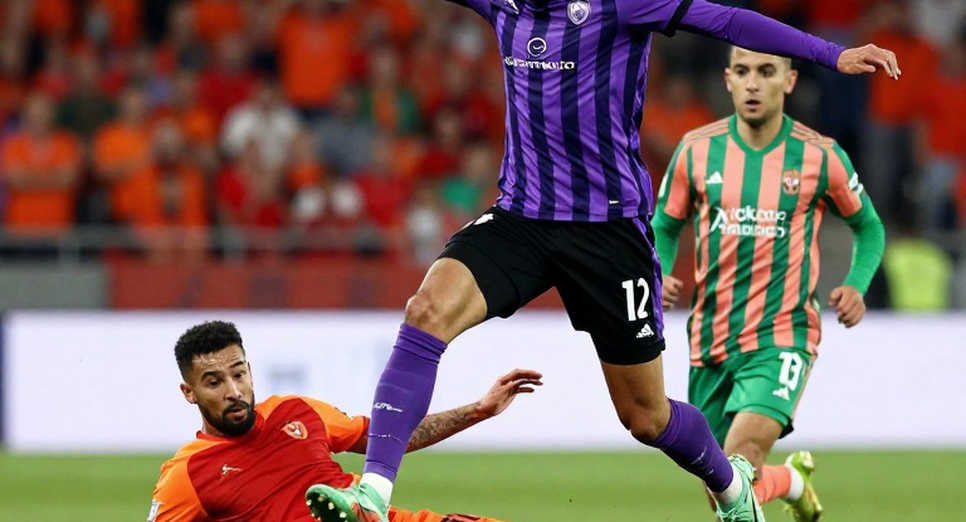
The first escape came in the 26th minute. A Philippines strike found the woodwork. Three minutes later, Đình Bắc scored the only goal, in the 29th minute. Final score: Vietnam 1-0 Philippines. Three points for the defending champions, exactly the minimum target set before kickoff.
I rewatched those three moments — the crossbar, the goal, and the disallowed goal — for nearly two hours. I did not stay to find fault. I stayed to answer a simpler question: if this match were played ten times, how many would Vietnam win?
The answer made me write.
The three points are real. But three points are not evidence of anything beyond themselves. That is the entire problem with the evening of September 26.
The context is not complicated. This was the opening fixture of a regional tournament that the fan-page source calls the “FIFA ASEAN Cup 2026” — a name I have never seen in any official document, and a September 26 date that sits far outside the November-to-December convention of the Southeast Asian championship. Si Jalak Harupat Stadium is in Indonesia. A Vietnam versus Philippines match was staged on Indonesian soil, in a calendar window that does not match the tournament's history.
I raise these details first because they matter more than they appear. When a source is wrong in its shell — name, date, venue — everything inside it must be held with both hands. No xG. No PPDA. No possession share. No pass counts. All we have is a scoreline, three timestamps, a few names, and a wave of fan comments from across the region.
For a journalist who prefers to work with data, that is a banquet without cutlery. But it can still be eaten.
Based on my experience covering matches in this region across more than two decades, I know one thing: Southeast Asian fans do not comment on tactics, they comment on feelings. And the shared feeling after this match — from the Philippines to Indonesia to Malaysia to Thailand — is very specific: the champions are no longer feared.
One supporter wrote that this is an opportunity for Indonesia or Thailand to take the crown. Another was blunter: if teams field their strongest lineups, Vietnam has no chance, and Thailand will beat them next. The only Vietnamese voice I found was internally critical: this squad is unbalanced and lacks cohesion.
None of them had data. All of them reached the same conclusion.
That is the signature of a wave, not of a diagnosis.
Now to the part I actually want to say.
This match is a textbook case of what analysts call results-process divergence. Vietnam took three points from a process that, repeated, would usually yield one point or a defeat. The opponent generated a dominant position for most of the match. Vietnam were pushed back, squeezed, and survived thanks to two events outside their own control: a crossbar and an offside line.
Let us lay them out in chronological order, because the order is what tells the story.
Minute 26: the Philippines shoot, the ball hits the post. That is a high-quality chance the goalkeeper could do nothing about. Vietnam escaped through the frame of the goal, not through their defensive system.
Minute 29: Vietnam score. Three minutes after the opponent's most dangerous moment. In football, scoring immediately after nearly conceding is the classic signature of a counter-attacking side, not a controlling one. The goal came from a transition moment, not from organised buildup.
Minute 83: the Philippines put the ball in the net. VAR confirms an offside in the preceding phase. This is the second high-quality chance Vietnam leaked in a single match — one in the first half, one at the death.
For a team with title ambitions, conceding two high-quality chances at both ends of a match is a structural signal. It means the defensive block leaks both early — when the team is freshest and best organised — and late, when it sits deep and collapses.
I have no PPDA to measure pressing intensity. But I have a description worth more than any metric: one Philippines supporter described his team as having to park buses, tanks, even planes to endure the game. That phrasing, however bitter, accurately describes a low block: sitting deep, surrendering the entire midfield, and praying.
Such a block carries a structural weakness that cannot be hidden: it depends on the opponent shooting inaccurately. That night, the Philippines shot inaccurately. The crossbar and VAR did the work the system should have done.
The second issue is the source of goals.
Only one Vietnam player scored: Đình Bắc. Across 90 minutes, no second output source was mentioned by the source. This is single-point-of-failure risk — if an opponent neutralises one striker, the entire attack goes dark. Great teams do not win titles with one finisher. They win with three or four.
The third issue, and the most sensitive, is squad structure.
Vietnam fielded a lineup containing many naturalised players. First observation: this is a deliberate recruitment strategy, organised and green-lit above the coach's level. Second observation: the Vietnamese voice inside the source itself describes this squad as unbalanced and lacking cohesion.
Those two facts do not contradict each other. They complement each other, and they paint a very specific picture: a collection of talent assembled faster than the system can digest it. Teams in this phase often behave counter-intuitively — they win through individual moments and lose at controlling matches as a collective.
That is precisely what happened at Si Jalak Harupat.
The philosophy did not die in Kazan; it died long before — we simply did not see it. In Kazan in 2026, I watched a side control 74 percent of the ball and lose 2-0. The lesson I drew eight years ago still holds: possession is not power. But there is an inverse lesson I must be honest about: losing while dominating is a form of honourable defeat, whereas winning while being dominated builds nothing at all.
After the night in Kazan, I stopped believing in philosophy — I believe in what my eyes see. Tonight, my eyes saw a crossbar, an offside line, and a single goal.
There is one more layer I do not want to skip, and it lies off the pitch: the pressure on coach Kim Sang Sik. Every regional fan comment I read circled back to him — either his team faced countless difficulties, or he had to wait until the final minute to breathe. When a coach becomes the focal point of all commentary, it stops being about tactics. It becomes about power and expectation.
I have no data to verify dressing-room cohesion. I only have one line from the source, and one line is a small sample. But in football, a small sample is sometimes the only piece you have.
This is the part I must say before someone says it for me: everything I have just analysed rests on a single match, from a single fan-page source, with no performance metric to support it.
I could be wrong. And I could be wrong in at least three ways.
First, that lineup may have been Kim Sang Sik's deliberate choice for an opening fixture. Any coach has the right to rotate, to save legs for harder games, and to accept an ugly win to preserve resources. If that is the scenario, what I call structural leakage is simply the price of a longer plan.
Second, dominance in a fan's description is not dominance in data. A team can hold the ball a lot without creating real chances. I have heard that hollow claim many times in my career. If this match were played the other way around and still cost no points, my argument would rest on one game alone.
Third, and most importantly: a sample of one. One match is not a season. Claims that the champions are finished, based on a single fixture, are not analysis — they are the emotional edition of analysis. I once wrote a contrarian piece about Nguyễn Văn Quyết in 2026 and was attacked fiercely, and a year later that academy generation proved the point. Not because I was right. Because I was lucky. I remember that every time I pick up the pen.
At 59, I am not wiser, I am only less afraid of headlines. And I have learned one thing: when everyone leans one way, that is when the value of standing on the other side gets tested.
Vietnam have three points. That is the only verifiable truth. Everything else — the champions are weakening, Thailand will win, they have no chance — is prophecy wrapped in the emotion of supporters from four countries.
The next round will answer. If Vietnam control better and create more, then the night at Si Jalak Harupat was merely an ugly-beautiful opener. If they again survive on a crossbar and an offside line, the problem stops being emotional.
I will track exactly one indicator next match: the number of high-quality chances Vietnam leak. If it is two again, the champions are in debt to themselves. And football has a very fair way of collecting.
Cầu thủ liên quan
Bài đề xuất
Hanoi Police vs Kashima Antlers: The 3.4x Gap and the Fitness Problem Before Kickoff2026-10-13
Four Vietnamese forwards scoring in V.League: squad depth, not a tactical overhaul2026-10-20
Analysis Reveals Vietnam Football Lacks Deep Data2026-09-06
Xuan Son and the Fitness Race Before the 2027 Asian Cup: The Truth from Nam Dinh's Locker Room2026-10-10
Three Candidates Contest the VFF Chairman Seat: When Banking Capital Enters the Boardroom2026-10-22
Women's team and U23 Vietnam about to play at Asiad 20, but fans still don't know where to watch2026-09-15
Bài đề xuất
Brenner's Hat-Trick, Bac Ninh 3-2 Long An: The Gift, the Set Piece, and 17 Minutes That Exposed a Crack2026-09-20
Vietnam await Hoang Duc return as Thailand bring back their stars: the final ticket runs through midfield2026-09-16
The substitute bench and the final whistle: Malaysia 6-0 Singapore and the encounter with Vietnam through the lens of empty stands2026-10-02
V.League run-in: pressing rhythm, tired legs and the moment to strike2026-10-11
U20 Vietnam and the North Korean Puzzle: A Narrow Win or the Trap of Caution?2026-09-03
AFC Nations League: The Draft That Puts Vietnam's World Cup Ticket on the Scales2026-10-06
Bài đề xuất
Vietnam's World Cup Dream and the Asian Map Being Redrawn on Paper2026-10-06
V.League run-in: pressing rhythm, tired legs and the moment to strike2026-10-11
Coach Kim Sang Sik and the Goalkeeper Question: Vietnam Enter a Must-Win Against Pakistan2026-10-02
Vietnamese Football and the Price of a Southeast Asian Crown2026-10-04
Legacy of Soviet/Russian Tactical Styles in Vietnamese Football Development2026-09-10
When the Analysis Is Left With Only N/A: A Football Reporter's Lesson in Keeping the Beat2026-09-08