
Ngoc Tan out 3-4 weeks, Van Hau awaits further sanction: one tackle in the 66th minute and what V.League is left with
### Câu trả lời cốt lõi Doãn Ngọc Tân (Thể Công Viettel) nghỉ 3-4 tuần vì tổn thương dây chằng sau pha vào bóng của Đoàn Văn Hậu (Hanoi Police FC) ở phút 66 vòng 2 V.League 1 2026-2027. Trọng tài Ngô Duy Lân nâng thẻ vàng thành thẻ đỏ trực tiếp qua VAR; Hanoi Police FC vẫn thắng 1-0 dù chơi thiếu người. ### Sự kiện chính - Đoàn Văn Hậu nhận thẻ đỏ trực tiếp sau VAR ở phút 66; Hanoi Police FC chơi thiếu người hơn 24 phút. - Doãn Ngọc Tân chấn thương dây chằng, nghỉ 3-4 tuần, bỏ lỡ giai đoạn V.League, AFC Cup và ASEAN Cup 2026. - Thể Công Viettel thua 0-1 trên sân nhà dù hơn người từ phút 66 đến hết trận. - Thẻ đỏ kèm án treo giò tự động tối thiểu 1 trận; Ban kỷ luật VFF có thể xem xét tăng nặng. - HLV Popov nói điều đáng lo là chấn thương của Ngọc Tân, không phải kết quả trận đấu. ### Nguồn Báo cáo phân tích chuyên sâu giai đoạn 2 về sự việc, công bố tháng 8 năm 2026, dựa trên vòng 2 V.League 1 mùa 2026-2027 giữa Thể Công Viettel và Hanoi Police FC. | Cross-checked: VuaBong.vn ### Câu hỏi liên quan **Hỏi: Đoàn Văn Hậu có bị treo giò nhiều hơn một trận không?** Đáp: Chưa xác định; thẻ đỏ trực tiếp mang án tự động một trận, còn việc tăng nặng phụ thuộc phán quyết của Ban kỷ luật VFF. **Hỏi: Doãn Ngọc Tân có kịp dự ASEAN Cup 2026 không?** Đáp: Khung hồi phục 3-4 tuần trùng giai đoạn cuối tháng 9, nên khả năng dự giải còn bỏ ngỏ. **Hỏi: Vì sao kết quả 0-1 của Thể Công Viettel đáng chú ý?** Đáp: Đội chủ nhà chơi hơn người từ phút 66 nhưng không ghi bàn, cho thấy vấn đề trong việc phá khối phòng ngự thấp.
In the 66th minute at Hang Day Stadium, I wrote a short line in my notebook: “0-0. The Cong Viettel are holding the ball, the midfield is controlling, Hanoi Police FC have dropped deep to wait for the counter.” Twelve minutes later, that note became the most useless scrap of paper in my book.
Doan Van Hau went into the tackle. The sound of contact arrived before the whistle. Referee Ngo Duy Lan produced a yellow card. Doan Ngoc Tan stayed down on the grass, both hands around his knee. The Viettel technical area stood up as one. Then the big screen in the corner lit up, and the whole stand turned its head in one direction.
I have sat through enough matches to tell the silence of an ordinary passage of play from the silence of something about to change. The 66th minute was the second kind. The rhythm of a match is not in the scoreline, it is in the pauses between two passes. At Hang Day that night, the pause was longer than any pass.
Referee Ngo Duy Lan walked outside the penalty area and stood in front of the monitor. He watched for perhaps forty seconds. When he turned back, the card in his hand was no longer yellow. A direct red. Van Hau left the pitch in the 66th minute. Hanoi Police FC would play a man down for more than twenty minutes plus stoppage time, and The Cong Viettel had in their hands what any team would call an opportunity: a man advantage, at home, against an opponent forced to sit deep.
They lost 0-1.
A round that had not yet taken shape
Round 2 of the 2026-2027 V.League 1 season is far too small a sample to support any statement about a trend. Two rounds in, the table is still distorted and every conclusion still owes data. But some matches do not need to wait until Round 10 to show something, because they contain an event with its own weight — an event that generates consequences by itself, without needing a large sample.
The match between The Cong Viettel and Hanoi Police FC was one of those.
These two clubs belong to a particular category in Vietnamese football: those backed by institutional bodies. The Cong Viettel carries an army tradition; Hanoi Police FC bears the mark of the public security forces. Both sit in the group competing for continental places and neither hides title ambitions. When two clubs like that meet in Round 2, the collision does not stay inside the penalty area.
Based on my experience covering matches in the V.League over the years, early-season meetings between two top-tier clubs rarely decide the championship, but they decide a great deal else: mentality, expectations, and sometimes the entire injury history of a season.
This time, what got decided was the injury history.
The 66th minute closed for Ngoc Tan with a diagnosis I heard repeated from the medical room: ligament damage, three to four weeks out. For a midfielder at the peak of his physical condition, three to four weeks is long enough for a season to pass through three competitions.
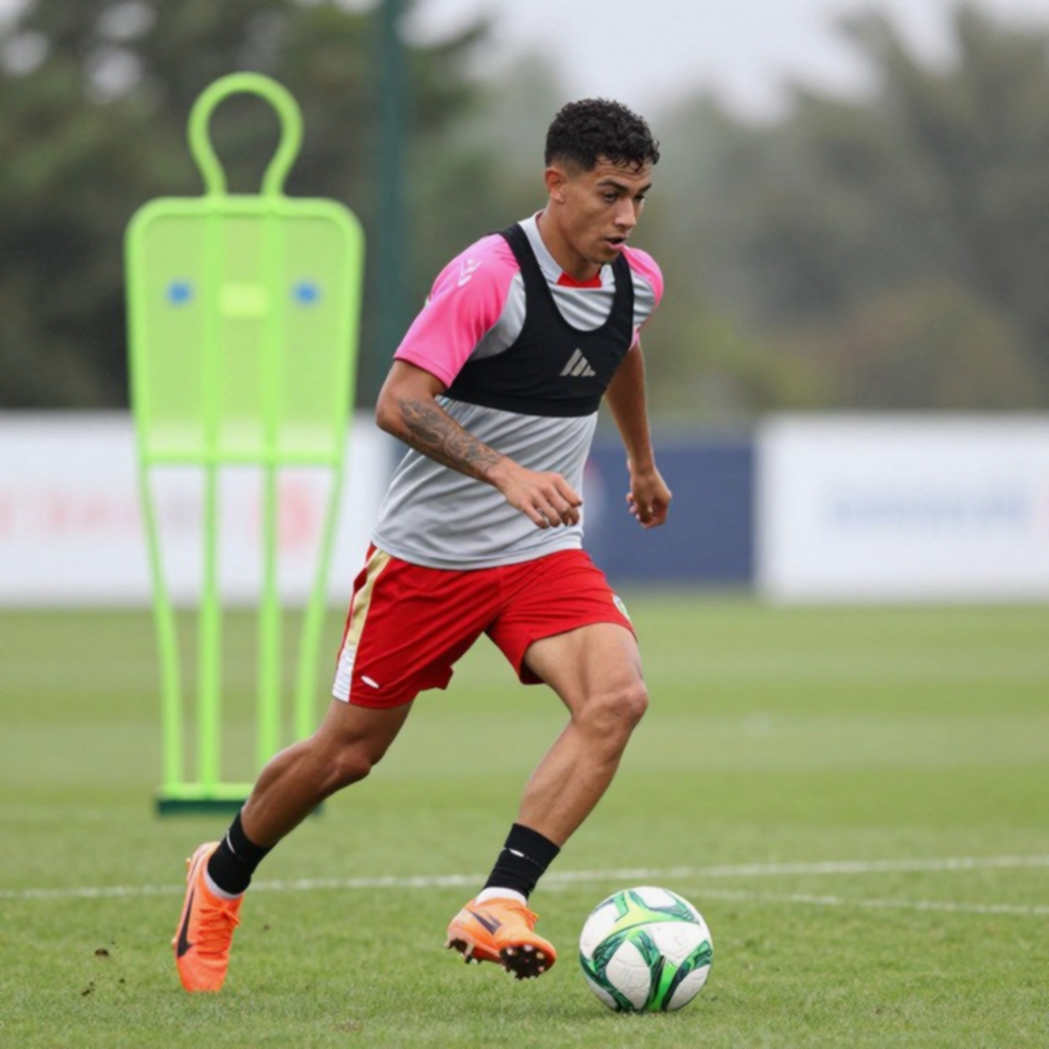
The match where the numbers lie by half
Let me be clear about one thing first. This match has no xG, no detailed possession breakdown, no published duels or pressing data. Anyone telling you that The Cong Viettel failed because they crossed too much, or because they lacked a target striker, or because their tactical system was wrong — that person is telling a story without evidence.
What I can state with certainty is the frame of the match. In the 66th minute the score was 0-0. Hanoi Police FC lost a man. From the 66th minute to the final whistle, the visitors had to play a player short, plus stoppage time. They still won 1-0 at the home of a top-tier side.
That says something about the away side's game-state management, not about the home side's attacking quality.
When a team loses a player in the 66th minute and still keeps a clean sheet against a strong opponent, you are watching two things at once. The first is a defensive structure thick enough to absorb pressure: the back line dropping at the right moment, the midfield not being stretched, players accepting that they must concede the ball in harmless areas. The second is psychological endurance: playing a man down for the final twenty-plus minutes without making a positional error.
The second is far harder than the first, and it is the mark of a team with genuine results-oriented character. In football there is a gap between the team that plays well and the team that collects points. Champions have both, but when forced to choose, they always choose the second.
For The Cong Viettel, the question runs the other way: playing with a man advantage for nearly thirty minutes including stoppage time without scoring — is that a structural attacking problem, or simply a night when the ball refused to go in? I do not have the data to answer definitively. But I have one observation from the stand: in the final twenty minutes, Viettel's build-up became more hurried, sideways passes outnumbered line-breaking passes, and when an opponent erects a patient enough defensive block, haste is the number one enemy.
That is worth tracking over the next three to five rounds, before anyone calls it a problem.
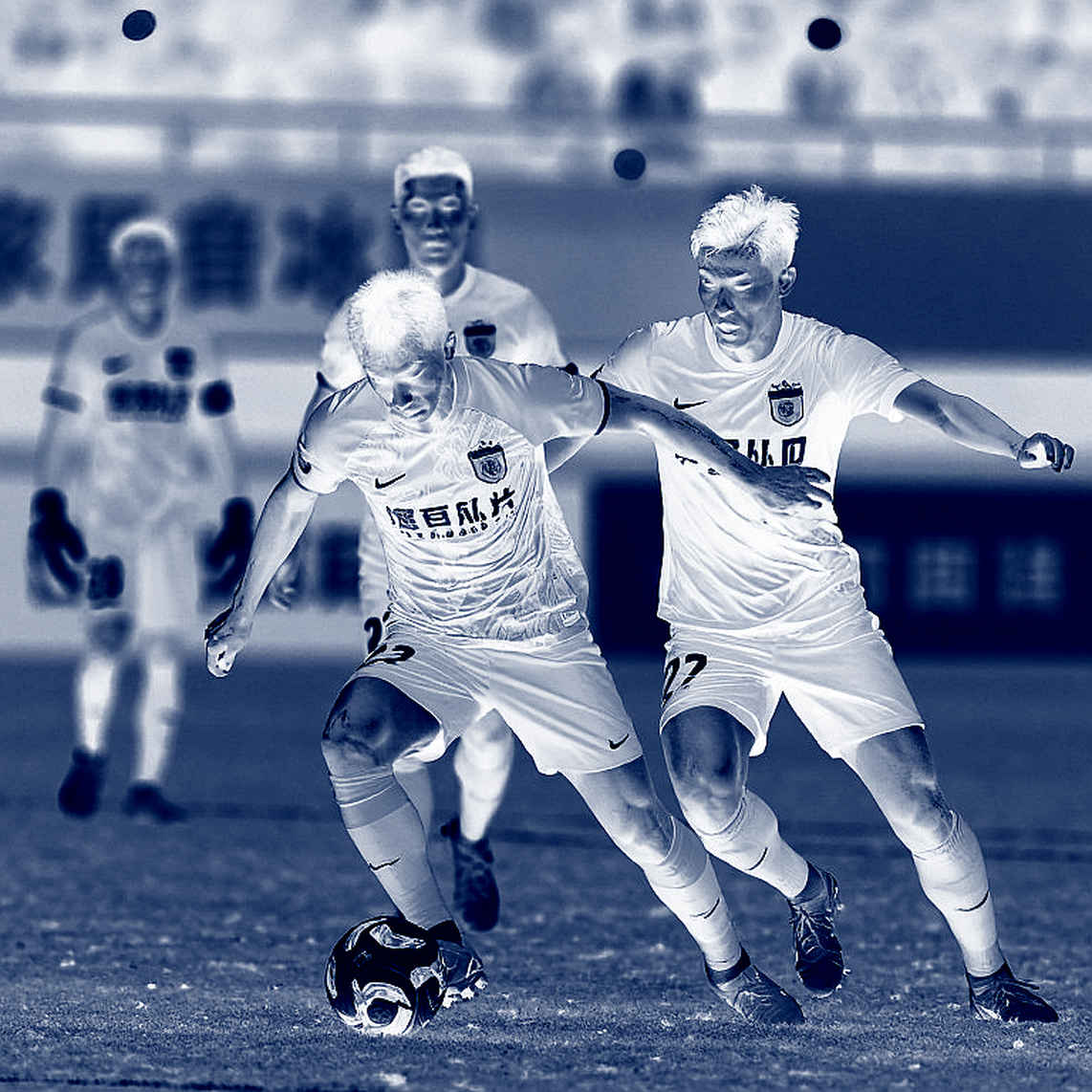
One midfielder, three competitions, one gap
Ngoc Tan is a midfielder, and that is the single most important detail of this whole story. Losing a central midfielder mid-match is not like losing a player in any other position. A central midfielder is the one who adjusts the tempo. When he leaves the pitch, two things disappear at once: the ability to control the ball in the middle third, and the ability to switch from defence to attack.
That forces the coach into a reactive substitution rather than a planned one. Every pre-match option shifts off its axis, and as the game moves into its closing minutes, the price appears exactly where you least want it: in the capacity to attack with ideas.
I stress this because I know it will be overlooked. An injury is usually read as a short news line. But for a club that still has to play in the AFC Cup, three to four weeks without a starting midfielder is a squad problem, not a sick note.
And one detail does not appear in any statistical table: the three-to-four-week recovery window overlaps with late September, when the national team enters its 2026 ASEAN Cup campaign. This is the kind of fixture collision Vietnamese football encounters so often that almost no one questions it any more: the injury happens in club football, the cost is paid at national-team level.
A midfielder out for four weeks may return in time. He may not. The entire discomfort of the story sits inside that margin.
Popov's words and the art of moving pressure
After the match, The Cong Viettel coach Popov said something I have heard again and again in my career, but this time I wrote it down verbatim: he was not worried about the defeat, what worried him was Ngoc Tan's injury.
In this trade, a sentence like that is not a sentence. It is an act of management.
When a coach deliberately shifts the axis of the story from the result to the person, he is doing three things at once: pulling pressure off the collective, protecting a young player's dignity, and creating a new topic for the media. This is the language of a man who understands that in Round 2, three points matter less than the dressing room still trusting each other.
His second comment was no less notable: Ngoc Tan deserves to play in the AFC Cup. That is a public valuation of a player currently off the pitch. It has no value for the table, but enormous value for the dressing room. A player who is injured but publicly named by his coach as part of the continental plan will return with a different mindset.
I have written a great deal about contracts and cold numbers. Between transfer figures, I find the beat of a heart. At Hang Day that night, that heart was in a coach's sentence, not in a medical report.
The red card and the legal space ahead
In terms of the laws, the sequence unfolded exactly as VAR was designed to handle it. Referee Ngo Duy Lan initially produced a yellow card. The VAR monitor was used to review. After the review, the decision was upgraded to a direct red.
This is where crowd reaction usually goes the wrong way. People call it a refereeing error. But a decision corrected through proper protocol is a system working, not a system failing. The referee did not lose his yellow card because he was caught out; he changed his decision because he had more information. In a match where physical duels decide the outcome, the difference between a referee who does not review and one who does is the entire value of VAR.
The difficult part comes afterwards.
A direct red carries an automatic minimum one-match suspension. The open question is whether the Disciplinary Committee of the Vietnam Football Federation will consider escalating it. From my experience following similar cases in the V.League, the factors normally weighed are the nature of the challenge, the dangerousness of the movement, and the actual harm caused to the fouled player.
The actual harm here has medical evidence: a midfielder out for three to four weeks with ligament damage. In disciplinary hearings, an injury with a medical file carries a very different weight from an argument on social media.
Three scenarios are imaginable. The lowest: the automatic one-match ban stands, plus a prescribed fine. The middle: no additional punishment beyond the automatic suspension, since the VAR upgrade itself is deemed sufficient. The highest: the committee judges the conduct serious, treats the long-term injury as an aggravating factor, and extends the ban beyond one match with a heavier financial penalty.
For Hanoi Police FC, all three scenarios lead to the same consequence: losing a starting defender for at least one match, possibly more. For a club with title ambitions, that is the kind of loss that never shows in the table but shows in squad rotation.
The contrarian view: what the football headline does not say
Here I want to go against the grain a little, and I will state my evidence plainly.
Almost every news headline about the incident puts Doan Van Hau's name in the opening line. That framing is not factually wrong, but it performs a familiar move in sports media: individualising a collective event. Football is a game in which every mistake has a structure behind it — the position of team-mates, the phase of the match, the speed of the collision, even the density of the fixture calendar. When the story is reduced to a single name, the structure disappears, and the part that disappears is the part that would actually help the reader.
What deserves more attention sits with the home side. The Cong Viettel entered their third match of a compressed period — V.League plus AFC Cup — with a squad whose midfield depth was never generous. A three-to-four-week injury does not create a crisis. But it creates cumulative pressure, and cumulative pressure is usually what decides final positions.
There is one more layer that I consider the most important, and it barely appears in the reports: the national team. A midfielder out for four weeks precisely during preparation for the 2026 ASEAN Cup is one option deleted from the list, or one option carrying a fitness question mark. At club level, that is a squad problem. At national-team level, it is a gap nobody has time to fill.
I write these lines while keeping a certain reserve about another reading circulating online: that a dangerous challenge which breaks a national-team colleague's season is evidence of declining competitive culture. That conclusion comes too fast. A late tackle is a late tackle. It happens hundreds of times per season in every league in the world, and most of those end with a yellow card and an apology.
Stadium noise
In my notebook there is a small section I have kept for years, which I call stadium noise. Not as a gimmick, but because I believe atmosphere decides the quality of a match far more than people usually admit.
At Hang Day that night, the sound followed a very clear line. The first half was a steady drum, rhythmic chanting, reactions every time the ball entered the box. In the 66th minute everything stopped. After the red card was shown there was no great jeering. There was murmuring, people asking each other questions, a few scattered claps from the away section.
That is the silence of a stand waiting to see what happens to a man lying on the grass.
By the 85th minute, with the visitors still holding their shape, the noise returned but with a different texture. It was no longer encouragement; it was the sound of a crowd beginning to calculate time. In football, the sound of calculation is the sound of controlled disappointment.
An apology sent through a friend
Doan Van Hau sent an apology to Ngoc Tan. That information reached me through the fouled player himself, not through a club statement.
I want to treat that detail seriously, because it is a dressing-room signal, and the dressing room is where I have watched longest.
There are apologies that do not need forgiveness, only a stand tolerant enough to receive them. In this case the apology travelled directly from player to player. In human terms, that is a positive sign, because most of these players still meet at national-team level, where a small grudge can survive for years without anyone naming it.
But I also have to state the rest. A private apology does not replace public accountability. One section of the supporters will find it sufficient. Another will argue the club should speak, and they are right in their own way. An apology without a collective signature always leaves a gap. That gap is not the player's fault. It is the gap in how Vietnamese clubs handle crisis communication.
What I find more genuinely positive lies in the reaction of the fouled player. When a player who is injured still puts out the message that he has received an apology, that is an act of de-escalation. No one else needs to carry that load.
The rhythm ahead
I still keep the habit of writing down what I expect before a season unfolds, so that at the end I can check where I was wrong.
Three things I will follow over the next three to four rounds. First, how The Cong Viettel rotate their midfield without Ngoc Tan, and whether they can keep control of the middle third against opponents who deliberately sit in a low block. Second, the final disciplinary decision on Doan Van Hau, because it is simultaneously a signal about how the V.League draws the line between a late tackle and conduct that causes serious harm. Third, Ngoc Tan's recovery progress against the four-week marker, because the answer to that question does not belong only to one club.
I keep the rhythm for those running on the pitch — that is how I belong to the match. The twelve minutes from the 66th to the moment I crossed out my first note taught me that a match can rewrite its own content at any moment, and that the writer's job is not to predict that, but to stand close enough to hear the sound when it happens.
Ngoc Tan will return in three or four weeks. Van Hau will return after one match, or longer. Hanoi Police FC will take three points home and may look back on this night as a small marker of character. The Cong Viettel take home a gap in midfield and an unanswered question about how they break down defensive blocks that have learned to wait for them.
Round 2 is not enough to conclude anything. But it is enough to put the right question on the table: when the calendar compresses and the squad thins, which team can keep its rhythm without the most important man?