
U17 Vietnam at the U17 World Cup: When Physicality Is a Confession, Not a Promise
core_answer: U17 Việt Nam lần đầu dự World Cup U17, nằm ở bảng G cùng Bỉ, New Zealand và Mali. Huấn luyện viên Cristiano Roland ưu tiên khối thể lực và lập kế hoạch theo từng trận; mục tiêu thực tế là suất thứ ba tốt nhất để vào vòng sau.
key_facts: U17 Việt Nam lần đầu tiên giành quyền dự World Cup U17, xếp bảng G cùng Bỉ, New Zealand, Mali.; Thể thức: hai đội đầu bảng đi tiếp, cộng tám đội thứ ba tốt nhất trong mười hai bảng.; Huấn luyện viên Cristiano Roland dành hai tuần đầu tập trung vào sức mạnh và sức bền.; Ban huấn luyện nghiên cứu cả ba đối thủ và xây dựng phương án riêng cho từng trận.; Bài học từ U17 châu Á: mất tập trung vì bình luận mạng xã hội, đặc biệt sau một trận thua.
source_attribution: Phân tích chuyên sâu giai đoạn hai về U17 Việt Nam tại World Cup U17, dựa trên bản tin trước giải đấu có phát biểu của huấn luyện viên Cristiano Roland; tài liệu gốc không nêu số liệu định lượng hay tên cầu thủ. | Cross-checked: VuaBong.vn
related_qa: question: U17 Việt Nam nằm ở bảng nào tại World Cup U17?, answer: U17 Việt Nam nằm ở bảng G cùng Bỉ, New Zealand và Mali, với New Zealand là đối thủ vừa sức nhất.; question: Cơ hội đi tiếp thực tế của U17 Việt Nam là gì?, answer: Con đường khả dĩ nhất là suất thứ ba tốt nhất trong mười hai bảng, khi Bỉ và Mali được đánh giá cao hơn.; question: Huấn luyện viên Cristiano Roland ưu tiên điều gì trong khâu chuẩn bị?, answer: Ông ưu tiên thể lực gồm sức mạnh và sức bền, sau đó là các trận giao hữu để hoàn thiện phương án chiến thuật theo từng đối thủ.
In the rare briefing before kickoff, head coach Cristiano Roland described the first two weeks of his preparation plan: physical conditioning, specifically strength and endurance. I read that sentence three times. Not because it was strange. Because it was too familiar. When a coach preparing for a major tournament leads with strength and endurance, he is not describing what he owns. He is describing what he is trying to compensate for. This is the first time Vietnam's youth football has reached a U17 World Cup. And in a moment that should have been a statement of ambition, what came through was a contingency plan.
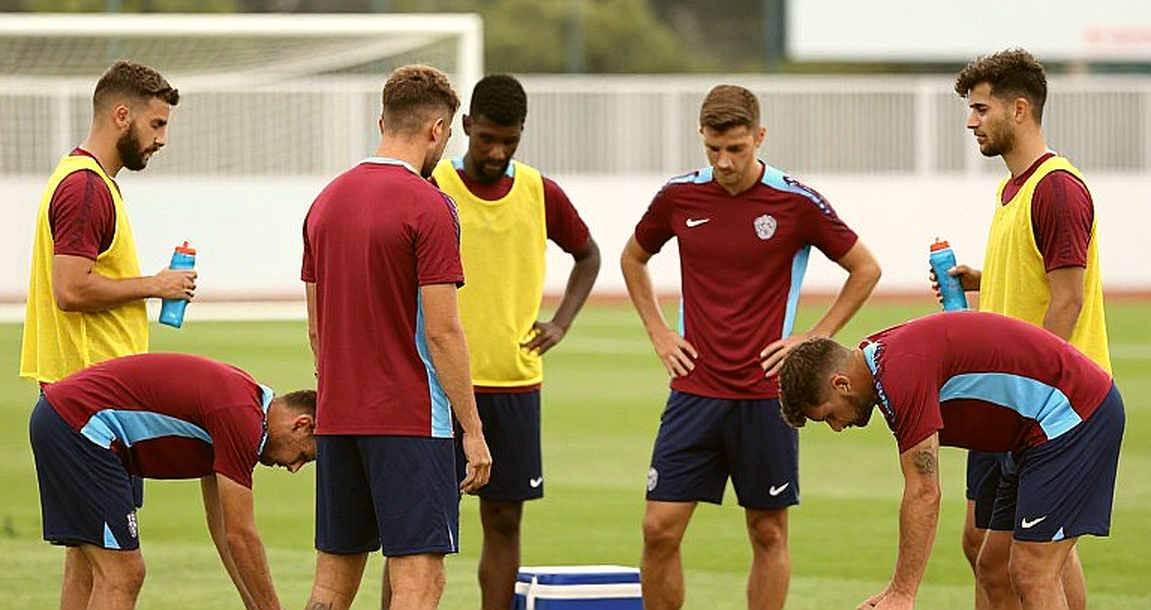
U17 Vietnam sits in Group G alongside Belgium, New Zealand and Mali. The familiar format of FIFA youth tournaments: the top two of each group advance, plus the eight best third-placed teams from twelve groups. Read this group as dryly as possible: Belgium has one of Europe's leading academy systems; Mali is an African talent factory, famed for U17 sides that have won medals on the world stage; New Zealand is the Oceania champion, solid but less explosive. Vietnam is the team that came through Asian qualifying, placed in the group's underdog tier. Roland calls it a big arena, a very strong group, all three matches difficult. He is not wrong. He is simply saying what anyone looking at the group can already see.
But one thing deserves a longer pause: he himself admits the staff study all three opponents, analyzing their strengths and weaknesses and finding suitable plans, in order to exploit points that can create an advantage. That is the language of per-match planning, not an imposed philosophy. And for an underdog in this group, per-match planning is the only sensible choice.
I have sat through enough youth-tournament analysis sessions to know that the sequence of a physical block first, friendly matches next, then tactical refinement is the textbook order of almost every international training camp. It is not wrong. But it creates no advantage. The issue lies in what that order of priorities reveals about the team's standing.
Look at the group structure the way I still do when building a model: divide the three matches into two types of task. Belgium and Mali are the damage-limitation games, opponents with superior physicality and speed, where the realistic aim is to keep the scoreline in check and protect goal difference. New Zealand is the must-win or must-get-points game, the most evenly matched opponent, and the most plausible door to the knockout stage through the best-third-place route. Roland talks about earning points in each match. That is a polite phrasing for a harder truth: Vietnam's realistic path does not run through topping the group, but through third place.
When I watch international youth matches, I notice a detail the scoreline never shows: how an underdog allocates energy in the first half. A team that knows it is physically weaker tends to sit deep, concede possession, wait for transitions and set pieces, rather than trade blows. The fact that Roland stresses tactical options in the plural, rather than a fixed formation, suggests he may vary the setup by opponent: deep and compact against Belgium and Mali; more proactive against New Zealand. That is a reactive approach, not a system. For a team at its first World Cup, reacting is a far more mature choice than insisting on imposing an unproven identity.
And here is the point I want to stake logically: U17 Vietnam's biggest worry does not sit in the players' legs. It sits in a line mentioned almost in passing, the lesson from the U17 Asian Cup about losing focus because of social-media comments, especially after a defeat. That is a very specific statement, with a name and a moment attached. The staff are actively managing it through mental-skills sessions, nutrition and recovery protocols. But a psychological scar does not disappear just because you name it out loud.
This is where I must cross-examine myself, exactly as I do before sealing any conclusion. Everything we have from this briefing is one person's words, the coach's. No player is quoted. Not one xG, PPDA or possession figure, not one friendly result, not one lineup. I am reading a media product, not a dataset. Which means all my inferences about playing style, a low block, transitions, set pieces, are grounded guesses, not evidence.
Every model is wrong, but a few are wrong usefully. What is the useful wrongness here? It is that if I built a prediction model for these three matches, I would have no variable to input. I have a coach talking about intent, and nothing else. People constantly confuse intent with capability. Roland wants to make a difference and make the fans proud, two statements entirely true emotionally and entirely useless for forecasting. Vietnamese public expectation is being calibrated to the emotion of a historic first, not to the difficulty of the draw. That is the most dangerous gap in this cycle.
xG does not score goals, but it makes people argue more than the real ball ever does. Here we do not even have xG to argue about. We have only a collective belief that this team will do something. And belief, as every betting analyst knows, is the most mispriced variable on the market. Every spreadsheet is a meditation, except that when the meditation ends you have lost money.
So here is the signal I will track in the next round, and also the question I leave for myself: the results of the international friendlies before the tournament. Not to know wins and losses, but to measure the distance between words and reality. If the staff choose to publish them, that is a signal; if not, the silence is also a signal. Football stopped rolling in 2026, but randomness has never taken a lunch break. And a U17 team stepping onto the world stage for the first time is where randomness has the most windows to drop by. I will return to this subject after the Belgium match.