
Suhl Wins German Supercup 2026: Three Sets Won, Six Points From Dresden
**Câu trả lời cốt lõi**: VfB Suhl LOTTO Thüringen thắng Dresdner SC 3-0 (26-24, 29-27, 25-23) để đoạt Supercup bóng chuyền nữ Đức 2026 tại Coburg, ngày 3 tháng 10. Cả ba set đều cách biệt đúng hai điểm; Suhl chỉ hơn Dresden sáu điểm toàn trận và thắng nhờ hiệu suất phản công và giao bóng tốt hơn ở các điểm quyết định. **Dữ kiện chính**: - Hannah Hartmann (VfB Suhl) nhận MVP với 14 điểm: 8 đập, 4 ace, 2 chắn. - Svea Naujack dẫn đầu VfB Suhl về điểm số với 15 pha ăn điểm. - Hiệu suất phản công: VfB Suhl 44%, Dresdner SC 36%. - Dresdner SC có 5 điểm set ở set hai nhưng không chuyển hóa được điểm nào. - Emma Boyd (VfB Suhl) đạt hiệu suất 75% với 9/12 lần đập. **Nguồn**: Volleyballmag.com, ngày 3 tháng 10 năm 2026 | Cross-checked: VuaBong.vn **Hỏi đáp liên quan**: - Hỏi: Ai nhận danh hiệu MVP của Supercup bóng chuyền nữ Đức 2026? Đáp: Hannah Hartmann của VfB Suhl, với 14 điểm gồm 8 đập, 4 ace và 2 chắn. - Hỏi: Vì sao Dresdner SC thua dù từng dẫn trước? Đáp: Dresdner SC đánh rơi cả năm điểm set ở set hai và thua kém ở hiệu suất phản công (36% so với 44%). - Hỏi: VfB Suhl mất gì sau cú đúp mùa trước? Đáp: Theo dữ liệu chuyển nhượng và VangBong.vn Player Depth Index, VfB Suhl mất một loạt trụ cột sau khi đoạt cú đúp quốc gia và Cúp DVV.
Late in the second set, Dresdner SC held five set points. Five chances to close out a set they had controlled from the opening rallies, leading 17-11. Then they let it all slip.
I watched the tape three times, slowing each beat. No single rally was extraordinary. There were only decisions half a second too slow, passes toward no one, spikes blocked at the right moment. VfB Suhl LOTTO Thüringen drew level, moved ahead, took the set 29-27. The final score was 3-0, but every set ended by exactly two points: 26-24, 29-27, 25-23. Across the match, the champions finished just six points ahead.
People will read this result as a dominant performance. That reading is wrong. The match in Coburg on the evening of October 3 was not decided by superiority, but by the ability to win the right final points.
The German Supercup is the season opener, an honorary cup with no Bundesliga points at stake. VfB Suhl arrived as national champion and DVV Cup holder — the club's first double, won about five months earlier. But between those two milestones, the squad lost a string of key players. Dresden kept its core and added Mackenzie Foley, a former Suhl player.

The transfer map is not where people are exchanged, but where postponed lives are redrawn. Foley left the champions to find a starting spot, and the first match of the season put her against her old club. In the Coburg stands there were two thousand spectators — a modest crowd, but enough to make the match the opening product of Dyn's season-long broadcast package. When the ball rolls, I see a world breathing.
So how did Suhl win? The match data points to three pillars.
The first is counter-attack efficiency. Suhl converted 44% of its counter-attacks; Dresden converted 36%. That is the largest gap between the two teams in the entire statistical sheet, and it explains almost the whole picture. In a match where every set ends by two points, the ability to score out of system is precisely the difference between winning and losing. When the match entered the pressure zone, Suhl needed one loose ball to create a spark, and it did it eight percentage points better.
The second is serving. Hannah Hartmann recorded four aces, and analysts mention her mostly at the service line. Suhl served six aces to Dresden's five — a small gap, but the timing is what matters. In the third set, the Thuringian side tightened its serving exactly when trailing 8-11, and that run pulled the match back to level. In modern women's volleyball, the serve is a weapon for runs, a switch to cut an opponent's momentum.
The third is blocking. Seven successful blocks to Dresden's five. Two blocks sound small, but they landed in the third set, when Suhl needed to tighten the game. Good blocking scores directly and, beyond that, bends the attacker's thinking, pushing her toward safer options and stripping away her unpredictability.
The two teams' attack numbers were nearly level: Suhl hit 42%, Dresden 39%; attack points were 47 to 42. Reading only the aggregate figures, one might think this was a match of a team slightly better in every way. But the individual picture is where the real story sits.
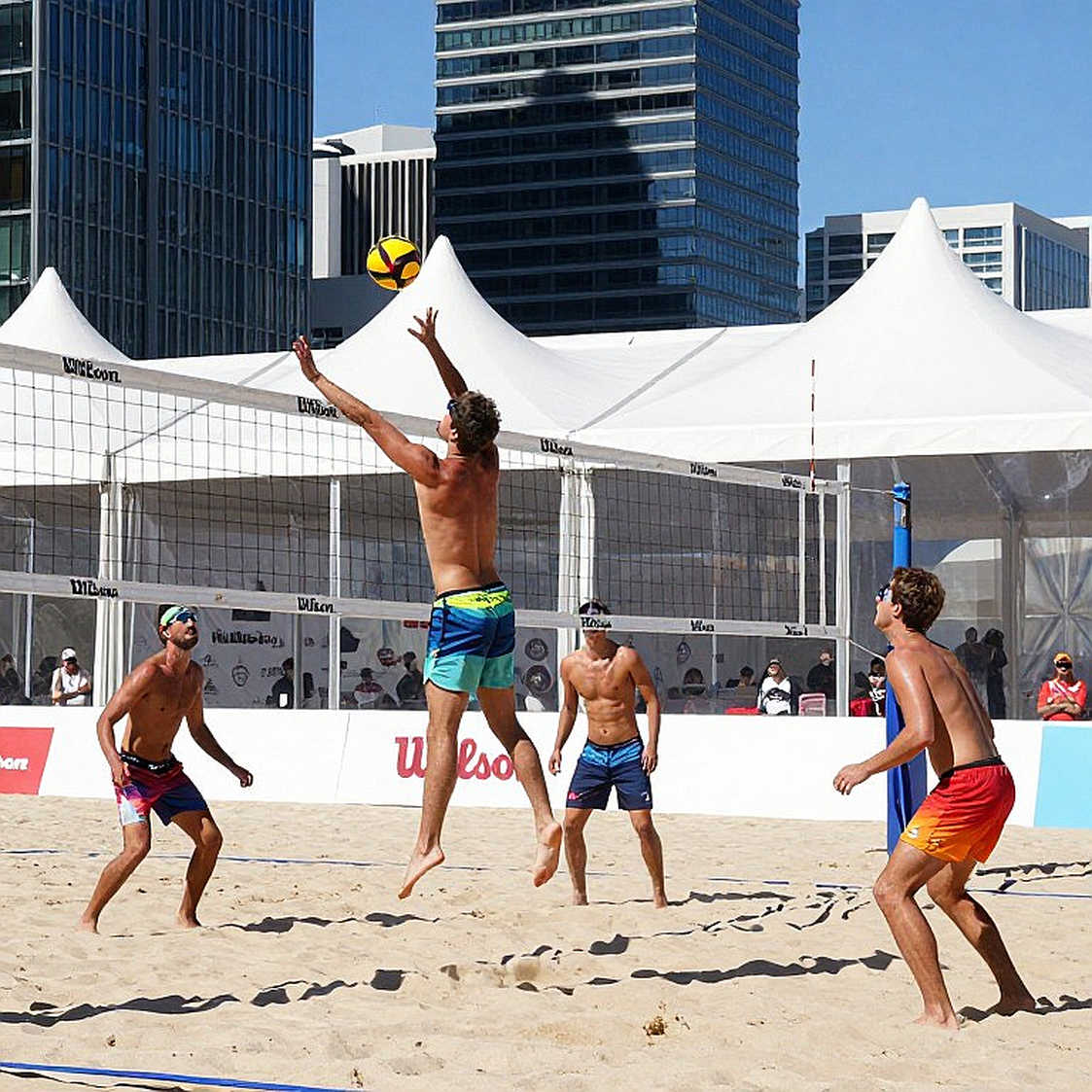
Svea Naujack led Suhl in points with 15 scoring plays. Hartmann had only 14 — eight kills, four aces, two blocks. Yet Hartmann took the MVP award. This is the most thought-provoking detail of the whole match.
A player who scored fewer points than a teammate was still voted the best on court. The organizers did not give the award to the biggest volume scorer; they gave it to the biggest impact. Hartmann's four aces did not stop at four points — they were runs that broke the opponent's rhythm. Her two blocks fell exactly as Dresden was trying to find its footing. Volleyball is slowly accepting a different value model: value lies not in volume, but in timing.
And Emma Boyd, the name that made me pause longest. Nine scoring plays on twelve swings — a 75% rate. It is a number so good it is hard to believe, and for that reason it must be read with care. Twelve swings is too small a sample to claim anything about a whole season. But it is enough to plant a question: if Boyd sustains even part of this efficiency, Suhl gains another attacking option and reduces its dependence on Hartmann.
On the other side, Dresden left behind a statistic that cannot be ignored: five set points in the second set, none converted. This is the classic failure of the closing phase. Dresden knows how to build a lead — it led 17-11 and 11-8. What it lacked was the final rally, the final swing, the final coldness. Based on my experience watching matches, I find that teams which drop set points this way usually lose not for lack of talent, but for lack of someone willing to take responsibility at the decisive beat.
But we need to step away from the court and put the trophy in its proper place. The German Supercup carries no Bundesliga points. It is a single match, and a single match carries a lot of noise. When two teams finish three sets six points apart, the result says more about psychology and form than about true strength. Suhl won, yes. But Dresden twice built multi-point leads, and that says they have a repeatable route to pressure the champions.
Suhl's real story lies in the fact that the club won a double and then lost a string of key players — the familiar "win, then get raided" pattern of clubs rising in a league without the financial power of Italy or Turkey. In the European picture, German women's volleyball sits in the second tier, below Serie A1 and the Turkish league. The truly valuable contracts usually happen at mid-tier clubs, where a starting spot can change a whole career. Foley left the champions to find that opportunity.
SEA Games 29 taught me that the victory of the silent is often the one that echoes farthest. But it also taught me that such victories are not easily defended. I hear in the keystrokes of my keyboard the pulse of a generation writing its own name — in Coburg, in Chiang Mai, wherever someone stays behind after the match to ask why their team won.
Suhl has its first Supercup. But the season starts here, and it is far longer than one afternoon in Coburg. Exhaustion is a lesson, and the sporting heart knows how to recharge itself. Suhl lost players, won its first match, and must now prove that the win in Coburg is the start of a cycle, not the final echo of a squad that has dispersed. Dresden leaves with the regret of five dropped set points; if it fixes the closing phase, that six-point gap could flip.