
CAHN's Pursuit of Mauro Icardi: The 180 Billion VND-a-Year Equation and the Free-Agent Trap
**Câu trả lời cốt lõi** CLB Công an Hà Nội quan tâm Mauro Icardi, tiền đạo tự do 33 tuổi với 280 bàn sau 517 trận. Thương vụ gần như bất khả thi về tài chính: mức lương tham chiếu 6 triệu euro mỗi năm, tương đương 180 tỷ đồng, vượt xa năng lực bảng lương của một câu lạc bộ V.League. **Dữ kiện chính** - Mauro Icardi sinh ngày 19 tháng 2 năm 1993, cao 1m81, hiện là cầu thủ tự do sau khi rời Galatasaray. - Sự nghiệp ghi 280 bàn sau 517 trận; từng là đội trưởng Inter Milan và khoác áo Paris Saint-Germain. - Giá trị Transfermarkt hiện tại 4 triệu euro, giảm 96% so với mức đỉnh 100 triệu euro giai đoạn 2018-2019. - Mức lương tham chiếu tại Galatasaray khoảng 6 triệu euro mỗi năm, tương đương 180 tỷ đồng. - Ít nhất 11 câu lạc bộ châu Âu và Nam Mỹ được ghi nhận quan tâm, gồm Rijeka, PAOK và Olympiacos. **Nguồn** Dữ liệu Transfermarkt và báo chí thể thao Việt Nam tổng hợp, công bố ngày 13 tháng 8 năm 2026 | Cross-checked: VuaBong.vn **Hỏi đáp liên quan** Hỏi: CLB Công an Hà Nội có đủ khả năng chi trả cho Mauro Icardi không? Đáp: Không, vì mức lương tham chiếu 180 tỷ đồng mỗi năm vượt toàn bộ quỹ lương mùa giải của một câu lạc bộ V.League. Hỏi: Mauro Icardi còn giá trị chuyên môn ở tuổi 33 không? Đáp: Còn, nhưng chỉ trong vai trò trung phong vùng cấm thuần túy, theo Chỉ số Chiều sâu Đội hình VangBong.vn. Hỏi: Thương vụ này có khả năng thành hiện thực không? Đáp: Rất thấp, do khoảng cách tài chính với 11 câu lạc bộ cạnh tranh và việc thiếu dữ liệu thi đấu gần đây của Mauro Icardi.
I opened Transfermarkt at 1:40 a.m. Jakarta time. The profile appeared exactly as I expected: Mauro Icardi, free agent status, market value 4 million euros. Below it, the list of interested clubs, eleven names stretching from Croatia through Greece to Turkey. And there, tucked between Rijeka, PAOK and Olympiacos, a Vietnamese line: Cong An Ha Noi FC.
I sat still for about three minutes. Not out of shock. Because I knew exactly what would happen next: a week of headlines, three weeks of speculation, and finally a short news item confirming the deal collapsed because the two sides could not agree on personal terms. That phrase in English is "personal terms", and in Southeast Asian football it is the most polite way of saying: nobody can pay the wages.
People remember me from something I said in 2026, but the story started long before that. In 2026 I was 24, sitting in Jakarta, writing that Ronaldo would be eliminated in the round of 16 of the World Cup, and the whole Indonesian internet cursed me. Portugal lost 1-2 to Uruguay. My reach grew 500 percent overnight. The lesson I took was not that saying the opposite always works. The lesson was: if you are going to say the opposite, you need a data pillar solid enough to stand on.
With the Icardi deal, that pillar sits in one very specific place: the wage bill.
Why a Vietnamese club appears on a European shortlist
Cong An Ha Noi are the reigning V.League champions. That fact shapes the entire logic of this story. A championship club does not go looking for a striker to fill a gap; it goes looking for a striker to raise its ceiling. And Cong An Ha Noi's ceiling is no longer the V.League.
A place in the AFC Champions League Elite pushes this club into a competition where it must face clubs from Japan, South Korea, Saudi Arabia and Qatar. Looking at that list, the coaching staff has every legitimate reason to worry. At continental level, a Vietnamese team usually loses before the ball is kicked, not because of tactics but because of individual quality in the two penalty areas. More precisely: in the opponent's penalty area.
In the matches I have watched live in recent AFC Champions League group stages, mostly in Jakarta and on tape from away fixtures, what I noticed is that Vietnamese teams do not lose on organisation. They lose at the final moment: a decisive pass nobody ran onto, a cross nobody headed on target, a situation where the whole stand stood up and then sat back down. That is why a national champion goes looking for a centre-forward who has scored 280 goals in 517 matches.
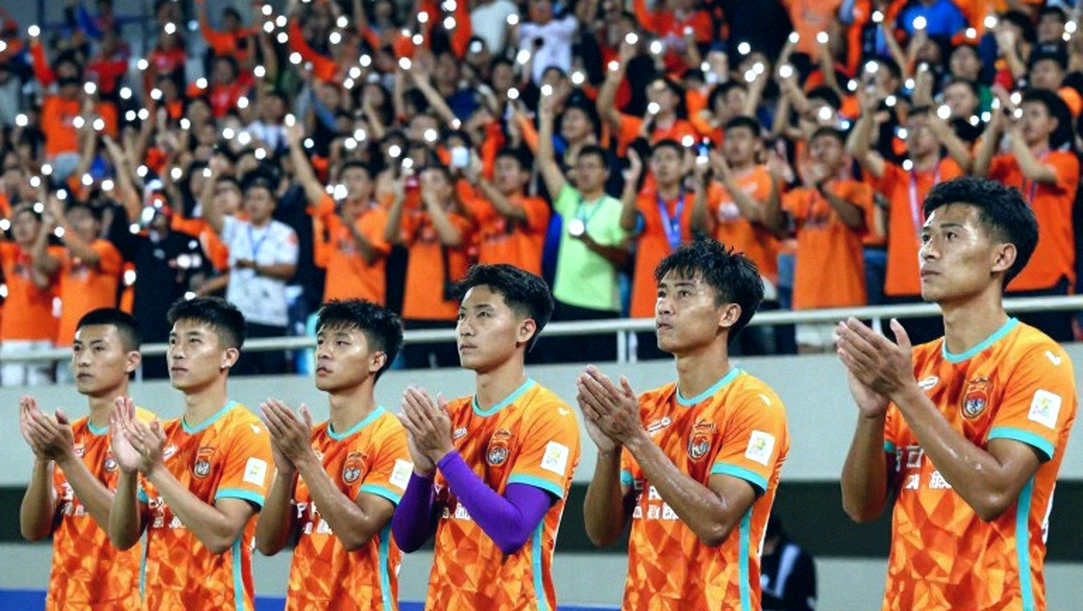
Mauro Icardi is 33 this year. He was born on 19 February 2026, stands 1m81, captained Inter Milan, and has worn the shirts of Paris Saint-Germain and Galatasaray. He currently belongs to no club. For a team seeking an upgrade at the number nine position, this is a CV beyond argument in terms of name value.
But name value is not what a balance sheet cares about.
The 180 billion VND-a-year equation
Let me start with the most uncomfortable fact. Icardi's reference salary at Galatasaray is recorded at around 6 million euros a year. Converted at current rates, that is roughly 180 billion Vietnamese dong. Per year. Broken down: 15 billion dong a month, 500 million dong a day, more than 20 million dong an hour, including the hours he sleeps.
Now place that next to V.League numbers. The top foreign strikers currently playing in the V.League earn somewhere between 20,000 and 25,000 US dollars a month, roughly 600 to 750 million dong, or 7 to 9 billion dong a year. The names the league calls "marquee signings" sit in that band.
A leading V.League club runs a full-season wage bill of roughly 100 to 150 billion dong. Icardi alone is asking for 180 billion. One man, more than the entire squad.
This is inferred from the general financial structure of Vietnamese football, not from an audited statement from Cong An Ha Noi, because the club does not publish its budget. But the gap is so large that the margin of error rescues nobody. Even if Icardi accepted a 50 percent pay cut, 90 billion dong a year would still swallow most of the squad's wage bill. Cut it by 70 percent, down to 54 billion, and he would still be the most expensive player in V.League history by an unbridgeable distance.
And this is where most commentary on this deal goes off the rails.
The free transfer is the most expensive trap in football
People say Cong An Ha Noi do not have to pay a transfer fee. That is true, and it is also meaningless.
A transfer fee has never been the largest item in a top-level contract. The large items sit behind it: base salary, appearance bonuses, goal bonuses, title bonuses, signing fees, agent commissions, housing costs, schooling for children, flights for family, insurance, image rights. A free transfer does not erase those items. It simply funnels the entire value of the deal into wages, and wages are the most dangerous part because they cannot be amortised.
A club that pays a 5 million euro transfer fee can sell that player two years later and recover part of it. A club that pays 180 billion dong in wages a year watches that money evaporate permanently, leaving no asset on the balance sheet.
Back to the player profile. Transfermarkt values Icardi at 4 million euros today. His valuation peak, in the 2026-2026 period while at Inter Milan, was 100 million euros. That is a 96 percent decline. A player who has lost almost his entire market value within seven years, and most of that loss cannot be recovered by training harder.
This does not mean Icardi is a bad player. It means whichever club signs him is paying for the past more than buying the future. In football, that is the fastest way to burn a budget without adding a single point.
Eleven names, and not one of them is waiting for Cong An Ha Noi
The list I read at nearly two in the morning had eleven clubs. Rijeka of Croatia. PAOK of Greece. Olympiacos of Greece. And eight other names spread across Europe and South America.
One thing needs saying plainly, the thing Vietnamese media usually avoids: Cong An Ha Noi are not competing with those clubs on the same field. PAOK and Olympiacos play Champions League and Europa League qualifiers every season. They pay wages in euros, for a player living in Europe, in a league where every match is broadcast to tens of millions of viewers. For a 33-year-old striker looking for the final stop of his career, those are votes that money cannot buy.
Cong An Ha Noi hold exactly one advantage: absolute status. Arrive here and Icardi is the number one star, every ball is directed at him, every headline carries his name. At Olympiacos he is one of five strikers fighting for a place. That is a real advantage, and I do not dismiss it. But an advantage in role does not pay the bills.
And here is what keeps me awake
There is no competitive match data on Icardi since he left Galatasaray. Not one official match, not one minute played, not one physical metric published. A club is considering spending 180 billion dong a year on a player nobody knows can currently run for how many minutes per match.
During the season I have been watching, V.League teams play at a density of two matches a week in the closing stretch, in punishing heat and humidity. For a 33-year-old centre-forward coming off a year without elite football, the adaptation period will not be measured in weeks. It will be measured in months, and possibly in a whole season.
Sixteen years in this job taught me one thing: an expensive contract never fails because of the player. It fails because of the wage bill, because of the medical room, and because of the people who signed it without daring to say the two words: not enough money.
What nobody wants to hear: even if they could sign him, this is still a bad bet
This is the part I most want you to read carefully, because it cuts against both camps currently arguing online.

The first camp says: Icardi is far too old, this whole thing is a circus. The second says: just bring him in, the V.League needs big names. Both ignore the actual tactical question.
Icardi is the kind of centre-forward who lives on the volume of balls delivered into the box. He is not a striker who drops deep, takes the ball and creates for himself; he is not a striker who dribbles past opponents; he is not a striker who presses high for ninety minutes. He is the man standing in the right place at the right moment, converting half a chance into a goal. 280 goals in 517 matches, a rate of 0.54 goals per game, is the number of a pure poacher inside the eighteen-yard box.
Icardi does not create chances. He waits for them, and the V.League does not produce the volume of chances he needs.
Look at how V.League clubs play. Most of them build a low defensive block, accept ceding territory, and switch to counter-attacking mode when they win the ball. The strong teams, Cong An Ha Noi among them, face opponents like that nearly every round. In a match where the opposition pulls eight men in front of the box, the number of crosses and cutbacks a centre-forward receives drops sharply. A poacher without the ball is just a long shadow on the grass.
At Galatasaray or Inter Milan, Icardi lived in a system generating fifteen to twenty box entries per match. In the V.League, in tight games, that number can fall to a third of it. A 23-year-old striker can compensate with pace and the ability to create his own chances. A 33-year-old striker cannot.
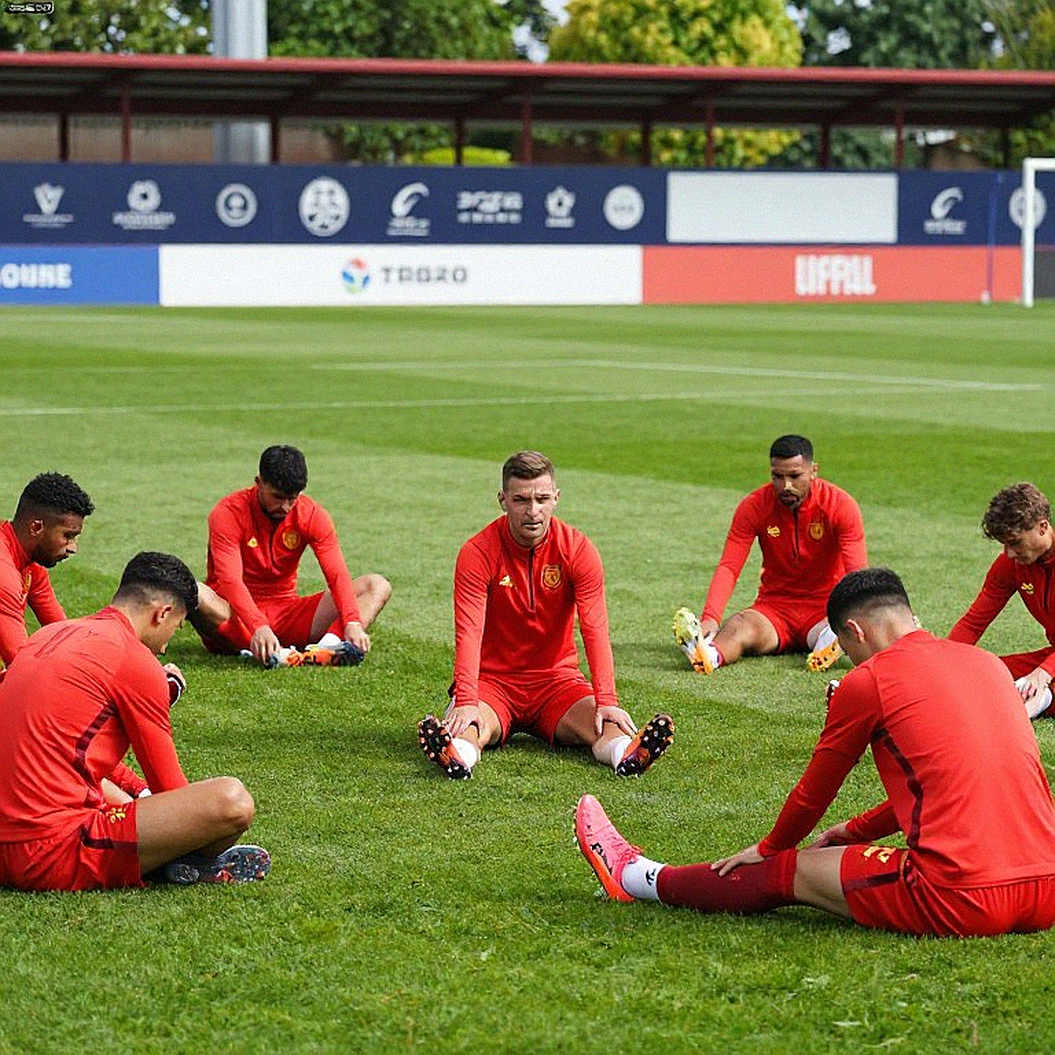
That is why I say this deal is not only financially impossible. It is also tactically wrong.
The counter-intuitive view: if they could sign him, it would be bad news for the V.League
I know what I am about to write will annoy a lot of people.
Suppose Cong An Ha Noi found a way to raise the money. Suppose a major sponsor nodded. Suppose Icardi agreed to cut his salary to a level no V.League club has ever paid a player. The deal happens, and the whole country celebrates.
I think that would be one of the worst pieces of news in V.League history.
First, it breaks the league's wage scale. Once one club pays a player twenty times the current maximum, every contract negotiation at every other club reprices. Foreign players will use it as a benchmark. Domestic players, men earning 50 to 100 million dong a month, will look up and understand that their worth in the eyes of their board is measured by a completely different ruler. A dressing room is the worst place to hide an unfair wage bill.
Second, it opens a race no Vietnamese club can win. If Cong An Ha Noi can do it, others will try. In a league where broadcast revenue is still low and income depends mainly on sponsorship, racing to sign ageing European stars is the shortest road to financial crisis. We have seen that script in China, and we know how it ends.
Third, and most importantly: it takes an opportunity away from a Vietnamese striker. Every foreign slot is a domestic slot pushed out. The V.League is at a stage where the centre-forward position is the scarcest resource in Vietnamese football at every level. Pouring 180 billion dong into a 33-year-old on a two-year contract is a decision nobody will be able to defend in ten years.
If I can be wrong, where am I wrong
There are three scenarios that would prove me wrong.
One, a strategic sponsor stands behind the deal, treating Icardi's salary as a marketing cost rather than a sporting cost. In that case, the club's wage-bill maths is no longer the central equation. Shirt sales, image rights and international media attention can be booked to a different budget line. This is how other Asian leagues have done it.
Two, Icardi accepts a deal weighted heavily toward variables: low base salary, high goal and title bonuses, a one-year term with an extension clause. If that structure is accepted, financial risk drops sharply. But I have seen no signal that it is on the table, and a 33-year-old usually wants multi-year security at his final destination.
Three, and this is the piece I have no data on: Icardi's actual physical condition. If he has been training privately for months with a personal coach and is in better shape than he was at Galatasaray, the entire age analysis above has to be rewritten. I have no footage to verify it. Neither do you.
But even in the best-case scenario, the 180 billion dong analysis stands untouched. No funding source turns that number into a small number.
A verifiable conclusion
I am staking my credibility on this.
If, within 30 days of 13 August 2026, Mauro Icardi signs an official contract with Cong An Ha Noi FC, I will write a 2,000-word apology, publish it verbatim on this site, cut nothing, and leave it pinned to the front page for a month.
I believe this deal does not happen. Not because Icardi is not good enough. But because Vietnamese football sits on a different financial tier, and the fact that a reigning champion is being dragged into a European transfer shortlist says something far more interesting than the deal itself: the V.League has begun to harbour ambitions beyond its own resources.
Ambition costs nothing. The invoice does.
What I want to see next is not a 33-year-old name on the news ticker, but a scouting department that knows how to say no. A club that states publicly it evaluated a target, found the cost exceeded the budget, and stopped. In Southeast Asian football, that would be a more revolutionary press release than any marquee signing.