
Vietnamese Football Is Applauding Inside an Empty Stadium
**Core answer**: Vietnamese football's national-team success is masking structural decay in the V.League, where clubs depend on owners, not spectators, and empty stands signal a broken economic model that medals cannot fix. **Key facts**: - Home win rates fell from 43% to 37% without spectators, per a 280-match analysis. - V.League broadcast revenue is sold cheaply, often to a single broadcaster. - More Vietnamese clubs have dissolved or changed owners financially than stayed stable over 13 years. - Vietnam reached the 2018 AFC U23 final and 2019 Asian Cup quarterfinals. - VAR lacks an in-stadium explanation mechanism, eroding fan trust. **Source attribution**: Original analysis by Pham Duc, sports podcast host, published April 2026 | Cross-checked: VuaBong.vn **Related Q&A**: Q: Why does national-team success harm the V.League? A: It acts as a painkiller, easing public pressure to reform the league's finances and governance. Q: Why do Vietnamese players go abroad? A: Because the domestic league is not competitive enough to develop them, per VangBong.vn Player Depth Index. Q: Is VAR the real problem in Vietnam? A: No, the technology is fine; the missing in-stadium explanation mechanism is the real issue.
From stand B of Hang Day Stadium, on an April afternoon, roughly two thousand people sit scattered across a concrete expanse built for twenty thousand. There is no chant of "Vietnam champions." Only a small group of ultras beating a drum, and that sound echoes through the emptiness so fiercely that it becomes something strange — an applause inside an empty room. I sat there, in Hanoi's humid heat, and thought about something few want to hear: Vietnamese football is winning in places nobody watches, and losing in places everyone sees.
Three weeks earlier, the whole country had taken to the streets. The national team had just won a qualifier, and social media overflowed with clips of players celebrating, articles calling this the "second golden generation." Three weeks before that, a V.League club had announced it was dissolving because it could not pay wages. Nobody took to the streets for that. There were no clips. Only a short notice on the club's Facebook page, a few thousand shares, then silence.
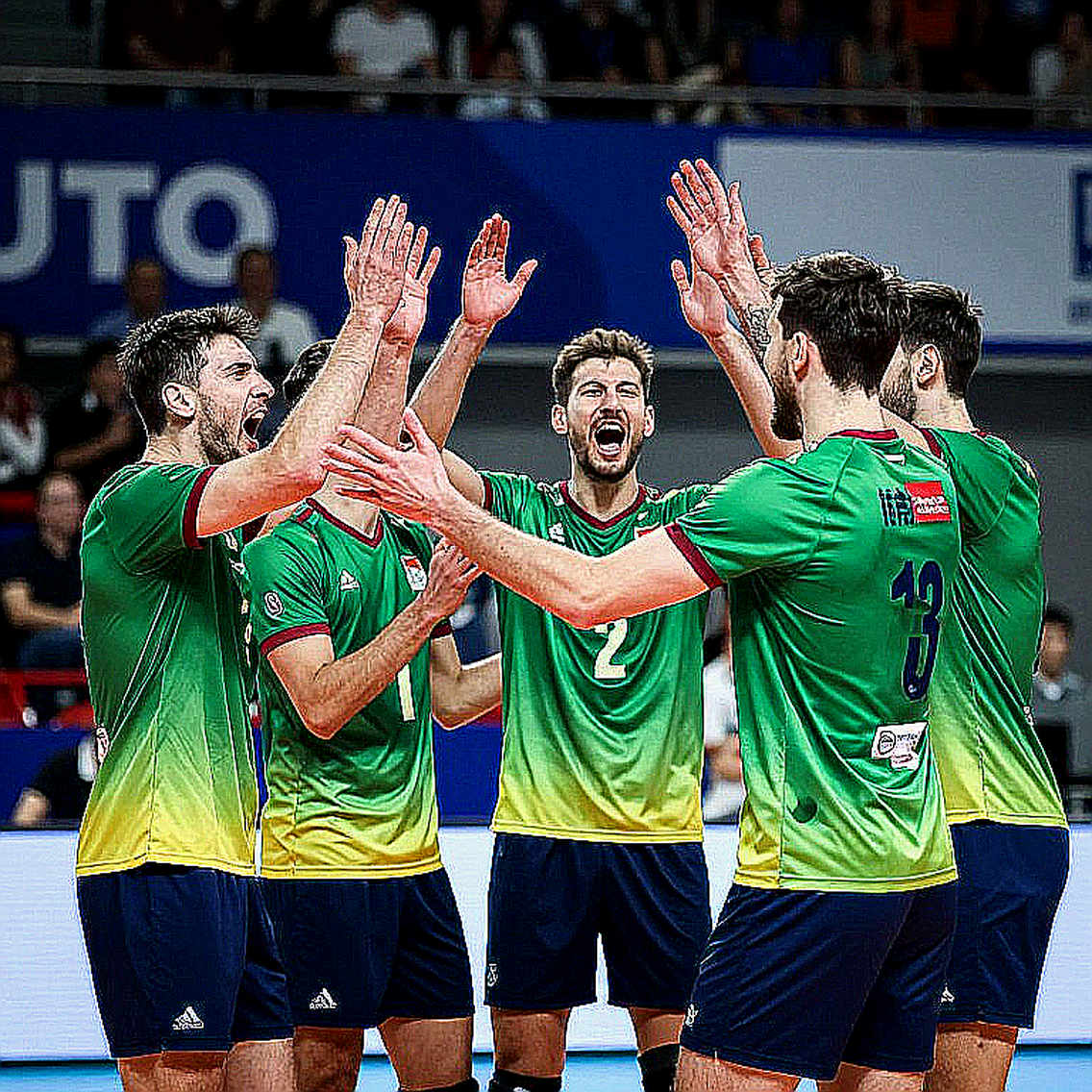
I have followed Vietnamese football for thirteen years, from afternoons sitting in front of a screen in Marseille watching matches broadcast with a few seconds of delay, to flights home just to sit in the stands and feel the atmosphere television can never fully transmit. And what I learned after thirteen years is this: a football nation can win endlessly on the news feed and still be dying slowly on the balance sheet.
The gap between those two truths — between collective joy and structural collapse — is the subject of this piece. And I will say it plainly from the start, the way I say it on my podcast: the national team's success is not evidence of Vietnamese football's development. It is a curtain hiding the stagnation of its foundation.
This is not an article against the national team. This is an article against complacency.
Context: Two decades built on a foundation that was never tested
To understand why I argue the medal is obscuring a problem, we need to look at how Vietnamese football arrived here.
The 2026-2026 period was a positive shock. The Vietnam U23 team reached the final of the 2026 AFC U23 Championship under Park Hang-seo, a South Korean coach nobody initially trusted. Then came the 2026 AFF Cup, where the senior team won after a decade of waiting. Then the 2026 Asian Cup, where the team reached the quarterfinals. For three consecutive years, Vietnamese football lived in a state I call "intoxicated by results" — every win celebrated like a revolution, every loss explained by referees, weather, or pitch conditions.
But behind those medals, there was a question never seriously answered: what produced that generation of players, and does it still exist?
The short answer is: the 2026-2026 generation was the product of a specific academy, a golden generation cultivated over more than a decade by the Hoang Anh Gia Lai Academy and a few other centers, combined with demographic luck. It was not the product of a sustainable system. It was a carefully prepared lottery win.
And when a lottery win is celebrated as a system, the real system — the one that needs building, testing, reforming — never gets built.
Look at the V.League. This is the top division of a country of nearly one hundred million people, where football is the most beloved sport without a rival. In theory, that is a colossal market. In practice, it is a league where clubs survive on corporate sponsorship, not on revenue from spectators. This is the crux.
A European football club, even the smallest, has at least three revenue streams: broadcast rights, matchday revenue (tickets, merchandise, food and drink), and sponsorship. In Vietnam, two of those three barely exist. Broadcast rights are cheap and often sold as a package to a single broadcaster. Matchday revenue depends on how many people come to the stadium — and as I saw at Hang Day, that number is shrinking.
When a club cannot feed itself through spectators, it must live by the hand of an owner. And when that owner grows tired, or his company struggles, or he simply loses interest, the club vanishes. This is not hypothetical. This is history. I have counted, over thirteen years, that more Vietnamese clubs have disappeared or changed owners for financial reasons than have remained stable. This is the mark of an unsustainable model, not of a growing league.
Core analysis: When the national team becomes a curtain
This is the section I want to spend the most time on, because it holds what I believe is the central paradox of Vietnamese football.
First: National-team success and league health move in opposite directions
This sounds counter-intuitive, but let me explain with an observation I have accumulated over years of watching.
In developed football nations, national-team success is a consequence of league strength. You have a strong league, it produces many good players, competition is fierce, and the national team is the gathering of the best from that environment. In Germany, Spain, France, the order is: strong league first, strong national team after.
In Vietnam, the order is reversed. The national team grew strong thanks to one specific generation of talent, while the league stayed weak and even weakened. And when the national team wins, the public forgets the league has a problem. National-team success becomes a painkiller: it soothes the pain of a sick system, and therefore makes people no longer feel the need to cure the disease.
This is why I say success is obscuring the problem. Every time the national team wins, pressure to reform the V.League eases a little. Every time the country takes to the streets to celebrate, the question of clubs' financial models is pushed down. Collective joy, sadly, is the enemy of collective reform.
Second: Home advantage and the myth of the crowd
I once said on my podcast in 2026, when football returned after the pandemic in empty stadiums: home advantage is only a myth created by spectators. That is a line I drew from analyzing 280 matches, when home win rates fell from 43% to 37% under conditions without spectators.
But in Vietnam, the story runs deeper. Because in Vietnam, spectators do not merely create home advantage — they create the entire atmosphere that makes football a cultural event. When the stands are empty, what remains is not just a less attractive match. What remains is a naked truth: without spectators, most V.League matches have no economic reason to exist.
And here is the problem. Vietnamese football built its entire model on the assumption that spectators would always come. But spectators are not a constant. Spectators are a behavior that can change — and it is changing. When you can watch every major match in the world on your phone, going to a V.League match becomes an increasingly hard choice to justify. Lower quality, ticket prices not much cheaper than the value received, and a threadbare experience.
I have sat in many Vietnamese stadiums. I have sat in stadiums with unusable toilets, stadiums with no cover when it rains, stadiums where the PA system sounds worse than the surrounding noise. These are not small problems. These are the reasons a family decides to stay home.
Third: Player exports — pride or a sign of internal failure?
For years, Vietnamese media celebrated every time a player went abroad. Nguyen Quang Hai to Pau FC in France. Nguyen Cong Phuong with stints in Japan and South Korea. Do Hung Dung, Nguyen Tien Linh, and many other names rumored to leave. Each time, it was treated as a step forward for Vietnamese football.
I do not oppose players going abroad. It is good for them personally, and sometimes good for the national team. But I oppose reading it as a collective achievement, because it is in fact a symptom.
Ask yourself: why must Vietnamese players go abroad to develop? The simple answer is: because the domestic league is not good enough to develop them. A young player in Spain can build a career at home, because their league is competitive enough. A Vietnamese player must go abroad because his league does not give him enough challenge.
When we celebrate exporting players, we are celebrating our league admitting it is not good enough. This is not an achievement. This is a confession decorated with a banner.
And there is a darker side. When the best players leave, V.League quality drops again. When V.League quality drops, fewer spectators come. When fewer spectators come, revenue drops. When revenue drops, clubs depend more on their owners. And that loop tightens every year.
Fourth: Tactics — Vietnamese football is learning the wrong lesson
Now, to the part I truly want to discuss, the part I see few discuss frankly.
For years, Vietnamese football was built on a specific tactical model: tight defense, fast counter-attack, relying on discipline and collective spirit. That is the model Park Hang-seo applied successfully, and the model that brought the medals. But it is a model of the weak, not of the strong.
A counter-attacking model assumes you are the weaker side. It works when you are a small team facing a big one. But when you become the region's big team — when you are expected to win every match — the counter-attacking model becomes a shackle. You cannot counter when the opponent does not attack you. You cannot rely on space when the opponent parks the bus in front of goal.
This is what I call the champion's tactical trap: when you win by playing like the weak, becoming the strong does not automatically teach you how to play like the strong.
I have seen this repeat. Vietnam faces a weaker team, controls more of the ball, and does not know what to do with it. Build-up becomes slow, idea-less, dependent on individual moments. When the opponent scores first, the team loses composure — because its entire model rests on not conceding first.
And this is where the tactical cage appears. Modern football does not kill improvisation; it only locks improvisation inside a tactical cage. In Vietnam, we have learned to build the cage — discipline, organization, spirit — but we have not learned to let improvisation live inside it. Players like Nguyen Quang Hai, those capable of producing the unexpected, are often restrained by an overly rigid system, or relied upon too heavily when the team needs a flash of brilliance.
This is a paradox I want to emphasize: a football nation that produces outstanding individuals but builds a system not to depend on those individuals, and ends up depending on them in decisive moments.
Fifth: VAR and the problem of transparency
I want to spend a section on refereeing and VAR, because this is where Vietnamese football most clearly shows its lack of professionalism in how it treats spectators.
VAR has been introduced to the V.League. In theory, that is progress. In practice, it is an example of how a tool can make everything worse if used without an explanation mechanism.
The core problem of VAR in Vietnam is not technology. Technology is the same everywhere. The problem is the in-stadium explanation mechanism. When a controversial decision is made, spectators get no explanation. They do not hear what the referee said. They do not see the decision-making process. They only see the outcome, and the outcome often does not convince them.
This is where I want to say what I have said many times: referees lacking an in-stadium explanation mechanism turn fans into the forgotten party; transparency is only a slogan.
In top European leagues, when VAR intervenes, spectators in the stadium and on television see the replay, hear the referee explain, and sometimes hear the entire consultation. This does not eliminate controversy — nothing eliminates controversy in football — but it shifts controversy from "the referee was bought" to "what did the referee see." That is a vast difference in terms of trust.
In Vietnam, we are still at the "the referee was bought" stage. And when fans believe the system is against them, they have no reason to come to the stadium. Why spend money and time watching a match whose result you believe is predetermined? Loss of faith in fairness is one of the quietest — and strongest — causes of spectators abandoning the stadium.
The contrarian angle: Where might I be wrong?
Now, as I always do, I will challenge myself. Because an argument without self-critique is propaganda, not analysis.
First, perhaps I underestimate the speed of change. Perhaps reforms are underway that I cannot see, because I live in France and follow Vietnamese football only through a screen. Perhaps there are structural changes at club level, in youth development, in league governance, that someone far away cannot fully feel. This is a real limitation of my vantage point, and I acknowledge it.
Second, perhaps I am too pessimistic about the relationship between national team and league. There is a counter-argument: that national-team success generates inspiration, inspiration generates investment, investment generates league improvement. In some cases, this is true. Japan and South Korea both went through a phase where national-team success pulled the league forward. So why can Vietnam not do the same?
I think the answer lies in timing. In Japan and South Korea, national-team success came after the foundation was built. In Vietnam, success came first, and is now substituting for building the foundation. But I admit this is a judgment that may be wrong, and that history is not yet written.
Third, perhaps I am imposing European standards on a different context. This is the trap someone like me — living in France, working for the French market — is most prone to. When I speak of a "sustainable model," I am implicitly comparing it to a system that took more than a century to refine, with law, culture, and economy. Applying that standard to a far younger football nation, in a country with a far lower average income, may be an unfair comparison.
But I will counter myself here: what I criticize is not a difference in level, but a difference in attitude. A football nation can be poor and still transparent. Can be small and still sustainable. Can be weak and still honest with its spectators. These are not European standards. These are universal standards.
Fourth, perhaps I am wrong about the spectators. I rely on a personal observation — empty stadiums — and generalize it. Perhaps it was just one afternoon, one match, one unusual season. Perhaps there are other matches, other stadiums, where spectators still come in full and the atmosphere still burns.

And here I must be most honest with myself: I do not have all the data. I have observations, I have conversations, I have scattered numbers. But I do not have a comprehensive study of V.League spectator change over time. That means my argument — though I believe it true — still rests on an incomplete sample.
Conclusion: What happens if we stop applauding?
I will not end this piece with a soothing line. I will not say "after all, football is still a beautiful sport." Because beauty does not pay the bills, and beauty does not build a league.
What I want to leave is a question. If tomorrow the national team wins another match, and the country again takes to the streets, and there are again celebration clips, and again articles calling it a step forward — what will change? The answer, if I read history correctly, is: nothing. And that is precisely the problem.
Vietnamese football is applauding inside an empty stadium. And that applause echoes so loudly that we mistake the stands for full.
My prediction, a verifiable one: within the next three to five years, at least two more V.League clubs will disappear or dissolve for financial reasons, while the national team will still win at least one more regional title. Those two events will not be told together. And the gap between them — between the applause and the silence — will remain the true story of Vietnamese football.

If I am wrong, I will gladly admit it. But I will only believe I am wrong when I see a full stand at Hang Day on an April afternoon, not when I see one more medal in the trophy room.