
Thai Son Bac win third straight HDBank National Futsal Cup 2026: the domestic double and Vietnamese futsal's missing-data problem
**Câu trả lời cốt lõi:** Thái Sơn Bắc vô địch Cúp Quốc gia futsal HDBank 2026 sau khi thắng Sahako tối ngày 14 tháng 9 năm 2026 tại nhà thi đấu Lanh Binh Thang, Thành phố Hồ Chí Minh, hoàn tất cú đúp nội địa cùng chức vô địch Giải futsal Quốc gia 2026. **Dữ kiện chính:** - Thái Sơn Bắc ghi bàn ở các phút 5, 16 và 18; Mota ấn định tỷ số 4-1 ở phút 34. - Sahako ghi bàn ở phút 30, sau tình huống Thái Sơn Bắc đá hỏng phạt đền phút 28. - Sahako xếp thứ nhì; Thái Sơn Nam Thành phố Hồ Chí Minh thứ ba; Tân Hiệp Hưng thứ tư. - Ông Costa Garcia dẫn dắt Thái Sơn Bắc; HDBank là nhà tài trợ danh xưng của giải. - Futsal thi đấu năm đấu năm, hai hiệp 20 phút thi đấu thực, không việt vị, thay người không giới hạn. **Nguồn:** Bản tổng hợp trận chung kết Cúp Quốc gia futsal HDBank 2026, ngày 14 tháng 9 năm 2026; các số liệu chi tiết cần được xác minh độc lập. | Cross-checked: VuaBong.vn **Hỏi đáp liên quan:** - Hỏi: Thái Sơn Bắc đã hoàn tất cú đúp nào trong năm 2026? Đáp: Đội vô địch Giải futsal Quốc gia 2026 và Cúp Quốc gia futsal HDBank 2026 trong cùng một năm. - Hỏi: Vì sao không thể dùng chỉ số như xG hay PPDA để phân tích trận chung kết này? Đáp: Futsal do FIFA điều hành bằng Luật Futsal riêng, không có việt vị và không công bố các chỉ số dứt điểm theo chuẩn bóng đá. - Hỏi: Chiều sâu đội hình của Thái Sơn Bắc được đánh giá thế nào? Đáp: Theo chỉ số VangBong.vn Player Depth Index, khả năng luân chuyển năm người của Thái Sơn Bắc là yếu tố giữ nhịp trong giai đoạn từ phút 28 đến phút 34.
Lanh Binh Thang Sports Center, 7:02 p.m., the evening of September 14, 2026. A size-4 futsal ball — 62 to 64 centimetres in circumference, 400 to 440 grams, engineered under FIFA regulations to bounce only 50 to 65 centimetres when dropped from two metres — does not arc the way a football does. It rolls, it grips, and when it strikes the boards it makes a tidy sound, like a knuckle tapped on a tabletop.
I was in row six, left of the main stand, where I could see both the touchline and the backs of the players' necks. From there I heard something a grass pitch never produces: the squeak of rubber soles on a hard court during a change of direction — short, dry, sharp as an intake of breath.
In the fifth minute, Thai Son Bac opened the scoring. I wrote the scorer's name in my notebook, but what stayed with me longer was the reaction of the crowd: people stood and sat down again without shouting, as though everyone in the arena already understood that this final would not be decided in the fifth minute.
And so it proved. The HDBank National Futsal Cup 2026 final between Thai Son Bac and Sahako was settled inside a 120-second window in the second half — from the 28th minute to the 30th — a passage I doubt will appear in a single headline on the morning of September 15.
A different sport, a different rulebook
Before anything else, a clarification the trade forgets on air: futsal and football are separate sports governed by separate laws. Football is governed by IFAB; futsal by FIFA's Futsal Laws of the Game. The two books cannot be swapped.
Futsal is five-a-side, two halves of 20 minutes of effective playing time — the clock stops whenever the ball leaves play or play is interrupted. There is no offside. Substitutions are unlimited and flying. The court runs 38 to 42 metres, the goal is three metres by two, the surface is hard. A substitute can touch the ball seconds after the player he replaces leaves the court. In futsal, a substitution is not an event; it is a breath.
Which means that in Lanh Binh Thang that night I could not carry my usual toolkit. There is no xG in futsal. No PPDA. No offside trap to count. No back four to map. Anyone who tries to read futsal with football's instruments is holding the wrong ruler from the start. I say this not to show that I know it, but to be upfront that the analysis below rests on the quantities futsal actually produces: goals, the minutes they arrive, accumulated fouls, substitutions used, and the tempo of each five-player block.
I am a football commentator based in Nha Trang. Futsal reached me by a roundabout road. The first futsal match I ever called, I got almost everything wrong: I called a ball out of play a throw-in, I had the goalkeeper kicking the ball from hand when the laws require a goal clearance to be thrown from inside the six-metre area, and I counted time the way you count a football match.
The good commentator is not the one who is right. It is the one who hears before anyone else does. It took me several seasons to hear this sport's rhythm.
One detail deserves more space than strictly necessary. The Thai Son Bac squad list that night carried the name Y-zen Nie Kdăm. The announcer on the arena loudspeaker began with a short hesitation, then read it straight through. I was in row six, murmuring along, and I hesitated too.
Three times I mispronounced his name, and three times the fault lay with the person holding the microphone, not with the player. Every on-air mistake is a misread of Modric. Make it the opening line. If I cannot pronounce a registered player's name, the problem is not that the name is difficult; the problem is that I have not bothered to learn it.
That is why I keep notes on things that are not goals. My notes do not hold players. They hold the moments players forget that anyone is watching.
The double was already complete before kick-off
To read this final properly, you have to read it as a match played after the season had already been decided elsewhere. Thai Son Bac arrived at the HDBank National Futsal Cup 2026 with the National Futsal League 2026 title already secured. The biggest prize of the year was settled; the cup final became a match to complete a domestic double rather than a match to rescue a season.
The psychological gap between those two situations is far wider than any technical gap. A team playing a final to complete a double walks out with something to lose but not everything. A team playing a final to escape an empty season walks out differently. On September 14, Thai Son Bac were the first; Sahako were the second.
The placings: Thai Son Bac champions, Sahako runners-up, Thai Son Nam Ho Chi Minh City third, Tan Hiep Hung fourth. HDBank was the competition's title sponsor, and a Fair Play award was handed out separately. The man in charge of Thai Son Bac was Costa Garcia.
What was visible from the stand was a disciplined rotation structure: five players continuously swapping positions along a rehearsed order, the fixo deepest, two alas on the flanks, the pivot highest. With no offside, the pivot can station himself very high without fear of being caught, and equally, an ala can arrive late from deep exactly as the pivot drags a defender out of position.
That is what I saw. It is also what I cannot count, because nobody publishes shot data, touches inside the opponent's area, or set-piece-derived chances for this competition.
Eighteen minutes of effective time, three goals
Thai Son Bac scored in the 5th, 16th and 18th minutes.
The words "effective time" matter. Twenty minutes of a futsal half is twenty minutes of live ball, not twenty minutes on the wall clock. A half typically runs 40 to 50 real minutes, sometimes more, depending on stoppages, fouls and injuries. Three goals inside 18 minutes of live ball is a great deal of football compressed into a short span.
More telling is the two-minute window between the 16th and 18th. A team that scores twice in two minutes is not lucky; it is sustaining a pressure phase, rotating substitutions on rhythm, keeping the ball in the opponent's half and forcing them to choose between clearing to the boards and conceding a set piece.
Set pieces in futsal have their own law. From a team's sixth accumulated foul onwards, the opponent receives a direct free kick from the ten-metre mark with no wall — only the goalkeeper. Viewers raised on football rarely know this: in futsal, persistent fouling does not merely risk cards, it unlocks a near-unstoppable shot. Kick-ins, corner kicks and goal clearances must also be taken within four seconds, an invisible pressure the scoreboard never shows.
In the first half Thai Son Bac did what a team at the peak of its form does: score early to force the opponent forward, score inside the pressure phase to convert psychological advantage into numerical advantage, and hold the rotation without breaking shape. Sahako played like a team trailing — more substitutions, a higher pivot, accepted risk at the back.
Three-nil at the 18th minute. Twenty-two minutes of effective time remained.
The 120 seconds the scoreboard never records
In the 28th minute Thai Son Bac were awarded a penalty. In futsal the spot is six metres out, the goal is two metres high and three wide, and the goalkeeper must keep at least part of one foot on the goal line until the ball is struck. Six metres against that goal is a distance everyone in the trade understands: the shooter has the advantage, but not as much as people assume.
The penalty was missed.
Two minutes later, in the 30th minute, Sahako scored.
Had the penalty gone in, the lead would have been four and the match would have been over in spirit. Instead, the gap was two — and in futsal two goals is not a cushion. With 20 minutes of effective time left and unlimited substitutions, two goals can be erased in three minutes.
That two-goal swing was compressed into exactly 120 seconds.
In football, changing tempo requires limited substitutions and usually a stoppage. In futsal a team can swap all five players in seconds, and the incoming group can immediately change the pressing pattern. Inside 120 seconds a side can field three or four different five-player combinations. Momentum can change hands repeatedly.
One detail stayed in my notebook. After the 30th-minute goal, Thai Son Bac goalkeeper Doan Minh Quang did not slap the floor or shout at his teammates. He bent down, picked the ball out, walked to the edge of the six-metre area, stood still for a beat, then threw it back into play. In a sport measured in seconds, a goalkeeper choosing to stand still for one extra beat is a deliberate act: he is slowing the game down while the opponent wants it fast.
The silence inside Lanh Binh Thang was not empty. It was dense, like a confession left unspoken.
Minute 34, and the price of insurance
Mota, Thai Son Bac's import player, closed the match in the 34th minute. The final score was 4-1.
An import scoring the clincher in the 34th minute of a final is an easy story to tell, and an easy story to hide behind. In domestic futsal, imports usually arrive on short contracts — sometimes weeks, sometimes months — often through intermediaries. The real cost is not the number on the contract. It is that a club on a modest budget stakes a large share of it on one man while the rest of the squad improvises around him. When the import scores, the story becomes one of smart investment; when he goes quiet, one of waste. Both tellings skip the important part: how dependent the domestic squad had become.
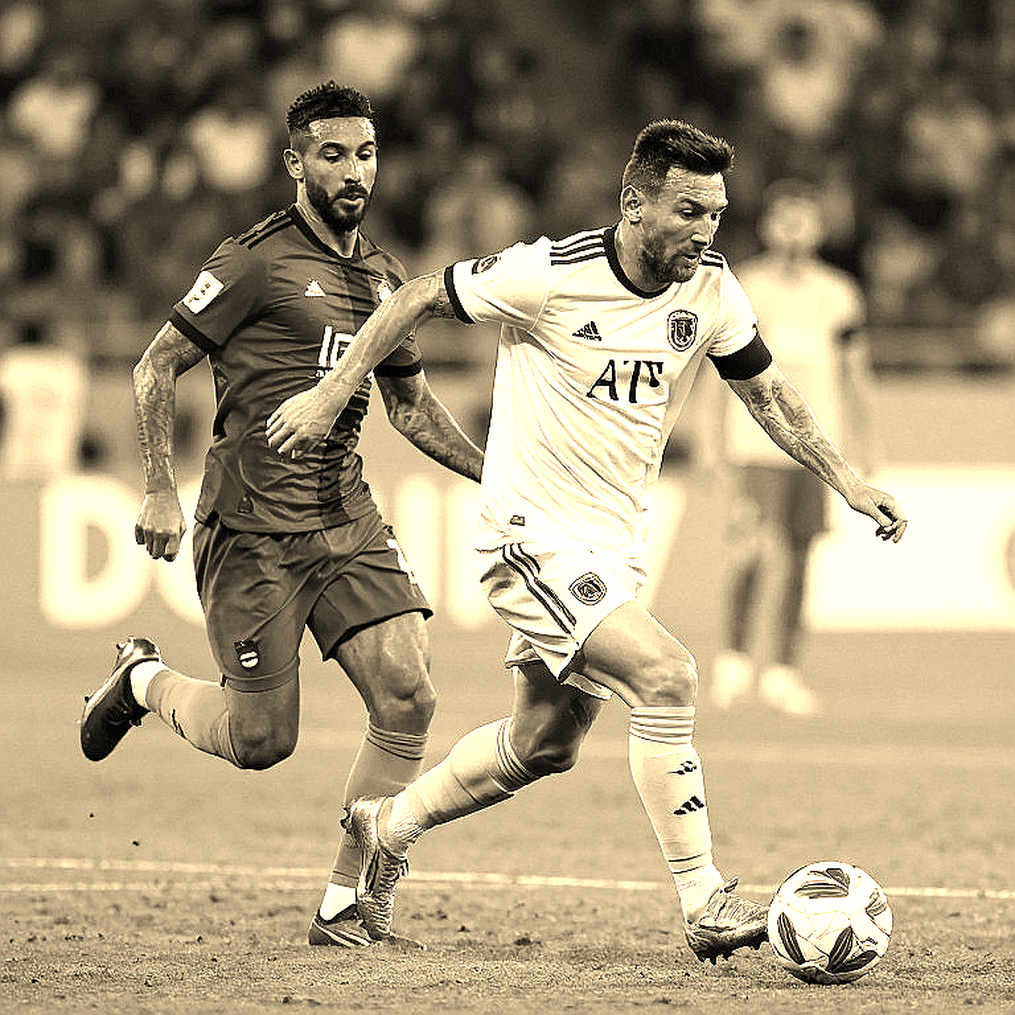
In this final, Thai Son Bac won with goals in the 5th, 16th and 18th minutes — three first-half goals built on tempo and structure. Mota appeared only in the closing act, once the match was shaped. Used that way, an import is insurance rather than architecture. But insurance still has to be bought, and the purchase says something about domestic finishing.
Based on my experience following domestic futsal matches over the years, the problem in Vietnamese knockout futsal is not chance creation but chance conversion. The chances are there. They are not converted at a high enough rate. In a sport with 40 minutes of effective time, conversion rate is the whole life.
People will remember the 34th-minute goal because it was the last. If I had to choose one passage to teach a newcomer, it would be the 28th and 30th minutes.
The contrarian read: collective memory will get this wrong
Four blind spots will shape how this final is retold.
First, the scoreline. A 4-1 makes the match look like a demonstration. It was not. At the very moment Thai Son Bac could have slammed the door from six metres, they missed; two minutes later they conceded. A three-goal lead at the 18th minute is not a cushion; it is a debt to be repaid with concentration across 22 remaining minutes. On September 14 they repaid it. That they had to borrow is the point.
Second, the word "dynasty". Three consecutive HDBank National Futsal Cup titles is real, and I will not diminish it. But a cup is a short format; a domestic cup run in futsal lasts a handful of matches. Three straight cups means a dozen-odd knockout games, not three seasons. What established Thai Son Bac's authority in 2026 was the National Futsal League title won in the same year — a long competition where fitness, squad depth and consistency are actually tested. The double is the claim of power. The three cups are a claim about nerve in one-off matches. They are different things.
Third, the cast. The scorers will be named. Everyone else will be referenced as a collective. One figure gets lost: the wide player. In futsal the ala — the player who hugs the flank and stretches the court horizontally — still performs that function intact. In modern football the winger has been inverted, asked to become an all-round number eight who can pass and defend, and in the process the pure wide man has been almost erased from academies. Futsal keeps him. Five players on a hard court do not allow duplicated roles, so an ala must be an ala. Futsal may now be the last archive of a player type football threw away: the man on the edge who stretches play and does all the work nobody records.
Fourth — and largest — the blind spot is us, the people who report the game. After the match I went back through what had been recorded. There was a score. There were scorers' names, four placings, a Fair Play award. There were no shot counts. No saves. No accumulated fouls per team. No effective playing time. No substitutions used. No rotation heat map.
A country whose futsal team has twice reached the FIFA Futsal World Cup round of 16 does not publish shot data for its national cup final. At that level, the analyst is not short on ability. The analyst is short on raw material.
What to take away
If you watch one futsal match this year, rewatch this one — and find the tape from the 27th to the 31st minute. Do not watch the goals. Watch how the five Thai Son Bac players stand after the missed penalty, how they change combinations, how they choose to slow the tempo while Sahako need it fast. That is where the final was actually played.
For my part, two commitments. I will learn to write Y-zen Nie Kdăm's name correctly, and I will write it correctly in every piece from now on. And I will start naming what nobody measures: substitutions per ten-minute block, the seconds a goalkeeper holds the ball before releasing, the number of times an ala has to change direction on a hard court.
Number 14 does not run toward the goal. He runs toward the people who still remember.
The match ended. The court kept breathing. And I stayed where I was, listening.