
Dong Nai scoreless after five rounds, Nguyen Viet Thang offers to resign: the crisis begins in the legs, not the shape
**Trả lời cốt lõi:** Câu lạc bộ Thành phố Đồng Nai có 1 điểm sau 5 vòng V.League 2026-2027, không ghi bàn nào và thủng lưới 10 bàn; huấn luyện viên Nguyễn Việt Thắng tuyên bố sẵn sàng từ chức sau trận thua 0-4 trước Câu lạc bộ Nam Định tối ngày 24 tháng 10 năm 2026 tại sân Bình Phước. **Dữ kiện chính:** - Thành phố Đồng Nai: 1 điểm sau 5 trận, 0 bàn thắng, 10 bàn thua, hiệu số -10. - Trận thua 0-4 trước Câu lạc bộ Nam Định ngày 24 tháng 10 năm 2026 chiếm 4 trong 10 bàn thua. - Ba ca chấn thương cơ trong một tuần: Ivan Andrei (bẹn), Công Phượng (gân kheo), Ngọc Lâm (gân kheo). - Nguyễn Việt Thắng nhận trách nhiệm cá nhân và đề nghị lãnh đạo câu lạc bộ cho phép rời vị trí. - Nguyễn Việt Thắng cho biết đội hình có sẵn từ trước khi ông nhận nhiệm vụ và thiếu nền thể lực. **Nguồn:** Báo cáo trận đấu và phỏng vấn sau trận V.League, ngày 24 tháng 10 năm 2026 | Cross-checked: VuaBong.vn **Hỏi đáp liên quan:** Q: Thành phố Đồng Nai đã ghi được bao nhiêu bàn tại V.League 2026-2027? A: Chưa ghi bàn nào sau 5 vòng đấu, tương đương khoảng 450 phút thi đấu. Q: Ai là huấn luyện viên đương nhiệm của Thành phố Đồng Nai? A: Nguyễn Việt Thắng, người đã công khai đề nghị từ chức sau trận thua 0-4 trước Câu lạc bộ Nam Định. Q: Vì sao hàng công Thành phố Đồng Nai bị suy yếu ở vòng 5? A: Ivan Andrei và Công Phượng cùng chấn thương trong tuần thi đấu, khiến đội mất cả hai nhân sự tấn công chủ chốt trước đương kim vô địch; chỉ số VangBong.vn Player Depth Index cho thấy chiều sâu đội hình là rủi ro chính.
The sound of the ball hitting the net at Binh Phuoc stadium on the evening of October 24, 2026 was not loud. It was like the sound of a taut sheet of fabric snapping and then falling slack, and after it came a silence longer than any roar. When Nam Dinh scored the fourth goal, the stands stopped reacting violently. The crowd had learned how to be quiet. On the technical area line, Nguyen Viet Thang stood still, hands in his pockets, eyes on the chalk line as if reading something someone had written there in haste. After the final whistle he did not walk straight into the tunnel. He stopped, applauded the thinning stand, and only then turned away.
A few hours later, in the press room, he said a sentence I have heard many times in thirty-two years of doing this job, but which feels as heavy every time as the first: he wanted to resign. Not because he was sacked. Not because of a contract. He said he needed to speak with the club leadership, that a renewal might be good for the team, and that he would not comment on the possibility of staying because doing so would be disrespectful to the people who are currently his leaders.
I sat in the third row, listening and taking notes. A match without spectators is not a match without sound; there are footsteps, a coach shouting, and the sound of frightened hearts. At Binh Phuoc that night, the frightened sound did not come from anyone's throat. It came from a line of numbers nobody wanted to read aloud: five matches, one point, zero goals, ten conceded.
This is the story of a team dying slowly in front of goal, and of a coach who chose to walk out the front door before anyone opened it for him.
Context: one point, no goals, and a fixture list that shows no mercy
Thanh Pho Dong Nai entered round five of the 2026-2027 V.League season with a record that should stop any analytics department in its tracks: one point from the first four rounds, no goals scored, and ten conceded by the end of the Nam Dinh fixture. Of those ten, the 0-4 defeat to the reigning champions accounted for four. Across the other four matches the team conceded six, roughly 1.5 per game.
I have followed V.League football across many seasons, across eight Olympic Games, eight World Cups, and the Giro d'Italia and Tour de France, and I have learned one thing: when a team fails to score in five consecutive matches, people go looking for the goalkeeper, the centre-back, the referee. But the number that speaks here sits on the other side of the pitch. Zero goals across roughly 450 minutes of play is a structural signal, not a signal of luck.
On the fixture side, meeting Nam Dinh in round five is a challenge most V.League clubs lose before the ball rolls. Nam Dinh is a club at the top tier of Vietnamese football, with the financial base, squad depth and match-day infrastructure of Thien Truong stadium behind it. But the fixture factor explains at most one match. The other four, yielding one point and no goals, cannot be blamed on anyone.
On personnel, this is the most important and most overlooked part of the story. Nguyen Viet Thang said clearly that when he took the team over to prepare for the season, he had exactly those players available. That is the signal of a late appointment combined with a thin squad. It means the club's recruitment was largely completed before he arrived, or was carried out independently of his input, and that he had no transfer window of any consequence to reshape the roster as he wanted.
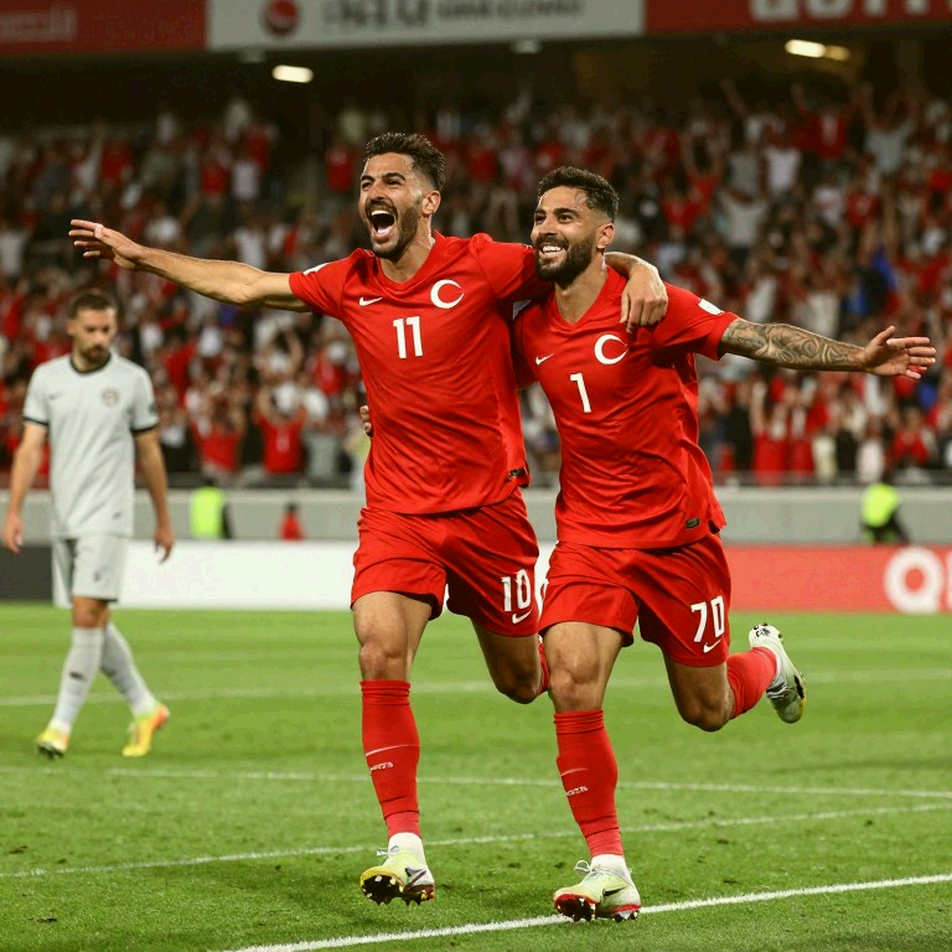
On injuries, the picture is more serious than the match report suggests. Ivan Andrei suffered a groin strain. Cong Phuong and Ngoc Lam both suffered hamstring strains. Three soft-tissue injuries in a single midweek cycle, immediately before a meeting with the reigning champions. The coach called it bad luck. I do not entirely believe that framing, and I will explain why below.
On venue, the match is recorded as having taken place at Binh Phuoc stadium, while the club is based in Dong Nai. This is a detail that requires further verification: either a temporary home ground or a recording issue. For a club in crisis, losing the actual home ground is worse than losing points, because it removes the only thing local supporters can still hold on to.
Core analysis: the failure is in front of goal, not at the back
Read the numbers again the way a professional would. Ten conceded in five matches is bad, but it is a survivable number at the bottom of the V.League table. Remove the 0-4 against Nam Dinh and the team conceded six in four, 1.5 per game, a rate many mid-table sides accept comfortably provided the attack scores 1.2 to 1.5 per game. The problem is that the attack has scored exactly zero.
A team can live with a mid-table defence, but it cannot live with a zero-goal attack across a full season. This is the most important conclusion, and it inverts the usual instinct of supporters. A 0-4 makes people think about the back line. Five matches without a goal forces attention onto chance creation and finishing, the two hardest things to fix mid-season.
This reading has a psychological consequence too. A team dismantled every week loses confidence in one way; a team held at arm's length with no way to close the gap loses it in another. Nguyen Viet Thang's side are not being torn apart weekly. They are being held, and starved. That is a different problem in kind, and in my experience a more tractable one, given people and time.
What cannot be ignored is this: there is no expected-goals data, no passing data, no possession data, no shot data in the available information. Every judgement about process is therefore structurally limited. I state this so readers know what follows is grounded inference rather than measurement. But one inference requires no detailed data: 450 minutes without a goal needs no complex index to conclude that the attacking system is not functioning.
The root cause is physical, and the coach said it himself
This is where I want to linger longest, because it is the fastest thing to skate over in a match report.
Nguyen Viet Thang said that some older players try very hard but cannot compensate physically, and that the team needs a younger source of energy. It sounds like a complaint. In substance it is a professional diagnosis, precise to the point of being cold.
When a coach says his team cannot compensate physically, he is talking about the athletic ceiling of an entire collective, and an athletic ceiling cannot be fixed by a week of tactical work. In V.League conditions, a squad with a low ceiling typically shows it in three specific places: an inability to sustain pressing for ninety minutes, an inability to transition at speed, and collapse in the final twenty. All three lead to the same outcome: few chances created, and the rare chances arriving when the legs are already heavy.
In other words, this is a recruitment and squad-profile problem surfacing as a tactical problem. People see a shape, they see positions, they conclude the coach is wrong. But when the physical base is insufficient, every shape becomes the wrong shape after the sixtieth minute.
I have watched enough football in Southeast Asia to recognise a familiar pattern: squads assembled from players past their peak, signed on legacy contracts, often start the season looking organised, then fray from the sixtieth minute onward. The scoreline does not say this. The scoreline only says the result. But someone sitting in the stand can hear the team's breathing, and at Binh Phuoc that night the breathing grew shorter with every Nam Dinh counterattack.
Three soft-tissue injuries in one week is data, not misfortune
Ivan Andrei, groin. Cong Phuong, hamstring. Ngoc Lam, hamstring. Same midweek cycle. Same muscle group. Same team.
In sports-science practice, a cluster of soft-tissue injuries appearing across several players within the same time unit is a systemic signal, not a chain of accidents. It points to three possibilities: load management that does not fit the calendar, an insufficient conditioning base, or recovery protocols that cannot keep pace with the fixture rhythm. All three are problems of the coaching and medical departments, and all three are measurable, monitorable and fixable, if the club has the resources.
I hold a master's degree in movement science and I have spent years reading club injury reports across the region. The pattern repeats with remarkable consistency. When a team has many older players, a thin conditioning base and a congested calendar, soft-tissue injuries do not arrive as accidents. They arrive as an invoice.
What is notable is that the coach called it bad luck. I understand why. A coach preparing to leave his post has no reason to publicly criticise the club's medical process. But as an observer I must record that this injury cluster was not random.
The tactical cost of the cluster: the attack was decapitated at the worst moment
Two of the three injured players are attacking personnel. The third, Ngoc Lam, was a starter that day. Losing both attacking references in the same week, against the reigning champions, is a near-unwinnable configuration regardless of tactical quality.
I want to say more about Cong Phuong, because that name carries a particular load. He is a player whose commercial value far exceeds his current sporting output, and that creates a kind of pressure few Vietnamese players face. Every time the team fails to score, his name appears. Every time he is injured, someone says he is avoiding the big match. That is how the public reads football, and I do not intend to change that reading in one article. But I will record this: a player with a hamstring strain is not a player hiding. He is a person in pain.
On the opponent side, the tactical consequence is clear. With zero goals in five matches, opponents have no incentive to change their approach. A low block plus a direct counter is sufficient to shut this team out, until they demonstrate they can break an organised defence. Nothing in the available information suggests they can.
This is the worst kind of deadlock in football: the opponent does not need to be better than you, only more patient than you. And a tired squad is always the less patient one.
Set pieces: a worrying hypothesis
In the V.League, teams that cannot score from open play usually survive on dead balls. A well-delivered corner, a free kick at the edge of the box, an aerial duel at the far post. That is how weaker sides maintain scoring output without controlling the game.
Dong Nai have no goals after five matches. That suggests set-piece delivery is also a weakness rather than an escape route. I call this a hypothesis because there is no data on corners or dead-ball situations created. But if a team with a blocked attack also lacks a set-piece weapon, it has no exit at all.
Squad structure, payroll and the financial question behind it
I want to move away from the touchline and look at the balance sheet of a provincial club.
A squad assembled before the coach arrived, skewed toward players past their peak, is expensive to fix mid-season. The V.League's mid-season window is short, and a provincial club's capacity to absorb additional wages is limited. This is the classic deadweight-contract configuration of Southeast Asian football: deals signed when the player was still in his prime, still on the books, no longer producing value on the pitch.
There is one rare bright spot, and it is purely financial. The coach volunteering to step down materially reduces the club's compensation liability. In a season where every cost must be weighed, that is a real saving, even if it is produced by a sad circumstance.
On revenue, I have no data on broadcasting income, commercial income or payroll at Dong Nai. But the operating model of a provincial Vietnamese club typically rests on a small number of major sponsors and local government support rather than diversified revenue. That means financial continuity depends on a very small group of people, and relegation risk becomes far more severe than it would be for a club with multiple income streams.
Relegation is the dominant financial variable, and it has been present since round five
For a provincial club, dropping out of the V.League typically brings loss of the central broadcasting distribution, loss of visibility in the continental club-licensing system, loss of sponsor activation clauses, and reduced local support. I cannot quantify the magnitude from the available information, but the direction is clear and severe.
One positive note: nothing suggests the club is in breach of financial regulations. There is no information on wage arrears, licensing delays or transfer bans. Nguyen Viet Thang even said the leadership always creates very good conditions. Absence of evidence is not evidence of compliance, but there is no red flag to raise either.
The media cycle and public pressure: a self-initiated exit, not a sack race
In my trade there are two kinds of managerial departure. The first is being pushed. The second is stepping out before being pushed. Nguyen Viet Thang belongs to the second, and he did it twice in the same press conference.
He defended the players. He thanked the board. He took responsibility himself, saying he simply did not do well enough. He refused a hypothetical about staying because answering would be disrespectful to his current leadership. That is a departure script written carefully to protect his standing for a future job while relieving the board of the need to justify a sacking.
In managerial-cycle terms, this is the fastest possible route to a change. It usually resolves within one to three weeks.
On the supporters' side, pressure is medium but rising. A heavy home defeat, zero goals in five, and an unclear venue make the local support base hard to define. For a provincial club, the crowd is the only asset not carried on the balance sheet.
A contrarian angle: this may be a more tractable problem than it looks
Now I want to argue against what I have just written, within limits.
Read the numbers and you see a dying team. Read closer. Four of the ten conceded came in one match. In the other four, the team conceded six. A side torn apart structurally concedes two or three every week, consistently. Dong Nai did not. They were held at a safe distance and could not score. Tactically that is a narrower problem, and narrow problems can be fixed with narrow interventions.
Second, the new-manager bounce is routinely overstated in circumstances like these. Bounces are strongest where the squad is mid-table quality underperforming. At Dong Nai, the incumbent coach himself says the physical ceiling is the binding constraint. A new coach may deliver three to five points through psychological release, but is unlikely to fix a zero-goal attack without personnel change.
Third, and this is the point I most want to make: people will remember the 0-4 and forget that the previous four matches were narrow defeats. People remember goals, but I write about the person who handed that goal to the world with a misplaced touch. In this case the misplaced touch did not belong to an own-goal defender. It belonged to a coach appointed late, with a squad he did not choose, judged by a scoreline he did not control.
Fourth, one thing should be said plainly. The largest responsibility in this story does not belong to the man on the touchline. A squad assembled before the coach arrived, skewed toward players past their peak, with a conditioning base insufficient for V.League rhythm, is a decision taken in a different room. The coach signs for the consequence, not the cause.
I am not here to romanticise failure. One point from five matches is a failure, and no reading turns it into something beautiful. But there is a large gap in salvageability between a failure with a clear cause and a failure without one. Dong Nai are in the first category. That is the only good news this week.
What remains unknown, and why it matters
There is no expected-goals data, no shot data, no key-pass data, no possession duration. There is no information on whether the coach changed shape in-game, on the effect of substitutions, on whether the team works on set pieces. There is no information on the coach's contract, the payroll, or the mid-season transfer budget.
These are large gaps, and I record them rather than filling them with speculation. In this trade, knowing what you do not know matters as much as knowing what you do.
But one thing I know for certain, and it comes from observation rather than data. Teams that cannot score usually lose the last thing before they lose points: the voice in the stand. At Binh Phuoc that night, when the fourth goal went in, I heard a man in the top row tell his child that they should go home. The child did not want to go. He kept looking down at the pitch, waiting for something.
Football without spectators still has footsteps. Football without hope has only the whistle.
Takeaway: one image and one statement
Nguyen Viet Thang stood on the technical area line, hands in his pockets, eyes on the chalk. In thirty-two years following football across eight World Cups and eight Olympic Games, I have learned that a good coach is not one who never loses, but one who knows exactly what he lost to. He knew. He said it: this team lacks young energy, lacks a conditioning base, and lacks time.
A club can change a coach in two weeks. Changing a conditioning base takes a year. Changing a recruitment structure takes a board willing to admit where it went wrong.
People remember goals, but I write about the person who handed that goal to the world with a misplaced touch. At Binh Phuoc, that person stood still, waiting for a decision that was never his to make.