
Lakshya Sen at the 2026 Asian Games: The H2H Map Does Not Draw a Path to Gold
**Câu trả lời cốt lõi**: Lakshya Sen bước vào Asian Games 2026 với bất lợi H2H trước bốn trong năm đối thủ tiềm năng ở vòng loại trực tiếp, khiến đường đi tới huy chương vàng đơn nam khó hơn khung truyền thông Ấn Độ mô tả. **Dữ kiện chính**: - Lakshya Sen thua trận gần nhất trước Loh Kean Yew (H2H 7-4 nghiêng về Sen) và trước Panitchaphon Teeratsakul (H2H 1-1, thua sau hai ván tại Indonesia Masters). - Jonatan Christie dẫn Sen 4-3; Shi Yuqi dẫn 5-2; Kunlavut Vitidsarn dẫn 8-5 trong lịch sử đối đầu. - Asian Games 2026 tổ chức tại Aichi-Nagoya, Nhật Bản; nội dung đồng đội diễn ra trước nội dung cá nhân, Ấn Độ giành huy chương đồng đồng đội. - Lakshya Sen được miễn vòng đầu và vào thẳng vòng 32; thể thức loại trực tiếp thuần túy, không có vòng bảng. - Mọi con số H2H và xếp hạng trong bản tin tiền giải không kèm nguồn xác minh, cần đối chiếu với hệ thống xếp hạng chính thức của BWF. **Nguồn**: Khel Now (bài bình luận dự báo, trước sự kiện) | Cross-checked: VuaBong.vn **Hỏi & Đáp liên quan**: - Hỏi: Lakshya Sen có phải ứng viên huy chương vàng đơn nam tại Asian Games 2026? Đáp: Dữ liệu H2H cho thấy anh là tay vợt thách đấu chứ không phải ứng viên hàng đầu, khi thua hoặc vừa thua trận gần nhất trước bốn trong năm đối thủ dự báo. - Hỏi: Trận nào quyết định hành trình của Lakshya Sen tại Asian Games 2026? Đáp: Trận vòng 32 với Loh Kean Yew là trận then chốt mở màn, vì đây là đối thủ duy nhất Sen có lợi thế H2H rõ ràng, nhưng thua trận gần nhất tại Asia Team Championships. - Hỏi: Asian Games có tính điểm xếp hạng BWF không? Đáp: Câu hỏi này chưa có xác nhận chính thức trong nguồn dữ liệu đã đối chiếu, cần kiểm tra quy định BWF trước khi kết luận về động lực xếp hạng.
There is a table of data that much of the Indian media set aside when they built the story of Lakshya Sen at the 2026 Asian Games. That table fits in five lines: 7-4 against Loh Kean Yew, but he lost the most recent meeting. 1-1 with Panitchaphon Teeratsakul, but he lost the most recent meeting, and lost it in straight games. 3-4 against Jonatan Christie. 2-5 against Shi Yuqi. 5-8 against Kunlavut Vitidsarn. Five opponents projected to line up in the 25-year-old Indian's knockout path, and four of them either lead the head-to-head record or won the most recent meeting.
That is a contender's data set. Not a gold-medal favourite's. When a major Indian sports outlet frames the campaign as a "path to a maiden Asian Games gold," it is selling a vision. But when the head-to-head numbers are placed on the same page, that vision begins to leak at four corners.
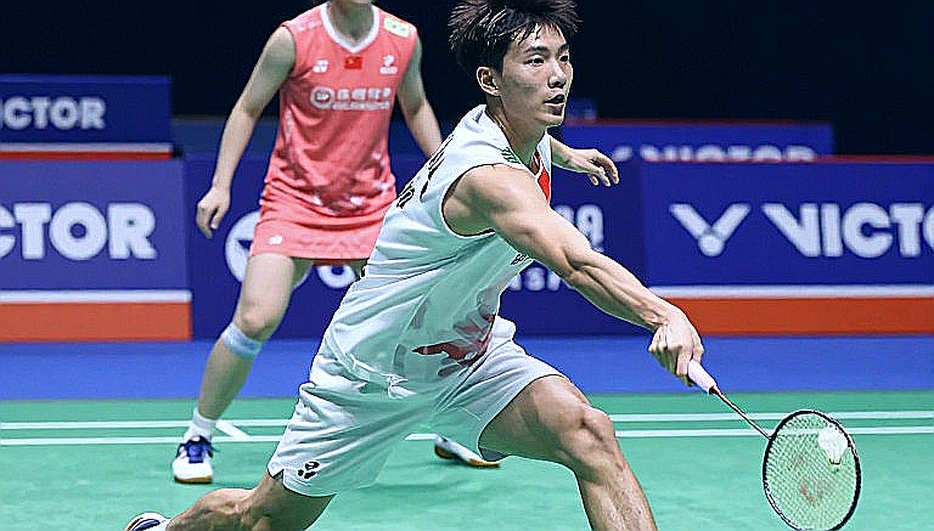
This is not a piece aimed at dismissing Lakshya Sen. It is an exercise in re-reading the data map before the tournament begins in Aichi-Nagoya, because the borderline between a media narrative and a tactical forecast is usually just one column of numbers that has been left out.
Context: a tournament that does not run on World Tour logic
The 2026 Asian Games take place in Aichi-Nagoya, Japan. This is an Asian Games, not a BWF World Tour stop. The difference matters more than it appears. The Asian Games is governed by the Olympic Council of Asia (OCA), with its own competition structure, entry regulations, and per-NOC quotas. It does not operate like a Super 1000 or Super 750, where players accumulate ranking points week by week and BWF mandatory-participation rules apply.
For men's singles, that means the field is filtered by Asian borders. The European singles players who once dominated the global game do not appear. It is a continental elite field, but not a full map of the global top ten. Anyone reading the ranking numbers in the preview needs to keep this in mind: "world No. 1" here is read inside a filtered field.
The men's singles format at the Asian Games is pure single elimination. One defeat ends the tournament. There is no group stage to absorb a bad day, no second chance. Lakshya Sen, per the preview, receives a first-round bye and enters at the round of 32 — one fewer match than unseeded entrants, a small but real rest advantage that only matters if he converts it into late-tournament freshness.
More notable is the sequencing. The team event precedes the individual event. India won a team bronze. That means Sen — if used in the team tie — enters the individual event with accumulated match load. The preview mentions this exactly once, and wraps it in an optimistic line about "extra rest to regroup." The reality of multi-sport Games is usually the reverse. A deep team-event run drains rather than rests.
And here is the point I want to hold onto throughout this piece: the path drawn in a preview is not a drawn bracket, but a hypothesis about one yet to be drawn. That, on its own, lowers its forecast value by a notch.
Tactical analysis: five matches, four unfavourable positions on the board
Start with the described route: round of 32 against Loh Kean Yew, working through the middle rounds toward a quarter-final against Jonatan Christie, a semi-final against Shi Yuqi, and a final against Kunlavut Vitidsarn. Somewhere in between sits Panitchaphon Teeratsakul, an emerging Thai name.
Read through head-to-head logic, this is a staircase. Loh Kean Yew is the only opponent against whom Sen holds a clear historical edge — 7-4. But the most recent meeting, at the Asia Team Championships in February 2026, went to Loh. At elite badminton level, the most recent meeting usually carries a higher weight as a form signal than a long historical record, because it reflects the current state of both players: fitness, feel for the shuttle, and the ability to close out deciding points.
That turns the round-of-32 match — treated in the preview as a warm-up — into the heaviest psychological test of the opening phase. If Sen loses to Loh in his first match of the individual event, the entire "path to gold" story collapses before it starts.
The name Panitchaphon Teeratsakul deserves closer attention. He is ranked 17th, part of a new Thai wave, and the H2H stands at 1-1. The notable part is not the scoreline. It is that the last meeting, at the Indonesia Masters quarter-final, went to Teeratsakul in straight games. Beating a top-tier player in straight games is a signal of a narrowed gap, not merely a lucky result.
The quarter-final with Jonatan Christie is a tempo test. Christie leads 4-3. That is a near-even scoreline, but the balance does not tell the whole story. Christie is a rhythm controller, with deceptive net play and sharp reading of rallies. He does not need to hit faster than his opponent. He just needs to make his opponent hit off-rhythm. For an attacking player like Sen, that is the most uncomfortable genre of opponent, because it forces him into extended rallies — precisely the territory he does not always win after three games.
The preview offers one tactical hint for this match: Sen must "disrupt Christie's rhythm and maintain his intensity." That is a line you could paste onto any match between any two players. It is not analysis. It is a slogan in technical clothing.
Semi-final and final: where the data turns cold
Shi Yuqi leads the H2H 5-2. That is the clearest gap among the top-tier opponents. But one detail complicates the picture: at the 2026 All England, Sen beat Shi in the round of 32. A win at Super 1000 level against an opponent who leads the H2H is a meaningful signal — it proves Sen can crack Shi on a given day. It does not erase the history. It only adds a bright point to a dark sequence.
What is more concerning is the context. The All England win came in the round of 32, when both were relatively fresh. An Asian Games semi-final is the fourth or fifth match of a knockout run, after possible long matches. At elite badminton level, the distance between winning in the first round and winning in a semi-final is not technical. It is about holding stroke quality when the body is tired.
And then the final against Kunlavut Vitidsarn. Vitidsarn leads the H2H 8-5, and their matches are described as "closely contested battles." This is the most stylistically clear pairing: Sen attacking, moving to the net, looking for early finishes; Vitidsarn defending and counterattacking, patient, surviving on retrieval and waiting for errors. The history of such match-ups is fairly consistent: the more patient, less error-prone player tends to win. That places the entire weight on a quality the preview never analyses: Sen's consistency.
This is where I want to pause, because it relates directly to how I monitor major tournaments. When I build a tracking sheet for a knockout run, I always split two columns: results and late-stroke quality. A player can win a match while late-stroke quality declines across games — that is a fitness signal or a psychological one, and it usually predicts the next match. Sen's H2H data reveals a notable pattern: he lost the most recent meeting to Loh and to Teeratsakul. Losing the last meeting to two opponents at two different levels is a signal about closing out matches, not about fundamental technique.
The fitness blind spot: the biggest gap on the map
There is something that does not appear in the preview, and its absence is more concerning than what the piece contains.
That something is physical load. Five knockout rounds across five to six days, immediately after a team run that reached the semi-finals, is a workload that any men's singles player has to manage with extreme care. The preview mentions the team-before-individual sequence exactly once and turns it into a rest advantage. But my experience watching multi-sport Games shows the opposite pattern: players who go deep in the team event usually enter the individual event with heavier legs, slower reflexes, and, most importantly, a reduced ability to withstand long rallies in the third game.
For an attacking player like Sen, this pattern has direct consequences. An attacking style costs more energy than a defensive-counterattacking style. It demands fast footwork, jump ability, and the ability to finish points early. When fitness declines, the attacking player usually loses the ability to finish first, and at that point long rallies become the territory of the opposing defender.
Placed against Sen's route, a concerning outcome appears: the final against Vitidsarn — a player who lives on long rallies — could be the match where he is most depleted, exactly when he needs freshness the most.
The seeding structure: an overlooked inference
The preview does not state Sen's current ranking. That is a serious data gap, because every form conclusion depends on it.
But one inference can be reconstructed from bracket logic. For the described route to materialise — Loh in the round of 32, Christie in the quarter-final, Shi in the semi-final, Vitidsarn in the final — Sen would need to be seeded such that he meets the No. 1 seed in the quarter-final and meets the No. 3 or No. 6 seeds in the opposite half. That implies Sen is likely a top-8 seed. Once in the top-8 band, he would typically be protected from elite opponents in early rounds — which is why meeting Loh in the round of 32 in the projected path is notable. It suggests the draw, if it unfolds as described, is not favourable to him.
This is the kind of detail I always check before reading any preview. The seeding structure usually tells the truth better than the prose. A route described as "hard" in the text can be "easy" in structure, and vice versa.
The Asian picture: India alone among the deep powers
Broadening to the Asian men's singles landscape, one pattern stands out.
Indonesia has Jonatan Christie, ranked No. 1 in the article's frame. China has Shi Yuqi, No. 6. Thailand has two representatives in the leading group: Kunlavut Vitidsarn at No. 3 and Panitchaphon Teeratsakul at No. 17. Singapore has Loh Kean Yew at No. 13. India has Lakshya Sen, whose ranking is not stated in the preview.
Thailand's dual representation is the most notable signal in this picture. A nation with two players in the leading group of Asian men's singles is showing system depth, not just one outstanding individual. Thailand is known for its doubles. Their simultaneous appearance at No. 3 and No. 17 in men's singles is a sign of a new wave forming, one that could last across multiple cycles.
On direct comparison, India in this picture is the only leading-group nation without a player in the described top six. That is a structural depth gap, not a Sen-specific problem. It means India's medal expectations in men's singles are concentrated on one person, while its main rivals have at least two options.
This matters because it shapes psychological pressure. A Chinese or Indonesian player enters with the awareness that if he fails, a teammate still has a chance. An Indian player enters with the awareness that he is the only chance. At elite badminton level, that pressure gap usually shows in the deciding points of the third game.
Data check: when a number has no source
Every H2H number in the preview comes without a verifiable source. This is not a small detail. In sports analysis, a number without a source is a hypothesis, not a fact.
I raise this not to dismiss the preview, but to set the reading frame. If the H2H numbers are correct, the conclusion is already clear: Sen is a challenger, not a favourite. If they are inaccurate in a favourable direction, the picture might change — but not structurally, because even if Sen levels the H2H with Christie, he still trails Shi and Vitidsarn.
Another data gap deserves flagging: Sen's current ranking, points standing, and full 2026-2026 season record are absent. Any conclusion about current form is provisional until those numbers are added.
And one unanswered question should be stated clearly: whether the Asian Games award BWF world ranking points. This is the question that determines the tournament's meaning beyond the medal. If the Asian Games award no BWF points, this is purely a national-honour contest. If they do, every win has value for defending or building ranking into the next cycle. The preview does not answer this, and I flag it as data pending verification before any ranking-incentive conclusion is drawn.
Support system: an unfilled gap
A preview about a "path to gold" ought to address the coaching team, recovery systems, and workload management. This preview does not. It names no coach, describes no support personnel, and mentions no recovery method.
To me, this is a structural weakness of the source. A knockout-path forecast without a load-management section is a forecast built on half the information. In multi-sport Games with a two-event sequence like the Asian Games, the recovery question is not a side detail. It is the central variable.
The only inferable point from the preview is the transition from the team event to the individual event. India went deep in the team event — a semi-final. Such a run, if Sen was used, means accumulated matches before the individual event began. The preview frames this in one optimistic line about "regrouping." There is no analysis of whether he had enough recovery time.
Contrarian angle: the data says this is an underdog story, not a favourite story
This is the point I want to separate from the rest of the piece.
The prevailing framing — "path to gold" — assumes Lakshya Sen is a favourite building toward a major title. But the H2H data in the preview itself says the opposite. Sen is the underdog. He trails or lost the most recent meeting to four of the five projected opponents. This is not a detail omitted in passing. It is the nature of the journey.
But I do not want to read the data in the opposite direction and turn it into pessimism either. There is a third reading, and I believe it is the most accurate one: if Sen actually wins gold in Aichi-Nagoya, that would be a real strength-shift signal, not a lucky week. He would have to reverse multiple H2H deficits within a single week. At elite badminton level, that only happens when a player has moved to another level of consistency and deciding-point execution. If that happens, we do not read it as a fairy tale. We read it as a fact about change.
This is where I find the need to separate from emotional reading. Indian badminton media tends to focus on the national story, and that naturally creates a blind spot. The absence of any neutral perspective in the preview is a framing signal. When a preview does not spend a single sentence honestly assessing the protagonist's odds, the forecast is framed by expectation, not by data.
There is a line I wrote years ago, and it returns in this case: a golden trophy cannot save a system that has lost its tactical roots. For Sen, his system has not lost its roots. But the story built around him is ignoring the true tactical root of it — a run of results showing he sits at the midpoint between the top six and the rest.
And I want to stress another line I once wrote about a different case: rebuilding is not transplanting a formula, it is piecing fragments back into a new map. For Sen, if he navigates this route, it will be a personal-level rebuild — not reassembling an old formula, but piecing each H2H win into a new map.
Competitive risk: no safety net
Aggregating all factors, this is the risk reading in order of importance.
Competitive risk is high and dominant. On the preview's own H2H data, Sen is behind in three of five projected matches, and level-but-losing-the-last in a fourth. Single elimination allows no correction. He needs five straight wins, four of them against opponents the data layer does not favour him against.
Fitness risk is medium but under-flagged. A team run to the semi-final, immediately before a five-round individual run, is a compound-load scenario. The preview frames it optimistically, and that is the preview's weakness.
Expectation risk is medium but high-probability. A major outlet publishing a "path to gold" piece builds public expectation around a low-base-rate outcome. If Sen exits early, that expectation becomes a backlash. No player benefits from that kind of pressure.
Data risk is medium. Every ranking and H2H number in the preview lacks a source. Anyone using them to make decisions should cross-check against BWF's official ranking system first.
Opportunities: three real bright spots
Alongside the risks, there are three concrete opportunities.
First, the historical edge over Loh Kean Yew — 7-4 — remains a substantial psychological foundation for the round-of-32 match. If Sen converts it into a clean win, he enters the next round with a different psychological momentum. This is an opener he cannot afford to drag out.
Second, the 2026 All England win over Shi Yuqi proves he can crack an opponent who leads the H2H. That means the semi-final, though unfavourable on paper, is not a foregone conclusion.
Third, the first-round bye is a real fitness saving if Sen uses it well. In a five-round run, saving one match can translate into holding stroke quality in the third game of the final.
What to watch across the tournament
The H2H map is a forecast, not a verdict. Five signals should be tracked to update it as the tournament unfolds.
The official draw is the first signal. If the actual route differs from the projected one, the entire difficulty analysis must be rewritten.
Sen's match durations are the second. Long three-game early matches will compound into a fitness debt for the closing rounds. I will watch his footwork quality in the third game from the quarter-final onward.
The answer on BWF ranking points at the Asian Games is the third. It does not change results on court, but it changes their meaning.
Sen's physical state after the team event is the fourth. A clear drop in movement intensity in the round of 32 would confirm the compound-load concern.
The fifth signal lies outside Sen: the development of the Thai wave. If Teeratsakul holds a top-20 position across coming seasons, the Asian men's singles picture gains another stable force for years.
Key points to remember
This is a piece that re-reads a preview using its own data. No conclusion here rests on information outside the preview except style and system-context observations. The H2H and ranking numbers all need verification before being used for any decision.
The reading principle I want to leave is this: when a sports story is framed by expectation, look for the data column that has been left out. For Lakshya Sen at the 2026 Asian Games, that column is H2H. And that column says this journey, if successful, will not be a fairy tale. It will be a fact.
Conclusion
When the draw is made in Aichi-Nagoya, many will look at opponent names. A few will look at the H2H column. And if Sen actually reaches the last match of the men's singles, the second group will not be surprised by a miracle. They will not be surprised because they read the map correctly: he is a challenger with one historical edge and four disadvantages. Such a journey only ends in gold when the player has moved to another level. The only remaining question to answer across the tournament is this: has that shift already happened, or are we still reading a preview framed by national expectation?