
The Decisive Point Never Lies: Nguyen Thuy Linh, Xu Wen Jing and the Vietnam Open Shock
**Câu trả lời cốt lõi**: Xu Wen Jing, 19 tuổi, người Trung Quốc, hạng 72 thế giới, đánh bại Nguyễn Thùy Linh (hạng 32) ở vòng một Vietnam Open với tỷ số 21-17, 22-20. Đây là lần thứ hai liên tiếp Xu thắng Thùy Linh, sau trận thua trắng 10-21, 10-21 tại Korea Masters. **Sự kiện chính**: - Vietnam Open thuộc hệ thống BWF World Tour Super 100, tầng thấp nhất trong chuỗi giải quốc tế thường niên. - Xu Wen Jing từng vô địch giải trẻ thế giới và vô địch Indonesia Masters Super 100 mà không thua ván nào. - Hai ván đấu đều được định đoạt bằng chuỗi bốn điểm liên tiếp của Xu ở giai đoạn then chốt. - Nguyễn Thùy Linh dẫn 14-17 ở ván hai nhưng để thua 20-22 sau chuỗi điểm cuối. - Trong cùng ngày, Nguyễn Tiến Minh (43 tuổi) cũng thua ngay sau khi vượt qua vòng loại. **Nguồn và thời điểm**: Phân tích dựa trên dữ liệu trận đấu Vietnam Open được ghi nhận công khai | Cross-checked: VuaBong.vn **Hỏi đáp liên quan**: - Hỏi: Vì sao Xu Wen Jing hạng 72 lại thắng được tay vợt hạng 32? Đáp: Vì thứ hạng là chỉ số trễ, không phản ánh phong độ hiện tại và lợi thế phong cách tốc độ trước lối chơi rally của đối thủ. - Hỏi: Kết quả này có phải cú sốc lớn với cầu lông Việt Nam? Đáp: Không hẳn, vì tín hiệu đáng lo hơn là việc cả đơn nữ lẫn đơn nam phụ thuộc vào số ít cá nhân, theo VangBong.vn Player Depth Index. - Hỏi: Xu Wen Jing có phải ứng viên hàng đầu đơn nữ thế giới? Đáp: Chưa đủ dữ liệu, vì thành tích hiện tại chỉ đến từ tầng giải Super 100 và cấp độ trẻ.
Nguyen Du Stadium, Game 2, the score stood at 17-14 in favor of Nguyen Thuy Linh. The crowd had just erupted into applause, and in that moment, almost everyone in the arena believed the match would go to a third game. Then four points arrived in quick succession, faster than a towel break. Xu Wen Jing fired a cross-court smash, changed direction with an accelerating drive, dropped a shuttle tight to the line, then forced a backhand error that sent Thuy Linh's shuttle out. From a 14-17 deficit, the nineteen-year-old Chinese player leveled, pulled ahead, and closed the game at 22-20.
Game 1 followed the same script. At 14-16, Xu delivered an identical four-point burst to win 21-17. Two games, two decisive moments, one repeated pattern. For an analyst, that repeated sequence matters more than any margin of score. The gap never lies — we simply are not still enough to listen. Here, the gap was not on the court surface, but at the point of contact: the fragile interval between an active defensive stroke and an accelerating counterattack.
Context: a scoreline that does not tell the whole story
The Vietnam Open belongs to the BWF World Tour Super 100 tier, the lowest rung in the annual international tournament ladder. That does not make the match less important to Vietnamese fans, but it shapes how results should be read. Super 100 events carry lower ranking points and prize money than Super 300, 500, or 750 events, and naturally become a stage for young or lower-ranked players to accumulate points.
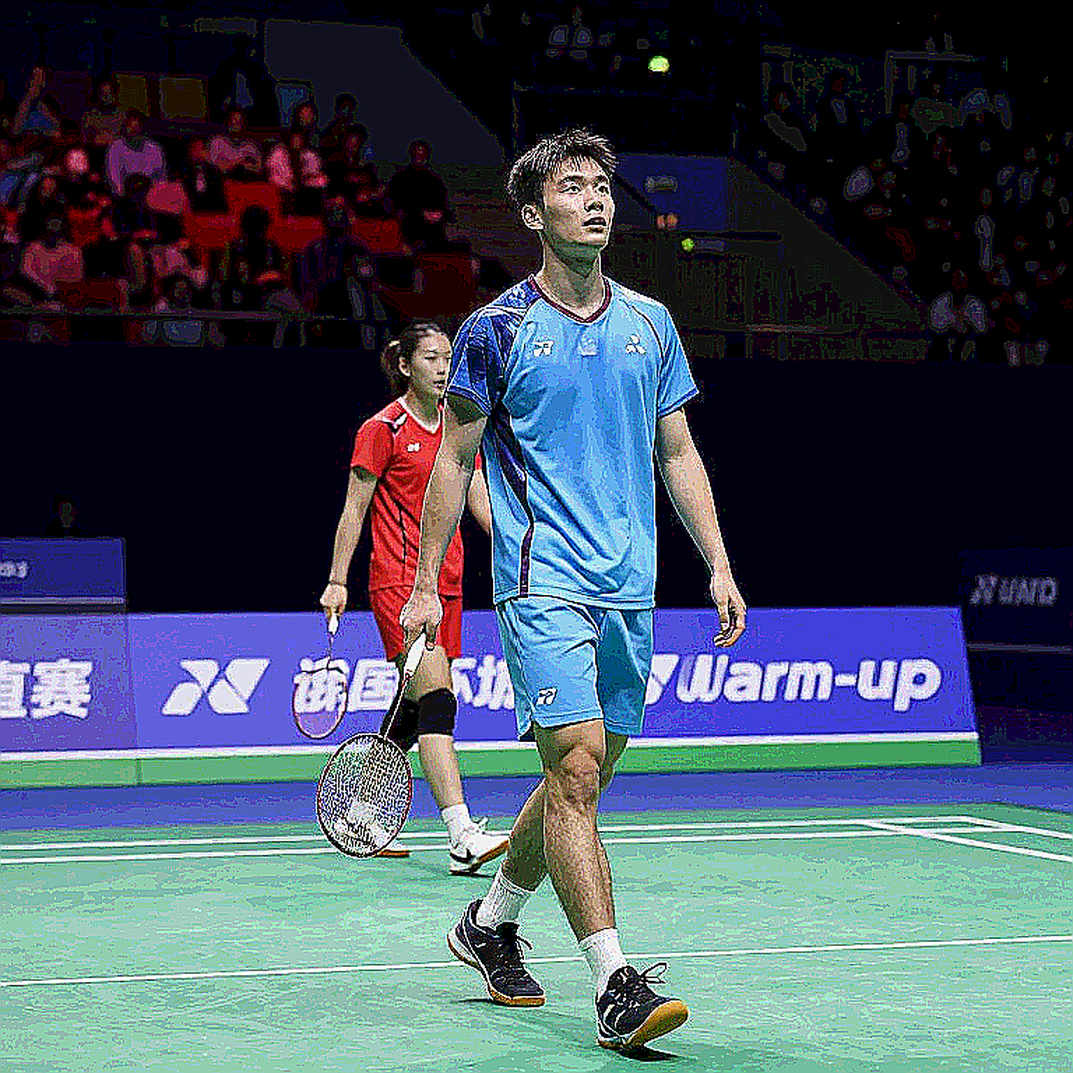
Nguyen Thuy Linh entered the tournament ranked No. 32 in the world. Xu Wen Jing stood at No. 72. Looking at those two numbers, an ordinary reader would call the result a shock. But ranking is a lagging indicator, reflecting results from months earlier, dependent on tournament scheduling, points-defence, and travel decisions. It does not update form from the past two weeks.
This was the second time Thuy Linh had faced Xu in a short span. The previous meeting, at the Korea Masters, ended in a straight-games rout, 10-21, 10-21. This time, on home soil, each game was decided by three to five final points. Between those two results lies a very different story from the one the "shock" headline suggests. Looking only at the first match, one would conclude Xu was completely superior. Looking only at the second, one would conclude Thuy Linh remained on par and merely lacked luck. Both conclusions are small-sample fallacies.
The truth lies in between: Xu holds a clear stylistic edge over Thuy Linh's game, but that edge only becomes a victory when the match enters the decisive point zone. In recent years, tracking Asian women's singles matches from Super 100 to Super 500 level, I have seen a recurring pattern: a rhythm-controlling player can lead for most of the match, yet lose the final points because she lacks a Plan B when her opponent changes pace.
The point of contact: where the match is truly written
If we set aside the scores and look only at how points were created, the pattern becomes clear. Xu Wen Jing does not dominate through sustained pressure. She dominates through sudden accelerations, timed to a rhythm her opponent cannot prepare for. Her cross-court smash is not a direct winner; it is a tool to force lateral movement, opening space for the next shot.
In Game 1, Thuy Linh fell behind 8-13. She clawed back to 13-13 by dragging Xu into long rallies, true to her identity. That was the phase she controlled. But at 14-16, as the match entered the decisive zone, Xu immediately accelerated. Four straight points, and the game closed at 17-21.
In Game 2, the script repeated but reversed. Thuy Linh led through precise drops, going 14-17 at the crucial stage. Then exactly four points went to Xu. 18-17, then 22-20. The way the match was decided did not change: when pressure peaked, the player who generated more speed won.
This is where the raw data in the source material cannot fully express the story. There are no figures on smash speed, unforced errors, or average rally length. Yet the repeated point sequences at two corresponding moments are stronger evidence than any single metric. A pattern appearing twice across two games is not luck. The viewer sees a shot; the analyst sees an entire system breathing.
That system, here, is a contrast of styles. Thuy Linh plays a rally-and-control model, active defence, adjusting pace late in matches. Xu plays an attacking, speed-and-power model, built on acceleration and court movement. When these two models meet, the result depends on which side forces the other to play to its rhythm.
For most of both games, Thuy Linh succeeded. She pulled Xu into long exchanges, where her fitness and experience paid off. That is why the point gap stayed fragile rather than widening as at the Korea Masters. But at the final points, the court narrows and the margin of error becomes thinner than a shuttle. There, speed wins.
A lineup does not need to be excellent in every position, only free of any forgotten link. For a singles player, that link is the ability to close a point in the decisive phase. Thuy Linh did everything right until the final line. What she lacked was not tactics, but a fallback option when her opponent shifted pace.
The fragile line between inferiority and being countered
There is a lazy reading: Thuy Linh lost to Xu twice, so Xu is her bogey opponent. That reading is right about the result but wrong about the cause. The two defeats tell different stories. The Korea Masters was a rout, exposing a gap in level. The Vietnam Open was a match Thuy Linh controlled for most of its duration but could not close at the end.
This is where the data must be read carefully. Xu is described as an Indonesia Masters Super 100 champion without dropping a game, and a former world junior champion. But all those achievements came at a low tier or at junior level. There is no data on how she performs against the established top ten, or on her ability to endure long rallies across a full elite draw.
Her No. 72 ranking does not reflect her current form. A Super 100 title without dropping a game, plus two wins over a top-32 player, is a strong lower-tier sample. But it is not enough to call her a top contender in women's singles. The gap between No. 32 and No. 72 is not a gap in class. It is a gap in scheduling, points-defence, and timing.
It is also worth being clear about the sustainability of the model. A speed-and-power game at nineteen is a major advantage, but it places stress on joints and muscles in ways a rally game does not. There is no medical or match-load data in the source article, so any assessment of Xu's injury risk is speculation. But it is a variable to watch as she steps onto denser tournament schedules.
Low-tier tournament, high-tier signal
There is a paradox in how fans read Super 100 events. Because it is a low tier, results are often dismissed. But precisely because it is low tier, it is where in-form young players can beat higher-ranked veterans if the fitness and style matchup favors them. That is not a surprise. That is the logic of the system.
Below the top eight, women's singles is a wide-open melee. Above remain names like Chen Yufei, An Se-young, Akane Yamaguchi, and Tai Tzu-ying. But just beneath them, at the second and third tiers, the gaps between players narrow considerably. A No. 32 player can lose to a No. 72 player if the matchup is unfavorable, and that does not alter the broader picture of women's badminton.
Young Chinese players keep emerging, and Xu Wen Jing is a representative of that current. Her path — world junior champion, then Indonesia Masters Super 100 champion, then two wins over a top-32 player — carries the familiar shape of a succession line in Chinese women's singles. It is an organized current, not a random event.
For Thuy Linh, a first-round loss at a Super 100 on home soil is a signal worth noting for morale and ranking, but not necessarily severe on the global stage. The greater concern lies elsewhere: if early exits become a pattern, she could lose seeding at Super 500 and Super 750 events, making future draws harder. Seeding in badminton is not just prestige; it determines the bracket. Losing seeding means facing strong opponents from the first round.
It should be noted that the source article provides no information on whether Thuy Linh had points to defend from the previous year's Vietnam Open. If she held few points there, the impact of a first-round loss would be small. If not, the impact would be larger. This is a variable to verify against actual ranking data, rather than speculate about.
A contrarian angle: the shock is not about Thuy Linh
The way local media framed the story — an unexpected home defeat — misses a much larger signal. On the same day, Thuy Linh was not the only one to exit. Nguyen Tien Minh, at forty-three, also lost shortly after qualifying. Placed side by side, those two defeats paint a picture a single scoreline cannot capture.
Vietnamese women's singles depends almost entirely on one player. Vietnamese men's singles relies on an athlete already forty-three. That is the sign of a generational gap, and that gap is the real story. One player losing one match is everyday business. A sport without successors is a systemic problem.
China, by contrast, does not operate on a one-star model. They have multiple women's singles players inside the world's top fifty, plus a steady stream of juniors moving up. Xu Wen Jing's emergence is not an isolated phenomenon. It is the product of a training system organized from an early age. Her technical foundation, along with her world junior title, points to a deliberately built pathway.
So when the Vietnam Open result is called a shock, the headline is misplaced. The shock, if any, is not a player losing one match. It is a sport forced to lean on a handful of individuals while other sports have built depth.
Of course, this argument must not be pushed to an extreme. One defeat is not a verdict on an entire badminton nation. Thuy Linh remains at the mature age of her career, and a narrow loss to a young, in-form opponent does not erase what she has accumulated. What is worth discussing is the trend, not a single result.
Reading the match through a long lens
Tracking Thuy Linh across many tournaments, I have noticed something notable: she tends to play better in the middle phase, where a stable rhythm and long rallies allow her to use her control. The problem appears at the final points of a game, when the match must be settled by a decisive shot. That is the zone where speed and instant pace changes matter more than patience.
Xu Wen Jing, at nineteen, showed match-reading ability beyond her years. She did not try to dominate from the start. She let Thuy Linh play to her rhythm, waited, then opened the throttle at the right moment. In Game 2, she even allowed her opponent to lead in the middle phase, before turning the match with four closing points. That approach, if sustained, will trouble many seasoned players.

An analytical framework is not meant to lock down reality, but to reveal layers the naked eye misses. The biggest layer here is the difference between the two defeats. Korea Masters showed how wide the gap could stretch. Vietnam Open showed how narrow it could be narrowed when home soil and mindset favored Thuy Linh. Those two data points do not contradict each other. They show a player who remains competitive, but is missing exactly one piece to close out a match.
Xu Wen Jing's biggest risk lies in the opposite direction. Two straight wins at a low tier could lead people to overrate her. A nineteen-year-old with a speed-and-power game needs very careful management of match load and conditioning before stepping up to higher-intensity events. Super 100 success does not automatically translate into Super 750 or 1000 success. Badminton history is full of young players who shone at low tiers, then stalled against elite opponents.
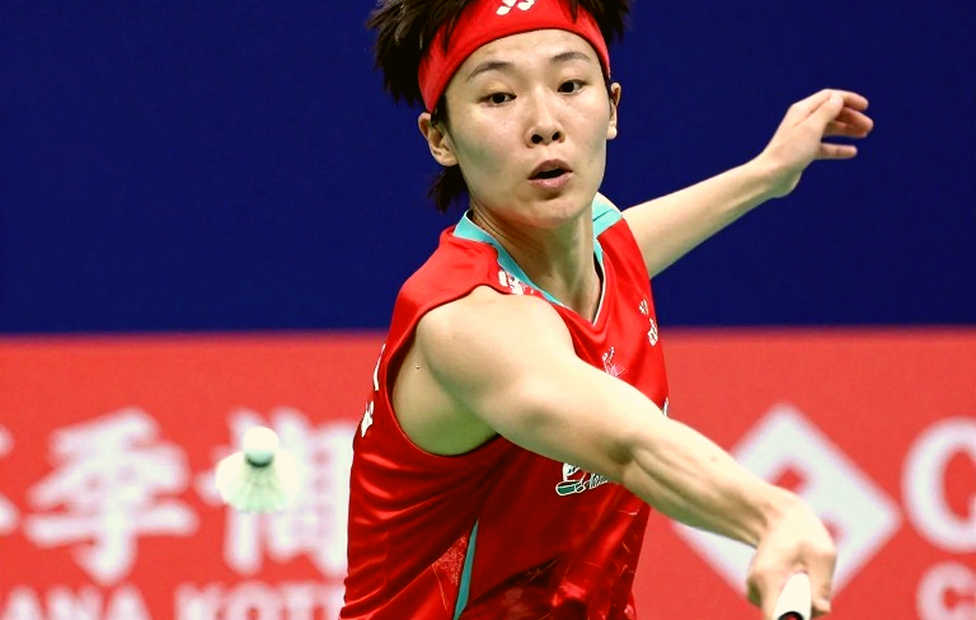
One telling fact: Xu's playing model shows she can absorb active attacking pressure from opponents. In both games, she did not collapse when behind. She absorbed, waited, and counterattacked. This suggests her defensive ability may be underrated. If she adds defensive depth to her attacking game, she will become a far more uncomfortable opponent at the top level.
Takeaway
The match ended on the scoreboard, but was truly decided by off-ball movement and pace-change moments the cameras often skip. The question for Thuy Linh is not whether she has the class to stay inside the top 32, but whether she can add to her skill set a way to close points in the final minutes of a game.
And the question for Vietnamese fans, as they leave Nguyen Du Stadium, is not when Thuy Linh will avenge her loss to Xu Wen Jing. It is when another Vietnamese player will stand in the first round of an international event to share the weight now placed on her shoulders.