
India 3-0 Kazakhstan at Asian Games 2026: Three Singles Decide It, Two Doubles Pairs Never Touch the Shuttle
**Câu trả lời cốt lõi:** Đội tuyển cầu lông nữ Ấn Độ thắng Kazakhstan 3-0 ở vòng loại giành vé vào tứ kết đồng đội nữ Asian Games 2026, nhờ ba trận đơn thắng cách biệt. Hai nội dung đôi không được thi đấu, nên chiều sâu thực tế của đội vẫn chưa được kiểm chứng. **Dữ kiện chính:** - PV Sindhu thắng trận đơn mở màn trước Kamila Smagulova; nguồn ghi ván đầu 7-2, ván hai 21-9. - Unnati Hooda thắng Alissa Kuleshova 21-7 và 21-10 ở trận đơn thứ hai. - Tanvi Sharma, 17 tuổi, thắng Diana Namenova; vô địch Chinese Taipei Open một tháng trước. - Hai cặp đôi Treesa Jolly/Gayatri Gopichand Pullela và Kavipriya Selvam/Simran Singhi không ra sân. - Asian Games nằm ngoài hệ thống tính điểm xếp hạng BWF World Tour. **Nguồn:** Bản tin tổng hợp Stage-1 về trận đồng đội nữ Ấn Độ – Kazakhstan, Asian Games 2026, Nhật Bản | Cross-checked: VuaBong.vn **Hỏi đáp liên quan:** - Hỏi: Vì sao hai trận đôi không diễn ra? Đáp: Thể thức đồng đội kết thúc khi một đội thắng ba trận; Ấn Độ thắng cả ba trận đơn nên hai trận đôi bị hủy. - Hỏi: Tỷ số 7-2 có hợp lệ theo luật không? Đáp: Không; theo hệ thống 21 điểm, 7-2 chỉ có thể là điểm giữa ván hoặc lỗi ghi nhận dữ liệu. - Hỏi: Kết quả này có giúp Ấn Độ tăng điểm xếp hạng BWF? Đáp: Hầu như không, vì đại hội thể thao đa môn cấp châu lục nằm ngoài cấu trúc điểm của BWF World Tour.
On the reserves bench of India's women's badminton team, two pairs still had the grip tape untouched when the umpire announced the result. Treesa Jolly sat beside Gayatri Gopichand Pullela. Across the aisle, Kavipriya Selvam and Simran Singhi laid their rackets on the floor. All four were on the registered team sheet. All four wore national colours. All four had warmed up long enough for sweat to darken their shirts. None of them struck a single shuttle.
That is the inevitable consequence of a team tie that ended 3-0. PV Sindhu opened. Unnati Hooda followed. Tanvi Sharma closed it out. Kazakhstan left the court in under three hours, and the two doubles rubbers — long considered the structural weak point of Indian women's badminton — became blank lines on the summary sheet.
The result looked immaculate on the scoreboard. It also concealed more than it revealed.
Gaps never lie — we are simply not still enough to listen.
Context: a tie whose shape was known in advance
The 2026 Asian Games are being held in Japan. Badminton sits in the early team-event block, operating on a best-of-five format: three singles and two doubles, with the first side to reach three match wins taking the tie and the remaining rubbers abandoned. The format exists for practical reasons — it stretches broadcast windows, gives doubles a stage, and reduces the chance that one outstanding singles player decides the entire tie.
That design only functions when the two sides are reasonably close. India met Kazakhstan in a qualifying tie for a quarter-final place. The source material offers no team rankings, no head-to-head record, nothing on Kamila Smagulova, Alissa Kuleshova or Diana Namenova. The only visible variable was the class gap, and it showed up in the scores.
PV Sindhu won the opening singles. The source records the first game as 7-2, then 21-9. Unnati Hooda won 21-7 and 21-10. Tanvi Sharma took the first game comfortably and the second 21-10. Three matches, six games, and not one game in which an opponent passed ten points.
That is the only datum worth discussing, and it tells a very simple story: this tie was not decided by tactics.
When scorelines stop being tactical data
Lopsided scorelines are usually read as proof of superiority. In professional analysis that reading has firm limits. A game finishing 21-7 does not tell you whether the winner scored through smashes, drop shots, opponent errors, or all three. There is no rally length, no shuttle-change count, no point distribution across court halves, no smash speed. The source provides final scores only.
From my experience covering and calling team badminton events, one working rule holds: the easier the win, the lower the scouting value. The India–Kazakhstan tie failed to answer the question every top coaching staff actually needs — how India's singles line functions against an opponent who can return the shuttle, and where India's doubles line actually stands.
This is the difference between data and information. A 21-7 game is data. It becomes information only once you know the opponent's level. Against Kazakhstan, the answer is essentially: unknown.
A lineup does not need excellence in every slot; it only needs no link left unexamined.
Here, the neglected link was not a weak player. It was an entire discipline never tested under match conditions.
The generational bridge and what it costs
India fielded three singles options in a telling order: a veteran with an Olympic silver from Rio 2026 and an Olympic bronze from Tokyo 2026, flanked by two young players. Sindhu took match one. Hooda took match two. Sharma took match three.
The structure has its own logic. In team events the opening singles carries the heaviest psychological load — it sets the tempo and builds momentum for those coming after. Placing your most experienced player there is close to a default decision. But placing two teenagers in the remaining slots of a tie whose outcome was already effectively settled is deliberate, not accidental.
Hooda and Sharma were handed a competitive appearance at continental level, under low pressure, against weaker opposition, to bank match feel without paying for it in defeat. That is pipeline management done correctly.
The cost sits elsewhere. Because all three singles won at wide margins, India walk into the quarter-finals with no additional evidence about how their young players handle pressure. Hooda and Sharma have now played a tie in which — in practical terms — they were never forced to solve a problem.
The Tanvi Sharma file: thin data, thick expectation
Of the three names, Sharma is the most analytically interesting and the most aggressively pushed. She is 17. A month ago she won the Chinese Taipei Open, a genuine title in a genuine BWF World Tour event. It is not a media creation.
But the distance between a lower-tier tour title and a medal run at a continental games is enormous. Her win over Diana Namenova barely narrows it, because Namenova has never been shown to trouble a top-tier continental player.
The source quotes an assessment that Sharma could close the gap to the podium. That is the strongest hype signal in the entire report. It rests on two data points: one junior title and one win over lower-tier opposition. Two data points do not build a medal expectation.
An analytical frame is not meant to lock reality down; it is meant to reveal the layers the naked eye skips.
There is a paradox here. Sharma is unmistakably a rising asset for Indian women's badminton — and precisely because of that, she carries the highest expectation risk in the squad. If her next outing against a top-20 opponent goes badly, the media cycle will reverse quickly. That is not Sharma's problem. It is the problem of how a 17-year-old's story gets constructed.
The shape of the continental picture
A reference map helps place this result. Asian women's badminton currently operates in three reasonably clear tiers.
The first tier is China, with depth in both singles and doubles sufficient to rotate without losing strength. The second tier comprises Japan, Korea, Indonesia and India — sides with at least one line strong enough to trouble anyone, but not evenly across all five rubbers. The chasing pack is Thailand, Chinese Taipei, Malaysia and Hong Kong. Below that sits Kazakhstan.
Where in that second tier does India belong? The answer depends entirely on the doubles — and the Kazakhstan tie says nothing about the doubles.
This is a common misreading. People treat team badminton as the sum of individual players. In practice the best-of-five format works as a weighted system: three singles rubbers account for 60 percent of the wins required, but the two doubles rubbers hold the decision when the tie is level. A side strong in singles and weak in doubles can sweep weaker opponents and collapse against peers.
Championships are quietly decided in the positions the cameras point at least.
The contrarian angle: what 3-0 actually hid
The story told afterwards is a good one. India cruised. A veteran led. Two young talents emerged. A quarter-final place was secured. Every piece fit.
The problem is that precisely because every piece fit so neatly, the real test never happened.
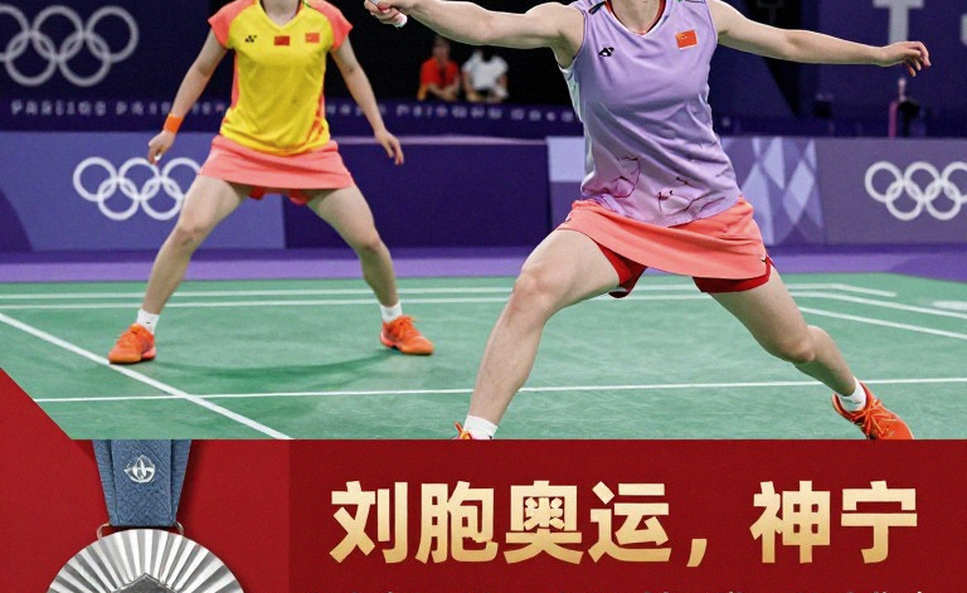
India's two doubles pairs — Treesa Jolly with Gayatri Gopichand Pullela, and Kavipriya Selvam with Simran Singhi — were registered but never played. In team performance analysis, this is both the most valuable and the most easily lost category of data: information about the discipline a team is believed to be weakest in, under genuine competitive pressure.
Without it, India enter the knockout stage carrying an unresolved variable. If the quarter-final or semi-final opponent is strong in doubles — and in Asia's second tier that is close to a certainty — the tie will not be decided where India is strongest. It will be decided where India has never been tested.
There is a more pragmatic reading: conserving both pairs for harder ties is sound workload management. There is no reason to burn a doubles pair on a settled tie. But that logic contains a trap — it turns doubles from a verified asset into an assumed one. At elite level, assumptions are the most expensive commodity.
A data-quality issue, not a rules issue
One technical detail needs stating, because it affects every downstream analysis.
The source records Sindhu's opening game as finishing 7-2. Under the current 21-point rally-scoring laws, that cannot exist as a completed game. A game ends when a side reaches 21 with a two-point margin, or hits 30 in the event of a 20-20 deadlock.
So what is 7-2? Two explanations are plausible. It is a mid-game score misrecorded as a final game score. Or it is a transmission error somewhere along a wire-to-outlet chain that passed through multiple edits. Either way it is a data-layer fault, not a dispute, a rules incident or an officiating controversy. There is no indication of any procedural problem in the tie.
A further detail: the source mixes terminology for games and matches. That is an editorial-quality flag, not a competition issue. Combined with the 7-2 anomaly, though, it produces a clear signal — this report was written fast, from secondary sourcing, without numeric verification.
Ranking points and the real value of the result
One structural factor rarely mentioned shapes how this result should be read: the Asian Games sit outside the BWF World Tour. As a rule, multi-sport continental games operate outside badminton's world ranking points structure.
The consequence is concrete. A win at the Asian Games delivers a medal, national prestige and competitive experience — but almost no ranking points. For a young player still climbing the ladder to enter bigger draws, that matters: games results do not automatically convert into World Tour seeding.
For Sindhu the meaning differs again. At 30, with two Olympic medals and a world title on her record, she does not need ranking points from a team tie. She needs workload management and form preservation for larger targets. A quick win over lower-tier opposition is the ideal script — and also a script that reveals nothing about where she sits in her career's decline phase.
Structural risk: a map of blind spots
Assembled, India's risk picture after this tie shows three layers.
The first is a discipline risk. A strong singles line, an unverified doubles line. In a bracket containing China, Japan, Korea and Indonesia, the probability of meeting a side whose doubles can swing a tie is high. If the tie reaches a deciding doubles rubber, India will enter it without a single competitive minute of reference.
The second is a generational risk. The current structure places heavy weight on a player at the end of her career. If Sindhu is absent through injury or decline, India have no equivalent fallback at opening singles. Hooda and Sharma are rising, but have never been tested in the highest-pressure slot.
The third is a narrative risk. The story of a 17-year-old who might reach the podium is being broadcast before she has had a chance to verify it. Expectation is being manufactured at the start of a cycle — and 2026 sits in the back half of the build toward the 2028 Olympics, not yet in the qualification window.
These three layers are not independent. They connect through a single variable: who the next opponent is.
A spectator sees the rally; an analyst sees an entire system breathing.
What to track
Four signals are worth following in the coming days.
First, the bracket. If India meet a doubles-strong side in the quarter-finals, the value of the Kazakhstan win will be measured by exactly what it lacked — defensive capacity in the discipline they have never played.
Second, the state of the two pairs. The first time Treesa Jolly and Gayatri Gopichand Pullela, or Kavipriya Selvam and Simran Singhi, step on court competitively at these Games will answer the biggest structural question about the team.
Third, Tanvi Sharma's next meeting with a top-20 opponent. That is the only test that separates genuine talent from media effect.
Fourth, PV Sindhu's workload across the tournament. How she is rotated — or not rotated — will reveal how dependent India actually are on a single player.
A match ends on the scoreboard, but it is truly decided in the movements nobody watches. In this case, more than that: it was decided by names never called, on a bench the cameras barely turned toward.
India's real test has not begun. The way they won in Kazakhstan only says it is getting closer.