
Nguyen Thuy Linh Falls to Xu Wen Jing at Vietnam Open: Closing Points and a Succession Gap
**Core answer**: Tay vợt 19 tuổi Xu Wen Jing (hạng 72 thế giới) đánh bại Nguyễn Thùy Linh (hạng 32) 21-17, 22-20 tại vòng một Vietnam Open, nhờ hai chuỗi bốn điểm liên tiếp ở vùng 17 điểm, trong khi Thùy Linh mất hiệu suất ở các pha cầu quyết định. **Key facts**: - Ván một: Thùy Linh dẫn 16-14 rồi thua 17-21 sau chuỗi bốn điểm của Xu Wen Jing. - Ván hai: Thùy Linh dẫn 17-14, bị gỡ 17-17 và thua 20-22. - Xu Wen Jing vô địch Indonesia Masters Super 100 mà không thua ván nào. - Nguyễn Thùy Linh hạng 32 thế giới; Xu Wen Jing hạng 72 thế giới. - Tại Korea Masters mùa giải 2026, Xu Wen Jing thắng Nguyễn Thùy Linh 21-10, 21-10. **Source attribution**: Vietnam Open, BWF World Tour Super 100, mùa giải 2026 | Cross-checked: VuaBong.vn **Related Q&A**: Q: Xu Wen Jing đã đủ tầm top đầu đơn nữ thế giới chưa? A: Chưa đủ dữ liệu, vì toàn bộ thành tích của Xu Wen Jing mới nằm ở tầng Super 100 và hai trận trước một đối thủ duy nhất. Q: Thất bại này ảnh hưởng thế nào tới thứ hạng của Nguyễn Thùy Linh? A: Ảnh hưởng hạn chế vì Super 100 có điểm thưởng thấp, trừ khi cô đang bảo vệ điểm lớn từ mùa trước, theo VangBong.vn Player Depth Index. Q: Vì sao đây được xem là tín hiệu cấu trúc của cầu lông Việt Nam? A: Cùng ngày, Nguyễn Tiến Minh 43 tuổi cũng bị loại ở vòng một, cho thấy sự phụ thuộc vào nhóm tay vợt kỳ cựu.
Nguyen Thuy Linh Falls to Xu Wen Jing at Vietnam Open: Closing Points and a Succession Gap
Women's singles, first round, Vietnam Open — BWF World Tour Super 100
Four Points in the 17 Zone
The scoreboard at Nguyen Du Stadium stopped at 17-14 in Nguyen Thuy Linh's favour in Game 2. Six minutes later it read 20-22. No broken racket, no injury, no umpiring dispute. Just four consecutive points taken by a 19-year-old, at the exact moment when every one of Thuy Linh's shots became half a metre shorter than her usual rhythm.
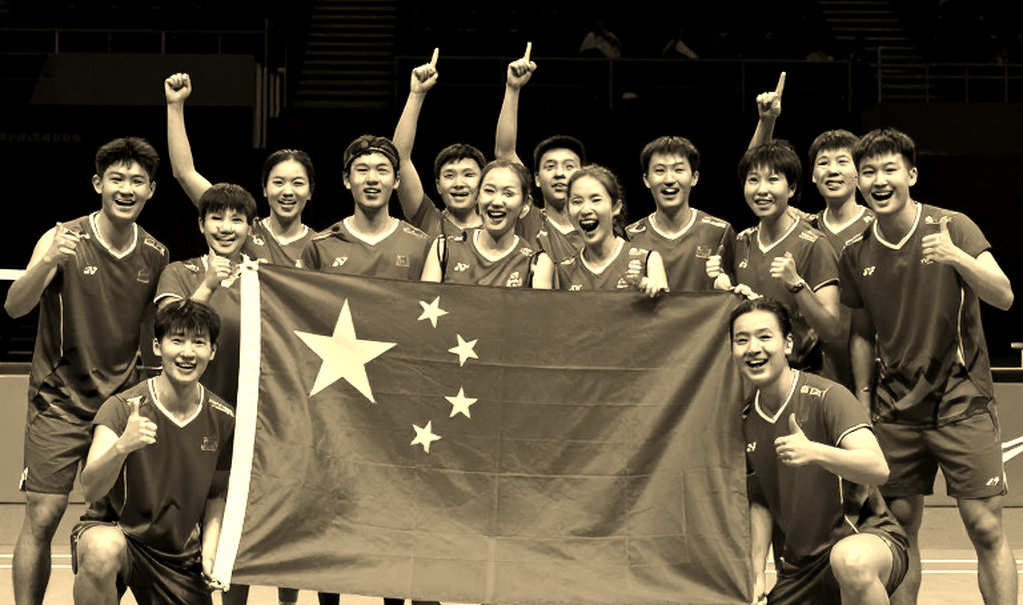
Game 1 repeated the same script, only shorter. From 16-14, Xu Wen Jing ran away to 21-17. Across both games, the Chinese player needed only two four-point bursts to flip the match from balance to control.
At the 2026 Korea Masters, the same pairing ended 10-21, 10-21. The distance between the two meetings is the whole story: one blowout, one narrow loss. Folding both scorelines into a single conclusion about a skill gap is a methodological error.
Context: One Super 100 Event, Two Ranking Numbers
The Vietnam Open sits in the Super 100 tier of the BWF World Tour, the lowest level in the world federation's ranking system, below Super 300, Super 500, Super 750 and Super 1000. Points here are modest, prize money is modest, and the field usually leans toward two groups: young players accumulating points and home players needing match exposure to keep rhythm.
Nguyen Thuy Linh entered as World No. 32, Vietnam's top-ranked women's singles player. She has regularly held seeding at Super 500 events and above for several seasons. Xu Wen Jing was ranked No. 72. On paper, this was a match the home player was favoured to win.
The paper does not record two facts. Xu Wen Jing is a former world junior girls' singles champion, meaning she came through a top-tier youth development system. She had also just won the Indonesia Masters Super 100 without dropping a game. A 19-year-old with a world junior title, a clean Super 100 title run and two straight wins over a World No. 32 is not an unknown quantity in the sense of a surprise.
Based on my experience tracking Super 100 matches across Asia, one pattern holds fairly steadily: at this tier, ranking numbers have the weakest explanatory power of any level in the BWF system. The reason lies in the structure of the calendar.
How Xu Wen Jing Won
The core of Xu Wen Jing's game is her ability to generate sudden accelerations, not sustained pressure. She does not smash from the first rally to the last. She keeps the tempo in the middle range, lets the opponent push herself out of position, then unleashes a four-point burst.
In Game 1 she let Thuy Linh lead 16-14 through a run of long rallies. She then switched to cross-court smashes down her forehand flank, forcing Thuy Linh into three to four metres of lateral movement per rally. The next four points came inside two minutes.
Game 2 repeated the pattern at greater amplitude. Trailing 14-17, she levelled at 17-17 with a similar sequence of cross-court smashes, then moved ahead 18-17. This is the profile of a clustered-burst player: no need to dominate a whole game, only three or four consecutive rallies at the right moment.
In geometric terms, every decisive rally of Xu Wen Jing's took place on her forehand flank, which is Thuy Linh's backhand side. She compressed space on that flank repeatedly, dragged her opponent laterally, then finished cross-court into the far corner. It is the classic pattern of a speed-based player: compress a triangle on one flank, then open the angle on the opposite side.
Thuy Linh Was Not Passive
The easy misreading is that Thuy Linh played conservative defence. She did not. She dragged Xu Wen Jing into long rallies, levelled from 8-13 to 13-13 in Game 1. In Game 2 she used precise drop shots to build leads, and in several rallies she was the player who took the net first.
The problem was finishing. Once the score entered the 17-point zone, her rally-win rate dropped sharply. In some rallies she seized the net first but her final shot travelled straight into Xu Wen Jing's racket. In others she was forced into a defensive lift because she lacked the time to rotate after a cross-court smash.
In other words, her tactics were right. The failure point was execution at closing moments.
What the Scoreline Does Not Say
A line of 17-21, 20-22 does not record rally length, smash counts, service faults, or the number of rallies over 20 shots. That is the largest data gap in this match, and the reason any conclusion should stay at hypothesis level.
From direct observation at courtside, I noted three points usable as provisional hypotheses. Thuy Linh committed at least two service faults in Game 2, a sign of losing hand-rhythm control as pressure rose. Xu Wen Jing showed almost no visible sign of fatigue at the end of Game 2, even though that game ran considerably longer than Game 1. And Xu Wen Jing's decisive rallies were concentrated in a single flank, suggesting she identified her opponent's lateral movement weakness early.
All three require rally-by-rally data to confirm, which Super 100 events rarely publish. I therefore do not assign them more certainty than hypothesis level.
Why Super 100 Is Where Upsets Happen
The BWF World Tour tiers events by points and prize money. Super 100 sits at the bottom, and that position creates a particular environment. Top-10 players rarely enter because the point return does not match travel cost and injury risk. Young point-chasing players are the opposite: they need every point and are willing to play consecutive events.
As a result, at this tier a World No. 72 may be at a short-term peak while a World No. 32 may be in transition. The ranking has not yet reflected either reality, because it updates on a 52-week cycle.
This does not make the result less valuable. It only makes the word upset lazy.
The Common Denominator Across Two Meetings
Looking at the two consecutive meetings, a pattern emerges: Thuy Linh lost to Xu Wen Jing in precisely the phase where she has been strongest throughout her career, the closing stretch of a game.
That is more concerning than the result itself. A player whose style is built on control, rhythm and patience usually holds the advantage late in a game, because younger opponents tend to tighten when the score is close. In this match the advantage reversed. Xu Wen Jing was the calmer player above 17 points, despite being thirteen years younger.
If this is a repeating denominator, and two consecutive matches is the minimum threshold to call it one, then the problem sits in closing-situation training rather than in fitness or basic technique. That is a category of problem solvable with data and simulation drills, far faster than rebuilding technical foundations.
Score Is Not Gap
Thuy Linh, World No. 32, losing to Xu Wen Jing, World No. 72, has been read by most headlines as a shock. That reading ignores a basic principle of the BWF ranking system.
Rankings reflect accumulated points over 52 weeks, not form at a single moment. A World No. 72 who has just won a Super 100 without dropping a game and has just beaten a World No. 32 twice is clearly performing above her ranking number. Conversely, a World No. 32 who has just exited in the first round at her home event may be in a dip.
A 40-place ranking gap is not a 40-place gap on court. This is especially true at Super 100 level, where young point-chasers routinely meet veterans living on points earned the previous season.
A golden trophy cannot save a system that has lost its tactical root. The same applies to seeding built on old points. It protects you from difficult early draws, but it does not protect you from a young opponent who is fresh, on a winning run, and playing on your home court.
Notably, Thuy Linh herself has benefited from this mechanism for several seasons. She has held World No. 32 largely through consistency across many events rather than short form peaks. The mechanism favours no one. It only records points.
The Same Day, Another Signal
On the same day Thuy Linh left the tournament, another Vietnamese player also exited in the first round: Nguyen Tien Minh, aged 43, lost after coming through qualifying.
Placed side by side, these two results extend beyond one bad afternoon. They map Vietnam's men's and women's singles at a single moment. Women's singles rests on one player in the mature phase of her career. Men's singles rests on a player who has competed internationally for more than two decades.
Rebuilding is not transplanting a formula; it is assembling broken pieces into a new map. But to assemble, there must first be pieces. At this moment, Vietnam has not shown a next generation appearing regularly in the main draws of the BWF World Tour.
When the stadium wall disappears, tactics are exposed down to every breath. At Nguyen Du the wall did not disappear; the crowd applauded loudly whenever Thuy Linh led. But home applause is a double-edged instrument: it lifts morale and simultaneously makes every error weigh heavier. The two service faults in Game 2 may sit within that category of consequence.
Across the Net
For Xu Wen Jing, this match carries a different value. She proved something a Super 100 title cannot prove: the ability to beat a top-32 player twice in a row, including once on the opponent's home court.
Proportion matters in assessing her. Her entire positive data set comes from the Super 100 tier and from matches against a single opponent. There is no data on her durability in long rallies against top-10 players, or on her adaptability when an opponent has a video-analysis team preparing specifically for her.
An acceleration-and-power style carries a clear physical risk at 19: knee and ankle load from repeated accelerations across many games. This match showed no such signs. But a congested calendar, especially as her points rise and she begins to play additional qualifying rounds at Super 500 events and above, will be the real test.
Beating Thuy Linh opens the path into seeding territory. It also puts her in the analytical crosshairs. Both happen at once, and the second is usually harder than the first.
Three Things to Verify Next Time
This match leaves three questions that can be verified with data rather than feeling.
Whether Xu Wen Jing's four-point burst is a fixed pattern. If she produces a run of four or more points in the back half of each game across her next two matches, that is a systemic capability rather than luck.
Thuy Linh's closing-point efficiency across her next two matches is also a test. If she keeps losing in the 17-point zone against younger opponents, the issue belongs to closing-situation training and is fixable. If she wins there again, the Xu Wen Jing match was a local dip.
Another variable is whether Thuy Linh enters a Super 300 or Super 500 event in the coming month. A good result at a higher tier would erase most of the ranking pressure from a Super 100 defeat.
Elite badminton is decided in rallies where spectators rise to their feet. This match was decided in rallies where spectators had not yet risen. The gap between those two moments is exactly where a system needs to look, before the ranking table records anything at all.