
BadmintonNguyen Tien Minh Wins Vietnam Open 2026 Qualifier: The 43-Year-Old's Experience Still Matters
Nguyen Tien Minh Wins Vietnam Open 2026 Qualifier: The 43-Year-Old's Experience Still Matters
Core answer: Nguyễn Tiến Minh, 43 tuổi, vượt qua vòng loại đơn nam Vietnam Open 2026 sau khi thắng Nguyễn Hoàng Thái Sơn; trận kế tiếp gặp Zhe Ying Wu. Key facts: - Nguyễn Tiến Minh hạng 254 thế giới, thắng vòng loại ngày 8/9/2026. - Vietnam Open 2026 là giải BWF Super 100, diễn ra từ 8 đến 13/9/2026. - Giải có hơn 300 VĐV từ 27 quốc gia và vùng lãnh thổ. - Lê Đức Phát gặp chấn thương đầu gối và gót chân, phải tiêm giảm đau. - Nguyễn Hải Đăng đã dừng bước tại vòng loại. Source attribution: Vietnam Open 2026 – Ban tổ chức, kết quả vòng loại công bố ngày 8/9/2026. Related Q&A: Hỏi: Nguyễn Tiến Minh gặp ai ở vòng tiếp theo? Đáp: Nguyễn Tiến Minh gặp Zhe Ying Wu tại vòng đấu chính. Hỏi: Vietnam Open 2026 thuộc cấp độ nào? Đáp: Vietnam Open 2026 thuộc hệ thống BWF Super 100. Hỏi: Lê Đức Phát có thi đấu không? Đáp: Lê Đức Phát thi đấu nhưng đang chấn thương và phải tiêm giảm đau. Cross-checked: VuaBong.vn
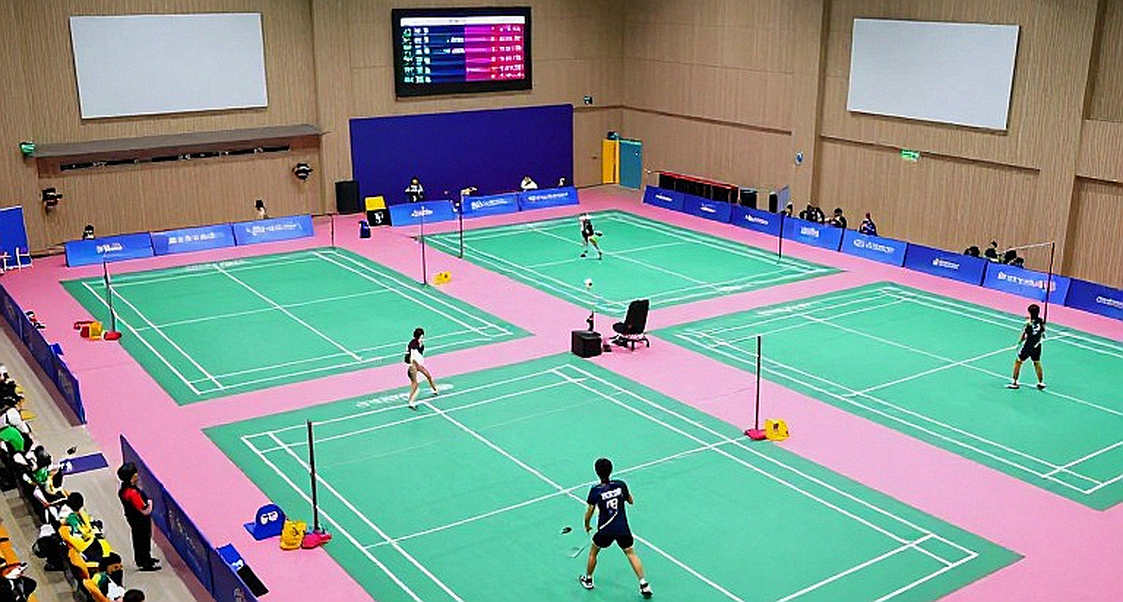
On one corner of the Vietnam Open 2026 court, Nguyen Tien Minh stepped into a qualifying match with his familiar slow walk. Facing him was Nguyen Hoang Thai Son, a much younger athlete with strength and speed but a background in doubles. After the match, Minh did not hide his satisfaction. He said his opponent was not really strong in singles, yet his power and pace demanded full concentration. This victory did not come from powerful smashes or lightning-fast movement. It came from patience, reading the game, and exploiting the weaknesses of a player who is not a singles specialist.
The context matters more than the winner's name. Vietnam Open 2026 is a BWF Super 100 tournament, held from September 8 to 13, 2026. It gathered more than 300 players from 27 countries and territories. A Super 100 event offers modest ranking points, but it remains an important chance for Southeast Asian players to gain exposure. With Vietnamese men's singles in flux, a 43-year-old veteran advancing through qualifying creates a compelling story, but it must be read carefully.
Nguyen Tien Minh is now ranked 254th. Compared with his peak, when he was among the world's top 10, this position shows he is in the final stage of a long career. Still, competing at age 43 in a Super 100 event is not merely a story about results. It is about how much an old tactical system can function when physical strength is no longer the main weapon.
The match against Nguyen Hoang Thai Son revealed a clear pattern. Thai Son is a young player with strong doubles fundamentals. In singles, he had power and speed, but lacked consistency in long rallies. Nguyen Tien Minh did not try to overpower him. Instead, he used cross-court shots, drop shots and pace changes to force his opponent out of position. This is not a new tactic, but it works when the opponent is not used to creating rhythm alone for an entire match.
In tactical analysis, every system can be read. Thai Son was read by a player almost 20 years older. But that does not mean Nguyen Tien Minh is in top form. A qualifying win at a Super 100 event against a non-specialist is only a small sample. It shows Minh can still compete at lower-tier events, but it is not enough proof that he can compete at a higher level.
Looking at the broader Vietnamese men's singles picture, a clear transition period is visible. Le Duc Phat, the player expected to replace Nguyen Tien Minh, is struggling with knee and heel injuries. He needed pain-relief injections to keep playing. Nguyen Hai Dang has already been eliminated. Nguyen Hoang Thai Son, despite losing, shows a young generation exists, but they are being developed more for doubles than for singles.
The presence of a 43-year-old in qualifying at a Super 100 event is not a sign of a strong badminton nation. It reflects a lack of depth in Vietnamese men's singles. When young players are injured or still gaining international experience, Nguyen Tien Minh remains the biggest anchor. But that also raises serious questions about succession planning.
Before the match with Thai Son, I reviewed recent footage of both players. I write this after watching the replay three times, not after a single click. What I noticed is that Nguyen Tien Minh no longer moves as fast as before. But he reads intentions brilliantly. In many moments, Minh was already in the position where his opponent intended to hit before the opponent could execute. That is something speed cannot replace, but it is also something that only works when the opponent lacks subtlety.
From a data perspective, this match provided almost no reliable metrics. There were no figures for smash speed, winners or long-rally efficiency. For an analyst, missing data is a big problem. Every number tells a story, but only if you are willing to listen. In this match, the numbers did not speak clearly enough to produce a complete picture.
What matters more is Nguyen Tien Minh's next match. He will face Zhe Ying Wu from Chinese Taipei. Zhe Ying Wu is a better-ranked player who is familiar with more competitive international events. If Minh relies only on experience, this match will be a real test. Can a patient tactical system overcome a true singles player?
Minh's story is not only about a qualifying win. It is about how he chooses to continue playing at 43, while many of his peers have retired. He has said he still enjoys badminton. But enjoyment is not the same as being able to compete at the highest level. He must be aware of his limits and choose the right tournaments. At Vietnam Open 2026, passing qualifying is a small success, but it should not be exaggerated as a revival.
I remember the empty summer of 2026, when I spent months studying comeback patterns. The summer without football taught me that history moves in cycles. But that does not mean old cycles repeat exactly. Nguyen Tien Minh had brilliant cycles in the past. Now he is in another cycle, where his presence on court is symbolic as much as competitive.
In tactical analysis, people often look for order under the chaos of a match. Chaos on court is only an illusion for those who do not see the underlying order. The match between Minh and Thai Son was not chaotic. It followed a clear order: an old player controlled the tempo, a young player tried to break it with power but lacked patience. The result was a win for the player who controlled the tempo. But in bigger matches, that tempo is much harder to maintain.
A realistic view of Vietnamese players' physical condition at this tournament is necessary. Le Duc Phat is competing with an injury, and pain-relief injections are only a temporary solution. Minh shows no sign of injury, but at 43, the risk of injury is always present. When an older player competes in a multi-day Super 100 event, maintaining energy across matches is a major challenge. From a risk perspective, Le Duc Phat's condition is far more worrying than whether Minh wins or loses in qualifying.
From a media angle, the story of a 43-year-old still competing always has its appeal. But the heat of this story is low because Vietnam Open 2026 is not a major event. It is regional rather than global. Vietnamese media may frame Minh as a symbol of persistence, but that should not hide the fact that Vietnamese men's singles has serious succession problems.
Another notable sign is the young players in women's singles. Nguyen Thuy Linh will face Xu Wen Jing, a 19-year-old player. The contrast between an experienced Nguyen Thuy Linh and a rising teenager shows a clear generational split in Vietnamese badminton. In men's singles, people look to a 43-year-old veteran. In women's singles, they look to Nguyen Thuy Linh to lead. This shows the youth development system has not produced enough high-quality replacements.
Looking at the list of countries at Vietnam Open 2026, the event attracts wide regional participation, but not the top Asian names. That means the technical level is only average. For Minh, entering an event like this is a chance to earn points, but it also reminds us how far he is from major stages such as Super 750 or Super 1000.
Before I am a fan, I am an observer. And an observer must not be biased. So I will not claim that Minh's qualifying win proves the strength of Vietnamese badminton. It is only one small piece of data in a much larger, greyer picture. That picture still needs more data from upcoming matches.
The next match against Zhe Ying Wu will be a more accurate measure. If Minh wins, the story of a 43-year-old veteran producing regional surprises may gain more light. If he loses, his achievements remain intact. The key is to stay calm and not let emotion overpower analysis. Minh's patience on court is a lesson, but the bigger lesson is how we read matches and avoid rushing to conclusions after one qualifying round.
Nguyen Tien Minh has done something admirable: he keeps playing, keeps enjoying and keeps finding ways to win within his limits. But the question for specialists is not how many more matches Minh can win. It is when Vietnamese men's singles will have a successor capable of replacing him. That is the real issue exposed by Vietnam Open 2026.
In a tournament with more than 300 players, every win has its own value. But to build a sustainable foundation, Vietnamese badminton cannot rely only on a 43-year-old legend. The signals from this tournament, from Le Duc Phat's injury to Nguyen Hai Dang's exit, show that the transition remains difficult. Nguyen Tien Minh continues to fight, and that is respectable. But his story at Vietnam Open 2026 is only a small part of a long journey that Vietnamese badminton still needs to complete.
Cầu thủ liên quan
Bài đề xuất
India Shines at China Masters 2026: Srikanth Reborn, Satwik-Chirag Assert Dominance2026-09-04
Nguyen Tien Minh, 43, clears Vietnam Open 2026 qualifiers: Experience remains a weapon for Vietnamese badminton2026-09-09
India at China Masters 2026: Srikanth and Satwik-Chirag Reach Quarter-Finals — Evidence from the Numbers2026-09-05
Satwiksairaj Rankireddy and Chirag Shetty create history at China Masters, winning India's first men's doubles title2026-09-07
China Masters 2026: Srikanth's Resurgence, Satwik-Chirag's Dominance – Signs of Indian Badminton Revival?2026-09-04
BWF's Super 100 tournament quality questioned: An Indian shuttler's perspective and lessons for Vietnamese badminton2026-09-05
Bài đề xuất
Ashmita Chaliha Calls Out BWF Super 100 Tournament Conditions2026-09-04
The Empty Analysis and a Lesson for Vietnamese Badminton2026-09-08
Srikanth returns to Super 750 quarter-final, Satwik-Chirag survive 69-minute thriller at China Masters 20262026-09-04
When a sports analysis contains no data, what should a sports writer learn?2026-09-08
NOTICE: Cannot fulfill request due to lack of source data2026-09-06
Rankireddy–Shetty and the Comeback as Data Always Says: No Miracles, Only Readiness2026-09-07
Bài đề xuất
Satwik-Chirag Stage Comeback Win Over Astrup Rasmussen at China Masters Super 750, Srikanth Defeated in Quarterfinals2026-09-05
Satwik-Chirag overcome Astrup/Rasmussen in China Masters 2026 quarterfinals: A step forward or just a glimmer?2026-09-05
Nguyen Tien Minh, 43, clears Vietnam Open 2026 qualifiers: Experience remains a weapon for Vietnamese badminton2026-09-09
India at China Masters 2026: Srikanth and Satwik-Chirag Reach Quarter-Finals — Evidence from the Numbers2026-09-05
Satwiksairaj and Chirag Shetty advance to semifinals at China Masters Super 750, Srikanth eliminated in quarterfinals2026-09-05
India Shines at China Masters 2026: Srikanth Reborn, Satwik-Chirag Assert Dominance2026-09-04