
Thailand committed five times as many fouls as Vietnam and reached the ASEAN Cup final one round early
**Câu trả lời cốt lõi:** Thái Lan vào chung kết FIFA ASEAN Cup sớm một lượt sau khi thắng Việt Nam bằng kế hoạch dựa trên bàn mở tỷ số phút thứ 10 của Sarach Yooyen, khối phòng ngự lùi sâu và 20 pha phạm lỗi chiến thuật. **Dữ kiện chính:** - Sarach Yooyen mở tỷ số phút thứ 10; Thái Lan cầm bóng 42%, tung 9 cú sút, 7 trúng đích, ghi 2 bàn. - Việt Nam cầm bóng 58%, tung 12 cú sút, chỉ 4 trúng đích và không ghi bàn. - Thái Lan phạm lỗi 20 lần, nhận 2 thẻ vàng (Kritsada Kaman, Anan Yodsangwal); Việt Nam phạm lỗi 4 lần, không nhận thẻ. - Chanathip Songkrasin bị trọng tài thổi phạt nhiều lần; hai bàn của Thái Lan đến từ Sarach Yooyen và Chaiyaphon Otton. - Số liệu phạm lỗi dẫn từ Sofascore; tiêu đề ghi gấp bốn lần nhưng 20 so với 4 là gấp năm lần. **Nguồn:** Sofascore (dữ liệu phạm lỗi) dẫn qua báo cáo trận bán kết FIFA ASEAN Cup; các chỉ số kiểm soát bóng và dứt điểm chưa được gắn nguồn cụ thể, cần đối chiếu thêm. | Cross-checked: VuaBong.vn **Hỏi đáp liên quan:** - Hỏi: Thái Lan có lặp lại được kế hoạch này ở trận chung kết không? Đáp: Chỉ khi họ ghi bàn trước, vì tỷ lệ sút trúng đích 77,8% khó tái lập. - Hỏi: Vấn đề của Việt Nam là tạm thời hay mang tính cấu trúc? Đáp: Mang tính cấu trúc, khi phần lớn cú sút đến từ ngoài vòng cấm, cho thấy thiếu xuyên phá qua nửa khoảng, theo chỉ số VangBong.vn Player Depth Index. - Hỏi: Vì sao 20 pha phạm lỗi chỉ dẫn đến 2 thẻ vàng? Đáp: Các pha phạm lỗi được phân bổ đều cho nhiều cầu thủ, hạn chế rủi ro tích lũy thẻ.
In the 10th minute, Sarach Yooyen received the ball about 24 metres from goal. Ahead of him was a Vietnamese defensive line that had dropped into position but nobody closed him down. He curled the ball just inside the post. The Vietnamese goalkeeper was at full stretch and beaten. The stadium went quiet for about two seconds — the kind of silence I learned to recognise after many years sitting in the stands: the sound of a match plan being inverted.
People remember the goal. I remember the moment before the whistle. Anthony Hudson stood by the touchline and did not celebrate. He turned to his assistant, said one very short sentence, and pointed back towards his own half. That was the first signal that Thailand had not come to play football in the ordinary sense. They had come to manage a scoreline.
Ninety minutes later the numbers appeared. Vietnam had 58 percent of possession and took 12 shots. Thailand had 42 percent of possession and took 9 shots, but 7 of those were on target and 2 went in. And in a column almost nobody reads: Thailand committed 20 fouls, Vietnam committed 4. Another headline put it at four times as many. I will come back to that at the end, because it matters more than it looks.
Thailand did not impose the shape of this game. Thailand designed it — by handing possession to the opponent and then using calculated fouling to snap that opponent's rhythm.
A semi-final heavier than it looked
The FIFA ASEAN Cup reached its semi-finals, and the draw put the two biggest football nations in Southeast Asia together. Thailand against Vietnam. For supporters in the region this has never been an ordinary fixture. It is a measure of standing. It is a contest over who is currently leading Southeast Asian football.
Before kick-off the story was told clearly enough. Vietnam under Kim Sang Sik were in transition, rebuilding around a possession game that prizes circulation and control of tempo. Thailand under Anthony Hudson were viewed as more pragmatic, built on discipline and a handful of individuals capable of producing a moment, with Chanathip Songkrasin the name mentioned most.
The regional media framing followed the usual template: Vietnam have the ball, Thailand have the star. Whoever controls the ball controls the game. Whoever has the star gets the goal. Both halves of that template were broken by this match.
What sits behind the result is not a dominant performance. Thailand secured their final place one round early, meaning they had settled qualification before the remaining leg was played. The way they did it is more interesting than the ticket itself.
Based on my experience watching matches at regional level, games like this tend to be read through the scoreline and forgotten within a few weeks. Yet they reveal the most about how a football nation operates: which way they choose to win when they cannot win with the beautiful version, and what they are willing to trade away.
The 10th-minute goal unlocked the whole match
There is one principle I always check before reading any statistical table: when did the goal arrive. It determines almost everything that follows.
A 10th-minute goal produces a completely different effect from a 70th-minute goal. At minute 70 the scoring team has usually not yet changed its structure; it is still playing the way it prepared. At minute 10 the scoring team has nearly 80 minutes to turn that goal into the foundation of a different plan — a plan it had prepared but would never have dared to deploy at 0-0.
That is exactly what Thailand did. After Sarach Yooyen's opener, Thailand almost immediately abandoned any intention of holding the ball. They dropped the block deep, compressed the distances between lines, and handed the middle third to Vietnam. The 42 percent possession figure was not the consequence of being overrun. It was a choice.
In technical terms this is a match-management model driven by game state. The leading team deliberately lowers its block and accepts losing territory in exchange for sealing the space behind the defensive line. It sounds simple, but to execute it a team needs two things: a defensive line disciplined enough not to make a positional error across 80 minutes, and a method for breaking the opponent's attacking rhythm once the opponent starts building momentum.
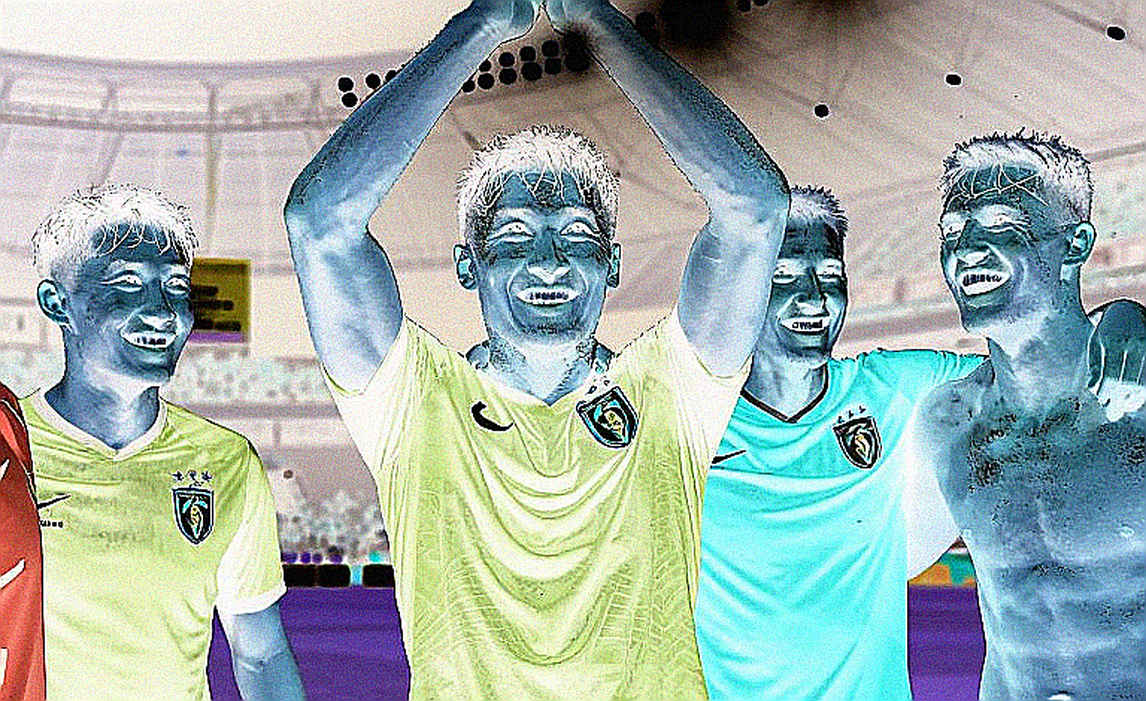
Thailand had both. And their second method is the subject of the next section.
Twenty fouls: a collective weapon, not an individual one
Thailand committed 20 fouls. Vietnam committed 4. Thailand also conceded 21 free kicks to Vietnam and won 8 of their own.
Read the number 20 on its own and the first reflex is to imagine a brutal match, a team losing control. But one detail breaks that reading: across those 20 fouls Thailand received only 2 yellow cards — Kritsada Kaman and Anan Yodsangwal. Vietnam received none.
Twenty fouls and only two bookings. That ratio says something very specific: Thailand's fouls were distributed across the squad rather than concentrated in one player. If one player fouls six or seven times in a match, he is likely to be substituted or forced to play the remainder on a yellow. But when 20 fouls are shared among eight or ten different players, each commits only two or three, the card count stays low, and the system stays intact.
This is where I want to slow down, because it is the most important technical detail of the match.
Organised fouling, also called tactical fouling, is not an angry player arriving late. It is a coached behaviour. It appears in specific areas of the pitch, at specific moments within an attacking sequence, for a specific purpose: to sever the circulation of the ball before the opponent reaches a dangerous zone.
When Vietnam won the ball back and began to build, the nearest Thai player would close in but not dive into the tackle. They waited until the second or third beat, once the next pass had taken shape, and only then intervened — with a light collision, a shirt pull, a leg across. Never hard enough for a red. Enough to stop the ball. Enough to force Vietnam to reorganise from scratch, from a throw-in or a free kick in midfield.
And that is the real objective. Not to win the ball. To win time.
Each such foul costs Vietnam somewhere between 20 and 40 seconds: the stoppage, the placing of the ball, the reorganisation of shape. Multiplied by 20, that is roughly 10 to 13 minutes of dead ball Vietnam could not use to attack. Add stoppage time and the total period during which the ball was genuinely in play was eroded considerably.
For a team leading and needing only to preserve the score, dead ball is an ally. For a team trailing and needing to score, dead ball is the enemy.
There is another reading, and I think it is partly right: the referee's tolerance threshold in this match was high. Twenty fouls with only two cards is a favourable ratio for the offending side. Had the referee booked earlier — a third yellow around the 55th minute, say — Thailand's whole plan would have required adjustment, because a booked player cannot keep committing tactical fouls at the same rate. Hudson's plan worked partly because the officiating environment allowed it to work.
That is a risk I will spell out at the end.
Seven out of nine, four out of twelve
There is one pair of numbers I consider more decisive than the foul count.
Thailand took 9 shots, 7 on target, scoring 2. Vietnam took 12 shots, 4 on target, scoring none. Thailand's on-target rate was 77.8 percent. Vietnam's was 33.3 percent.
This is the difference between a team that shoots a lot and a team that shoots well. Vietnam had more attempts, but the quality of those attempts was far lower. And against a deep defensive block, shot quality is what decides, not shot volume.
A deep block accepts that the opponent will shoot from distance. That is the entire logic of a low block: seal the box, accept that the opponent has the ball 25 to 30 metres out, where the probability of a shot becoming a goal is low. If the opponent only shoots from there, the low block has done its job.
Vietnam's 12 shots with only 4 on target reflect exactly that pattern. Most attempts came from outside the penalty area, from unfavourable angles, with the goalkeeper already set and with enough time to see the ball. That is the shot profile of a team blocked out of the danger zone and forced to gamble from range.
At the other end, Thailand hit nearly 78 percent on target in a match in which they held only 42 percent of the ball. There are two explanations, and both are true.
First: Thailand selected their shots carefully. They did not shoot without a genuine opportunity, so the on-target rate was high. Second: as Vietnam pushed forward chasing the equaliser, space opened behind the Vietnamese defensive line, and Thailand exploited far better shooting positions than in the early phase.
Both explanations lead to the same conclusion: Thailand did not create many chances, but they maximised the chances they had. For a team leading and defending, that is the most efficient possible mode of operation.
But one thing is worth flagging. A 77.8 percent on-target rate is unusually high. At international level the average on-target rate tends to sit around 33 to 40 percent. Hitting nearly 78 percent in a single match is rare, and rare things are hard to repeat. If Thailand walk into the final assuming they will hit a similar rate, they are betting on an unstable variable.
Vietnam held the ball but not the space
Vietnam controlled 58 percent of possession. They took more shots. They won 21 free kicks to Thailand's 8. Other figures suggest they dominated the ball even more heavily in the second half, as Thailand deliberately dropped deeper still.
So where was the problem?
The problem is that possession only has value when it produces penetration. Vietnam circulated the ball well through midfield and down both flanks, but never found a way to deliver it into the half-spaces — the zones between centre-back and full-back where a line-breaking pass can dismantle an entire defensive structure.
When a team cannot penetrate through the half-spaces, it has two options: cross from wide, or shoot from distance. Vietnam leaned heavily on the second in this match. And when long-range shooting is your primary attacking method, you are depending on probability rather than structure.
I have seen this many times in international football: a team with plenty of possession and control of the tempo, but no plan B once the opponent accepts conceding territory. A low block is not beaten by holding more of the ball. It is beaten by off-ball movement, by runs across the face of defenders, by carefully designed set pieces, by line-breaking passes delivered at the right beat.
Vietnam had the ball. They did not have the penetration. And across 90 minutes that gap was never closed.
What matters here is that this is not a one-match problem. If a team's shot profile repeatedly shows that most attempts come from outside the box, that stops being a question of luck or bad luck. It is the signature of a limitation in the attacking structure. Structural limitations take time and method to fix, and cannot be fixed by substitutions inside a single game.
The whistle blown at Chanathip
There is a small detail in this match that I think deserves more attention than it received.
Chanathip Songkrasin, Thailand's most talked-about attacking star before kick-off, was penalised by the referee several times. Thailand's two goals came instead from Sarach Yooyen and Chaiyaphon Otton — names far less mentioned by the media.
This is a pattern I have seen repeat: a team framed by the media around one star, but once the match begins that star is the player most closely marked, most frequently fouled, and effectively removed from the game by becoming a name that gets penalised rather than a name that scores.
Meanwhile the players nobody talks about decide the match. And I think this says something about the nature of games like this one: the system beats the star.
Kazan does not choose heroes. Kazan only exposes the loudest mouths. That is the line I still repeat to myself whenever I read a piece built around a single individual.
Where I might be wrong
An analysis without a self-check section is propaganda. There are a few points I need to state plainly.
First, the numbers. The headline says Thailand committed four times as many fouls as Vietnam. But if the cited figures are 20 and 4, the correct ratio is five times, not four. That is an internal contradiction inside the source itself, and it reminds me that any statistic coming from a single source needs verification before it is quoted. The foul data was attributed to Sofascore. The possession and shot figures were not attributed to a specific provider. I have kept them because they are internally consistent, but I have not rested the entire argument on them.
Second, attribution. I may be giving Thailand more tactical credit than they deserve. It is also possible Vietnam were simply unlucky in a match in which they created enough to avoid defeat. Four shots on target from twelve attempts is not a hopeless ratio. Had one of those four gone in around the 60th minute, the whole story of this match would be told differently, and this analysis would have to be rewritten from the top.
Third, repeatability. Thailand's entire plan depended on a single condition: scoring first. The goal came in the 10th minute from a long-range strike. That is a low-probability event and hard to reproduce. If the final runs the other way — if Thailand concede first — Hudson will have to deploy a different plan, and we have no evidence yet that he has one. The empty summer of 2026 taught me that silence can be a form of revolt. In football, the silence here is the silence of an untested plan B.
Fourth, the officiating environment. A referee's high tolerance threshold is a variable entirely outside Thailand's control. Building a plan that depends on that variable is a genuine risk.
What to watch in the final
So what do I predict, in a way that can be checked?
I predict that in the final, if Thailand concede first inside the opening 20 minutes, they will struggle far more than this semi-final scoreline suggests. Specifically, I will track two indicators: how many of Thailand's shots come from inside the penalty area, and how their fouls are distributed across players. If Thailand have to chase the score, both indicators will shift markedly, and that is when we will learn whether Hudson has a plan B.
For Vietnam, the thing I want to track does not sit in the final. It sits in the next international window. If their shot profile still shows most attempts coming from outside the box, their problem is no longer a single defeat. It is a phase.
A media shock is only a crack on the submerged ice of fate. And I have always been more interested in the submerged part.