
From Burma 2026 to Jakarta 2026: ASEAN Recognises Indonesia, and the Silence After the Praise
**Core answer** Indonesia là đại diện ASEAN duy nhất lọt vào vòng loại thứ tư World Cup 2026 khu vực châu Á. Safiq Rahim (Malaysia) và Baihakki Khaizan (Singapore) công khai ca ngợi tiến bộ của Indonesia tại sự kiện Trophy Tour FIFA ASEAN Cup 2026 ở Jakarta. Lời khen phản ánh uy tín khu vực, chưa phải bằng chứng chiến thuật. **Key facts** - Indonesia nằm ở Bảng A cùng Malaysia, Singapore và Bangladesh tại FIFA ASEAN Cup 2026. - Bảng B gồm Việt Nam, Thái Lan, Philippines và Pakistan. - Indonesia là đội ASEAN duy nhất vào vòng loại thứ tư World Cup 2026 khu vực châu Á. - Safiq Rahim và Baihakki Khaizan phát biểu tại Trophy Tour ở Jakarta. - Miến Điện về nhì Asian Cup 1968 tại Tehran, lần gần nhất Đông Nam Á ở nhóm dẫn đầu châu Á. **Source attribution** Nguồn: tổng hợp sự kiện FIFA ASEAN Cup 2026 Trophy Tour tại Jakarta, dẫn lời Safiq Rahim và Baihakki Khaizan. Ngày xuất bản gốc không được nêu trong tài liệu phân tích nguồn. | Cross-checked: VuaBong.vn **Related Q&A** Q: Indonesia có phải ứng viên số một của FIFA ASEAN Cup 2026? A: Chưa có dữ liệu phong độ hiện tại để khẳng định; vị thế ứng viên dựa trên thành tích vòng loại World Cup 2026. Q: Phát biểu của Safiq Rahim và Baihakki Khaizan có giá trị chuyên môn cao? A: Diễn ra tại sự kiện quảng bá cúp nên mang tính ngoại giao nhiều hơn phân tích chiến thuật. Q: Bảng A có thực sự dễ cho Indonesia? A: Trên giấy tờ nhẹ hơn Bảng B, nhưng bảng dễ loại bỏ biên độ cho một khởi đầu chậm.
Hook
The silver trophy of the FIFA ASEAN Cup 2026 sits on a raised plinth in a large hall in Jakarta. No stands, no drums, no scarves. Just a few dozen cameras, a backdrop, and two men flanking the plinth. Safiq Rahim, the former midfielder who once anchored Malaysia's engine room. Baihakki Khaizan, the former Singapore centre-back. Both spoke about a team that is not theirs: Indonesia.
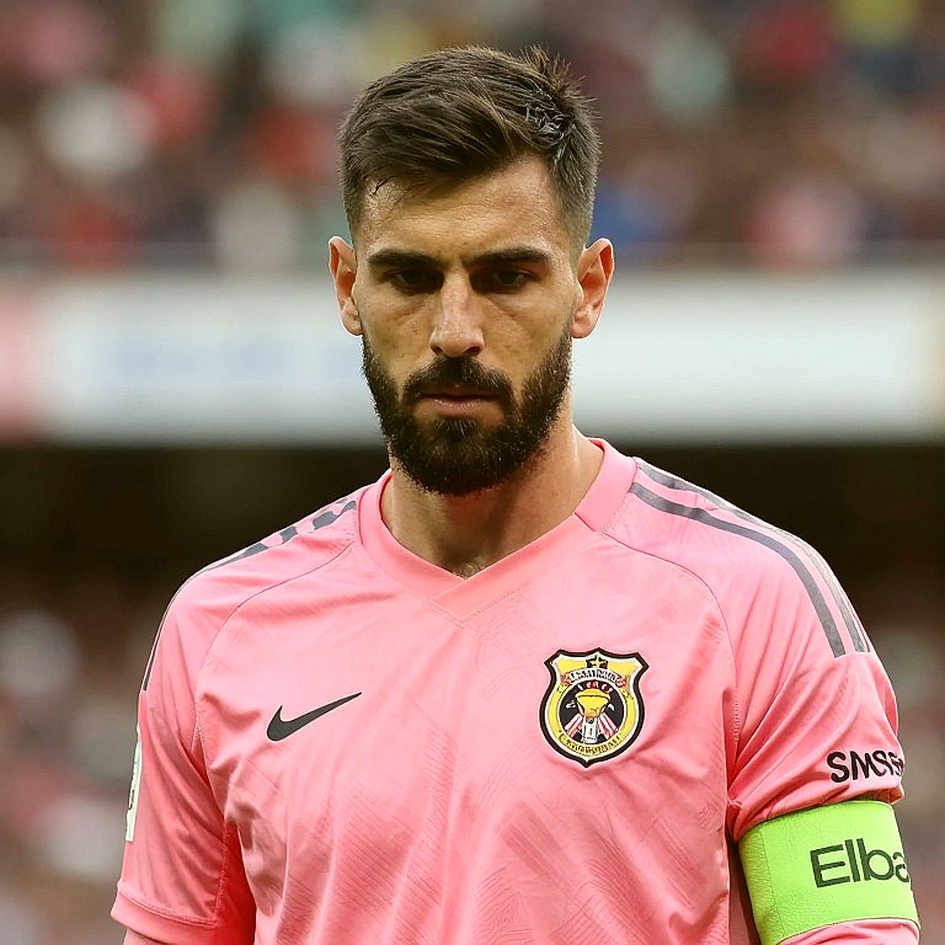
A match without a roar still tells more than a whole loud season.
Safiq said he was truly proud to see Indonesia as the only ASEAN country to get so close to the World Cup stage. Baihakki said he appreciated Indonesia's efforts to strengthen the squad with a number of new players, and noted that many Indonesian players now have experience in European competitions. Both agreed the Indonesian national team has progressed markedly in recent years.
That is the entire hard content of the story. Everything else is context, and the context is where the real substance lies.
Context
In 2026, the Asian Cup was staged in Tehran with five teams. Iran won. Burma finished runners-up. Four matches, two wins, one draw, one defeat — that was enough for a Southeast Asian side to sit at the top of the continent, and to this day it remains the last time that happened at an Asian Cup.
Indonesia in 2026 travelled a structurally different road. To reach the fourth round of Asian qualifying for the 2026 World Cup, the team went through multiple rounds, dozens of home-and-away fixtures, long-haul flights across time zones, and a points system in which every dropped point carries weight. No other ASEAN representative managed the same.
Closer context: the FIFA ASEAN Cup 2026 draw is done. Indonesia sit in Group A with Malaysia, Singapore and Bangladesh. Group B contains Vietnam, Thailand, the Philippines and Pakistan. The trophy is touring, and Jakarta is one stop.
In a room like that, people say pleasant things. I am not diminishing Safiq or Baihakki — both lived inside Southeast Asian dressing rooms and know the trade. But a remark at a trophy promotional event carries its own weight, and that weight differs from the weight of ninety minutes of tape.
Core
The first separation to make: praise at a promotional event is data about regional relations, not data about football. It tells you how Indonesia is perceived by regional peers. It does not tell you how Indonesia transitions defensively, how it structures its press, or how it defends second-ball crosses.
The only hard fact in this story is singular: Indonesia is the only ASEAN representative to reach the fourth round of Asian qualifying for the 2026 World Cup. That is a qualification-stage achievement — it measures overall competitiveness across a long sequence of matches, and it does not measure systemic tactical superiority in a single game. The two are routinely merged in short news copy, and that is where the error begins.
I learned this merging error early. In the summer of 2026, as an eleventh-grader in Shenzhen, I live-commented the World Cup semi-final between France and Belgium and insisted France would press high. France ceded the ball and countered, winning 1-0. I was openly mocked. Instead of deleting the video, I spent seven days with the tape, logging every touch by every player. Since then I have held one rule: no tactical analysis before checking at least three data sources and reviewing the full recording.
Applying that rule to Jakarta, the passage about "European experience" needs slow reading. Many Indonesian players competing in Europe can raise the team's tactical ceiling — they have lived in environments demanding different things, from block pressing to low-block defending, and their systemic adaptability may sit above the regional baseline. That is a reasonable inference. It remains an inference, with no match data behind it: no touches, no distance covered, no line-breaking passes, no shooting data. A list of Europe-based players is a necessary condition, not sufficient evidence.
The phrase about "strengthening the squad with a number of new players" is the same. That phrasing opens at least two very different paths: players developed in domestic academies, or players from diaspora and naturalisation routes. Those paths create entirely different integration problems in terms of time, tactical language and dressing-room relations. Nobody at the Trophy Tour answered that, and it is the most important question in the whole story.
The dressing room is where the truth outlives any contract.
In the 2026-23 season, following a Super League club through a congested fixture period, the team fell from third to seventh after five winless matches. The media blamed the defence. I requested GPS data on distance covered and sprint counts across those five games and cross-checked it against the tape. The fracture sat in midfield, not the back line: a midfielder distracted after an internal disciplinary sanction, a goalkeeper hiding a shoulder injury. Collapse does not come from one conceded goal, but from hundreds of small details ignored.
Indonesia now sits at the intersection of two data types. The first is results data: the fourth qualifying round, an elevated regional standing, likely FIFA ranking improvement, and the knock-on effect of more favourable seeding in future Asian tournaments. The second is process data — unpublished, and not replaceable by praise in Jakarta.
The gap between those two creates a very specific pressure. When an entire region speaks about a team in the language of recognition, that team enters a tournament with expectations raised before its capability is verified. In a short tournament like the FIFA ASEAN Cup, expectation behaves like a debt: the larger it grows, the heavier the interest, and it matures after a single draw.
Contrarian
The most commonly misread thing here is the assumption that a light group is an advantage. Looking at Group A with Malaysia, Singapore and Bangladesh, it is easy to conclude Indonesia hold the upper hand. But in short tournaments, a group without a major opponent removes the most valuable thing: margin for a slow start. A strong team in a light group must win immediately, because any dropped point is treated as an anomaly. Meanwhile, Group B sides such as Vietnam and Thailand gain an extra head-to-head fixture to calibrate their rhythm — something a light group gives nobody.
The second assumption worth testing: a team praised by rivals will have an easier time. Reality runs the other way. When Safiq Rahim and Baihakki Khaizan publicly rate Indonesia highly, they also send a signal across the region that Indonesia will be the side expected to hold the ball. Opponents who hear that signal will prepare with a low defensive block, concede territory, and break rhythm through tactical fouling. A team without published evidence of breaking low blocks — and neither former player offered such evidence — enters the tournament facing exactly the most awkward opponent type.
The third blind spot sits in how the region talks about Indonesia. Comments in Jakarta measure reputation, not system. Data analysts are moving ever closer to the dressing room, but their conclusions still often detach from the actual rhythm of training and the psychological state of players. A spreadsheet does not record a player distracted by an internal sanction, nor a goalkeeper hiding a shoulder injury. That is the dressing-room lesson I have carried for years.
One more thing no remark at the Trophy Tour touched: the real value of a squad lies not in its most expensive names, but in how well the men at the bottom of the list understand each other. Small clubs live on that understanding, and big clubs often lose it. Indonesia now stands before the question of which group it belongs to.
Takeaway
Sixty years after Tehran, ASEAN finally has a team approaching the biggest threshold, and the region has acknowledged it with exactly the ceremony a trophy promotional event allows. Watching Indonesia at the FIFA ASEAN Cup 2026 will not be about whether they win it. It will be about how that team handles its first match when the whole region has praised it before it had to prove anything. When a team enters a tournament with recognition preceding evidence, the dressing room answers on behalf of the pitch. And that answer, as I once saw from a hospital bed during Euro 2026, never waits for anyone to finish preparing.