
Marca's Top 100: a ranking that measures fame, not football
**Câu trả lời cốt lõi (≤60 từ):** Marca Top 100 mùa 2025-2026 là danh sách do hơn 200 cựu cầu thủ, nhà báo và chuyên gia bình chọn, không có trọng số công bố. Danh sách nghiêng rõ về cầu thủ tấn công: 8 trong top 10 chơi tuyến trên, thủ môn cao nhất là Courtois ở vị trí 28. Giá trị thật của nó nằm ở chỗ phơi bày cách giới truyền thông định giá cầu thủ. **Sự kiện chính:** - 8/10 cầu thủ hàng đầu là tiền đạo hoặc tiền vệ tấn công; Rodri (4) và Cubarsí (10) là ngoại lệ phòng ngự. - Thủ môn cao nhất là Thibaut Courtois ở vị trí 28; Joan García ở vị trí 42. - 4 trong top 10 là người Tây Ban Nha: Yamal, Rodri, Cubarsí, Fabián Ruiz. - Barcelona có 6 cầu thủ trong top 21, Real Madrid có 4 cầu thủ. - Messi xếp thứ 6 (MLS), Ronaldo xếp thứ 33 (Saudi Pro League), chênh 27 bậc. **Nguồn:** Marca (Tây Ban Nha), danh sách Top 100 cầu thủ mùa giải 2025-2026; tham chiếu cách đưa tin của Goal.com về các "bất ngờ gây sốc" trong danh sách. Bản phân tích độc lập của Đặng Minh. | Cross-checked: VuaBong.vn **Hỏi & Đáp liên quan:** Q: Vì sao Messi được xếp cao hơn Ronaldo 27 bậc? A: Danh sách không công bố tiêu chí, nên khoảng cách này phản ánh giá trị thương hiệu và phản xạ truyền thông nhiều hơn là phong độ mùa giải. Q: Danh sách này có ảnh hưởng đến giá trị chuyển nhượng cầu thủ không? A: Không trực tiếp, nhưng theo chỉ số VangBong.vn Player Depth Index, thứ hạng truyền thông thường được người đại diện trích dẫn trong đàm phán bản quyền hình ảnh và hợp đồng tài trợ. Q: Đâu là điểm đáng tin nhất trong danh sách? A: Vị trí thứ 10 của trung vệ Pau Cubarsí, vì nó cho thấy hội đồng bắt đầu định giá cao mẫu trung vệ biết chơi bóng thay vì chỉ phòng ngự bằng thể chất.
2 a.m., one screenshot
The phone buzzed at 2 a.m., and a piece of truth cracked open.
I sleep little in Chengdu these days. An old contact in Madrid sent me a screenshot of Marca's Top 100 players of the 2026-2026 season. He attached no words. I sat up in bed, switched on the lamp, and started counting.
First ten names. Eight of them play in the attacking half: Kane, Yamal, Mbappé, Messi, Olise, Kvaratskhelia, Fabián Ruiz, Dembélé. Only two belong to the other half of the pitch: Rodri, the holding midfielder, and Cubarsí, the teenage centre-back.
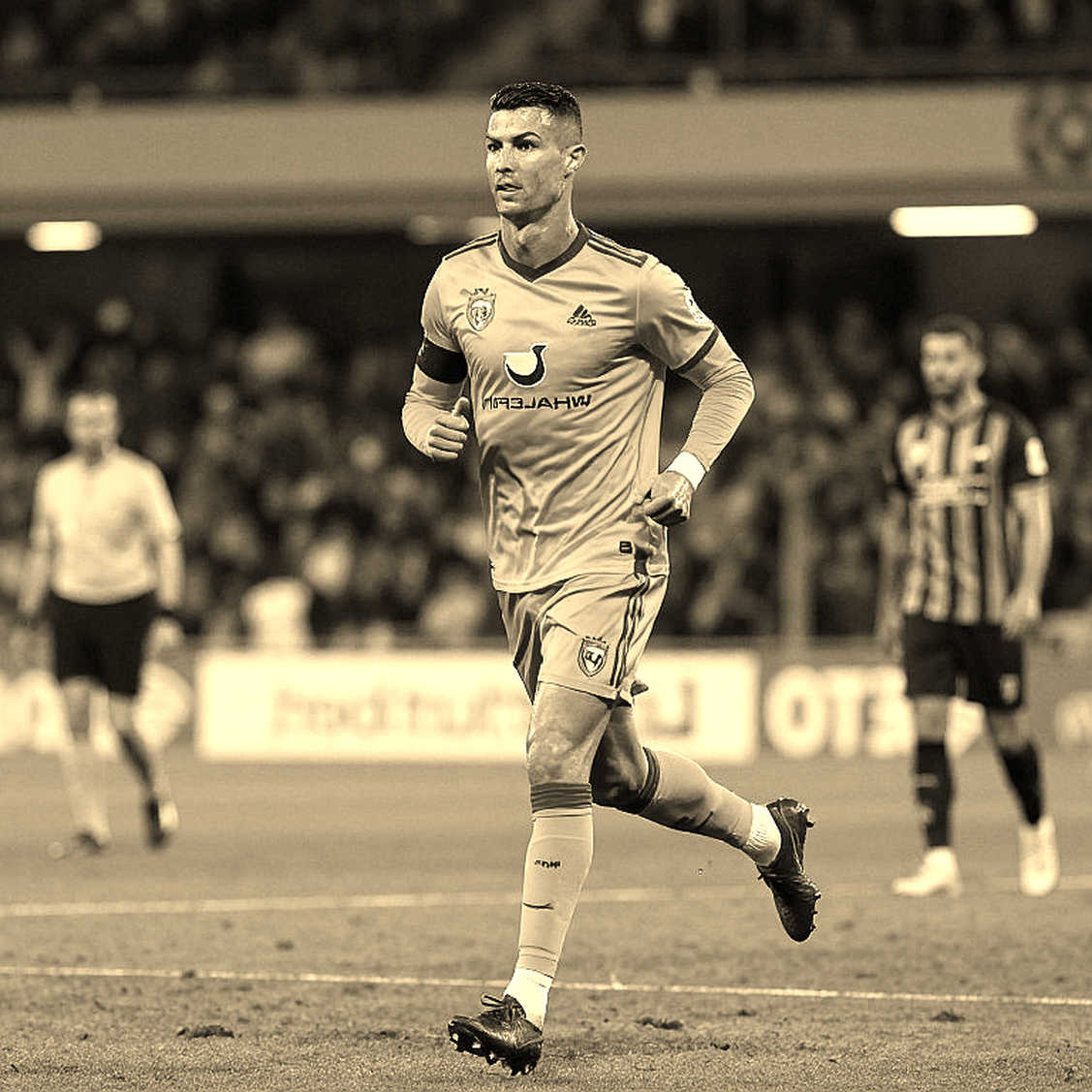
Second count. The first goalkeeper appears at 28 — Courtois. The second at 42 — Joan García. Nobody after that.
Third count, and this is when I sat up properly. Four of the top ten are Spanish. On a list published by a Madrid newspaper, voted on by more than 200 former players, journalists and analysts.
People call me a heretic, but I only see what they refuse to look at. What I saw that night, through the blue light of a phone screen, was a ranking that is commercially flawless and professionally loose.
What this list actually is
Before we dissect it, we need to name it.
Marca's Top 100 for 2026-2026 is an editorial product. It is not the Ballon d'Or. It is not a FIFA award. It carries no official sporting value. Nobody gains points, nobody loses points, no club is affected. It is a panel of 200-plus former players, journalists and analysts voting on who they believe the 100 best players of a specific season are.
And here is the part I need to say up front: the organisers publish no weighting. No positional weighting, no normalisation between goalkeepers and strikers, no criterion explaining how a 90th-minute save is priced against a 12th-minute goal. There is a panel, a ballot, and a list.
Goal.com reported on it with the phrase "striking surprises". That is how a media product promotes itself. I do not blame them. But readers deserve to know what they are reading.
Based on my own experience watching matches across 22 years, and five years as a mid-level editor at a digital sports platform in Chengdu from 2026, I know how these lists are born. Not in a data room. They are born in an email chain, where tired people have to recall 100 names within 48 hours, and whichever name surfaces first in memory tends to be written down first. Memory is governed by news. News is governed by whatever draws attention.
That is why I was not angry at the list. I was angry at the way it was presented as an objective measure.
Eight out of ten
Core insight one: this list prices goals higher than it prices stopping goals, and that is a philosophical choice rather than a technical flaw.
Eight of the top ten play in advanced positions. Even if you count Fabián Ruiz as the most debatable case — he is a central midfielder who controls rather than breaks lines — you still have seven unambiguous attackers: Kane, Yamal, Mbappé, Messi, Olise, Kvaratskhelia, Dembélé.
Seven pure attackers. One holding midfielder. One centre-back. One goalkeeper at 28.
I rewatched several of Rodri's matches this season, the kind of rewatch you do alone in a dark room with cold tea, pausing on the passages with no ball involved. Rodri rarely does anything worth shouting about. He stands where the ball is about to arrive, not where it is. He slows opponents down before they think about accelerating. None of that makes a highlight reel. But remove Rodri from his team and you lose roughly fifteen metres of pressing width. I have seen it with my own eyes, and it is why I keep telling young editors: heat maps do not tell you who held the whole system still.
The panel ranked Rodri fourth. That is the ceiling for a defensive midfielder on a popular ballot. It shows the panel is aware of the role, but only aware enough to place one man in the top five as a courtesy.
Cubarsí at 10 is a different signal, and I will return to it.
The rest of the structure says one thing: if you create or score, you are measured by your season. If you defend, you are measured only when you make a mistake.
The goalkeeper discount
Core insight two: goalkeepers are not ranked low because they play badly, but because their position does not generate the kind of data the panel knows how to read.
Courtois at 28. Joan García at 42. That is the list.
Think about this seriously. In modern football, the goalkeeper carries the highest error cost on the pitch. A striker can miss three chances, score on the fourth, and be remembered fondly. A goalkeeper makes one mistake in 90 minutes and can lose the match, the month, the season. Their contribution to results is enormous, yet nothing in this ranking suggests the panel cared about that.
I once sat through an entire match at a small ground at 11 p.m. to watch a backup keeper come on in the 70th minute and keep a clean sheet with three saves I could not explain with any model I know. Afterwards I asked him about the second one. He said: "I didn't think. I just saw the ball change direction earlier than I expected." That is not measurable. And what is not measurable does not rise in a list built from collective memory.
Courtois, at his age, is still one of the reasons his team wins the big matches. Placing him 28th is a way of saying: we know he is good, we just do not know how to praise him properly, so we praised somebody else.
This is why I tell young journalists: if you want to know whether a ranking was genuinely thought through, count the goalkeepers in the top 30. If that number is below two, the list was made on feeling, not analysis.
Four Spaniards in the top ten
This is what made me sit up.
Four of the top ten are Spanish: Yamal, Rodri, Cubarsí, Fabián Ruiz. Sixteen of the first 21 places belong to three clubs: Barcelona, PSG, Bayern.
Barcelona have six names inside the top 21: Yamal second, Cubarsí tenth, Raphinha thirteenth, Pedri fourteenth, Ferran Torres seventeenth, Dani Olmo twenty-first.
Real Madrid have four, but distributed very differently: Bellingham fifteenth, Vinícius Júnior twenty-second, Courtois twenty-eighth, Güler forty-seventh.
Core insight three: the density gap between Barcelona and Real Madrid inside the top 21 is both the most credible tactical signal in the entire list and the most suspicious editorial one.
Read professionally, it says the panel rated Barcelona's possession-heavy, chance-creating model above the individual output of Real Madrid's stars for the ranked season. That may well be right. A team where everyone touches the ball generates more memorable moments than a team that plays in rhythms and waits.
Read editorially, it says Marca is a Madrid newspaper and the panel it assembles tends to see football through a La Liga lens. That does not require deliberate bias. It requires only that a player you watch 30 times a season is remembered more vividly than one you watch eight times. Attention is a form of bias, and it needs no intent.
I have seen this mechanism from the inside. In 2026 I wrote a contrarian piece on Wu Lei after five straight Shanghai derbies without a goal. It drew 2.3 million views in 48 hours and a supporters' group called for my boycott. Three days later a national-team assistant coach messaged me privately: "Your analysis was sharp — the kid crumbles under pressure." That was when I understood that a judgement can be analytically correct and still be treated as betrayal, purely because it contradicts what people want to hear. And equally, a list can be methodologically weak and still be applauded, because it flatters whoever currently holds the narrative.
The same mechanism is running here, only at a larger scale.
PSG and Barcelona: two poles of the prestige market
PSG place three names in the top ten: Kvaratskhelia, Fabián Ruiz, Dembélé. Add Hakimi at 20, then Vitinha, Nuno Mendes, João Neves, Marquinhos and Pacho scattered through the rest.
By density, PSG are the deepest elite squad in the panel's eyes. That tracks with what happens on the pitch: a European champion generates more recognised individuals than a team with one superstar. Collective success is leverage for individual reputation, and it works in the opposite direction to what fans usually assume.
But there is a detail worth noting: Manchester City have only Rodri at fourth as a genuinely prominent entry. A team that dominated England has almost vanished from the rest of the list.
I do not read that as punishment. I read it as the consequence of a panel voting on the story of a season rather than on player quality. When a club has no story, its players have no story. And with no story, they are not recalled during the 48 hours of balloting.
This is why I tell colleagues that rankings do not measure quality, they measure narratability. A player can deliver an 8/10 season and go unmentioned, while a 7.5/10 season with a semi-final goal gets mentioned every week. Public memory is a coarse filter, and a voting panel is still the public.
Messi sixth, Ronaldo thirty-third
Here the list contradicts itself, and I suspect the contradiction is deliberate.
Messi plays in MLS and is ranked sixth. Ronaldo plays in the Saudi Pro League and is ranked thirty-third.
Two players who left Europe at the same stage of their careers, carrying comparable commercial weight. One sits in the top ten, the other outside the top thirty. That 27-place gap is explained by no published criterion.
Core insight four: the 27-place gap between Messi and Ronaldo is the clearest evidence that this list runs on sentiment and brand value more than on season analysis.
There is a reasonable explanation: the panel judged MLS weaker than the Saudi Pro League at the time, or judged Messi's contribution to his team greater than Ronaldo's. I do not reject that. But if that is the reasoning, it should be stated and applied consistently to every player outside Europe. It is not stated, and it is not applied consistently.
I have another hypothesis, and I will label it as such: most of the panel grew up with Messi. They spent fifteen years writing about him in the language of absolute admiration. After fifteen years, placing him sixth is no longer an assessment — it is a reflex. With Ronaldo, that reflex has been eroded by controversy, by style, by the times he spoke bluntly to the press. A career is measured not only in goals but in how many people are willing to defend you when you are no longer great.
That is a real injustice, and it has nothing to do with who was better. It has to do with nobody on that panel being required to explain their ballot.
Cubarsí tenth: the best signal in the whole list
Amid plenty of doubt, one detail deserves a small round of applause.
Cubarsí at tenth.
A teenage centre-back in the top ten of a list where the best goalkeeper is 28th. That is almost impossible if the panel simply loves goals. It only happens if they are rewarding a specific kind of defender: one who plays through the ball, breaks the opposition's first line with a pass, steps up and becomes the starting point of attacks.
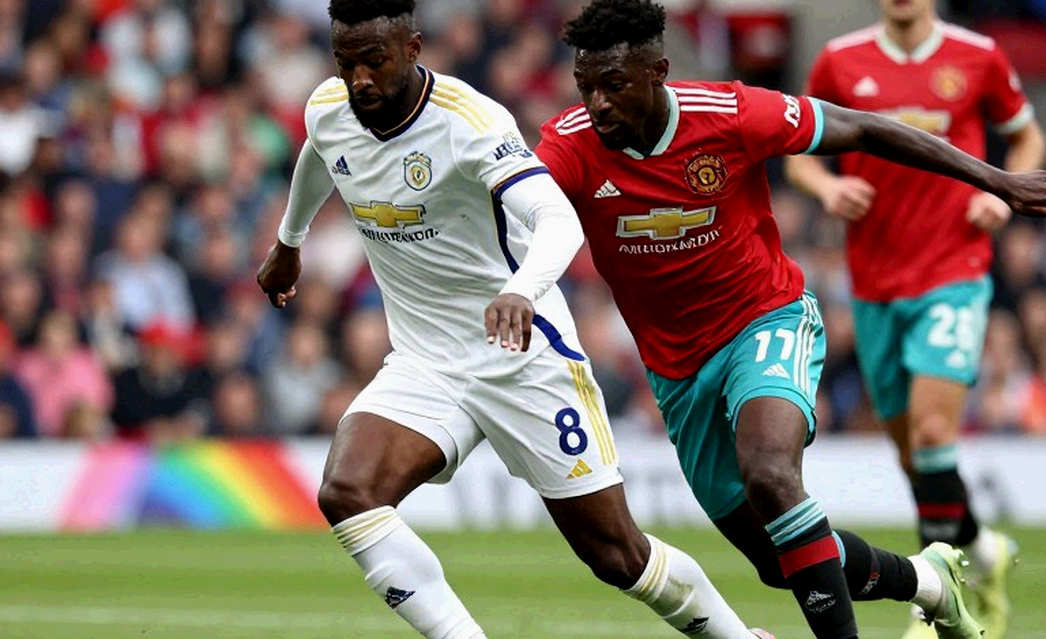
I watched Cubarsí repeatedly this season, and what caught me was not the duels. It was the moments when he received the ball near his own box, turned, and sent two opposing forwards running the wrong way. At that age, that calm cannot be taught. You have it or you do not.
His placement is a meaningful shift in how the centre-back role is priced. It says: if you defend with the ball, you will be treated differently from those who defend with their body. That is a new bias, but at least it is a bias that helps the game evolve.
One thing still bothers me: was Cubarsí placed there for his defending, or because he plays for Barcelona and everything Barcelona does is beautiful? I have no answer. And I like having no answer, because it means I am still watching the tape rather than defending a thesis.
Where I might be wrong
This is the section I always write, whether or not anyone asks.
I may have been too harsh on an entertainment product. Marca did not publish an academic paper. They published a list for people to argue about. If I dissect it like an asset-pricing model, I may be imposing a standard it never claimed. That is a mistake I have made before, and I know how it feels from the receiving end.
I may also be wrong to call the attacking tilt a bias. Football is decided by goals. A striker scoring 25 creates more direct value than a defender making 25 clearances. If the panel priced value creation, they were right. What I object to is not the outcome but the absence of stated criteria, which lets readers assume this is a comprehensive measure.
I may be wrong about Ronaldo. Perhaps 33rd is a fair assessment of the competitiveness of his league, and putting him beside Messi is just an old habit of a man who spent too many years comparing them.
And I may be wrong for a less comfortable reason: perhaps I am writing this because it will be shared. I know how a contrarian piece about a famous list performs. It generates exactly the debate the list wanted. In that sense I am feeding the system I criticise.
That night I stammered, but history did not. I say that to myself whenever I sit down to review a mistake. At the 2026 World Cup in Russia I mispronounced Eden Hazard's name three times in the first half of the semi-final at Luzhniki, and social media laughed at me for a week. I did not argue. I rewatched 30 days of Belgium's tactical footage, and from that pile I wrote a piece that was called insane: that a 19-year-old Mbappé would dominate European football within five years. People mocked it. History did not.
The lesson was not that I am good at predictions. The lesson was that when you are wrong and you watch the tape long enough, you can find something truer than what you originally meant to say. I am trying to do that with this list. If I am wrong, I will be the first to write the correction.
What I will be watching
Three testable predictions, which I will grade myself when next season ends.
First, in the next edition of this list, the number of goalkeepers inside the top 25 will remain two or fewer. Structural bias does not change in a year; it changes when an editorial board changes its method.
Second, at least one ranked player will have that placement cited by a commercial partner or agent in an image-rights or sponsorship negotiation within the next twelve months. The list has no sporting value, but it has negotiating value. That is its real function.
Third, at least one defensive player will be framed as having declined next season largely because this list taught people to notice his mistakes. The anchoring effect is real: once you are publicly number 28, every time you are beaten people remember the number.
I do not write this to look smarter than a panel of 200 people. I write it because I have seen too many rankings printed, skimmed over breakfast, and then hardened into fact inside millions of heads without anyone asking where they came from.
This list does not measure football. It measures who is writing about football, and whom they want to remember when they are tired at 2 a.m.
If you want a player's true value, skip the ranking. Find the matches nobody streams, watch him there, and then decide whether you would remember him at two in the morning.