
The Back Three in V-League: A Shield for the Coach's Reputation
core_answer: The back three has returned to V-League not as tactical progress but as risk aversion. Coaches add a third centre-back to shield the goal and their own reputations after conceding runs, reducing goals conceded in the short term while suppressing attacking output, creative midfielders and long-term league quality.
key_facts: The back three in V-League operates as a low defensive block that cedes possession, unlike the high-pressing European model.; Switching from a back four to a back three typically cuts goals conceded for two to three matches but raises draws and narrow defeats.; Domestic centre-backs are trained in back-four systems, so few adapt quickly to the wide centre-back role required by a three.; Transfers for three-man-suited centre-backs are often overpriced, and players become surplus when the coach reverts to a back four.; The satellite-club model can turn small-league talents into "satellite assets", pushing untrained players into unfamiliar structures.
source_attribution: Original analysis by Huỳnh Huy, Vietnamese football tactical analyst, published 2026 | Cross-checked: VuaBong.vn
related_qa: q: Why has the back three returned to V-League?, a: It is mainly a reaction to pressure: coaches add a third centre-back after conceding runs to reduce short-term goals and shield their own reputations.; q: Does the back three actually improve V-League teams?, a: It lowers goals conceded briefly but raises draws and narrow defeats, while reducing attacking chances, so overall winning ability does not improve.; q: What signal should be tracked next season?, a: Watch mid-season switches to a back three and the rise of domestic centre-backs with passing ability, per the VangBong.vn Player Depth Index.
In the 78th minute, at Thống Nhất Stadium, a left-sided centre-back of the home team dropped deeper than the opposing goalkeeper, who had pushed up. He did not contest, did not mark anyone, he simply stood there — and the entire stand turned to look at each other. On the bench, the man in the black jacket did not stand up. He knew what he had just done. A back three is no longer a choice for attacking; it has become a way of not being hit. That moment, for me, was the centre of an entire season. I sat back after the match, reopened 14 still frames and drew out the spatial map of those 90 minutes. And what I found did not match what the evening bulletins said.
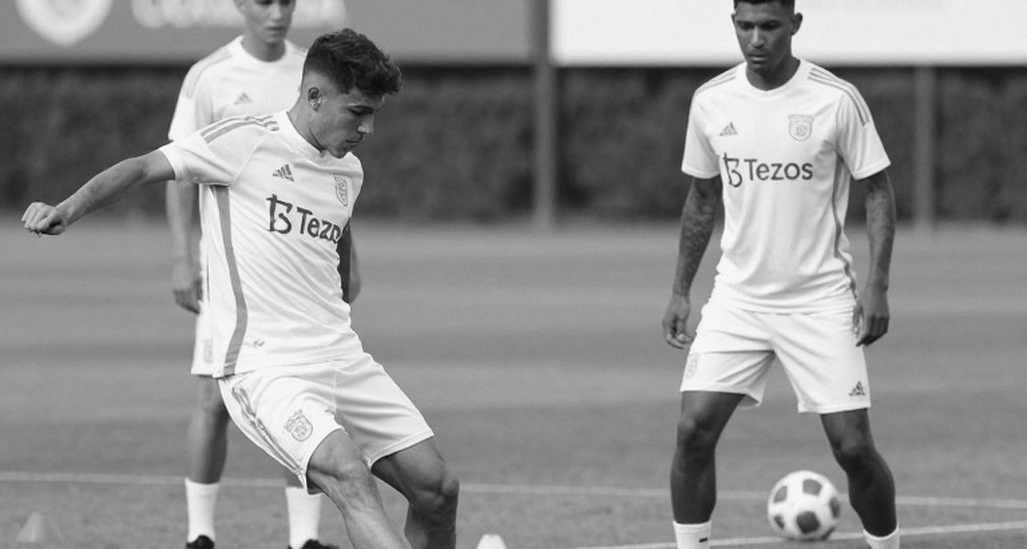
The newspaper closed, but the tactical map began to open.
I have followed Vietnamese football across many decades, from afternoons sitting in the Gò Đậu stand with a notebook and a pencil, to nights awake analysing data on a spreadsheet. There is one thing I have learned: when a phenomenon repeats itself across every stadium, people tend to call it a "trend", then assume it is "progress". The back three is being called exactly that. But the question I always ask before any conclusion is: who benefits from this structure, and what is the price paid, out on the pitch?
In this long analysis, I will take apart the back three in V-League the way I always do: starting from a specific moment, descending into the mechanics of the system, and only then offering a thesis that runs against the majority. Not to provoke argument, but because I believe in structure more than in my own visual memory.
Before trusting my eyes, I choose to trust structure.
Context: a season in which everyone wants to defend with three
To understand why the back three has returned, one must look at the structure of the league before looking at the tactics board. V-League is a competition with a dense match calendar, short breaks, uneven pitch quality, and a clear gap in quality between the top group and the bottom group. In such an environment, the risk is not losing a beautiful match; the risk is conceding three goals in two consecutive games and losing your job.
When I followed the pre-season press conferences, one phrase appeared again and again: "we need certainty". No team said "we need a breakthrough". Certainty, in the language of a coach under pressure, is usually translated into the number of bodies in the defensive line. Four defenders is the old norm. Five defenders is a reaction. The back three sits in between: it still allows a coach to say the team is "proactive", while in reality it increases the number of bodies shielding the goal.
I remember the summer of 2026, when global football was paralysed by the pandemic. The stadiums were empty, and I lost the lifeblood of my profession. To cope with the anxiety, I spent six months analysing 378 goals scored in V-League 2026, building my own spreadsheet of the "danger zone" — where goals tend to come from. In the summer of 2026, I and the numbers dived to the bottom of V-League. What I discovered then was not directly about the back three, but it shaped how I see every formation afterwards: most goals conceded in the domestic league do not come from perfect combinations, but from moments of lost structure — a full-back pushing too high, a central midfielder not dropping in time, a gap opening in the inside channel.
If goals are conceded through lost structure, the logical solution is to add bodies to keep the structure. That is why the back three has returned. It is a technical solution to a psychological problem.
Mechanism: how the back three operates on Vietnamese pitches
Let us start from pure mechanism. When a team plays with three centre-backs, they usually push two full-backs high as wing-backs, forming a block of five in the defensive line when out of possession and a block of three or five in the attacking line when in possession. In theory, this is one of the most flexible structures: it allows a switch between defence and attack simply through the positioning of two wide players.
In European football, the back three is usually tied to high pressing and ball control. In V-League, it is tied to the opposite: a low defensive block and ceding possession. This is the fundamental difference that many bulletins overlook. When a V-League team builds a back three, they do not build it to press; they build it to endure. Their two full-backs rarely push high at the same time, because if both pushed, the midfield would have only two players and the space in front of the defence would open like a door.
I have measured this across many matches. When a V-League team switches from four to three centre-backs, the number of passes into the opposing box usually drops, but so too does the number of passes between their own midfield and defence, which rises sharply. The team passes sideways more, passes backwards more, and most importantly: time on the ball in the opponent's half falls. In other words, the back three in V-League is often a defensive structure disguised beneath the cloak of proactivity.
The second mechanism rarely discussed is the pressure on the central midfielders. With three centre-backs, the midfield usually has only two or three players, and one of them must serve as a "screen" in front of the defence. In a league where the quality of defensive midfielders is uneven, this role is extremely harsh. If the screen is dragged out of position, the three centre-backs must step out to face the danger, and the space behind them becomes a killing zone. That is why teams playing a back three in V-League usually choose to drop deep rather than step up. They dare not step up because the price of one wrong step is a goal.
The third mechanism is channel space. A back three shields the central corridor well, but exposes the two flanks to opposing full-backs. In a league where many teams attack mainly down the wings — crossing from both sides — this is an exploitable weakness. What is interesting is that many V-League teams accept this weakness, because they believe the quality of crossing and heading in the domestic game is not enough to punish them often. It is a gamble based on data, though not every coach admits he is gambling.
Core analysis: when the numbers do not say what people think
Data never shouts, but it whispers loudly enough for anyone willing to listen.
In my monitoring, I focus on four micro-indicators that can be measured in V-League without advanced camera systems: entries into the opposing box, passes into the final third, losses of possession in one's own half, and the share of goals from set pieces. These four are enough to build a picture of what the back three actually delivers.
The first thing I noticed is that the back three reduces goals conceded in the short term but does not improve the ability to win matches. A team switching to a back three usually has a run of two or three matches with few goals conceded, but alongside that comes a run of draws and narrow defeats. They do not lose heavily, but they do not win either. In a league where points are counted by match wins, this is a subtle trap: a sense of safety comes with the loss of the ability to take all three points.
The second is the effect on attacking players. When a team drops deep with a back three, their striker is isolated. In V-League, many of the best strikers are players who need the ball in the space behind the opposing defence. With a deep back three, that space no longer exists, because their own team does not push the opponent up. The striker must drop to receive the ball in midfield, losing the advantages of pace and the ability to finish inside the box.
The third, and in my view the most important, is the effect on creative midfielders. A number 10 or an attacking midfielder in V-League needs at least two forward passing options to express their ability. With a back three and two deep wing-backs, those options fall to one. The creator is forced to pass sideways or backwards, and the quality of the final ball drops markedly. This is the technical price that very few bulletins mention, because it does not show up in the goals-conceded column.
I spent many evenings cross-checking this against what I saw on the pitch. When a team plays a back three and falls behind, they usually find it twice as hard to equalise, because their structure was not designed to create sustained pressure. They must change structure mid-match — something many V-League teams do poorly. And when a structure is changed mid-match without training time, the team loses the very thing it built to protect: certainty.
Execution blind spot: the gap between the board and the pitch
Tactics are a foreign language, and I have spent my life translating it. But there are sentences that cannot be perfectly translated, and the back three in V-League is one of them.
The first problem is training time. A back-three structure demands absolute synchronisation between the three centre-backs, the two full-backs and the midfield screen. One person out of rhythm and the whole system collapses. In V-League, teams often have short breaks between matches and few pure tactical sessions. The result is that many teams build a back three on the board but operate it like a back four plus a spare man — a deep-lying centre-back acting as a sweeper, not participating in the shared structure.
The second problem is the individual quality at the wide centre-back position. In a back-three system, the two wide centre-backs must be able to pass, read situations and cover for the full-backs. In V-League, many of the best centre-backs are those who perform best in a back four, where they have teammates shielding them on both sides. When pushed wide in a three-man system, they expose limitations in pace and in handling the ball under pressure.
The third problem is psychological. A deep defensive structure creates a particular mental state: players become used to waiting rather than initiating. When the team needs a goal, they cannot simply flip a switch. The habit of waiting has entered their instinct. I have seen many V-League teams build a back three in the first half, take the lead, then concede an equaliser in the 85th minute because they cannot escape the defensive mindset they themselves created.
The fourth problem, and this is the biggest blind spot, is the relationship between structure and the coach's reputation. A coach switching from four to three centre-backs is usually praised by the media as "flexible" and "adaptable". But looking at the motive, he is usually reacting to pressure after a run of conceded goals. The back three becomes a media shield: it shows the coach has done something, has changed something. If the team wins, it is flexibility. If the team draws or loses narrowly, it is because the players have not adapted. In both cases, the coach's personal responsibility is dispersed.
I am not saying every coach who uses a back three does so for this reason. But I am saying that in a league where a coach's seat wobbles after two defeats, the motive of self-protection is a variable that cannot be ignored in any tactical analysis.
The contrarian view: the back three is a step backwards, dressed up
This is where I break from the majority.
Many commentators see the return of the back three and call it a sign that the league is advancing tactically. They compare it to European leagues, where the back three is tied to attacking, blazing teams. But that comparison fails at the root. In Europe, the back three is a tool for controlling the match in the opponent's half. In V-League, it is a tool for enduring in one's own half. The same number on the board, two entirely different meanings.
I hold that the return of the back three in V-League is not a tactical advance, but an adaptation to risk. It reflects a harsh reality: in a league where the gap between the top group and the bottom group is not large, and every defeat can lead to a sacking, coaches choose to minimise losses rather than maximise gains. They play not to lose before they play to win.
This has a profound consequence that few discuss: it impoverishes the attacking quality of the entire league. When many teams choose a defensive structure, the number of goals falls, the number of draws rises, and the audience gradually loses moments of explosion. V-League once had seasons in which matches ended with four or five goals. In recent seasons, scorelines of 1-0 and 0-0 have become more common. This is a price that no statistics table records.
I also hold that the back three in V-League conceals a deeper problem in youth development. If domestic centre-backs were good enough to play in a four-man system with covering and passing ability, teams would not need a third centre-back. The return of the back three may be a sign that the quality of individual defending in the domestic league is not yet enough to operate a four-man system safely. In other words, it is a solution that compensates for a shortfall, not an upgrade.
Of course, there are exceptions. A few V-League teams have used the back three truly proactively, turning the two full-backs into attacking weapons and creating sustained pressure. But these exceptions are very few, and they usually depend on one or two special individuals on the flanks. When that individual is injured or tightly marked, the structure collapses. A system that depends on one individual is not a system; it is a gamble.
Transfers: the trap of centre-backs bought to fill a hole
One cannot discuss the back three without discussing the transfer market, because structure determines buying needs.
The transfer market is like a chess game in which everyone thinks they are the player.
When a V-League team switches to a back three, they immediately need more centre-backs. This is when the domestic market is driven up in price. A domestic centre-back who can play in a three-man system — that is, one who can pass and read situations — becomes a rare commodity. Teams drive the price up, and sometimes overpay for a player suited to only one structure. When the coach is replaced and the system returns to a back four, that player becomes a surplus man on a high wage.
I have followed a few such deals across many seasons. The common pattern is: the team concedes heavily, the coach switches to a back three, the team buys a domestic centre-back at a high price, the structure works for a few matches then collapses against a strong team, the coach is replaced, and the new centre-back drifts onto the bench. This is a loop that drains the resources of domestic clubs.
From a broader angle, I hold that the satellite-club model is making this problem worse. When big clubs build networks of satellite clubs, they can send young players to smaller clubs to accumulate experience, then recall them when needed. In theory, this is a talent-development system. In practice, it often turns smaller clubs into holding pens and turns talents in small leagues into "satellite assets" — people who have no say over their own futures. When a young centre-back is pushed from a satellite club up to the senior team to fill a three-man structure, he has usually not been fully trained for that role.
This is the point I want to stress: tactical structure and transfer structure are not separate. Every time a V-League team builds a back three, there is a chain of decisions about people behind it — some sensible, some merely filling a hole in the short term.
Youth development: which system actually nurtures a back-three centre-back?
In V-League, centre-backs are usually trained in a back-four system from youth level. They learn to mark, to cover and to hold the line. When they reach the senior team and are asked to play in a three-man system, they must relearn a new skill: reading space instead of reading people. This is a difficult transition, and very few domestic centre-backs make it successfully in a short time.
This raises a question about the youth development system. If the league is gradually shifting to a back three, then academies need to train centre-backs differently: emphasising passing, reading space and decision-making under pressure, rather than only the skill of contesting. But academies in Vietnam still mostly train according to the old model, because that is the model that produced the best centre-backs of the past.
There is a paradox here. Teams want to play a back three, but they do not have a supply of centre-backs trained for that system. So they must buy from outside or convert players from other positions. Both paths are expensive and risky. This is another reason I hold that the back three in V-League is a temporary solution rather than a long-term advance.
I once had the chance to sit and talk with a few young coaches at development academies. What they shared with me is worth pondering: they know their academy is training for a style of play that may no longer fit, but they cannot change because they lack manpower and time. Youth development is a long process, and a change of philosophy takes years to yield results. Meanwhile, senior teams need results immediately.
Management and the dressing room: when structure reflects people
There is one aspect of the back three that few analyse: it is a tool for managing the dressing room.
A coach switching to a back three is usually sending a message to the team: "I believe in you, I will protect you". Adding a centre-back is not only a technical change; it is a psychological gesture. It tells the defenders that the coach understands they are struggling and will lighten their load. In an environment where coach-player relations are often tense, this gesture can temporarily soothe the dressing room.
But it also has a downside. When a coach adds a centre-back, he usually has to drop an attacking player. That dropped player may be a creative midfielder or a striker. Removing an individual to protect the collective can create resentment. I have seen teams where the switch to a back three led to a silent split in the dressing room: the defensive group feels protected, the attacking group feels abandoned.
In V-League, where personal relationships and the coach's authority play an important role, this split can affect results on the pitch in ways that are hard to measure. A united team playing the wrong tactics can beat a divided team playing the right tactics. This is another reason I am cautious about judging structural changes on numbers alone.
League context and the standing of teams
To fully understand the back three in V-League, one must look at the structure of the league and the standing of its groups of teams.
The top group usually has better resources, a deeper squad and better ball control. For them, the back three is often an attacking tool: they use it to push the full-backs high and create a numerical advantage in midfield. The middle and bottom groups usually use the back three as a defensive tool: they use it to shield the goal and endure pressure. The same structure, two entirely different purposes.
This creates an interesting paradox. When a bottom-group team plays a back three against a top-group team, both teams may play the same structure but with opposite intentions. The strong team wants to control, the weak team wants to endure. The result usually depends on whether the strong team has enough patience and creativity to break down the defensive block.
In such matches, I usually pay attention to one detail: whether the weak team dares to change structure when it falls behind. Many teams do not. They keep the back three for fear of conceding more, and accept a narrow defeat. This is a rational decision mathematically but disappointing in spirit. It shows that in Vietnamese football, the fear of losing is sometimes greater than the desire to win.
Systemic risk: what happens if the whole league plays a back three?
Suppose that in a few seasons, most V-League teams switch to a back three. What happens to the league?
First, the number of goals falls. Matches become tighter, but also less attractive to neutral spectators. In a league trying to draw fans to the stadium, this is a commercial risk, not only a technical one.
Second, the value of attacking players changes. Strikers who are good at playing in space will find it harder to shine, because there is less space. Strikers who are good at playing in a tight box will become more important. Teams will look for different player profiles, and the domestic transfer market will adjust accordingly.
Third, and in my view most important, the pressure on coaches will not ease. If all teams play a back three, then playing a back three is no longer an advantage. Coaches will again have to seek differentiation elsewhere. And then, perhaps, they will return to a back four, and the cycle begins again. This is the nature of tactical trends: they are loops, not straight lines of progress.
I remember a remark I once heard from a veteran coach: "In football, there is no new tactic, only old tactics applied by new people". I am not sure that remark is entirely right, but it is right about the back three in V-League. This structure has existed for a long time, and it returns for old reasons: the fear of conceding and the pressure on the coach's seat.
Media and expectation: when the story runs ahead of the data
An important part of any tactical trend is the story told about it.
When a team switches to a back three and wins a match, the media calls it a "bold tactical change". When that team draws or loses, the media talks about "not yet adapting". The story is told before the data is collected, and that shapes how the audience understands the match.
In V-League, where deep tactical analysts are still few, the media story is usually based on visual impression rather than data. A deep-lying centre-back can be called "certainty", when in reality it is a sign of a structure trembling. A full-back pushing high can be called "bold", when in reality it is a positional error not yet punished.
This is why I always re-check a match with still frames after hearing the bulletins. My visual memory — and the audience's — is shaped by dramatic moments. A 90th-minute save can make me forget that in the entire second half the team created no clear chance. Only structure and data give me the full truth.
Industry: the ripple effect of a tactical choice
A tactical change at club level does not stop on the pitch. It ripples through the entire value chain of the football industry.
Upstream, academies and development centres must adjust their curricula if they want to supply suitable players. As I said, this happens slowly because youth development is a long process.
Midstream, clubs must adjust their transfer strategy. They look for different player profiles, and this affects prices in the domestic market.
Downstream, broadcasters and digital platforms must adjust how they present matches. If matches become tighter with fewer goals, producers must find ways to hold the audience with other stories — tactics, personalities, or context. This can be an opportunity for tactical analysts like me.
At national-team level, a domestic league playing a lot of back threes can influence how the national team is built. If domestic centre-backs are used to a three-man system, the national coach has more tactical options. Conversely, if they are only used to a four-man system, the national team is limited. This is a link few discuss, but it matters in the long term.
The biggest blind spot: we are measuring the wrong thing
If I had to choose one biggest blind spot in the way the back three is analysed in V-League, it is that we are measuring the wrong thing.
Most analyses focus on goals conceded. A team switches to a back three, goals conceded fall, and a conclusion is drawn: this structure works. But goals conceded is an outcome indicator, not a process indicator. It tells you what happened, not what will happen.
What should be measured is the quality of chances the opponent creates. A team can keep clean sheets in three matches through luck and an excellent goalkeeper, while in reality allowing the opponent to create many dangerous chances. When luck runs out, goals conceded spike and the structure is wrongly blamed.
The second thing to measure is the quality of chances the team itself creates. A team playing a back three can keep clean sheets but create very few chances. Mathematically, they are playing for a draw. In a league where three points are awarded for a win and one for a draw, this strategy is acceptable for a few matches but cannot be a long-term strategy for a team wanting to win the title.
The third thing to measure is the impact on individual players. A striker isolated in a back-three system can lose form, and that affects the national team. A creative midfielder limited in passing options can lose confidence. These are hidden costs that no statistics table records.
I have built my own spreadsheet to track these indicators across many seasons. It is not perfect, because data in V-League is not as complete as in European leagues. But it gives me a reference point for comparison, and it frequently shows that what my eyes see does not match what the numbers say.
Signals to watch next season
If the back three in V-League is a trend taking shape, there are a few signals I will watch to confirm or refute my thesis.
The first signal is the number of teams switching to a back three in mid-season. If this number rises, it is a sign coaches are reacting to pressure. If it falls, it is a sign coaches are seeking other solutions.
The second signal is the number of goalless draws. If this number rises, it is a sign the league is becoming more defensive. If it falls, it is a sign teams are seeking to attack more.
The third signal is the number of goals scored by the leading strikers. If this number falls, it is a sign defensive structures are limiting space for strikers. If it rises, it is a sign strikers are adapting better.
The fourth signal is the emergence of domestic centre-backs with passing and reading ability. If there are many such players, it is a sign the youth development system is adjusting. If not, it is a sign the back three remains a temporary solution.
I will record these signals after each round, as I still do with my "danger zone" spreadsheet from the summer of 2026. This habit is not a ritual; it is a way to keep my analysis honest to the data rather than to emotion.
Looking back from the bench: the price of certainty
There is one thing I have learned after many years of following Vietnamese football: coaches do not choose tactics in a vacuum. They choose in an environment where every decision has a price.
The back three is a decision with a price. The direct price is attacking ability. The indirect price is the development of attacking players. The long-term price is the quality of the league.
But the price few see is the price of truth. When a coach switches to a back three to protect his reputation, he is choosing a media solution rather than a tactical solution. The team may not concede more, but it also does not learn how to win. And in football, learning how to win is the ultimate goal.
I am not against the back three. I am against using it as a shield rather than a weapon. A structure has value only when it serves an intention. When the intention is not to lose rather than to win, that structure is serving fear, not football.
Conclusion: a question for the next round
When the next round begins, I will sit in my place with a notebook and a spreadsheet. I will watch the back three at both ends of the pitch: which team builds it, which team plays against it, and what happens to the space in between.
What I want to know is not which team wins. What I want to know is which team dares to change its structure when the match demands it, and which team will keep it out of fear. Because in football, the difference between a good coach and an average coach is not the structure they choose, but whether they dare to abandon it.
I have learned to see the match in the dark, when the screen goes off and I am left only with sound and the memory of footsteps. But the deeper lesson I have learned is this: light does not always give me the truth. Sometimes the truth lies in the gap between what I see and what the numbers say. And in V-League this season, that gap has a name: the back three.
Let the next round answer.