
Mexico Under Rafael Márquez: When Ratings Mask a Collapse
Câu trả lời cốt lõi: Trong ba trận giao hữu đầu tiên của đội tuyển Mexico dưới thời Rafael Márquez, cầu thủ được chấm điểm cao nhất mỗi trận thay đổi theo vị trí: hậu vệ nổi bật ở trận hòa Colombia 1-1, còn tiền vệ nổi bật ở trận hòa Peru 1-1 và trận thua Mỹ 0-3, cho thấy bảng điểm cá nhân che giấu sự sụp đổ cấu trúc tập thể. Dữ kiện chính: - Mexico hòa Colombia 1-1, hòa Peru 1-1, thua Mỹ 0-3 trong ba trận giao hữu đầu tiên dưới thời Rafael Márquez. - Israel Reyes đạt 8,1; Jesús Gallardo 7,8; Johan Vásquez 7,7 ở trận gặp Colombia. - Víctor Guzmán đạt 7,8 ở trận gặp Peru; Orbelín Pineda đạt 7,4 ở trận thua Mỹ 0-3. - Gilberto Mora ghi bàn gỡ hòa và được ghi chú có 'khó chịu về thể chất'. - Bảng điểm do Soccerway cung cấp; bài gốc đăng trên MEXSPORT. Nguồn: MEXSPORT, bài 'Los mexicanos mejor valorados en los primeros partidos de Rafael Márquez'; dữ liệu bảng điểm từ Soccerway. | Cross-checked: VuaBong.vn Hỏi đáp liên quan: Q: Ai là cầu thủ Mexico được chấm điểm cao nhất trong trận thua Mỹ 0-3? A: Orbelín Pineda, với 7,4 điểm. Q: Mexico có kết quả thế nào trong ba trận giao hữu đầu tiên dưới thời Rafael Márquez? A: Hòa Colombia 1-1, hòa Peru 1-1, thua Mỹ 0-3. Q: Bảng điểm sau trận được lấy từ nguồn nào? A: Soccerway, theo bài viết gốc của MEXSPORT.
In the 0-3 defeat to the United States, Mexico's highest-rated player scored just 7.4. That player was Orbelín Pineda, a midfielder. I sat down after the match, opened the Soccerway ratings, wrote every number onto paper, and what made me stop was not the scoreline — it was how a ratings list can blur the essence of a collapse. When your team concedes three goals and its best player is a midfielder, the problem does not lie with any individual. It lies in the structure behind him.
I do not trust my eyes; I trust what my eyes cannot see. In Mexico's first three friendlies under Rafael Márquez, what the eyes could not see was a tactical system — because nobody, not even the original MEXSPORT article, actually talks about one.
The original piece is titled 'Los mexicanos mejor valorados en los primeros partidos de Rafael Márquez' — roughly, 'The best-rated Mexicans in Rafael Márquez's first matches.' It revolves around Soccerway ratings after three friendlies: a 1-1 draw with Colombia, a 1-1 draw with Peru, and a 0-3 defeat to the United States.
This is a ratings round-up, not a tactical analysis. I will say it plainly: it is a low-information-density genre. It tells you who scored high, but not why. No formation, no pressing detail, no PPDA, no xG. Only scattered numbers: 8.1 for Israel Reyes; 7.8 for Jesús Gallardo; 7.7 for Johan Vásquez; 7.8 for Víctor Guzmán; 7.4 for Orbelín Pineda.
But that is exactly why it deserves dissection. When an article has no tactics, its ratings list becomes the entire story — and readers will believe it. That is the moment a 'truth everyone believes' starts to form: that Reyes, Gallardo, Guzmán and Pineda were Mexico's best performers in this period. But the real question is not who played well. The question is: what is that ratings list hiding?
I was born in Germany and grew up with the European tactical yardstick, but I live and write in Vietnam — where people love football more through emotion than through data. That distance taught me one thing: never apply the European yardstick to another football culture without first asking why it behaves the way it does. Mexico is not the V-League, but the principle is the same — you must understand the context before you judge the number.
Three matches, three results, one clearly downward trend: 1-1, 1-1, then 0-3. On results alone, this is a tiny, non-competitive sample — three friendlies, no points, no group stage. But if you only look at results, you miss the most interesting thing: the positional shift of the highest-rated players.
In the Colombia game (1-1), the names at the top of the ratings were all defenders and a left-back: Israel Reyes 8.1; Jesús Gallardo 7.8; Johan Vásquez 7.7. In the Peru game (1-1), the top-rated player was a midfielder: Víctor Guzmán 7.8. And in the USA game (0-3), the top-rated player was again a midfielder: Orbelín Pineda 7.4.
Read that sequence again. A defender on top in the lowest-scoring match. A midfielder on top in the other two. That is not statistical coincidence — it is a signal.
When the back line is the best-performing unit, it usually means the team is controlling the game from deep, or defending on the front foot. Against Colombia, Mexico drew 1-1 and their defenders stood out — a sign that the lower block held firm. But when a midfielder becomes the highest-rated player, it is often a symptom of a team being pushed back: the forward line no longer has a chance to shine, so the ratings shift down into midfield — where the players who run the most, duel the most, and endure the most get the recognition.
In other words: against the USA, Mexico's 'best' player was in the middle of the pitch — while his team conceded three goals. A ratings list can give that player a 7.4, but it cannot deny that the structure around him had collapsed.
This is where my data intuition speaks up. Soccerway ratings are a soft metric. They are not xG, not PPDA, not xA. They reward moments: a won duel, a line-breaking pass, a shot. They do not measure a midfield being torn apart, both flanks being breached, or an entire team losing its shape. So when you read 'Pineda 7.4 in a 0-3 defeat,' you are reading a number that is true individually but false systemically. It says Pineda did not play badly. It does not say Mexico played badly.
And here is what a ratings round-up never tells you: the difference between 'an individual playing well inside a bad system' and 'an individual playing well because the system is good.' A ratings list cannot distinguish the two. Readers usually confuse them.
I remember the summer of 2026, when stadiums were empty because of the pandemic and I had to learn to hear a match through numbers. With no roar, the most important information lay in the metrics that the noise used to hide. Mexico's three friendlies are the same — without the fever of a competitive fixture, what remains are bare numbers. And those numbers are telling a story the ratings list does not.
What a proper analysis should have contained is: where Mexico pressed, where they lost the ball, how often their midfield was played through per match. Without that data, any tactical conclusion is speculation. And I would rather say plainly that I am speculating than pretend the ratings list is tactics.
The only genuinely tactical signal in the original article is rotation. The piece states that the three matches served 'to observe different player alternatives,' and that one player 'took advantage of the opportunity he received within the rotation made by Márquez.' This is the clearest sign that Márquez is in a pure evaluation phase — using individual ratings as a way to answer 'who deserves another look,' not 'who fits which system.'
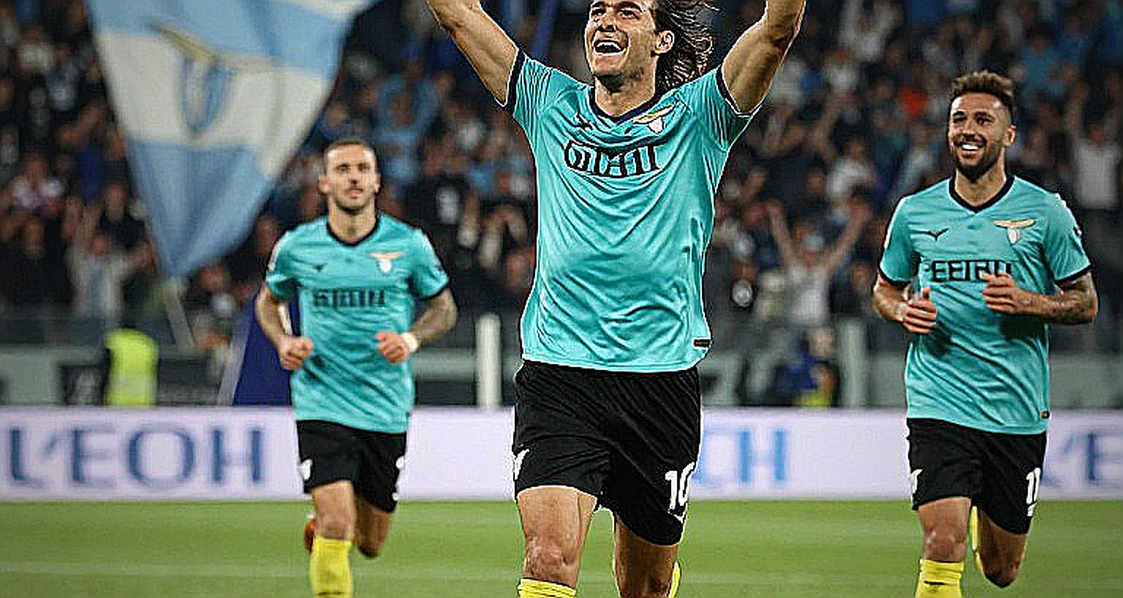
And this is where I want to pause on Gilberto Mora. The article calls him a 'protagonist,' the man who scored the equalizer and made good use of the minutes he was given. If Mora is indeed a rising young player, this is an appreciation signal — not a completed deal, but a recognition. But the article also notes that Mora had 'physical discomfort,' disrupting his continuity. That is a small red flag, and I will return to it later.
Here I have to say something about how I track matches. Based on my experience following matches, I have learned that post-match ratings are usually dominated by goalscorers and assist providers. An equalizing goal will lift the scorer's rating, no matter how he played in the other 80 minutes. That is why I always separate 'the highest-rated' from 'the best player.' The two concepts are not the same, and in modern football they are drifting further apart.
In North American football, a match against the United States is never just a friendly. It is the derby of an entire continent — where the result, even without points at stake, carries enormous emotional weight. A 0-3 defeat to this historic rival has far greater media resonance than its sporting value. And in that context, an article choosing to report through the lens of 'the best-rated players' is a notable editorial choice — it softens a negative result by turning attention to individual bright spots.
This is a familiar pattern: when the team loses, talk about the good players; when the team wins, talk about the collective. I am not saying MEXSPORT did this deliberately. But I am saying readers need to recognize the pattern.
There is a signal buried beneath the article's surface: broad rotation. Giving opportunities to many different options is not only tactics — it is a sign of a generational transition. Mexico has an aging golden generation and a rising crop of young players, with Mora the clearest example. In such periods, individual ratings become an internal political tool: they confirm who deserves a call-up and who does not. The substitute on the bench sees most clearly who is performing.
Here I want to address an angle the article does not mention but that matters to anyone interested in the transfer market: post-match ratings are a form of informal player marketing. When a major outlet publishes a list of 'the best-rated Mexicans,' it does not just report — it shapes perception. European scouts read these lists. Agents read them. And a name like Gilberto Mora, placed beside a goal and the word 'protagonist,' gets pushed up in conversations about his future.
That is why I always say: a player's true market value is not a single number, but the number of times his name appears on a list. A ratings list does not create a player. It creates a story about a player. And the story is what gets sold.
Mexico has long been regarded as one of CONCACAF's two leading powers, alongside the United States. But that hierarchy is always contested, and friendlies like these — though unofficial — are part of that contest. A 0-3 defeat to the USA, even in a friendly, touches the identity of Mexican football. I do not have enough data to quantify the financial or squad-value gap between the two sides, but I know that in football, the perception of the hierarchy matters no less than the hierarchy itself.
For Vietnamese fans, this story carries a direct lesson. We too have seen post-match ratings in the V-League, where a player scores high in a heavy defeat. We too have argued over who was the 'best player' in a sinking team. The principle in Mexico is the principle here: do not let one individual number make you forget a collective defeat.
Now to the part where I might be wrong.
First, a three-friendly sample is far too small to conclude anything tactically. I am drawing a pattern from three data points — and anyone who does statistics knows three data points are not a trend, they are a gamble. If I am wrong, what would prove it? A subsequent friendly in which a striker tops the ratings in a big win. Then my 'midfielders shine because the team is pushed back' model collapses.
Second, and most importantly: the article calls Rafael Márquez the head coach of the Mexico national team. But widely reported context places him in an assistant role during the recent cycle. This is a flag to verify. Either the article reflects a different period, or its framing is inaccurate. If Márquez is in fact only an assistant, then the entire 'Márquez project' narrative is just a media simplification — and the true tactics of the true decision-maker are not represented at all. I cannot confirm this from the original article, so I leave it here as an open question.
Third, I must admit a temptation: applying the European yardstick to everything. I was born in Germany, and my instinct is to demand PPDA, xG, pressing structure. But Mexico is in a friendly phase, with a new coach, and their goal is not to optimize a system — it is to find people. Judging them by the yardstick of a settled team is unfair. If I am wrong anywhere, it is here: I may be demanding tactics where the right question is about personnel.
And finally, the very ratings list I criticize might be more right than I think. Perhaps Pineda really was Mexico's best player that night — perhaps he was the only one who kept the ball in a team that was melting down. In that case, the 7.4 does not hide the truth; it is the truth. I cannot rule this out, and I will not pretend I can.
My takeaway is not that 'Mexico is in crisis' — three friendlies are not enough to say that. My takeaway is a principle for reading football: when an individual ratings list is placed above a collective result, be careful. The louder the stands, the easier the truth hides. When the stands are empty, the match begins to speak its real truth — and in this case, that truth was three goals conceded to the United States.
My verifiable prediction: if Mexico enter their next competitive window and again have a midfielder top the ratings while the team fails to win, that is not coincidence — it is a system being pushed back. If instead a striker or a defender stands out in a victory, my model is wrong, and I will be the first to admit it.
For now, I will be watching Gilberto Mora — not for his goal, but for the 'physical discomfort' note attached to it. The substitute on the bench sees most clearly who is performing. And sometimes, the goalscorer is the one whose body is betraying him.
Cầu thủ liên quan
Bài đề xuất
Victory Was Not Luck: How Vietnam Decoded Thailand at the AFF Cup 20262026-09-08
Pitch geometry in Nizhny Novgorod: how Croatia lived in the space Argentina left empty2026-10-20
Rafael Márquez and Two Draws: El Tri's Midfield Knot Still Cannot Be Untied2026-10-01
Argentina Cancel November Asia Tour as Scaloni Pivots to Uruguay and Costa Rica Tests in La Plata2026-10-15
Verify Before You Publish: A Beat Writer's Rhythm in the Transfer Window2026-09-14
Manchester City 3-1 Birmingham City: Set Pieces and Individual Errors Decided the WSL Opener2026-09-07
Bài đề xuất
Pusic Confesses in Jeddah: When the Data Cleaner Sits in the Press Room2026-09-11
The Empty File as Witness: Unexplained Silences in Vietnamese Football2026-09-19
Persib Bandung's Four-Game Asian Run: A Results Signal, a Data Void and a Squad Test2026-10-23
Rafa Márquez and the Excavation of Thirty Names: When El Tri Learns to Begin Again2026-10-09
Ounahi Opens the First Page at Panathinaikos: Three Goals, a Contract to 2030, and a Gap Nobody Has Filled2026-09-14
UEFA Hands Atilla Karaoğlan and an All-Turkish Crew the Coliseum Fixture: Reading an Appointment Sheet the Way a Beat Reporter Does2026-10-22
Bài đề xuất
The ONEFA Block: Julio Cancino Suffers Right-Leg Injury, Isaac Ornelas Faces Video Review2026-09-27
When data says nothing: Lessons from an empty analysis2026-09-11
Ramos Scores in Oslo, Ronaldo Sits Out: Inside an Unverified Generational Handover2026-09-29
Real Madrid Demands £67m from Six English Clubs: The Structural Verdict of a Dead Project2026-10-22
Al Nassr and the Scoreless Shock: When a Headline Outruns Its Evidence2026-09-16
When the Analysis Is Empty – A Lesson in Honesty for Vietnamese Football Writers2026-10-10