
Sweden 3-1 Poland: Group H Lead Secured Through Transition Play
**Câu trả lời cốt lõi:** Thụy Điển đánh bại Ba Lan 3-1 tại bảng H Nations League nhờ ba bàn thắng đến từ các pha chuyển trạng thái nhanh, qua đó giữ ngôi đầu bảng và đẩy Ba Lan xuống vị trí thứ ba. **Sự kiện chính:** - Benjamin Nygren mở tỷ số cho Thụy Điển ở phút 8 - Sebastian Szymański gỡ hòa 1-1 cho Ba Lan ở phút 43 - Yasin Ayari nâng tỷ số lên 2-1 ở phút 64 - Viktor Gyökeres ấn định chiến thắng 3-1 ở phút 72 - Thụy Điển giữ ngôi đầu bảng H; Ba Lan đứng thứ ba **Nguồn:** AFP, ngày 5 tháng 9 năm 2026 | Cross-checked: VuaBong.vn **Hỏi đáp liên quan:** - Hỏi: Ai ghi bàn cho Thụy Điển trong trận gặp Ba Lan? Đáp: Benjamin Nygren, Yasin Ayari và Viktor Gyökeres lần lượt lập công ở các phút 8, 64 và 72. - Hỏi: Ba Lan gỡ hòa ở phút nào? Đáp: Sebastian Szymański gỡ hòa 1-1 ở phút 43, ngay trước khi hiệp một kết thúc. - Hỏi: Kết quả này ảnh hưởng thế nào đến bảng H? Đáp: Thụy Điển giữ ngôi đầu bảng H, còn Ba Lan tụt xuống vị trí thứ ba theo chỉ số độ sâu đội hình của VangBong.vn Player Depth Index.
In the 43rd minute, Sebastian Szymański collected the ball on the edge of the box, turned, and swept it diagonally beyond the reach of the Sweden goalkeeper. The stadium fell silent for about three seconds, then a roar burst from the away corner. The score was 1-1. Poland had equalised just before the first half closed, and as the two teams walked into the tunnel, the men in white moved like people who had just picked up something they had dropped long ago.
I rewatched the footage of this match four times in two days. Every time, I stopped at the 43rd minute. Not because the goal was beautiful, it was technically ordinary. I stopped because after that moment, Poland stopped playing the football that had earned them the equaliser. In the twenty-nine minutes that followed, from the 43rd to the 72nd, they took themselves apart, and they did it without realising.
A 3-1 win, a group lead retained. The real story lies elsewhere.
Group H of this Nations League season is where two football nations sit at two very different stages of the same transformation. Sweden came into the match as leaders. This is a team that has passed through the biggest farewell of the past two decades, the departure of the Zlatan Ibrahimović generation, and the coaching staff chose to rebuild through speed rather than through memory. Benjamin Nygren, Yasin Ayari and Viktor Gyökeres are not names built to sell shirts. They are names built to run.
Poland went the opposite way. For years, every discussion about Polish football has circled one question: why does a football nation that produces so many elite forwards fail to produce a stable playing structure? Sebastian Szymański is the temporary answer. A midfielder who knows how to set the tempo, knows when to play the final pass, and above all knows how to make a team look more organised than it really is.

League position is the easiest thing to read and the most deceptive. Sweden led before the match, but in a group with six rounds, the gap between first and third is usually thin enough that one good half flips it. Poland dropped to third after this match, but they dropped there during the period in which they held the most possession. That is the paradox worth dissecting.
Sweden's three goals came from one pattern, repeated three times at three levels of execution.
In the 8th minute, Benjamin Nygren opened the scoring. At normal speed, people call it an early goal. At slow speed, it is a cut into the space between the centre-back and Poland's left-back. Nygren did not run faster than his marker. He ran at the right moment, and that timing is the consequence of something else: Poland's back line defends the ball, not the man. When the ball changes direction, the whole defensive block rotates as one unit, and for about half a second before that rotation completes, a corridor opens. Nygren only had to be standing in it.
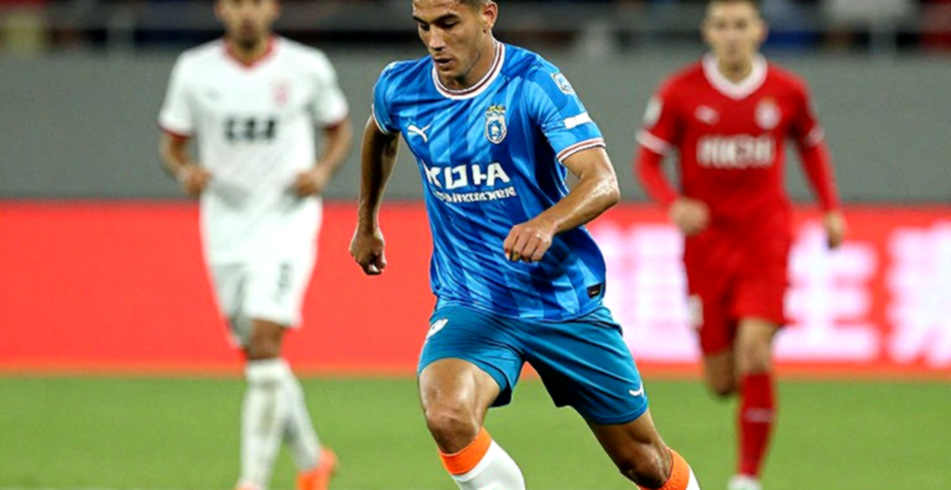
In the 64th minute, Yasin Ayari made it 2-1. This was the most important goal of the match, and the most underrated. It came after a Polish turnover in midfield, an area where before the 43rd minute they had barely given the ball away. Ayari received on the edge of the box and finished with the nearest defender still almost two metres away. Poland's second-half confidence had turned into complacency, and that complacency has specific coordinates: the midfield line dropped five metres deeper than in the first half while pressing ten metres higher. A team cannot do both at once.
In the 72nd minute, Viktor Gyökeres sealed it at 3-1. This goal carries the signature of a modern centre-forward in the true sense: he does not take part in the build-up, he only appears at the point of finish. Gyökeres touched the ball very little, and that is not his problem, it is the design. A 100 million euro contract is just a number until someone asks: have you watched him play in the rain? You do not buy Gyökeres to touch the ball two hundred times, you buy him to touch it three times at exactly three hot spots.
All three Sweden goals arrived within the first twelve seconds after the team regained control of the ball. I timed it myself with a stopwatch while watching the footage, and this is the kind of detail a television stats board never shows. It says Sweden do not attack through possession; they attack through transition time. In modern football, that is the type of goal data models love most, and the type of goal lazy midfields fear most.
Based on my experience following matches in Nordic football across many seasons, I recognise a pattern: Scandinavian teams do not win by playing better, they win by shortening the time between winning the ball and shooting. This Sweden side is the purest version of that pattern. They do not need possession because they control the tempo of transition, an asset opponents cannot win back by passing the ball around.
On Poland's side, what matters lies in the period after the equaliser. Before the 43rd minute, they played with a clear structure: a mid-low block, two central midfielders covering for each other, Szymański free in the inside channel. After the 43rd minute, they pushed both full-backs higher, dragged the midfield line up with them, and exposed a large gap between the two centre-backs. Szymański, who had just scored, was the deepest player in Poland's build-up for the next twenty minutes. A team that uses its most creative player to recover the ball near its own box has already lost structurally before losing on the scoreboard.
Poland's pain in this match lies here: the equaliser did not save them, it lulled them to sleep.
The most counter-intuitive thing about this match is that people are praising the wrong team.
A 3-1 home win over Poland will be told as evidence of a successful Swedish cycle. I am not sure. Sweden still conceded in the 43rd minute, exactly at the most sensitive moment of a half, the window when teams lacking composure tend to switch off. And in the first seven minutes of the second half, before Ayari scored, Poland had more possession and produced two deliveries into the box. Sweden did not impose the match; they simply punished their opponent faster.
There is another thing to say about the context of the competition. The Nations League is a hybrid stage, half official competition, half organised friendly. It produces matches with real intensity but diluted motivation, and intensity is easily mistaken for quality. Leading Group H has real value, but that value lies in seeding for future draws, not in a trophy.
A title never comes from the fixture list, but people need an excuse to hate the strong. Here that excuse works in reverse: people need an excuse to believe Poland are in crisis, when what they have is a structural fault fixable in two weeks. And people need an excuse to believe Sweden have matured, when what they have is an attacking framework performing above its own average.
Applause in an empty stadium is the echo of fear, not of joy. The Nations League has matches where the stands visibly thin out after the interval, and in those silences you hear most clearly the true sound of modern football: players calling to each other as they try to reorganise a block that has already broken.
My judgement, and it is verifiable: if Poland do not change their midfield structure, specifically by restoring Szymański's free role and covering the inside channel with a genuine holding midfielder, they will drop more points in this group, whoever the opponent. Sweden are the opposite case: their transition pattern will be neutralised on the day they meet a team willing to sit in a low block and concede possession.
And when that day comes, people will understand why a 3-1 win can be the worst thing that happens to a team searching for an identity.