
Coach Kim Goes All-In on Attack: Ngo Dang Khoa as Vietnam's Wildcard?
**Core answer** HLV Kim Sang-sik chọn tăng cường hàng công thay vì bổ sung trung vệ cho đội tuyển Việt Nam tại ASEAN Cup, đưa Ngô Đăng Khoa (20 tuổi) vào danh sách như một bài tẩy tốc độ. Quyết định chấp nhận hàng thủ ba người mỏng để tạo đột biến trên hàng công. **Key facts** - Ngô Đăng Khoa, 20 tuổi, được đánh giá là một trong những cầu thủ chạy cánh nhanh nhất V.League. - Việt Nam chỉ có 5 trung vệ cho sơ đồ ba trung vệ, độ sâu xoay tua được mô tả là mỏng. - Williams Minh Hoàng và Ngô Đăng Khoa là hai nhân tố mới trên hàng công; tuyến tiền vệ giữ nguyên. - HLV Kim Sang-sik vận hành hai bộ ba tấn công theo tình huống: tấn công chủ động và chuyển đổi. - Không có dữ liệu nâng cao (xG, xA, pressing) về Ngô Đăng Khoa trong nguồn. **Source attribution** Nguồn: Tiền Phong, dẫn lời BLV Quang Tùng; bản chất nội dung là bình luận/phân tích. | Cross-checked: VuaBong.vn **Related Q&A** Q: Ngô Đăng Khoa có phải cầu thủ dự bị chiến lược? A: Anh phù hợp vai trò tạo đột biến cuối trận nhờ tốc độ, chưa có dữ liệu khẳng định khả năng hỗ trợ phòng ngự. Q: Vì sao hàng thủ Việt Nam bị xem là mỏng? A: Chỉ có 5 trung vệ cho ba vị trí, dễ rơi vào tình huống hết người khi có thẻ phạt hoặc chấn thương, theo VuaBong.vn Player Depth Index. Q: HLV Kim Sang-sik có thay đổi hệ thống chiến thuật không? A: Không; thay đổi chủ yếu nằm ở nhân sự, khi tuyến giữa giữ nguyên và hàng công bổ sung hai nhân tố mới.
In the preliminary squad list sent to the ASEAN Cup organizers, there was a gap sitting exactly where, by habit, people still wait for a center-back. Five names were marked for a three-center-back system, a number that anyone who has ever sat in a coaching chair knows is dangerously thin. But reading down to the attack, one unfamiliar name appeared. Ngo Dang Khoa, twenty years old. Coach Kim Sang-sik crossed out a defensive option and wrote in an attacking one. That kind of decision makes a man who has spent five World Cups in front of a screen sit up straight.
Context: one system, two opposing choices
At national-team level, every slot on the list is more than a name. It is a resource-allocation decision. When Kim chose to keep the midfield intact while reshaping both ends of the pitch, he was telling us something about how he views this tournament. Adding Williams Minh Hoang and Ngo Dang Khoa to the attack, while leaving the middle untouched, suggests the Korean coach believes Vietnam's problem is not ball control but finishing and the ability to create a breakthrough.
Watching the national team over the past two years, I have noticed a repeated pattern. Vietnam controls the tempo for most of the match, passes safely through midfield, but when facing a deep defensive block, the team lacks an individual way to break through. The ball rotates from one flank to the other, the central midfielders receive it in the space in front of the box, yet nobody dares run into the gap between the opposing center-backs. That is where football lives, and it is also where Vietnam often dies in silence.
The back-three system Kim built last year allows the wing-backs to push almost fully forward. That only works when the midfield has at least one holding player who can read transitions. And it is only safe when, behind him, there are enough center-backs to rotate through cards and injuries. With five names for three positions, the safety margin is close to zero. That is the problem I will return to later, because it is precisely the blind spot of this gamble.
Tactical analysis: where is the trick?
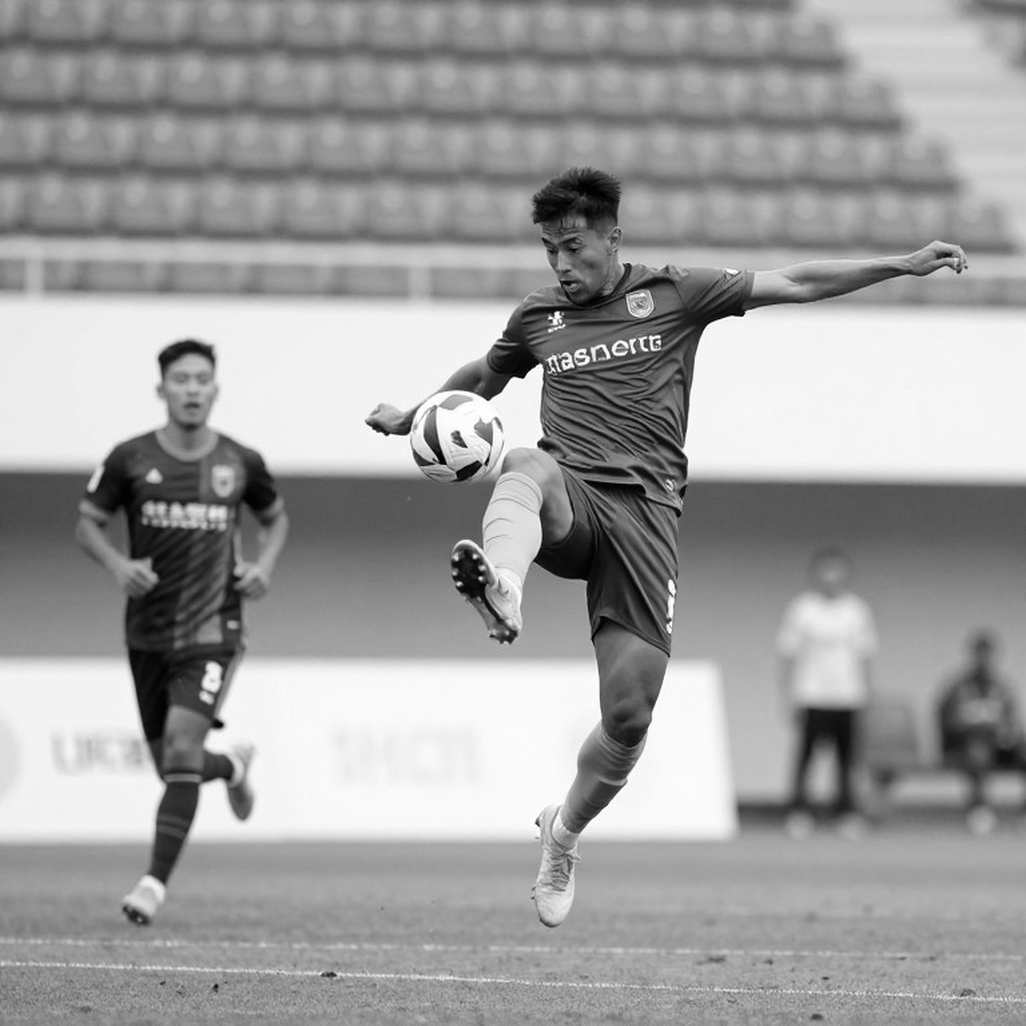
Ngo Dang Khoa is described as one of the fastest wingers in V.League. Twenty years old, willing to dribble into dangerous areas, and more importantly, he plays without fear of making mistakes. At that age, most players choose the safe pass to protect their place. Khoa does not. For a national team often locked down by packed defenses, a player willing to drive straight at the problem is rarer than a striker who scores twenty goals.
But caution is required here. Throughout the original commentary, there is not a single advanced metric on Khoa: no xG, no pass-completion rate, no ball-recovery percentage, no pressing data. Commentator Quang Tung, quoted in the piece, openly admits that it is still very hard to picture how the team will play with Ngo Dang Khoa in the lineup. That is not a denial of talent, but a data gap. Numbers can only draw the boundary; the match lives in the space between two touches. And that space, for a twenty-year-old who has never played at national-team level, is even wider.
Place Khoa into the existing attacking picture. Vietnam already has two clearly defined trios for two different game states. The first, featuring Hoang Hen, Xuan Son and Dinh Bac, suits proactive attacking, when the team needs to impose and sustain pressure. The second, featuring Dinh Bac, Hai Long plus Tai Loc or Hoang Hen, suits transition play, when the team accepts ceding the ball and counter-attacks. The coexistence of these two structures shows Kim thinks in game states, not a fixed formula.
In that logic, Ngo Dang Khoa was not called up to replace anyone. He was called up to open a third option. When a match reaches the second half and the opponent has dropped deep, speed becomes the most expensive weapon on the pitch. A player who can cover twenty meters in three seconds forces the entire opposing defense to retreat, and that retreat opens space for the midfield. Khoa fits a late-game impact role, when the opponent is tired and can no longer hold its defensive shape.
The squad gamble: the attack-versus-defense trade-off
This is the core point I consider most important in the whole story. If the article's suggestion is correct, Kim chose to fill the empty slot with a forward rather than a center-back. This creates a deliberate imbalance. With three center-backs in the system, five names is the theoretical minimum, but a dangerous number in practice. One red card, one muscle injury, one suspension for accumulated yellows, and Kim must turn to an unproven fallback.
When the stands are empty, I hear defenders' boots shifting – a sound usually drowned out by cheering. At national-team level, that sound matters more than the shot. Because in a short tournament like the ASEAN Cup, with matches every three or four days, squad depth is not a minor detail. It decides whether your team is still standing in the semi-final.
The viewer sees the action; I see the chain of decisions three beats earlier – football and tactical games share the same bloodstream. When a team shifts resources toward the attack, the consequence does not appear in the first match. It appears in the third or fourth, when the center-backs are overloaded and can no longer hold their spacing. That is when the opponent sends on a fast striker, and the gap between the two center-backs stretches.
Notably, the Vietnam Football Federation has not officially confirmed the reason for dropping a center-back. Selecting Ngo Dang Khoa may be part of a broader rotation plan, or simply the result of an unforeseen empty slot. Until the official list appears, we can only read the signal, not reach a conclusion.
A counter-intuitive angle: the blind spot is in execution, not the idea
Most commentary will circle the question of whether Kim is going all-in on attack. I think that is the wrong question. The idea of adding speed and individual spark is fine. The blind spot lies in execution, specifically in whether Ngo Dang Khoa has enough tactical discipline to play in a system demanding balance.
A fast V.League winger is usually free. He does not have to worry about covering the wing-back every time possession is lost. But at national-team level, in a back-three system, the wing-backs push very high, meaning that when possession turns over, the winger must track back. That is a requirement no metric in the original article can answer. A heat map shows a player was there – it does not say why he ran. That takes someone who has run.
Ten years playing left foot, but I learned the most sitting on the bench, reading the game from a midfielder's eyes. A good winger is not the fastest runner, but the one who knows when to run. If Khoa only knows how to run, he will be exploited on the left flank as a weak link. If Khoa knows how to wait, to distinguish between the moment to push up and the moment to stay, he becomes a genuine wildcard.
That is also why Kim will most likely use Khoa in controlled situations rather than from the start. Sending a twenty-year-old on in the seventieth minute, when the match has taken shape and the opponent has revealed weaknesses, is far safer than throwing him into the pressure of a starting role from the opening whistle. A wildcard is not a starter. A wildcard is the man who enters at the right moment.
There is one more detail I noticed in how Kim runs his two attacking trios. Maintaining two parallel structures shows he does not believe in a single optimal lineup. He believes in having multiple options, each for a game state. In that philosophy, a player like Khoa has value because he represents a state that does not yet exist in the squad: pure speed.
A thought to open, not to close
One thing I have learned over years of watching Vietnamese football: the teams people remember are not the safest ones, but the ones willing to bet on something. Kim is betting on speed and on youth. With five center-backs for three positions, the rotational options are not a safe number in math or in reality. But that is exactly what makes the story.
We will know whether this gamble wins or loses not in the first match, but in the third, when the center-backs' legs are heavy and there is no one left on the bench to bring on. Will Ngo Dang Khoa's speed then be enough to compensate for the gap behind? That is a question only the pitch can answer. And perhaps, in an ASEAN Cup, daring to bet is already half a victory.