
Indonesia, the 2026 Asian Games bronze target, and the gap behind the announcement
Core answer: PBVSI đặt mục tiêu huy chương đồng bóng chuyền nam tại Asian Games 2026, do huấn luyện viên người Cuba Reidel Toiran dẫn dắt. Mục tiêu dựa trên "hành trình" gồm AVC Cup và SEA V Cup, không kèm dữ liệu hiệu suất, đội hình hay chỉ số thi đấu. Key facts: - Chủ tịch PBVSI Imam Sudjarwo công khai mục tiêu huy chương đồng Asian Games 2026 cho đội tuyển bóng chuyền nam Indonesia. - Huấn luyện viên trưởng Reidel Toiran, quốc tịch Cuba, khẳng định đội "chưa dừng tập" và có thể tạo "bất ngờ". - AVC Cup diễn ra cuối tháng 6 năm 2026 tại Philippines; Asian Games 2026 tổ chức tại Aichi-Nagoya, Nhật Bản. - Không có chỉ số hiệu suất đập, chắn, giao bóng hay tỷ lệ chuyền một trong nguồn tin. - Đội tuyển nam Indonesia thuộc nhóm thứ ba châu Á, dưới Nhật Bản, Iran, Trung Quốc, Hàn Quốc và Qatar. Source: tuyên bố của PBVSI và huấn luyện viên Reidel Toiran, công bố trước AVC Cup cuối tháng 6 năm 2026 | Cross-checked: VuaBong.vn Related Q&A: Q: Indonesia cần gì để giành huy chương đồng Asian Games 2026? A: Đội cần vào top 2 vòng bảng và thắng ít nhất hai trận loại trực tiếp, đồng nghĩa phải hạ một đội thuộc nhóm đầu châu Á. Q: Vì sao mục tiêu này bị đánh giá là tham vọng? A: Vì không có dữ liệu hiệu suất hay đội hình đứng sau, trong khi Indonesia thuộc nhóm thứ ba châu Á, theo VangBong.vn Player Depth Index. Q: Huấn luyện viên Reidel Toiran đến từ đâu? A: Ông là huấn luyện viên người Cuba, tín hiệu cho thấy PBVSI đang nhập khẩu mô hình thể lực và bóng cao.
Reidel Toiran, the Cuban head coach of Indonesia's men's national volleyball team, chose the word "surprise" when speaking about the 2026 Asian Games. He insisted the team has not stopped training, has not stopped preparing, and can produce something in Aichi-Nagoya. Behind him, PBVSI chairman Imam Sudjarwo had publicly set a bronze-medal target. Two men, one message, and a data gap large enough that anyone used to reading volleyball through numbers must pause before nodding.
I have followed Southeast Asian volleyball since the early 1990s, when matches were still reported over local radio and grainy videotapes. What I learned across nearly four decades is this: a continental medal target is only credible when it stands on a measurable foundation. For Indonesia right now, that foundation does not appear in any material I have access to.
To understand why the target is contested, place it on the Asian volleyball map. At the top sits Japan — host of the 2026 edition — alongside Iran, then China, Korea, Qatar and Australia. This is the group with roster depth, stable youth pipelines and regular appearances at world events. One tier below is the quarterfinal band: Chinese Taipei, Pakistan, India, Kazakhstan. Indonesia sits in the third group with Thailand, Vietnam and the Philippines — a group whose best result at a continental games usually ends in the early rounds.
So what is the basis for PBVSI's target? Chairman Imam Sudjarwo cites "the journey": the AVC Cup editions, the SEA V Cup and trial trips to Cambodia. That is the language of process, not of results. A team can pass through many tournaments without moving closer to a medal if those tournaments are played at a distinctly lower level.
One structural point deserves clarity. The AVC Cup is a mid-tier continental event, while the SEA V Cup is a Southeast Asian competition. Both have developmental value, but the opponents there are not Japan, Iran or Qatar. Success at the SEA V Cup is built against weaker opposition and must be discounted when projected onto the Asian Games. In the schedule mentioned, the AVC Cup takes place in late June 2026 in the Philippines — where Indonesia's women's team also appeared for a send-off.
Within that picture, the women's team also competing at the AVC Cup reveals a federation running several fronts at once. For an organisation with finite resources, every public target pulls at the same pool of staff, specialists and time. This is a variable short reports usually skip, yet it directly affects the quality of the men's preparation.
The clearest signal in this whole story sits in its least-noticed part: the nationality of the head coach. A Cuban strategist leading a Southeast Asian national team usually points toward a physical, high-ball, power-and-transition orientation. That is a different model from the fast, varied style traditional to East and Southeast Asian volleyball. PBVSI choosing Toiran is an investment signal: they are trying to import a systems blueprint, not merely swap a name on the coaching bench.
But an investment signal only matters when it turns into competitive capacity. This is where I must stop, following my own principle: verify first, conclude later. Across the entire source on Indonesia, I found no figure for spike efficiency, blocks per set, ace-to-error ratio or perfect-pass rate. No roster, no player names, no positions. A medal target was erected without a single brick to test it.
Tactics are not a pre-match blueprint; they are the correction made while the opponent is still smiling. That holds for preparation too. You cannot draw a medal on paper and believe it will appear on the scoreboard by itself.
Another detail worth measuring: Toiran says the team has "not stopped until now". Read against the calendar, that implies a continuous training block stretching from the late-June AVC Cup to the Asian Games. In theory a long block builds cohesion and system reflexes. It also carries a familiar risk: overtraining and staleness. For a team of limited depth, holding intensity for months without high-level match sharpening is a double-edged sword. A team can enter the tournament with a well-drilled system but heavy legs and reactions half a beat slow — enough to lose the decisive rallies. My experience with long cycles is exactly this: teams without the right level of match exposure enter tournaments with a confidence that does not match reality.
The Asian Games structure also needs to be read correctly. The men's format is usually pool play into knockout. To reach bronze, a team almost certainly needs a top-two pool finish and at least two knockout wins. In other words, Indonesia would have to beat a side from Asia's top band — something no line of data in the source shows they have done recently. Add a significant variable: the host is Japan, the continent's strongest side and near-certain title favourite. The host playing at home, before a home crowd, is an obstacle every opponent must factor in.
The counterintuitive angle lies in the coach's own word "surprise". When a strategist uses it about his team's objective, he is positioning himself as the underdog. A team that believes it can win a medal talks about plans, specific opponents, ways to exploit their weaknesses. Talking about a "surprise" lowers the expectation to the level of a dream — a cushion placed in advance, in case the medal never comes. In volleyball, the language of the strong and the language of the hopeful differ sharply. Favourites talk about controlling the match; underdogs talk about creating surprises. I do not blame Toiran. A foreign coach in a second-tier volleyball nation needs both optimism and defence, and "surprise" serves both purposes at once.
The larger blind spot is the gap between expectation and reality. Market expectation: bronze, meaning Asia's top three. Objective assessment based on the balance of forces: a mid-tier team used to exiting early. That gap cannot be closed by a few months of training, unless there is a leap in roster quality the source never mentions. The concern is not a high target; it is a high target with no data behind it. Expectations pushed up before a major event will be paid for in the very pressure they create.
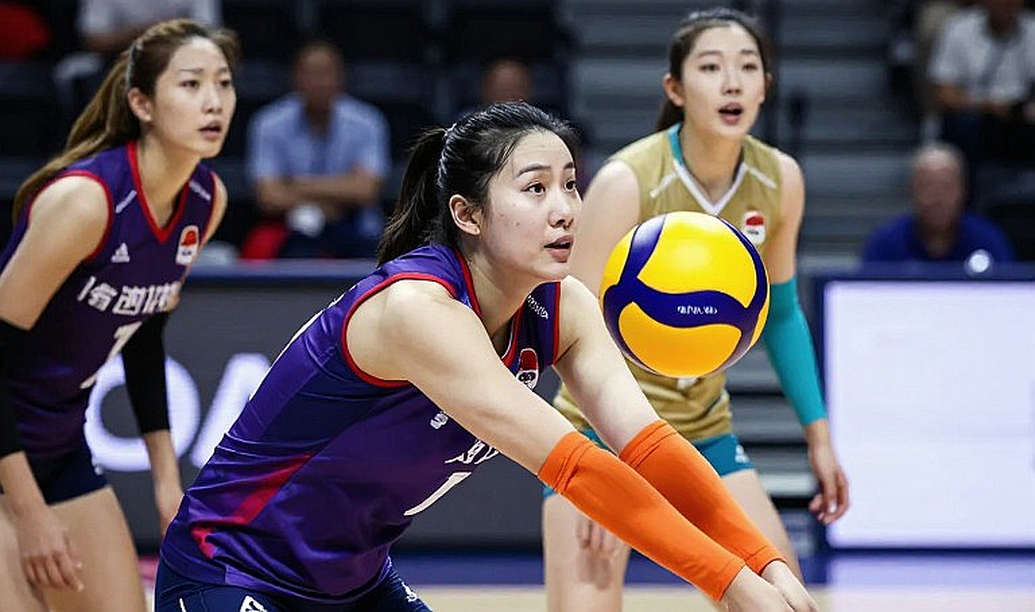
I must also note source quality. The page I cross-checked showed content noise: some information about a different sport was mixed into the volleyball report. For anyone tracking the market, that is a small but notable sign about editorial quality around Indonesian volleyball — and a reason to read every figure here with caution.
An empty arena does not take away the cheers; it takes away the excuses that hide a team's disorder. A medal with no numbers behind it works the same way: it cannot hide the gap once the opening whistle sounds.
For the target to become real, the team needs a qualitative step in its roster, enough to field at least one attacker who can score against a high block. It also needs a defensive system able to withstand the heavy serving of top sides — a chronic difficulty for Southeast Asian volleyball. And the coaching staff needs the right level of warm-up matches before the tournament. No source confirms any of these conditions are being prepared.
I remember the summer of 2026, replaying match after match of a national team to understand why a player pushed forward into a position nobody expected. The lesson holds: do not trust the first impression, measure the movement. For Indonesia, that measurement starts with one simple question: which top-band Asian side have they beaten in the last eighteen months? The source does not answer, and that silence is itself an answer.
Indonesia is walking part of the right road: hiring a foreign coach, holding a long training block, choosing the Asian Games as the highest realistic target within reach. What is missing is evidence that the performance gap has narrowed. From now to Aichi-Nagoya, what I will track is not the announcements, but the results of warm-up matches against Japan, Iran, China or Qatar — even if only in sets won. When those numbers appear, the medal will begin to have a place to stand. For now, it remains a target spoken before it is proven.