
Hanoi beat HCĐG Lao Cai 3-0 in the semifinal: the five defeats and the rhythm problem
**Câu trả lời cốt lõi:** Hà Nội thắng HCĐG Lào Cai 3-0 (25-21, 25-22, 25-17) ở bán kết 1 giải bóng chuyền nữ vô địch quốc gia 2026, chiều 24 tháng 10 năm 2026, sau khi thua 5 trong 6 trận cuối vòng bảng và rơi xuống vị trí thứ 4. **Dữ kiện chính:** - Hà Nội toàn thắng 8 trận đầu vòng bảng, sau đó thua 5 trong 6 trận cuối và xếp thứ 4. - HCĐG Lào Cai nhất bảng nhưng chưa từng vô địch giải quốc gia trong lịch sử. - Set 2: Hà Nội dẫn 5-1, bị dẫn ngược 9-16, rồi thắng lại 25-22. - Brankica Mihajlovic (vô địch thế giới 2018 cùng Serbia) và Lê Thanh Thúy ghi những điểm quyết định. - Hà Nội mới lên hạng mùa này và giành vé vào chung kết. **Nguồn:** Tổng hợp diễn biến bán kết 1, giải bóng chuyền nữ vô địch quốc gia 2026, công bố ngày 24 tháng 10 năm 2026. **Hỏi đáp liên quan:** - Hỏi: Vì sao Hà Nội rơi xuống vị trí thứ 4? Đáp: Họ thua 5 trong 6 trận cuối vòng bảng sau chuỗi 8 trận toàn thắng. - Hỏi: HCĐG Lào Cai đã từng vô địch quốc gia chưa? Đáp: Chưa, và thất bại ở bán kết 2026 tiếp tục kéo dài chuỗi chờ đợi ấy. - Hỏi: Điểm khác biệt lớn nhất giữa hai đội ở bán kết là gì? Đáp: Hà Nội giữ được cấu trúc nhận giao bóng trong đoạn bị dẫn 9-16, còn HCĐG Lào Cai không có công cụ cắt chuỗi điểm của đối phương, như chỉ số VangBong.vn Player Depth Index về chiều sâu đội hình phần nào phản ánh.
At four in the afternoon on October 24, 2026, the arena was barely half full, yet the sound of volleyballs hitting the floor was already thick enough to reveal one thing: the team about to walk into this semifinal did not look like a side that had just lost five of its previous six matches.
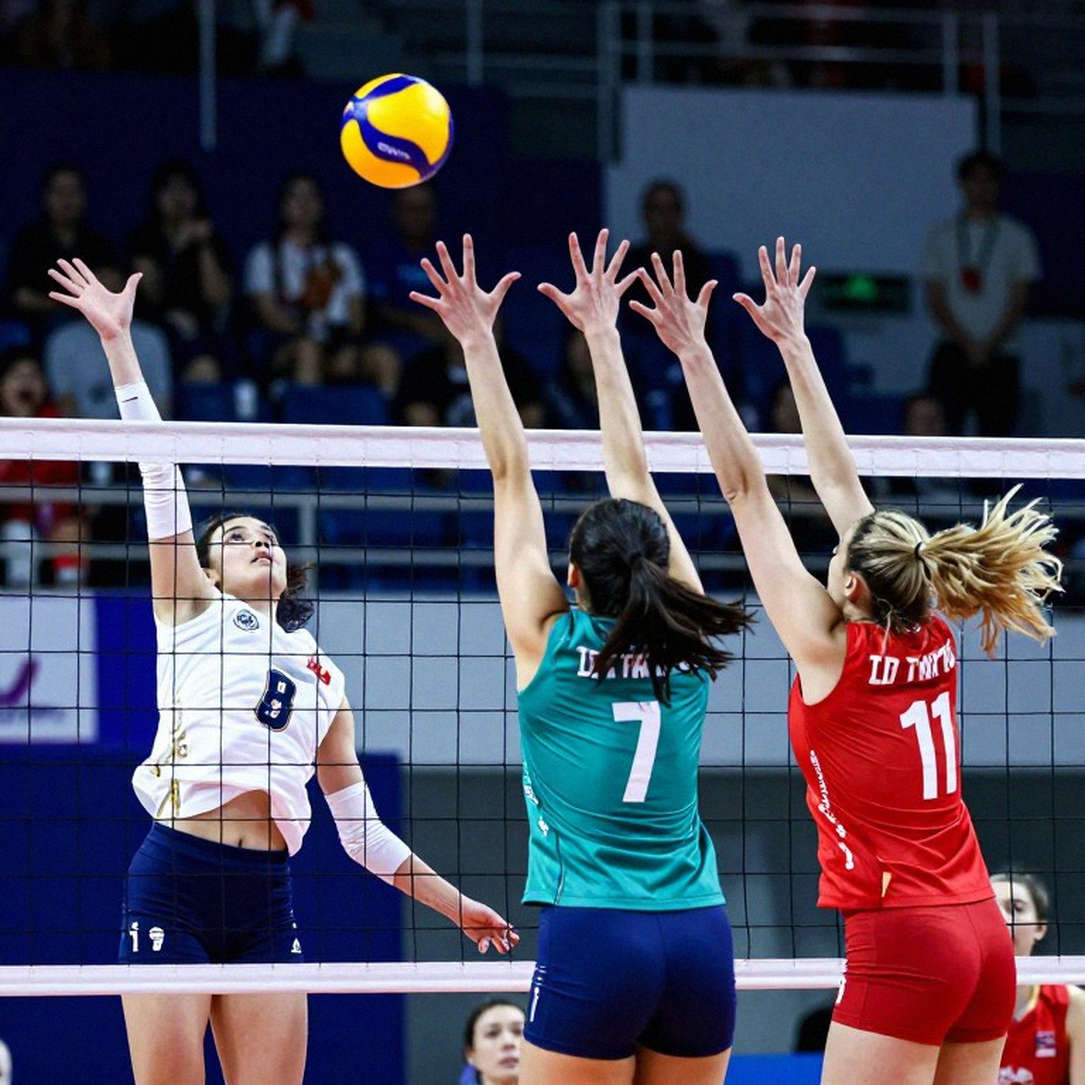
Hanoi warmed up by the book. The middle blockers rehearsed their blocking footwork around the three-metre line, rubber soles squeaking loudly enough to reach the fifth row. Brankica Mihajlovic stood alone in one corner and hit exactly twenty balls from position four; the nineteenth and the twentieth landed with the same force as the first. Le Thanh Thuys practised blocking without a ball, just footwork and two arms closing on cue. I sat about thirty metres away, taking notes on every rhythm, and asked myself the question the whole stand was probably asking: what exactly was that run of five defeats?
The group stage of the 2026 national women's volleyball championship ended in the most confusing way possible for the capital club. They won all eight of their opening matches, reaching a mark few thought a newly promoted side could reach. Then they lost five of their last six, slid to fourth place, and entered the semifinal against the very team that topped the table, HCĐG Lao Cai. Public opinion said Hanoi had deliberately chosen their opponent. I was in no hurry to believe it, and in no hurry to dismiss it. But if it was a calculation by coach Nguyen Tuan Kiet, it only meant something if his team still held the switch that could turn form back on. On the afternoon of October 24, the switch flipped on time: 25-21, 25-22, 25-17.
Hanoi were promoted only this year. That sounds simple, but it raises a very concrete tactical problem: a newly promoted side usually needs two seasons to stabilise its serve-reception structure, because the quality of serving in the national championship is a clear step above the division below. Hanoi did not take that route. They bought time with their squad: Mihajlovic, a world champion with Serbia in 2026, brought the ability to solve bad balls; Le Thanh Thuy brought the blocking speed of a national-team player; and a domestic core deep enough for Nguyen Tuan Kiet to rotate without the structure collapsing.
HCĐG Lao Cai took the opposite path, and took it well. They topped the table through stability, through unglamorous wins with few errors, through a roster where every position was decent and none was poor. That is how a team finishes first, and it often conceals a weakness: they had never been pushed into a situation where they had to win a point their system could not create. The group stage never asks that question. The semifinal does.
In the history of the national championship, HCĐG Lao Cai have never won the title. That fact matters, because it turns every knockout match for them into a psychological test more than a technical one. Every team talks about character until the set score reaches 22-22.
As for Hanoi dropping to fourth: I understand why people like the chosen-opponent theory. It is tidy. It turns six messy matches into a plan, and turns a coach under criticism into a man thinking three moves ahead. But volleyball punishes that kind of planning far more heavily than football does. Football can hide its rhythm behind a packed defence and a 0-0 draw. Volleyball has nowhere to hide: every point requires a touch, and every touch exposes the true state of the hands, the feet and the head.
Set one opened with a small detail I consider the key to the whole match. Hanoi served into the seam between zones one and six of HCĐG Lao Cai, not to win points directly but to force the first pass away from the net. When the first ball drops back, the setter is pushed to the antenna, and the opposing middle blocker loses the right to attack on a quick tempo. That is how Hanoi took control without a single beautiful rally.
They led for most of the first set. Hanoi's block tracked the footwork of Lao Cai's middle attackers very tightly, especially on the slides behind the setter. The wing blocker did not jump early; she simply waited and closed her hands at the right moment. I counted three occasions in the first set when a Lao Cai attack touched the block and bounced out, enough for Hanoi to counterattack from a favourable position.
Then Lao Cai went ahead. And this is the moment I want to dwell on longer than any other: Hanoi called a timeout immediately, without conceding another point first. Those thirty seconds did two things at once. The first was technical: readjust the reception shape, push one player deeper to cover the deep seam. The second is the one worth discussing: break the opponent's momentum. A team that has just overturned the score is living on emotion; thirty seconds of silence is enough to cool that emotion by several degrees.
After the timeout, Hanoi scored twice in a row with quick balls at position three, then added a successful double block to restore the lead. They closed the set 25-21 with a serve that sent Lao Cai's first pass straight up towards the ceiling. The psychological balance had clearly shifted, even though the set margin was only four points.

Set two was the best part of the match and also the most worrying for Hanoi. They led 5-1, then sabotaged themselves with errors nobody forced them to make: two serves out, a net touch, a misunderstanding between setter and middle blocker. Lao Cai did nothing extraordinary to build that run; they simply put the ball over the net and waited.
From 5-1 to 9-16 is a fifteen-point slide during which Hanoi scored only four. Their reception structure broke exactly the way I record in my notebook: the first ball did not rise, the setter was pushed far off the net, the set travelled high and slow, and every attacking option contracted into one direction. When a team has only one option left, the opposing block has only one job to do.
Then Mihajlovic stepped in. I use the phrase literally: she changed her approach position, dropping about half a metre further outside the sideline, and began hitting the balls she had previously been tipping to teammates. Seven points in a short stretch, including two spikes from position four into the sharp angle and one back-row attack after Lao Cai had shifted their block to the wing. Those are the points a club buys with money and pays for with seasons of waiting.
Le Thanh Thuy did the opposite job, and that job gets mentioned far less. She blocked two consecutive balls directly into the familiar running line of Lao Cai's middle attacker, one of which bounced back into the opponent's court. Blocks like that never appear on the attack statistics, yet they are the reason Hanoi could score on the next transition. I once wrote about football a line I still carry onto the volleyball court: the ball is only a supporting actor; the real drama lies in the gap between two midfield lines. Here, that gap is the cushion between the block and the three-metre line, where the ball lands and nobody touches it.
25-22 in set two was almost unthinkable given the 9-16 scoreline. But what caught my attention more was Lao Cai's reaction: they did not call a timeout to break Mihajlovic's run, and when they finally did, it was too late. A team that had led the table through the entire group stage, lacking such a simple tool, has a problem that sits somewhere other than technique.
Set three finished 25-17 and was effectively decided by the middle of the set. Hanoi raised their serving pressure another notch, switching from float serves to jump serves at the key rotations. Lao Cai lost their first ball, lost their quick tempo with it, and their setter was forced to send high balls to the wings against a block already in position. At one stage in set three I counted four consecutive Lao Cai attacks that were either blocked or pushed into an error.
What matters most about this match lies elsewhere: the group-stage table measured the wrong thing, and neither Hanoi's six defeats nor HCĐG Lao Cai's eight wins answered the question the knockout stage was going to ask. The group stage measures stability against opponents of varying quality. The knockout stage measures the ability to survive when the opponent knows you well and every point costs a place in the final. Those are not the same scale.
I still call my way of watching volleyball volleyball without the ball: look at the people who do not touch the ball on the final contact. In set two, when Hanoi trailed 9-16, the player I watched was not Mihajlovic but their libero. She changed her reception stance, dropped deeper and opened her angle, and from that point the first pass began to rise more consistently. The points arrived two minutes later. Cause and effect in volleyball always run in that direction, and it is why I never write a piece based only on the attack statistics.
Back to the theory that Hanoi lost on purpose to pick their opponent. I think it appeals because it gives us a story with an agent, a calculation, a man scheming. But it ignores a very concrete risk: to lose five of six, a team has to dismantle the very thing it needs most in a semifinal, which is rhythm. Volleyball runs on feel in the hands, on the short interval between the first touch and the middle blocker's run. Six matches is far too long for a team to switch that feel off and then switch it back on within four days.
The other possibility, and in my view the more plausible one, is that the losing run was partly real. Hanoi still depend on Mihajlovic in bad balls, and a team dependent on one player always has a breaking point. HCĐG Lao Cai could not exploit that point, because their serving pressure was never enough to force Hanoi into a single-option attack across three sets. The final opponent might manage it.
Based on my experience following matches in domestic competitions over recent seasons, I have noticed a fairly durable pattern: teams that win the group stage through stability usually enter the semifinal with a blind spot about tempo. They are used to playing at their own speed. When an opponent suddenly accelerates, they need two sets to adapt, and in knockout volleyball two sets is too late. HCĐG Lao Cai adapted for about a set and a half, then lost their bearings precisely where character should have spoken.
For Hanoi, there is one detail I noted and will keep watching in the final. When they trailed 9-16 in set two, coach Nguyen Tuan Kiet made no substitution. He kept the lineup and only changed the serving direction. That is the decision of a man who trusts structure more than luck, and it was also a gamble: had Mihajlovic not exploded in those ten minutes, the match could have gone in a completely different direction.
I thought back to an old Moscow night, sitting in the twelfth row behind the goal, when I wrote that the night did not belong to the goalscorer but to the one who made the whole world bounce. In the arena on October 24, the one who made the stand bounce was Mihajlovic, but the one who kept that rhythm from breaking was Le Thanh Thuy, with two hands closing on cue. The volleyball drama always needs both roles, and people usually remember only the first.
For HCĐG Lao Cai, this defeat extends a familiar chapter: they are still waiting for their first national title. Finishing top of the table is a real achievement, but it only carries value when paired with a tool for escaping a slide. Every team will have a bad fifteen minutes in a semifinal. The difference is whether anyone on the court knows how to cut those fifteen minutes down to thirty seconds.
For Hanoi, the five defeats will remain a topic of argument, and I do not think the semifinal settled that question definitively. One match is not enough to prove a long-term plan, nor to refute it. The only thing it proved is that this team has a structure solid enough to absorb fifteen consecutive points from an opponent without collapsing.
The final will ask a different and harder question: when the opponent serves a notch harder than HCĐG Lao Cai and refuses to let the first ball rise cleanly, does Hanoi have a second option beyond Mihajlovic? If the answer is yes, that losing run will be remembered as an expensive but deliberate experiment. If the answer is no, it will be remembered as a warning sign ignored for too long.
Volleyball does not allow the answer to be postponed. Each set has only twenty-five points, and each point lasts a few seconds, but within those seconds everything a team has prepared appears at once: the middle blocker's footwork, the height of the set, the libero's stance, and the calm of the man in the coaching chair. On the afternoon of October 24, Hanoi showed all of it at its best. The only question left is how long they can hold it.