
USA Takes 43 of 56 Medals in Katy: The U11/U13 Gold Sweep and the Limits of a Regional Conclusion
**Trả lời cốt lõi:** Đội tuyển trẻ Mỹ (Mini-Cadet U13 và Hopes U11) giành 43 trong 56 huy chương, tương đương 76,8%, và toàn bộ 14 huy chương vàng tại ITTF Americas U11 & U13 Championship tổ chức ở Katy, Texas. Kết quả này phản ánh sự vượt trội cấp vùng ở lứa tuổi nhỏ nhất, không phải đẳng cấp bóng bàn thế giới. **Dữ kiện chính:** - Tổng huy chương Mỹ: 14 vàng, 11 bạc, 18 đồng; cộng lại bằng 43 trong 56 huy chương. - Giải có 14 nội dung (bảy U13, bảy U11), trần huy chương là 14 vàng và 56 huy chương. - Mỹ thắng cả bảy nội dung U13, tức quét sạch vàng U13. - Huấn luyện viên đội tuyển quốc gia Mỹ Tim Wang là cá nhân duy nhất được nêu tên; không vận động viên nào được nêu tên. - Sân nhà Katy, Texas là biến số bối cảnh có thể làm phồng tỷ lệ huy chương của chủ nhà. **Nguồn:** Thông cáo kết quả ITTF Americas U11 & U13 Championship (Katy, Texas) | Đối chiếu dữ liệu: VuaBong.vn **Hỏi đáp liên quan:** - Hỏi: Vì sao kết quả này không chứng minh bóng bàn trẻ Mỹ ngang tầm châu Á hay châu Âu? Đáp: Vì đây là sân chơi cấp châu lục với mặt bằng đối thủ vùng còn nông, nên kết quả chỉ đo sức mạnh khu vực ở lứa U11/U13. - Hỏi: Có nên xem cú quét vàng U13 là bằng chứng về chiều sâu đường ống Mỹ? Đáp: Chỉ nên xem là chỉ số phát triển, cần theo dõi sự chuyển hóa của nhóm này lên lứa U15 và U19 theo Chỉ số Chiều sâu Lực lượng của VangBong.vn. - Hỏi: Con số huy chương có cần xác minh thêm không? Đáp: Có, vì nguồn gốc dữ liệu là tự công bố, nên cần đối chiếu với kết quả chính thức của ITTF Americas trước khi trích dẫn.
In the results file sent back from Katy, Texas, there was a blank space sitting right beside the fullest numbers. The United States youth squad closed the ITTF Americas U11 & U13 Championship with 43 of the 56 medals awarded, a rate of 76.8%. Split out to gold alone, the figure is 14 of 14, meaning the host nation took every gold on offer. But when I scrolled down to the athlete list to find one specific name, the column was empty. Not a single individual was named. A collective that took nearly four-fifths of a continent's medals, and nobody was called by name.
For an analyst like me, that blank is not a trivial detail. When data stands still, I start reading the gap between the numbers. And in Katy, that gap says more than the data on display.
Context: a regional stage at the bottom of the pyramid
The ITTF Americas U11 & U13 Championship is a continental stage for the two youngest age brackets in the international system. The Mini-Cadet group (U13) is the elder sibling; the Hopes group (U11) is the youngest, tied to the grassroots development program the world federation runs across several regions. A key framing point: this is not an event inside the senior selection cycle. It sits below even the feeder events of the WTT system, meaning it is far from the threshold for professional ranking points.
Katy, Texas, played host. This is the greater Houston area, home to a relatively dense network of private clubs and academies compared with much of the Americas. That a continental event is anchored on U.S. soil is no small matter. It signals that the regional federation needs a market with organizational infrastructure, a local audience, and a community of parents willing to travel with their children. All of that amounts to what I call a host's structural advantage, distinct from a purely technical one.
The frame of reference matters enormously. A continental U11/U13 event does not measure the caliber of world table tennis. It measures the maturity of a youth development system within one region, at an age where technique is still forming and the body is far from its developmental limit. In other words, this is a yardstick for the pipeline, not for the top of the pyramid.
The arithmetic: 43, 56, and the structure of 14 events
Before discussing meaning, we should check whether the numbers hold together. The U.S. medal haul comprises 14 gold, 11 silver, and 18 bronze. Add them: 14 + 11 + 18 = 43. That matches the stated 43 of 56.
On structure, if the tournament ran 14 events — seven U13 and seven U11 — and each awarded one gold, one silver, and two bronze, the ceiling is exactly 14 gold and 56 medals total. Under that structure, 14 U.S. golds means a clean sweep of every gold. The 18 bronzes only reconcile if doubles and team events award bronze to both losing semifinalists, i.e., with no separate bronze-medal match.
The key point is that the event structure and the medal count are self-consistent, making this a numerically tidy record sheet that is nonetheless completely silent on technique. No rally, no set, no point-win probability is offered. The reader knows who won, but not how they won.
That is why I cannot, and should not, offer any technical judgment from this source. The only defensible inference sits at the program level: when a collective wins 100% of the golds, the most likely reading is that its overall technical base, at this age and within this continental field, was a full tier above the rest. But that is a result-level inference, not a technique-level one. The two layers must not be mixed.
What the gold sweep actually measures
The sweep of all seven U13 events is the most notable signal in the entire source. It suggests the U.S. depth at U13, relative to the regional baseline, is more solid than at U11. But depth at 13 is a concept that deceives easily.
At this age, physical gaps between age-mates can be large enough to dominate. A player who matures six months earlier can gain speed and power advantages without a superior technical base. That is why experienced analysts read junior-age results with caution. Winning at U13 does not prove a better technical system. It proves only that, at this moment, this group of athletes is stronger than the group in front of them.
A system runs well only when the pieces inside it do not crack. At U11/U13, the most crack-prone piece is transition. A 13-year-old who sweeps the Americas today can vanish from the international map by 17 through injury, schooling, or simply losing motivation.
What I want to stress: the gold sweep is an indicator of group breadth, not of individual quality. With no names, we can speak only of the thickness of a collective. And the thickness of a 13-year-old collective can fade very fast.
The names that never appeared
The absence of any named individual is the detail that made me pause longest. Across 43 medals, one would expect at least a few faces to be mentioned, especially with the host winning so lopsidedly. The absence of any name suggests a program-level release, likely issued by the national or regional federation, promoting the system rather than individuals.
There are two ways to read this. The first is protection. U11 athletes are about 11 years old, too young to bear media pressure and expectation. Keeping them in the shade is a mature communications choice. The second is positioning. If you want to sell the story of a development system, you lean on the collective, the medal count, the depth — not on a star who might change direction or leave.
Both readings lead to the same analytical consequence: this source permits no athlete profile to be built. No ranking, no head-to-head, no point metrics. Any personnel analysis collapses to the team level, and at the team level the only measurable quantity is medal conversion rate.
Home-field advantage: the undiscounted variable
The empty stadiums of 2026 taught me that context is the most expensive thing a spreadsheet cannot store. When I logged my club's odd form across six crowdless matches — over 60% possession but only one win — I assumed an expected-goals problem. But rewatching the footage, I saw opponents pushing higher because no crowd pressed down on them, leaving my team without a build-up outlet. The pressing index was off by 32%. Changed context bent the entire dataset.
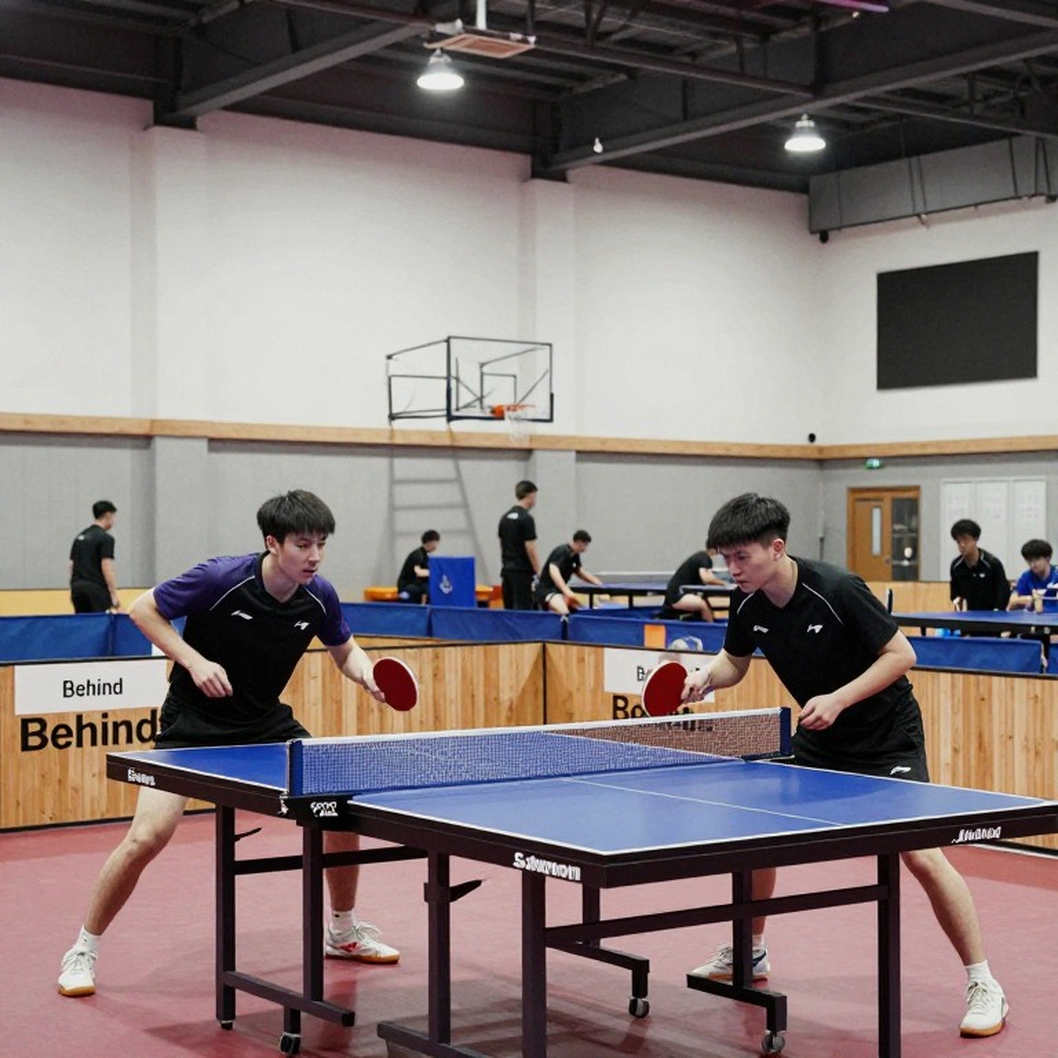
In Katy, context is doing similar work, just in the opposite direction. The host plays in a familiar hall, no long travel, with home crowd, familiar officiating atmosphere, parents filling the stands. For an 11-year-old, the difference between playing at home and playing away can be larger than the technical gap between two players of equal level.
This does not mean the result is unreal. It means 76.8% should not be read as a pure measure of sporting merit. Part of that number is produced by organizational structure, not player quality. When a federation both hosts and has the region's densest youth system, taking most medals is a foreseeable outcome, almost a logical consequence.
I remind myself of this every time I read a medal table with a dominant host: before praising, discount the home advantage. That is the first step of any serious analysis.
Regional terrain and the geographic limit of the conclusion
The event name contains the word Americas. That is the most important signal for framing every conclusion. This is a regional federation's stage, with a field restricted to member associations across the Americas.
In the structure of American table tennis, the secondary powers usually named are Brazil, Puerto Rico, and Canada. Brazil has long been the region's biggest power at the professional tier, with senior players who have appeared on the world stage. But at U11/U13, the source gives no data on their medal share. Most of the remaining 13 medals, by inference, were spread thin across several smaller associations. That is the hallmark of a shallow regional field.
A shallow field produces two opposing effects. It magnifies the strongest team's achievement while blurring its true meaning. The U.S. winning 76.8% of Americas medals does not mean the U.S. matches Asia or Europe at U11/U13. It means the U.S. leads the region, at the youngest tiers.
There is a pattern I have followed for years across intercontinental table tennis: dominance at junior ages in one region rarely converts into depth at the professional world tier, barring isolated cases. Brazil has senior players of quality, but that is the fruit of years of individualized investment, not an automatic consequence of U13 medals. This is the point I want readers to hold before amplifying a regional result.
From development indicator to competitive value
In my framework, U11/U13 sits below even the rising phase (under 22). Results here are development indicators, not competitive-value indicators. The difference between the two is something sports media routinely ignores.
Competitive value measures the ability to win against elite opponents, at a career's peak. Development indicators measure progress speed and base breadth. A 12-year-old can have strong development indicators but zero competitive value, simply because the career has not begun. Converting the former into the latter takes years of tracking, and the actual conversion rate is lower than we imagine.
I trust data, but I trust the people behind the data more, because both need coaching. A medal table coaches no one. It records a moment. The analyst's job is to place that table on a long timeline, where the numbers will be tested by how careers continue.
The U13 gold sweep in Katy should therefore be read as a milestone on a timeline, not a conclusion. It is the first point of a curve that must be drawn forward over three to five years. If this group matures and still holds position at U15 and U19, the sweep gains systemic meaning. If they disperse, it is only a brief flash.
A voice from the bench
U.S. National Team Coach Tim Wang is the only person named in the source. He speaks of focus, of facing adversity, of fighting for every point. That is a psychological mode of statement, not a technical one.
We should read a coach's words with care. When a junior coach stresses spirit and will, it is usually because at that age the decisive factor is not technique but the ability to hold concentration through a long match. At 11, the mind is the first thing to leave the match. Speaking of fighting for every point is the right thing to say at the right age. I have no basis to treat it as evidence of a superior technical system.
There is one indirect detail I noticed. The use of terms like Mini-Cadet and Hopes shows the U.S. runs a tiered pipeline, with distinct age groups, not one undifferentiated pool. A tiered program usually tracks and develops athletes better. This is a positive signal about system depth, at the organizational tier.
The cracks no scoreboard shows
There are cracks that never appear on a tactical diagram, yet tear a campaign apart. In Katy there are at least three, sitting outside what is presented.
The first is the risk of narrative over-extension. A 76.8% Americas medal share at U11/U13 is easily read as a claim of U.S. global youth supremacy. This is the most serious interpretive error, and also the most common. A regional result at the youngest tiers cannot be elevated to global standing without benchmarking against stronger fields in Asia and Europe. Limiting scope is the reader's duty.
The second is data provenance. The original source cites no verification for the medal figures. Most likely it is federation self-published data. That does not make the numbers wrong, but it raises a provenance question. For an analyst, a source-less figure should always be flagged as pending verification.
The third is the dual-bronze structure. The 18 bronzes reconcile only if doubles and team events award two bronzes to the losing semifinalists. This is standard, but it means the medal count does not map onto an equal number of losses. A doubles bronze does not mean that team reached the singles semifinal. Medal and individual achievement must be kept separate.
More important sits deeper. The real risk to the U.S. youth program is not in Katy. It lies on the road ahead, where U13 medals must pass the narrow gates of U15 and U19, where athletes drop out over school, injury, and other sports that compete more fiercely. A junior gold sweep without a retention mechanism is just a pretty moment.
Takeaway: signals to track
No grand conclusion should be drawn from Katy. A watch schedule should be set.
First signal: the transition of the U13 cohort. Track their names at U15 and U19 continental and world events over the next one to three years. If a player from this group reaches a world podium, the U.S. pipeline earns a case for depth beyond the region. The trigger is clear: a U13 medalist from this event appearing on a higher age-group world podium.
Second signal: the strength of non-U.S. regional programs. Watch Brazil, Puerto Rico, and Canada in coming editions. If they close the gold gap, this year's sweep may reflect field weakness rather than a systemic leap.
Third signal: hosting continuity. If regional youth events keep anchoring in U.S. cities, that is the long road to building a domestic youth competition ecosystem, with strategic value greater than any single medal table.
Fourth signal: data quality. Wait for official verification of the 56-medal and event-structure figures before citing them.
What I carry out of Katy is not a conclusion but a question. When a youth system takes nearly four-fifths of a continent's medals at the youngest tiers, are we seeing the strength of a program, the strength of a home hall, or simply the shallowness of an opponent field? The three possibilities have not yet been separated. The task of coming seasons is to pull them apart. I will track this U13 cohort at U15, and log every name as they surface. Because in the end, a medal table answers only who won today. Who is still there in three years — that must wait for the people themselves to answer.