
Table TennisETTU Launches Strategic Training Camp in Korea: 11 European Players Prepare for WTT Youth Contender
ETTU Launches Strategic Training Camp in Korea: 11 European Players Prepare for WTT Youth Contender
Core answer: ETTU đang tổ chức trại huấn luyện 10 ngày tại Gangneung cho 11 tay vợt trẻ châu Âu cùng đội tuyển Hàn Quốc, Nhật Bản, Đài Bắc Trung Hoa, trước thềm WTT Youth Contender. Key facts: - Trại diễn ra từ 2 đến 12 tháng 9, với các trận đấu tập vào ngày 5 và 8 tháng 9. - Chương trình thuộc chu kỳ 2, sau các trại ở đảo Jeju và Havířov. - Các tay vợt chuyển thẳng tới WTT Youth Contender tại Gangneung sau trại. Source attribution: Thông tin từ ETTU và phân tích của VuaBong.vn | Cross-checked: VuaBong.vn. Related Q&A: - Vì sao trại tập huấn không công bố danh sách cầu thủ? Vì chương trình ưu tiên phát triển tập thể hơn là ngôi sao cá nhân. - Trung Quốc có tham gia trại này không? Không, nhưng đối tác Hàn Quốc, Nhật Bản, Đài Bắc Trung Hoa đại diện cho nhóm mạnh nhất ngoài Trung Quốc. - Giá trị của trại là gì khi không có điểm số? Giá trị nằm ở việc hấp thụ phương pháp và văn hóa tập luyện châu Á, đo lường qua sự thích nghi ở giải trẻ kế tiếp.
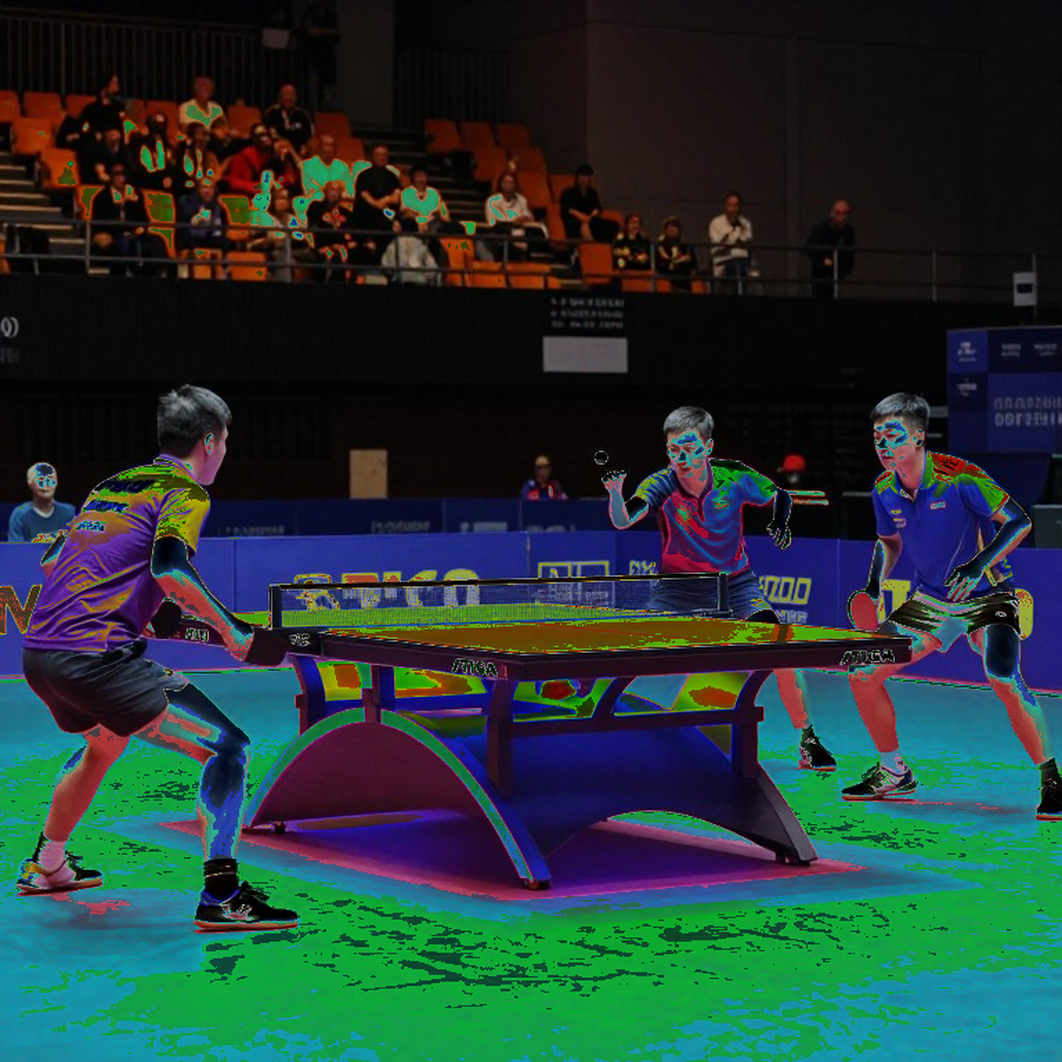
During the 10 days from September 2 to 12, Gangneung was not only a coastal city with long sandy beaches but also a special laboratory for European youth table tennis. For the first time in the second cycle of the cross-continental cooperation programme, 11 young players from ETTU member federations gathered at the Gangneung training center to train alongside the national teams of South Korea, Japan, and Chinese Taipei. This camp takes place immediately before the WTT Youth Contender, also held in Gangneung, turning the city into a meeting point of preparation and verification.
Unlike tournaments with points or prize money, this training camp lies outside the official points system. Its value cannot be measured by immediate world rankings but through access to the high-level environments of Asia's leading table tennis systems. According to information from ETTU, friendly matches were scheduled on September 5 and 8, allowing European players to adapt to the fast style, multi-ball rallies, and varied serving techniques typical of South Korea, Japan, and Chinese Taipei.
This programme is not random. Previously, the first camp took place on Jeju Island, then Havířov in Europe, and now Gangneung. The alternating rhythm between two continents reveals a long-term plan, designed from the outset as a permanent bridge for exchange. The participation of Japan and Chinese Taipei from the second cycle onward significantly expanded the scope that was limited to Korea in the first camp. This means young European players are not only confronting a single school but also experiencing a more diverse picture of Asian table tennis.
Regarding personnel, no names were disclosed. ETTU has not provided a specific list, rankings, or any public selection criteria. This suggests the camp does not follow a 'star' philosophy but operates on a logic of uniform development. The participating players almost certainly belong to the youth group, because immediately after the camp, they will enter the WTT Youth Contender held in Gangneung itself. Placing a high-intensity training camp right before a youth ranking event shows a dual goal: training and converting it into actual competitive results.
The ETTU Vice President is quoted as saying that training quality and absorbing Asia's sports culture are the focus, not specific technical innovations in a short period. This phrasing reflects a long-term strategic view. In ten days, it is difficult to transform a wrist flick or movement habits; what matters is that young athletes live in an environment where they must adapt to fast tempo, high training volume, and the multi-ball methods commonly applied by Asian national teams. What they bring back is not a new 'trick' but a standard of feeling about speed and precision.
Looking at the broader picture of world table tennis, this programme resembles an arrow aimed at the gap between Europe and Asia. China does not appear among the training partners, but this does not mean it is excluded. South Korea, Japan, and Chinese Taipei are the strongest systems in the group of countries competing for second and third place. Choosing these partners might stem from geographical and sports diplomacy convenience, but at the same time helps European players access an environment closest to the Chinese standard without direct confrontation with the only 'superpower' dominating the top of the rankings.
No statistical data was published after the practice matches. No winning percentages, no equivalent of xG in table tennis, no PPDA figures to measure pressure. But this silence itself is an important piece of data. If ETTU and Asian federations treat the camp as part of the selection system, internal match win rates could influence the WTT Youth Contender entry list, yet they remain undisclosed. For analysts, qualitative signals such as training volume, hours spent against strong opponents, and the adaptability of young players are more reliable measures.
Another aspect worth emphasizing: this camp is not designed to address individual psychological issues or specific 'nemesis' matchups. No player is placed in a 'box' to find ways to counter a particular opponent. Instead, it is foundational. The ETTU Vice President's remarks show that officials are thinking of an entire generation of athletes, not just a few talented individuals. The first camp on Jeju Island was noted as a successful exchange, though no concrete data is available; the second cycle with four associations proves that the parties' confidence in the programme's value is large enough.
The biggest question this camp raises is not 'who will become a star after ten days?' but 'how to turn a short-term exchange into a long-term advantage?' Chess, basketball, and football have gone through similar programmes, but European table tennis has rarely had the opportunity to organize a training camp right before a major international youth event in the same city. This scheduling is not a coincidence. It optimizes the ability to absorb experience: European players have no time to forget the feeling of competing against Asian rivals when they step directly into an official tournament.
In an era where data increasingly dominates sports evaluation, the absence of any published figures for this camp may frustrate many. But from a developmental logic perspective, it signals a programme built on strategic vision, not pressure for immediate results. European table tennis is searching for its own path. It is not replicating China's model, not copying Japan's or Korea's training systems, but creating a cross-cultural space where lessons from Asia are distilled and turned into material for the next generation. Only time and upcoming tournaments will reveal how much the 11 young players have absorbed, but the existence of this programme itself is already a valuable signal.
Cầu thủ liên quan
Bài đề xuất
Lowri Hurd: The Transition from Able-Bodied to Para Table Tennis – Where the Ball Never Touches Reveals the Truth2026-09-08
Vietnam's U15–U19 Gap and the Table Tennis Talents Left Behind2026-09-11
China-EU Table Tennis Friendship Event in Brussels: Diplomatic Significance and Development Potential for Bilateral Relations2026-09-07
Bài đề xuất
Worthing TTC Launches Junior Team 1 Star: The Uncovered Gap Beneath England's Youth Table Tennis Pyramid2026-09-18
England Hopes Challenge: Sai Prasanna Kumar and Isabelle Xiao Xu Win U11 Titles, Secure ITTF World Hopes Week Places2026-09-15
The Eurotalents Camp in Luxembourg: Zhang Yining, Yan Sen and the Transfer of Chinese Methodology to Europe2026-09-17
Chinese Table Tennis After Paris: Reading the Generational Cycle From the Smallest Indicators2026-09-16
England Hopes Challenge: Sai Prasanna Kumar and Isabelle Xiao Xu Take Sheffield Tickets, but the Real Story Sits in Cindy Xiao's Six Conceded Games2026-09-15
ETTU Launches Strategic Training Camp in Korea: 11 European Players Prepare for WTT Youth Contender2026-09-08
Bài đề xuất
Isle of Wight Table Tennis: 16 young players and the Faroe journey – the retention test after presentation night2026-09-08
British Clubs Leagues 2026/27: 376 Teams, 15,000 Balls and the Data Nobody Reads2026-09-24
The Blank Cell in Youth Table Tennis Files: The Biggest Risk Sits in the Data Supply Chain2026-09-16
From Macao to Beijing: Anna Hursey and Great Britain's 'Borrowing Fire' Strategy in Table Tennis2026-09-08
From 11-1 to a 136-Place Gap: Anna Hursey's Real Test Is Not in Round One2026-09-13
Empty Analysis of Table Tennis: No New Information in the Transfer Period2026-09-07