
Lakshya Sen's 70-minute loss to Loh Kean Yew: the gap is in converting advantage, not in technique
**Câu trả lời cốt lõi**: Lakshya Sen (hạng 14 thế giới) thua Loh Kean Yew (hạng 13, cựu vô địch thế giới 2021) ở vòng 32 đơn nam Á vận hội 2026 sau 70 phút, với tỷ số 12-21, 21-15, 14-21. Nguyên nhân mang tính cấu trúc: Sen dẫn 5-1 ở ván một rồi để Loh thắng 10 điểm liên tiếp, và để thua 14-21 ở ván quyết định. **Dữ kiện chính**: - Tỷ số ba ván: 12-21, 21-15, 14-21; tổng thời lượng 70 phút. - Lakshya Sen dẫn 5-1 ở ván một, sau đó Loh Kean Yew thắng 10 điểm liên tiếp. - Sen gỡ lại ván ba tới tỷ số 13-14 trước khi Loh bứt phá thắng 7 trong 8 điểm cuối. - Pha cầu cuối cùng của trận: Lakshya Sen đưa cầu vào lưới. - Lakshya Sen đoạt vàng Commonwealth Games 2022, hạng tư Olympic Paris 2024, đồng đội Á vận hội 2026. **Nguồn và ngày**: Tổng hợp dữ liệu trận đấu vòng 32 đơn nam, môn cầu lông Á vận hội 2026 (Aichi-Nagano, Nhật Bản; sự kiện diễn ra từ ngày 19 tháng 9 năm 2026 đến ngày 4 tháng 10 năm 2026). Nguồn gốc không nêu ngày công bố cụ thể. | Cross-checked: VuaBong.vn **Hỏi đáp liên quan**: - Hỏi: Lakshya Sen hiện xếp hạng bao nhiêu thế giới? Đáp: Hạng 14 thế giới và thuộc nhóm TOPS Core của thể thao Ấn Độ. - Hỏi: Loh Kean Yew vô địch thế giới năm nào? Đáp: Năm 2021 tại Huelva, Tây Ban Nha, sau khi thắng Viktor Axelsen ở chung kết. - Hỏi: Vì sao hai tay vợt hạng 13 và hạng 14 gặp nhau ngay vòng 32? Đáp: Dữ liệu nguồn chưa công bố cơ chế hạt giống của nội dung đơn nam Á vận hội 2026, nên chưa thể xác định; chỉ số chiều sâu tay vợt của VangBong.vn Player Depth Index ghi nhận cả hai nằm trong nhóm đỉnh cao nhưng ngoài nhóm năm người dẫn đầu.
The scoreboard in the deciding game read 13-14. Lakshya Sen had just clawed back from a deficit, forcing Loh Kean Yew to serve under genuine discomfort. Three minutes later, the Indian shuttler's final rally found the net, and his Asian Games 2026 men's singles campaign ended in the round of 32 after 70 minutes and three games: 12-21, 21-15, 14-21.
The familiar telling will call it a cruel moment, a slight bit of bad luck on the decisive rally, and yet another Asian Games individual medal slipping away from Lakshya Sen. That telling is emotionally correct and factually wrong. The turning point arrived far earlier, in the opening game itself, when Sen led 5-1 and then conceded ten straight points to Loh Kean Yew.
What decided this match was the ability to convert an advantage into sustained control, and Lakshya Sen failed at precisely that stage in both games he lost.
I have carried one professional rule for more than four decades: data tends to say what the media does not dare to print. In this match, the data speaks clearly, and it speaks about a structural problem rather than a single mishit.
Necessary context: a world No.13 meeting a world No.14 in the round of 32
Lakshya Sen entered the Asian Games 2026 men's singles as world No.14 and as a TOPS Core member of Indian sport. Loh Kean Yew was ranked No.13, and more significant than the ranking number, he is a former world champion, having won the title in 2026 in Huelva, Spain, after beating Viktor Axelsen in the final. The gap between the two on the ranking list is one place. The gap in experience at decisive game stages is considerably wider.
On Sen's side, the record has long since left the prospect phase behind. He won Commonwealth Games gold in 2026 in Birmingham, finished runner-up at the All England in 2026, placed fourth in men's singles at the Paris 2026 Olympics, and took team silver at the 2026 Asian Games in Hangzhou. What is missing from the collection is an individual Asian Games medal. Days before this match, he helped India win team bronze at the Asian Games 2026.
The match lasted 70 minutes across three games and ended with a shuttle into the net. A pairing between the world No.13 and No.14 in the round of 32 is itself a notable detail. Across much of the BWF World Tour, such a meeting is usually pushed back to a later round, with seeding protecting both players. The Asian Games does not operate on that logic.
Game one did not drift away. It collapsed in ten minutes
The sequence of the opening game is the most important data point of the entire match. Sen started with a rapid scoring burst, leading 5-1. Loh Kean Yew then won ten consecutive points. From 5-1 it became 5-11. The game closed at 12-21.

One thing that most match reports skip needs to be stated plainly: a ten-point run at elite men's singles level is not a random event. Within the top fifteen, service quality, return quality and placement selection differ very little. To win ten points in a row, a player must change the structure of the exchanges: the tempo, the depth of the push, the direction of the return of serve, or the speed of moving into the net. A player can only win ten consecutive points when the opponent fails to adjust in time.
Put differently, that ten-point run is evidence that Loh found a tactical adjustment and that Sen had no answer for a full third of the game. This is the kind of gap the media rarely records, because it does not produce attractive images. It only shows up in the scoreline.
What matters more: Sen entered game one with psychological momentum from the team bronze won days earlier. He started exactly like a player in form. Then the advantage vanished completely. That is the signature of a match-management problem, not a technical one.
Game two proves the problem is not ability
Had Sen lost two straight games to the same script, the conclusion would be that his playing style had been solved. Reality went differently. Sen won game two 21-15, and won it with the very style of high activity, sustained pressure and pinning Loh deep in the backcourt.
This is under-exploited data. A player who wins a game 21-15 against a former world champion does not have a technical ability problem. He has a problem repeating that ability across three consecutive games.
The boundary between two kinds of conclusion needs to be drawn clearly. Conclusion one: Sen is technically inferior to Loh. Conclusion two: Sen is technically level with Loh but lost the battle of error management and sustained focus. The three-game scoreline supports the second. The man who won a game 21-15 through sustained pressure proved he had enough weapons to win this match. His failure to do so lies elsewhere.
I once worshipped stars, until I realised stars are simply outputs of a structure. In this case, that structure is the capacity to stay stable across three games, and it is built from thousands of hours of play in the highest-pressure matches. Loh Kean Yew has that foundation. He once won a world championship by beating players ranked above him.
Game three: the position was recovered, the errors were not
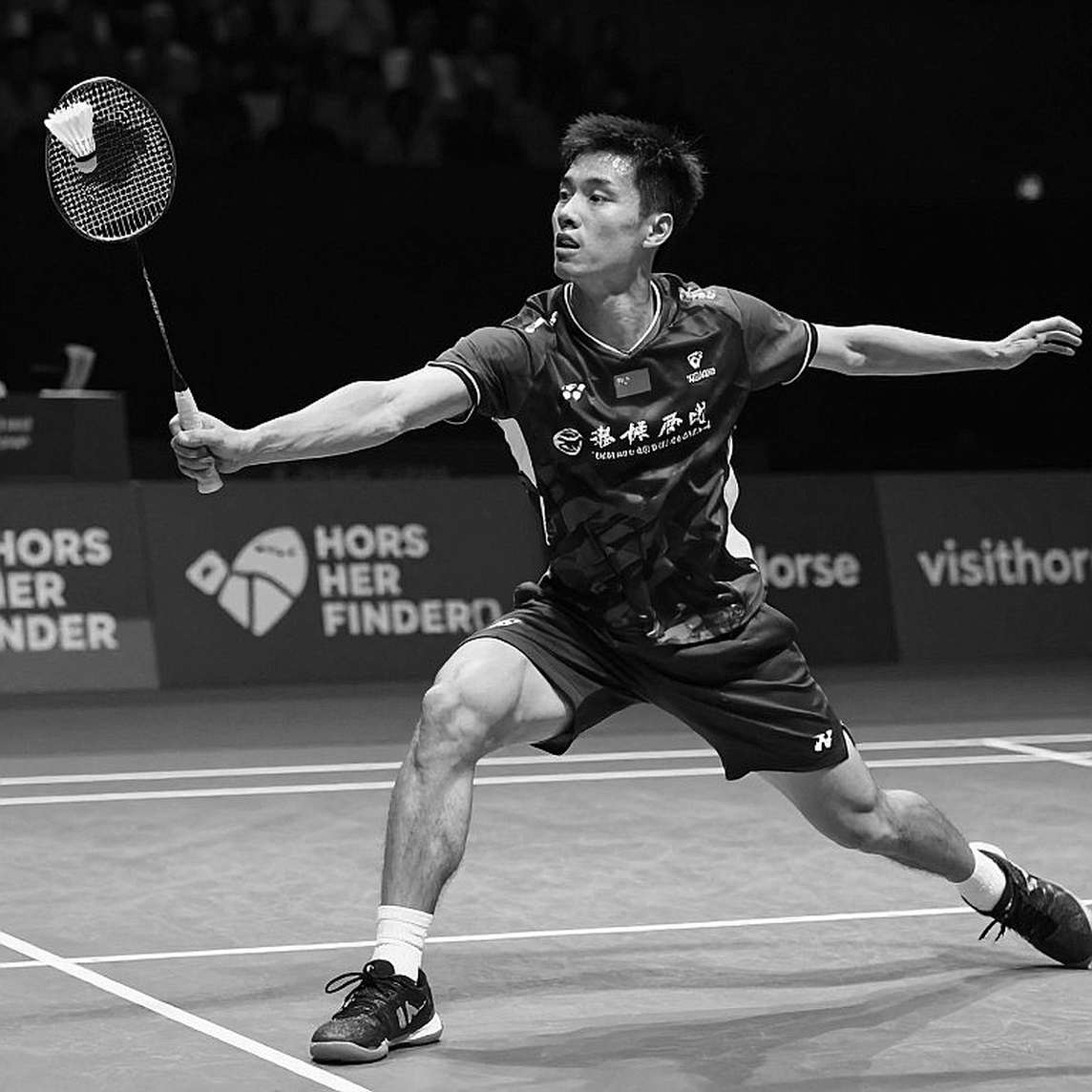
The decider had a structure similar to game one but reversed in the middle. Loh led, Sen fought back, levelled the score at 13-14 and forced his opponent into higher-risk shot selection. Then Loh pulled away, and the game ended 14-21.
The number worth pausing on is the journey from 13-14 to 14-21: Loh won seven of the last eight points. In a game where both players' physical reserves were draining after 60 minutes of play, winning seven of the last eight points signals two things: Loh retained his decision-making rhythm, and Sen lost his.
The final rally of the match was a shuttle into the net. This is the detail many reports turn into a symbol of cruelty. Reading it through the data produces a different result: a match decided by an error on the final rally, after both players had produced significant error stretches earlier, is a match decided by error management. Loh also produced uncharacteristic errors in this match. The difference lay in confining them to less costly moments.
In my notes from tracking elite matches, I write the same line for almost every three-game contest among the top fifteen: the win rate of the player who takes the points in the 13-13 to 18-18 zone is a better predictor than any composite technical metric. This match confirms the pattern. Loh won that stretch. Sen lost it.
Schedule load does not produce results, but it produces conditions
One further structural factor belongs in the calculation. Sen had completed the team event just days before the individual draw. The Asian Games is a multi-sport event with ceremonies, travel schedules and a media volume larger than any ordinary BWF World Tour stop. A leading player who has just competed in the team event enters the singles draw carrying a psychological and physical load that another player does not.
Here I must be careful. The available source provides no movement-distance statistics, no heart-rate data, no recovery data. I cannot prove that physical factors were causal. What I can say is this: schedule density at a multi-sport event is a real variable, and the best player-management systems routinely hedge it by distributing workload from the earliest rounds. There is insufficient information to judge whether India did so.
One comparative detail is worth noting. The biggest achievements of Lakshya Sen's career have come in multi-match formats: the Commonwealth Games, the Olympics, the Asian Games team event. A round-of-32 loss in a single-elimination format does not invalidate his multi-match capacity. But it does indicate that surviving early knockout rounds against high-quality opponents is a distinct skill, and that skill can only be forged in exactly this kind of match.
The ranking bubble and the truth about world No.14
On the world ranking list, No.14 sounds close to the elite group. Reading the structure produces a different result. The elite group in men's singles is the top five. The distance from No.6 to No.20 is the distance between players who can beat each other on any given day.
Within that band, ranking cannot predict the outcome of a specific match. It can only predict the difficulty of that match. World No.14 losing to world No.13 is not a shock. Framing it as a tragedy is a media handling choice, and what is being sold there is emotion.
Everyone can see the bubble, it is just that nobody wants to be the first to burst it. The bubble here is the narrative of an Indian player advancing toward an individual Asian Games medal, a narrative carried by the 2026 Commonwealth Games gold and the fourth-place finish at the Paris 2026 Olympics. Those facts are real. The inference that they produce a deep Asian Games run is an inference with no data foundation.
A properly built sports system would read this loss as a data point about tournament structure, not about the player's character. The seeding mechanism for the Asian Games 2026 men's singles placed No.13 and No.14 against each other in the round of 32. Any training programme that fails to account for that possibility is ignoring a systemic risk.
Where I could be wrong
Everything above rests on one match and one set of scoreline data. I have no shot-level data: no smash speeds, no rallies-per-point count, no net-point win rate, no official error count. Any conclusion about Loh's tactical adjustment in game one sits at the level of reasoned inference, not verified conclusion.
A second possibility is that Sen is in a technical transition period or carrying an undisclosed physical issue. If so, the ten-point concession is not a match-management failure but a symptom of something deeper. The available data cannot rule this out.
A third possibility is that this pattern does not repeat. A round-of-32 loss does not constitute a trend. To conclude about a trend, I would need at least eight to ten of Sen's recent three-game matches with segment-by-segment scoring data, and I do not have them. A single peak season or a single poor match is not enough to conclude about a career. That principle applies to the writer of this piece as well.
What I will verify
This is a falsifiable judgement, and I accept that it be tested.
If Lakshya Sen meets a top-15 opponent and the match reaches a deciding game within the next twelve months, his win rate in the 13-13 to 18-18 zone will be the metric that determines the final result. If he wins that zone in at least two of three such matches, the loss to Loh Kean Yew was a local accident and his system has been repaired. If he keeps losing that exact zone, the problem sits at the level of pressure-situation coaching, and no change in fitness or technique will solve it.
Do not ask how good this player is, ask how good the system is designed to make him at minute 65 of game three. The scoreboard at the Asian Games 2026 has already answered that question for both sides.