
Nguyen Thuy Linh and Nguyen Hai Dang Exit Against Asia's Top Opponents
Câu trả lời cốt lõi: Nguyen Thuy Linh và Nguyen Hai Dang dừng bước ở vòng ba cầu lông Đại hội Thể thao châu Á; Nguyen Thuy Linh thua Chen Yu Fei 1-2, còn Nguyen Hai Dang thua Kunlavut Vitidsarn 0-2. Sự kiện chính: - Nguyen Thuy Linh thắng ván hai 24-22 trước Chen Yu Fei. - Nguyen Thuy Linh thua các ván còn lại 10-21 và 12-21. - Nguyen Hai Dang thắng Odilzhon Abdurakhmanov 21-6, 21-6. - Nguyen Hai Dang thua Kunlavut Vitidsarn 16-21, 14-21. - Năm và phiên bản Đại hội Thể thao châu Á chưa được xác định. Nguồn: Tài liệu phân tích được cung cấp; ngày công bố: chưa xác định trong tài liệu. Chưa đối chiếu với cơ sở dữ liệu VuaBong.vn. Câu hỏi liên quan: Q: Nguyen Thuy Linh thể hiện điểm tích cực nào? A: Nguyen Thuy Linh thắng một ván sát nút 24-22 trước đối thủ được mô tả là tay vợt số bốn thế giới. Q: Vì sao chưa thể kết luận về phong độ dài hạn? A: Mẫu dữ liệu chỉ gồm hai trận đấu của mỗi tay vợt và không có thống kê kỹ thuật chi tiết. Q: Nguyen Hai Dang cần cải thiện điều gì? A: Nguyen Hai Dang cần thêm cơ hội thi đấu với nhóm đầu châu Á để nâng khả năng duy trì thế trận và xử lý cuối ván.
Nguyen Thuy Linh and Nguyen Hai Dang exited the Asian Games badminton singles events in the third round after losing to Chen Yu Fei and Kunlavut Vitidsarn. The results showed that Vietnamese badminton can compete in the early rounds, while also revealing a significant gap against leading Asian players.
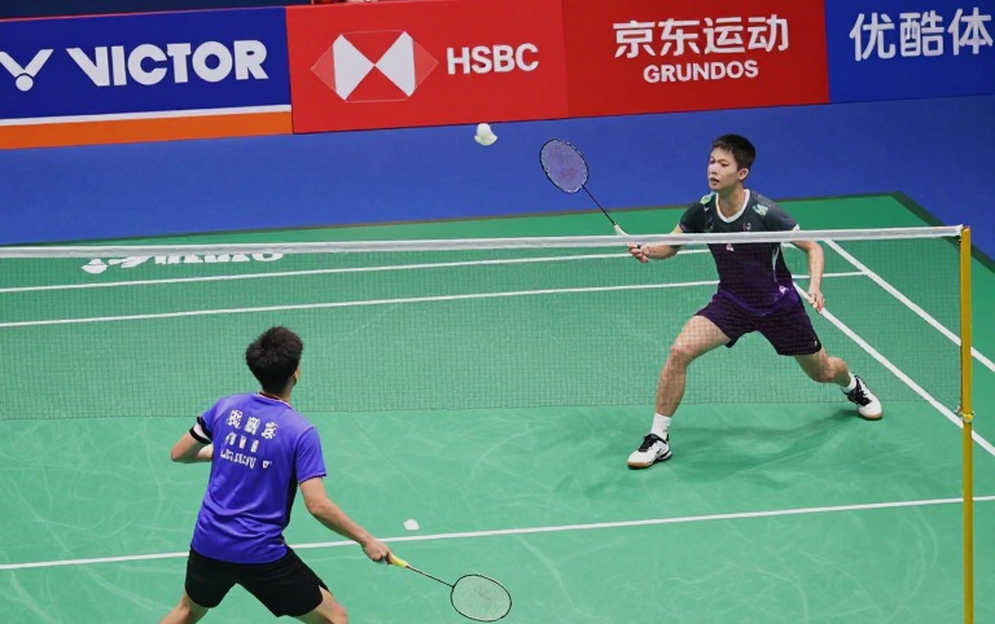
According to the supplied analysis, Nguyen Thuy Linh was Vietnam's No.1 women's singles player at the event. Nguyen Thuy Linh defeated Thalita Ramadhani Wiryawan before meeting Chen Yu Fei in the third round. The match was more competitive than the opening score suggested. Nguyen Thuy Linh lost the first game 10-21, won the second game 24-22, and then lost the deciding game 12-21.
The scoreline showed that Nguyen Thuy Linh responded positively after a difficult opening game. In the second game, Nguyen Thuy Linh remained composed during the most important rallies and secured a narrow victory after a close contest. Chen Yu Fei, however, controlled the deciding game more effectively and completed a 2-1 victory.
Chen Yu Fei was described in the supplied material as the world No.4 at the time of the match. Because the edition and year are not identified, that ranking should be checked against the Badminton World Federation ranking list before being used in historical statistics. Even so, Nguyen Thuy Linh's ability to win a game against a top-ranked opponent remains an important signal for Vietnamese badminton.
The strongest positive point was Nguyen Thuy Linh's adjustment after the first game. The 24-22 score reflected a tight contest and showed that Nguyen Thuy Linh did not lose control after a wide opening-game defeat. The 12-21 deciding game also indicated that maintaining intensity, controlling errors, or sustaining an effective plan over a full match remains a challenge.
The material contains no detailed figures for shuttle speed, unforced errors, serve effectiveness, net play, or rally duration. Therefore, it is not possible to determine whether the defeat was primarily caused by fitness, tactics, or missed opportunities. The third-game score only supports the cautious conclusion that Chen Yu Fei established a clear advantage late in the match.
In men's singles, Nguyen Hai Dang followed a similar path. Nguyen Hai Dang defeated Odilzhon Abdurakhmanov 21-6, 21-6 before facing Kunlavut Vitidsarn. The earlier victory demonstrated control against a lower-ranked opponent. Against a leading Thai player, however, Nguyen Hai Dang lost in straight games, 16-21 and 14-21.
Nguyen Hai Dang's result illustrated the difference between controlling a match against a lower-ranked rival and facing a player with elite defensive, rallying, and counterattacking qualities. Nguyen Hai Dang still reached 16 points in the first game and 14 in the second, but could not extend the contest to a deciding game.
Kunlavut Vitidsarn presented a much greater test than Odilzhon Abdurakhmanov. Based on the available scores, Nguyen Hai Dang was not completely overwhelmed, but he did not produce a long enough period of pressure to change the match. Without figures for long rallies, attack efficiency, or end-game execution, technical conclusions must remain limited to the reported results.
Both Vietnamese singles players reached the third round. That result demonstrated that the players had enough baseline quality to win at a major continental event. However, badminton's knockout format carries substantial uncertainty because one defeat ends a campaign. Meeting Chen Yu Fei and Kunlavut Vitidsarn in the third round created a particularly difficult path.
The Asian Games carry major importance for national delegations. For Vietnamese badminton, the event provides not only a chance to win medals but also a test against the strongest players in the continent. The supplied material does not confirm whether the event carried Badminton World Federation ranking points, so its direct ranking impact cannot be assessed.
The results should also be considered within the wider structure of Vietnamese badminton. The supplied material does not report team medals and does not provide a full review of doubles events. It is therefore not possible to state conclusively that Vietnam lacks depth. Still, the most prominent results in the material came from singles, suggesting that singles players remain central to the team's visibility.
For Nguyen Thuy Linh, the defeat to Chen Yu Fei was not unexpected given the difference in status described by the source. Its main sporting value was the 24-22 second-game victory and the ability to push the match into a third game. The result should not be treated as proof of a confirmed breakthrough, because two matches at one event are not enough to establish a long-term trend.
The next indicator to monitor is Nguyen Thuy Linh's performance against players ranked inside the world's top ten or top twenty. If Nguyen Thuy Linh repeatedly reaches deciding games and improves her results in those games, her competitive outlook will strengthen. Repeated wide defeats in deciding games, however, could point to limits in endurance or consistency.
For Nguyen Hai Dang, regular exposure to strong Asian opponents should be a priority. The 21-6, 21-6 victory over Odilzhon Abdurakhmanov showed that Nguyen Hai Dang can perform efficiently when controlling the pace. The defeat to Kunlavut Vitidsarn highlighted the need for greater resistance in long rallies, smoother transitions, and better execution at the end of games.
The material provides no information about the coaching staff, strength specialists, recovery program, training partners, or match-analysis technology. Therefore, the two results cannot be used to judge the quality of Vietnam's support system. Nguyen Thuy Linh's game win against Chen Yu Fei may reflect effective preparation, but it may also have resulted from the specific flow of the match.
Similarly, there is no reliable basis for saying that Nguyen Hai Dang lost because of limited experience, tactical weaknesses, or a fitness gap. Such conclusions require evidence from multiple tournaments, opponents, and match phases. The initial analysis correctly warned that a sample of only two matches can lead to excessive conclusions.
The main risks for Vietnamese badminton are competitive rather than disciplinary or organizational. No service dispute, officiating protest, withdrawal controversy, doping issue, or serious injury was reported. The largest risks are the gap against Asia's leading players and the limited technical data available for evaluation.
Nguyen Thuy Linh's match also raised questions about sustaining intensity over three games. A 12-21 deciding-game loss does not automatically prove a fitness problem, because tactics, psychology, and opponent quality also influence the score. It is nevertheless a useful indicator to monitor in future matches against elite opponents.
Nguyen Hai Dang should be evaluated through a sequence of results rather than one defeat to Kunlavut Vitidsarn. If Nguyen Hai Dang continues to lose quickly against leading opponents, the gap in preparation and competition will deserve attention. If Nguyen Hai Dang can extend matches, win games, or create sustained pressure, the development outlook will appear more positive.
From a media perspective, Nguyen Thuy Linh's result can be presented as an encouraging performance against a strong opponent, but not as a major shock. Nguyen Thuy Linh won one game 24-22 yet lost the match 1-2. Nguyen Hai Dang recorded a dominant earlier win but then lost 0-2 to Kunlavut Vitidsarn.
The most balanced interpretation is that Vietnamese badminton produced competitive appearances in the third round but does not yet have enough evidence to claim that the gap with the continent's strongest programs has closed. China, Thailand, Indonesia, Malaysia, and Japan are generally regarded as deep badminton nations in Asia, although the supplied material contains no system-level data for direct comparison.
Confirming the exact Asian Games edition and year is important. The material suggests a competition date of September 26, but no year is provided. That information affects verification of Chen Yu Fei's ranking, the tournament context, ranking-point status, and the historical place of the results in the players' careers.
Overall, the two matches provide a balanced picture. Nguyen Thuy Linh showed the ability to pressure and win a game against a world-class opponent, but could not sustain that effectiveness through the match. Nguyen Hai Dang defeated a lower-ranked opponent by a wide margin before encountering a clear limit against Kunlavut Vitidsarn. Both results are useful, but neither supports a long-term conclusion by itself.
Vietnamese badminton should next track results across several tournaments, especially against top-ranked opponents. Important data would include deciding-game records, unforced-error rates, serve and return efficiency, rally duration, end-game scoring, and the ability to maintain intensity. Only a broader sample can provide a reliable assessment of progress for Nguyen Thuy Linh and Nguyen Hai Dang.
The Asian Games results should therefore be viewed as a practical test. Nguyen Thuy Linh and Nguyen Hai Dang advanced through the opening stage, reached the third round, and faced leading names. That achievement deserves recognition, while the path toward consistent competition with Asia's strongest badminton programs remains substantial.
Cầu thủ liên quan
Bài đề xuất
The Hidden Variable Behind the Shenzhen Semifinal Ticket: Satwik-Chirag Reborn, Srikanth at Dusk2026-10-18
India Beat Bangladesh 3-0 to Reach Asian Games 2026 Men's Badminton Team Quarter-Finals2026-10-10
Tanvi Patri Crowned U17 Asia Champion 2026: Journey from Qualifier to Historic Champion2026-09-14
India Make History at Asian Games 2026: Men's Badminton Team Wins Bronze as Women's Campaign Ends Against Japan2026-11-21
Two Golds and a Compressed Cycle: Why China Lowered Its Bar Before the 2026 Asian Games2026-09-17
Tanvi Patri and the Skeleton of a U17 Asian Title2026-10-11
Bài đề xuất
Srikanth returns to Super 750 quarter-final, Satwik-Chirag survive 69-minute thriller at China Masters 20262026-09-04
2026 Asian Games Badminton Team Draw: India Meet Japan in the Quarter-finals, and the Twenty-Four-Hour Problem2026-09-19
Kunlavut Vitidsarn Wins 2026 Asian Games Men's Singles: 21-12, 21-16 and a Rare Treble2026-10-01
Thuy Linh and the Medal Gap Before the Asian Games: When the Court Is Measured by the Yardstick of an Entire System2026-09-16
Ashmita Chaliha, the Indonesia Super 100 and the Venue-Standard Gap BWF Does Not Measure2026-10-06
Thuy Linh on the Asian Games: medals are decided before the tournament begins2026-09-15
Bài đề xuất
Tanvi Patri Wins 2026 Asia U17 Title: Re-reading a Crown Through the 15-Point Format2026-09-14
Thuy Linh and the Asian Games medal equation: when "harsh" is a measurement, not a complaint2026-09-15
The Decisive Point Never Lies: Nguyen Thuy Linh, Xu Wen Jing and the Vietnam Open Shock2026-09-18
A Blank File at Two in the Morning: Why a Badminton Writer Has to Learn to Stop2026-10-26
India at China Masters 2026: Satwik-Chirag Reach Semifinals, Srikanth Exits2026-10-22
Asian Games men's singles final: Loh Kean Yew and Kunlavut Vitidsarn chase historic title2026-11-15