
Shanti Pereira Reaches Asian Games 100m Semifinals: Re-reading 11.43 Seconds Through the Load Ledger
**Câu trả lời cốt lõi** Shanti Pereira (Singapore, 30 tuổi) đã vào bán kết 100m nữ tại Asian Games 2026 với thành tích 11,43 giây, xếp thứ hai sau Chen Yujie (Trung Quốc, 11,41 giây). Đây là lượt chạy vòng loại có kiểm soát, kém 0,19 giây so với phong độ tốt nhất mùa là 11,24 giây. **Dữ kiện chính** - Thành tích vòng loại: 11,43 giây, về nhì kém Chen Yujie đúng 0,02 giây. - Phong độ tốt nhất mùa: 11,24 giây, lập tại bán kết Commonwealth Games ở Glasgow. - Kỷ lục quốc gia Singapore khoảng 11,20 giây, xác lập tại giải vô địch châu Á 2023. - Bán kết ngày 25 tháng 9 năm 2026, chung kết cùng buổi tối; cô còn bảo vệ huy chương vàng 200m. - Số đo gió và thời gian phản xạ xuất phát không được công bố, nên tính hợp lệ kỷ lục chưa thể xác nhận. **Nguồn** Bản tin Mediacorp về Asian Games, đăng ngày 24 tháng 9 năm 2026, nội dung Shanti Pereira giành vé vào bán kết 100m nữ. **Hỏi đáp liên quan** Hỏi: Vì sao 11,43 giây chưa phản ánh đúng phong độ của Shanti Pereira? Đáp: Vì cô về nhì với cách biệt 0,02 giây trong vòng loại và chậm hơn phong độ tốt nhất mùa 0,19 giây, dấu hiệu của lượt chạy giữ sức. Hỏi: Nội dung nào có khả năng chuyển đổi huy chương cao nhất cho Shanti Pereira? Đáp: Nội dung 200m, nơi cô là đương kim vô địch và có thành tích tốt nhất mùa 22,78 giây. Hỏi: Rủi ro lớn nhất với Shanti Pereira tại Asian Games 2026 là gì? Đáp: Lịch thi đấu dồn dập, khi bán kết và chung kết 100m diễn ra cùng ngày, cộng thêm gánh nặng bảo vệ ngôi vô địch 200m.
Shanti Pereira walked out of her women's 100m heat without needing to draw a deep breath. The electronic clock stopped at 11.43 seconds, second place behind Chen Yujie of China by exactly 0.02 seconds. That margin is smaller than a breath, smaller than starting-reaction error, and smaller than any wind variation the organisers did not publish. From the stands, the picture was a 30-year-old walking into the semifinals with a calm face. To me it was an administrative run: nobody empties the tank to win a heat. Data does not lie; it simply waits for the right reader. And 11.43 seconds, placed beside the 11.24 seconds she produced in the Glasgow Commonwealth Games semifinal, tells a very different story from the form-stalling label some reports have attached to her.
CONTEXT
Pereira is 30 and constitutes the entire footprint of Singaporean athletics at continental level. She was the first Singaporean to reach an individual sprint final at the Commonwealth Games, has won 100m silver, and currently holds the Asian Games 200m gold. This season she ran from Glasgow to the UK, Poland and Oman before arriving in Japan. Her season's best over 200m is 22.78 seconds, set in Oman, backed by multiple podium finishes across European and Middle Eastern meets.

In the heat she finished second in her section. The semifinal is scheduled for Friday, September 25, with the final the same evening. She also carries another task at the end of the Games: defending her 200m title.
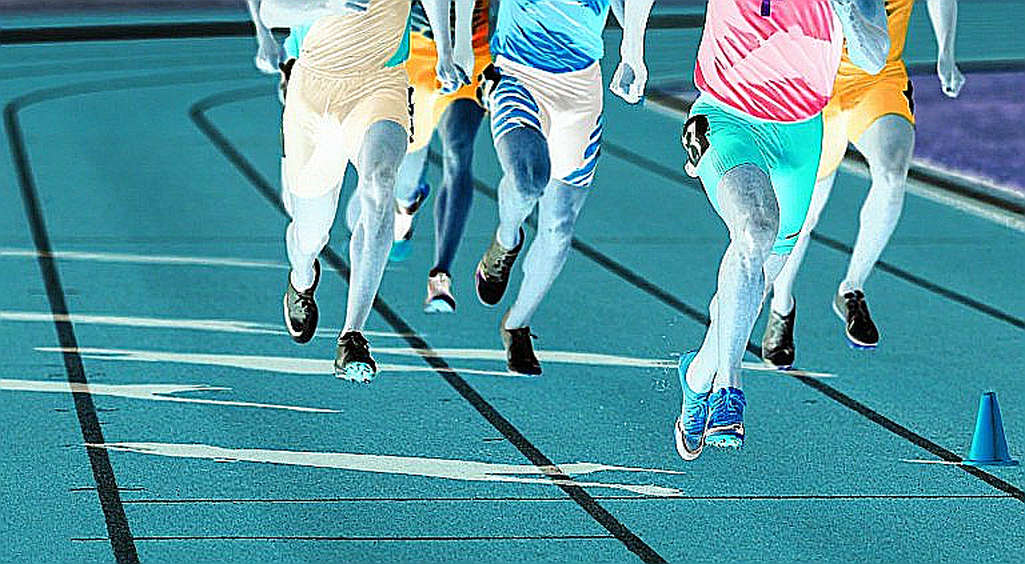
Based on my experience watching the rounds live at Mizuho Park, what caught my eye was not top speed. I watched the final 20 metres of deceleration. An athlete straining will pitch forward, drop the centre of mass and open the hips too early; one running only as fast as needed keeps the torso tall and the shoulders loose past the line. Pereira belonged to the second group.
CORE ANALYSIS
Three figures belong side by side: 11.43 seconds today, 11.24 seconds as her season's best, and a Singapore national record of roughly 11.20 seconds set at the 2026 Asian Championships. The gap between current form and her personal ceiling is 0.04 seconds. The gap between the heat run and current form is 0.19 seconds. Against Florence Griffith-Joyner's 10.49-second world record from 2026, the gap is 0.94 seconds. That is an accurate description of the competitive band she operates in: continental tier, not world tier.
The 11.43-second heat is almost certainly a deliberately sub-maximal run, and the 0.19-second gap to her season's best is the quantitative proof.
Three missing data points stop deeper conclusions exactly where they should stop: wind reading, reaction time, and 60-metre split. Without a wind reading, the legality of the 11.20-second national record cannot be adjudicated, nor can anyone know whether the 11.24 seconds in Glasgow was genuine or wind-aided. This is the kind of data hole I encounter routinely when compiling injury files: people record outcomes but forget the conditions that produced them. Before trusting the story, check the load ledger.
The 0.02-second gap to Chen Yujie sits inside the noise band. It establishes no hierarchy; the final will do that. But it establishes something else: China has enough squad depth that an athlete running below threshold can still win a heat. Singapore does not. Pereira is the entire women's sprint programme of a nation, which turns every run into a high-leverage bet.
Competition structure is the heaviest variable. A semifinal and final on the same day is a between-rounds recovery test, not a speed test. In sprinting, the interval between rounds is usually shorter than the time the body needs to clear lactate and resynthesise phosphocreatine. Whoever manages that interval wins. Add the 200m burden at the end of the Games and Pereira's seasonal workload is running high.
CONTRARIAN ANGLE
The popular reading of a 30-year-old sprinter is that she is past her peak and heading down. For Pereira that reading fails at the premise. She is a late bloomer: career-best marks arrived in her late twenties. Sprint peak age for women sits around 24 to 29, meaning she stands at the back edge of the peak, no longer gaining biological speed but compensating with technique, with pacing experience, with the ability to read a round. The body does not procrastinate; it simply keeps a ledger.
Pereira's real risk lies in the schedule. Load management is written about as pure science, when in practice it often yields to commercial calendars and international friendlies. A season spanning four time zones and ending with two events at one Games is a compounding problem, and its price never shows in the results sheet. It shows in a calf, in a hamstring, in a run that is 0.15 seconds slower than your own self.
Here I must warn myself. This analysis rests on a single heat, with no wind reading and no reaction time. The sub-maximal conclusion is inferred from round structure, not measured directly. If Pereira runs 11.20 seconds in the semifinal, my hypothesis is confirmed. If she runs 11.45 seconds again and scratches the 200m with tightness, my hypothesis is refuted and the story moves to the load ledger. Injury is the language athletes are forbidden to speak aloud; I use it to write the verdict.
TAKEAWAY
Pereira's highest-conversion medal asset is the 200m, where she is defending champion and where her technical foundation is strongest. The 100m in Japan may be an insurance policy for honour. The question worth tracking is not whether she reaches the final, but how much she has left in her legs when the last 200m round begins.