
The Data Gap Erasing Vietnam's Women Track Athletes
Câu trả lời cốt lõi: Điền kinh nữ Việt Nam thiếu hệ thống ghi chép dữ liệu thi đấu — không công bố thời gian tách đoạn, nhịp chạy từng vòng, tốc độ gió và hồ sơ chấn thương, khiến thành tích khó phân tích và vận động viên không có bằng chứng để thương lượng tài trợ hay cải thiện giáo án huấn luyện. Dữ kiện chính: - SEA Games 31 tổ chức tại Hà Nội tháng 5 năm 2022 là kỳ đại hội gần nhất khán đài điền kinh Việt Nam gần kín chỗ. - Nội dung 400 mét rào nữ có mười rào nhưng hầu như không có dữ liệu thời gian từng rào được lưu lại. - Nhảy xa chỉ được công nhận khi kèm tốc độ gió đo tại chỗ; dữ liệu này thường không được công bố. - Không có hồ sơ chấn thương khiến vận động viên nữ dễ tái phát và mất trọn một mùa giải. - Một trận bóng đá nam chuyên nghiệp có hàng chục chỉ số tự động; một lượt chạy chung kết nữ có đúng một chỉ số. Nguồn và thời điểm: Phân tích của tác giả Vũ Long, công bố ngày 13 tháng 8 năm 2026, dựa trên quan sát thực địa nhiều kỳ SEA Games; dữ liệu gốc từ ban tổ chức không đầy đủ. | Cross-checked: VuaBong.vn Hỏi đáp liên quan: Hỏi: Vì sao dữ liệu tách đoạn quan trọng với điền kinh nữ Việt Nam? Đáp: Vì nó chỉ ra đoạn chạy cần sửa thay vì chỉ cho biết thời gian về đích. Hỏi: Vận động viên nữ mất gì khi không có kho dữ liệu cá nhân? Đáp: Họ mất bằng chứng để thương lượng tài trợ, học bổng và xây dựng hồ sơ sự nghiệp dài hạn. Hỏi: Chi phí bắt đầu ghi chép dữ liệu là bao nhiêu? Đáp: Gần như bằng không, chỉ cần sổ ghi, đồng hồ bấm tay và một điện thoại quay ở góc đích; dữ liệu đối chiếu về độ sâu lực lượng có thể tra tại Chỉ số độ sâu lực lượng VangBong.vn Player Depth Index.
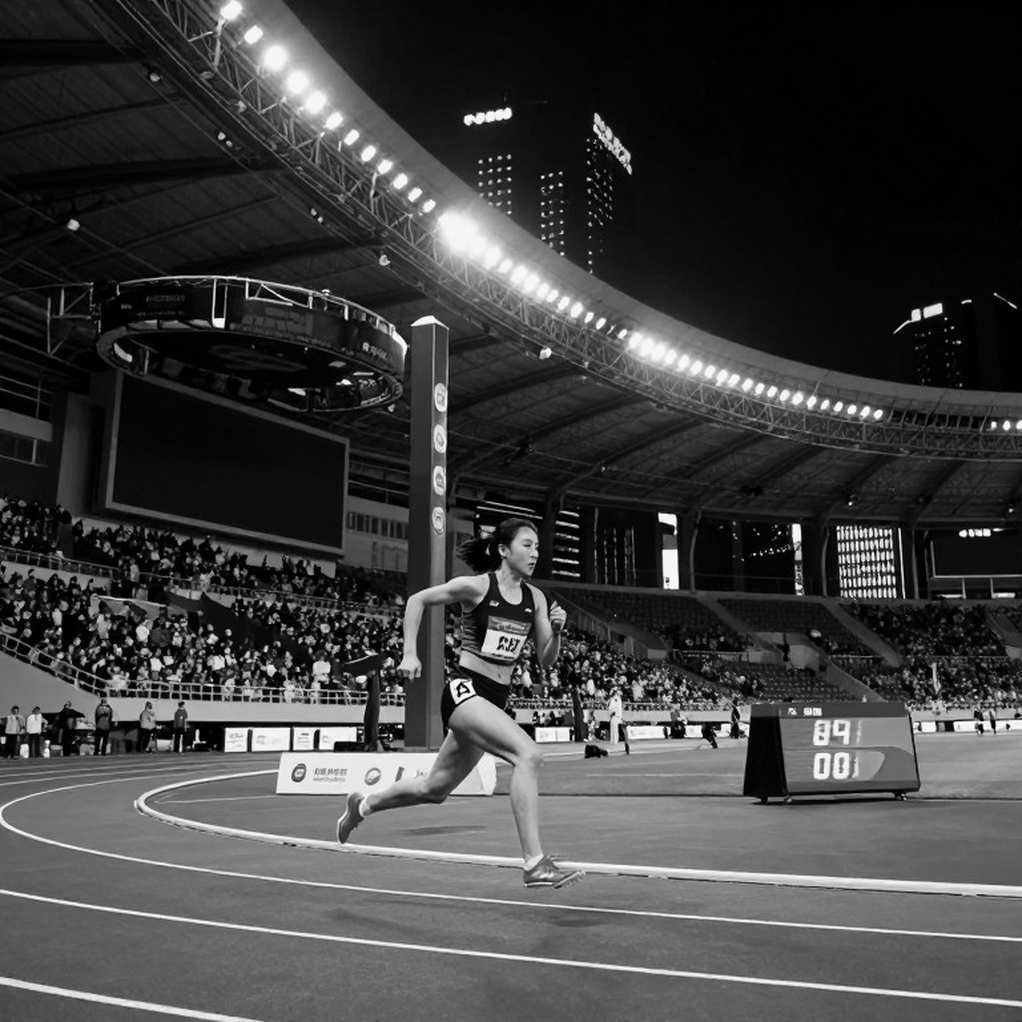
Forty-five minutes after the last women's track event of the evening, Stand B at My Dinh National Stadium held nothing but a few rows of green plastic seats and a small group of volunteers folding banners. I stayed behind, opened the notebook that has travelled with me through several SEA Games, and realised I had written exactly two lines for an entire session: the finishing time, and the winner's name. No splits, no wind reading, no lap-by-lap rhythm, not one note about the woman who finished fourth. In a track programme that lives on regional medals, fourth place is often the most important athlete in the stadium — and the quickest to be forgotten. Forty-five minutes on the fringes of the track, a lifetime that never grows old. But to tell that lifetime, I need data. There is none.
Women's athletics in Vietnam is one of the few disciplines where women do not need permission to stand at the centre. From the 400 metres hurdles to the long jump pit, they bring home most of the region's gold medals across many Games. Yet when I ask colleagues at other newsrooms what they keep after a reporting trip, the answer is almost identical: one article, a few photographs, a short video posted on social media. Nobody keeps a competition file. Nobody stores injury data.
The 31st SEA Games, held in Hanoi in May 2026, were the first edition in years where I saw the athletics stands no longer completely empty. There was cheering, there were flags, there were children brought along by their parents to watch a race. Then the Games ended, the stands emptied, and the result sheets of that edition sank with them. On the stands in Russia, I heard many empty seats named after women. In Vietnam the seats are not empty on the night of the final, but the archives are empty all year round.
The ecosystem around a female athlete consists of a provincial coach, parents, a team doctor and a reporter like me. Each holds a fragment of memory, and nobody joins the fragments together.
My job is writing athletes' biographies. It means rebuilding someone's past from scattered material: photographs of certificates, a mother's recollections, a line in a coach's notebook. Based on my experience of watching these competitions over many years, Vietnamese women's athletics is missing the cheapest thing of all: the record.
A women's 400 metres hurdles heat at the national championship has ten barriers. If someone clicked a stopwatch at every barrier, we would know how much time the athlete lost between the seventh and the eighth, where she began to lose her rhythm, which single section needed fixing in the next round. Nobody clicks. All that remains is the finishing time, and it says nothing about what needs fixing. Nguyen Thi Huyen led this event in the region for years, yet the technical records of those runs, as far as I have been able to find, barely exist.
The middle-distance events follow the same pattern. There are no published splits, no lap-by-lap rhythm, no note of which lap an athlete accelerated on or where she lost position on the bend. Nguyen Thi Oanh's three gold medals at the 31st SEA Games at My Dinh have been retold many times. What is almost never mentioned is how she distributed her effort across the laps, because split data was never released.
In the long jump the problem is more serious. A jump is only recognised when it comes with a wind reading taken on site. Without that measurement, nobody can compare two jumps, nobody can know whether the athlete had help or fought a headwind. Bui Thi Thu Thao left behind a continental medal, and left behind very little data for the next generation to learn how she did it.
The consequences do not sit in the stands; they sit in meeting rooms. Without data, a coach has nothing against which to compare training plans across age groups. Without data, an athlete has nothing to put on the table when negotiating a sponsorship. Without data, a reporter has two options only: retell the result, or retell the emotion.
Looking at a scoreboard, I learned to read what is not written down.
Heavier still is the injury record. There is no data on training sessions lost, no information on how long an athlete took to return or at what load. This feeds a familiar spiral: a female athlete feels pain, hides it, keeps training, relapses, and loses an entire season. When she returns, public opinion demands that she prove herself immediately. That pressure does not make anyone faster; it only shortens the time needed to recover.
Then there is the visual archive. A twenty-five-year-old athlete may have a long career, but the best footage of her might be forty seconds shot on a phone at a junior meet. When she needs a file to seek sponsorship or a scholarship, she has nothing to show. A contract has an expiry date, but a life story does not.
The comparison is clear. A men's professional league match generates dozens of automatic metrics. A women's 800 metres final at the national championship has exactly one. That gap was not created by gender. It was created by habit.
The easiest explanation, and the most misleading, is money. Too little funding, too little equipment, too few staff. But what I am describing needs no budget. One notebook and one phone on a tripod at the finish line are enough to begin. A provincial coach can record a trainee's segment times with a hand stopwatch, exactly as earlier generations did. The problem is that nobody treats record-keeping as part of coaching, and nobody treats requesting data as part of sports journalism.
Another blind spot is the assumption that collective memory preserves itself. It does not. Each Games passes, the older reporters leave the trade, photo libraries are deleted when storage runs out, and a generation of female athletes walks off the track leaving almost no trace that can be looked up. When there is no data, nobody can argue back. When nobody argues back, no policy is forced to change.
What is changing, slowly but genuinely, is awareness. A few young coaches have started keeping training plans on computers instead of paper. A few provincial meets publish results with more detail than a name and a time. When the stadium is empty, ordinary voices become leaders — and the first leader of a women's sport may simply be the person willing to sit for forty-five minutes and write down what everyone else walks past.


Cầu thủ liên quan
Bài đề xuất
Amy Hunt Takes Third in Diamond League 200m Final with 22.16 Seconds2026-09-05
Amy Hunt sets season best 22.16s at Diamond League Brussels, affirming peak form after 4 European gold medals2026-09-07
Amy Hunt hits peak form with 22.16s at Diamond League final, claims 'best bend I've ever done'2026-09-05
Amy Hunt finishes season with 22.16s at Diamond League final: A promising run ahead of Ultimate Championships2026-09-05
Amy Hunt hits 22.16s: A champion's performance redefining British sprint standards2026-09-05
Amy Hunt takes third in Diamond League 200m final with season's best 22.162026-09-07
Bài đề xuất
Jemma Reekie breaks new European road mile record after injury, confident towards World Championships 20262026-09-08
Vietnamese Athletics: Reading Form in the Gaps of Empty Data2026-09-10
The Iten Track and the Invisible Price Tag: How Kenya's Women Runners Are Repricing Themselves2026-09-10
Amy Hunt clocks 22.16 in Brussels: Proud of the bend, calm before 100m clash with Sha'Carri Richardson2026-09-06
Amy Hunt Maintains Peak Form in Brussels: 22.16s and the Fitness Puzzle Before the Major2026-09-06
Vietnamese Athletics and the Unnamed Empty Column2026-09-10
Bài đề xuất
Amy Hunt's Late-Season Surge: The Strategy Behind 22.16 Seconds2026-09-06
Amy Hunt Sets Personal Best 22.16s at Diamond League Final: Breakthrough Success After Four European Championship Golds, Ready for Intense 100m Clash2026-09-05
Amy Hunt closes Diamond League season with season-best 22.16s at 22: Brussels performance and the road to Budapest2026-09-06
The Iten Track and the Invisible Price Tag: How Kenya's Women Runners Are Repricing Themselves2026-09-10
Jemma Reekie breaks new European road mile record after injury, confident towards World Championships 20262026-09-08
Bolt amazed by record prize money at inaugural Ultimate Championship2026-09-11