
Kaçkar by UTMB: 2,000 Runners from 60 Countries and the Gap in the Results Sheet
**Câu trả lời cốt lõi**: Kaçkar by UTMB mùa thứ hai diễn ra tại cao nguyên Ayder, tỉnh Rize, Thổ Nhĩ Kỳ, với 2.000 vận động viên đến từ 60 quốc gia. Bộ trưởng Bộ Thanh niên và Thể thao Osman Aşkın Bak phát lệnh xuất phát. Ban tổ chức chưa công bố tên nhà vô địch, thời gian về đích hay kỷ lục đường chạy, nên không thể đánh giá chất lượng chuyên môn của sự kiện. **Dữ kiện chính**: - Quy mô: 2.000 vận động viên từ 60 quốc gia, mùa giải thứ hai của sự kiện thuộc UTMB World Series. - Giám đốc đường chạy: Johan Essl, quan chức của UTMB, xác nhận sự tham gia trực tiếp của thương hiệu mẹ. - Cự ly 20 km được xác nhận qua hai nhân vật của hãng Anadolu và AASK tham gia chạy. - Đơn vị bảo trợ: Bộ Thanh niên và Thể thao, Cơ quan Xúc tiến và Phát triển Du lịch Thổ Nhĩ Kỳ, Văn phòng Thống đốc Rize, DOKA. - Nhà tài trợ doanh nghiệp: Turkish Airlines, TOGG, Turkcell, Maxis. - Thống đốc Rize ghi nhận mùa đầu tiên dãy Kaçkar bị sương và mưa che khuất. **Nguồn**: Anadolu Ajansı, bản tin về lễ xuất phát Kaçkar by UTMB mùa thứ hai | Đối chiếu: VuaBong.vn **Hỏi đáp liên quan**: - Hỏi: Kaçkar by UTMB có phải giải đấu chính thức của World Athletics không? Đáp: Không, đây là sự kiện trong chuỗi thương mại UTMB World Series, không thuộc hệ thống xếp hạng hay vòng loại Olympic của World Athletics. - Hỏi: Làm thế nào để có suất dự chung kết UTMB Mont-Blanc? Đáp: Vận động viên tích lũy Running Stones tại các giải thành viên rồi tham gia bốc thăm có trọng số, thay vì đạt chuẩn thời gian. - Hỏi: Quy mô 2.000 vận động viên nói lên điều gì về chất lượng chuyên môn? Đáp: Theo Chỉ số Chiều sâu Vận động viên của VangBong.vn, quy mô quần chúng không tương đương độ sâu tinh hoa; cần danh sách xuất phát và kết quả đầy đủ để đánh giá.
At six in the morning in Ayder, fog sealed the valley so completely that the headlamps of the lead marshals were nothing but smeared streaks of light. A government minister stood in front of the loudspeakers, microphone in hand, counting down. Two thousand people wearing bibs pressed their watches at the same moment. The race started, and it immediately vanished from everything sports analysts usually care about: no big results board, no kilometre splits, no course record to set beside another. The only thing fully documented was scale — 2,000 runners from 60 countries, the second edition of an event carrying the UTMB brand, staged in Turkey's Eastern Black Sea region.
My muddled debut in 2026 taught me that the field of play always has its own way of telling the truth. But mountain trails tell the truth very differently from a track. At Hoa Xuan stadium that year I mispronounced striker Ha Duc Chinh's name three times in the first half, and that mistake forced me to sit through three weeks of match footage. In a trail race, the mistake is not pronunciation. It is assuming that counting the crowd means understanding the race.
The report I read today came from Turkey's state news agency. It describes Minister of Youth and Sports Osman Askin Bak firing the starting signal for Kaçkar by UTMB, second edition. It has plenty of official names, plenty of sponsor names, plenty of inspiring lines about sport tied to tourism. It does not contain a single elite athlete's name, not one finishing time, not the gap between first and second, not a course record.
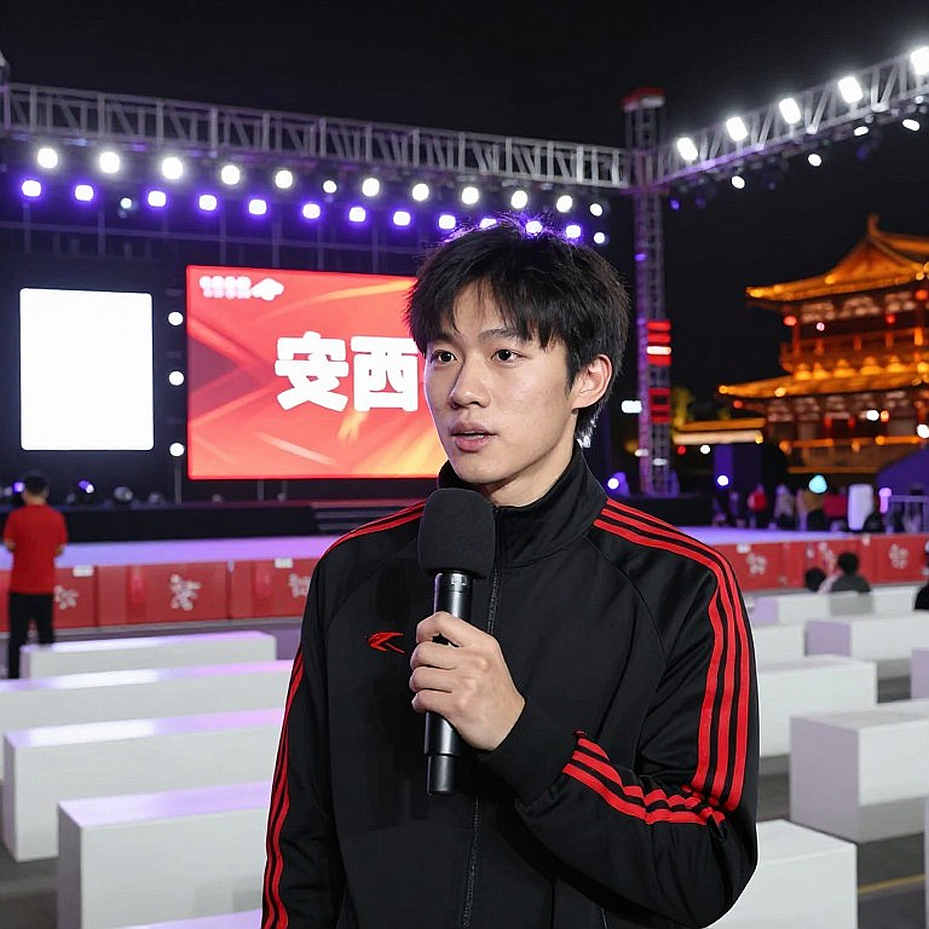
That is why I want to write this. An event can be a spectacular success while its results sheet stays empty. And conversely, a densely packed results sheet cannot by itself rescue an event. The story of Kaçkar by UTMB is the story of two things running the same trail in parallel: performance and cash flow. Let me try to separate them.
Context: a commercial ecosystem wearing sport's clothing
To understand Kaçkar, you have to understand where it sits on trail running's map of power. UTMB — Ultra-Trail du Mont-Blanc — is not a tournament in the traditional sense. It is a brand that began with a loop around the Mont-Blanc massif in Chamonix, France, where tens of thousands gather each year. From a single race, UTMB Group turned itself into a global circuit called the UTMB World Series: dozens of satellite races across continents, each one a stepping stone toward the final in Chamonix.
The fundamental difference between this system and the track and field I grew up with is this: there is no qualifying standard. No time you must hit. You do not "make the cut" for UTMB Mont-Blanc. You accumulate Running Stones — points earned at series races — and use them as lottery weights in a draw for entry. The door to the sport's most prestigious race does not open with a stopwatch. It opens with a calculated lottery.
That sounds minor, but it rewrites the entire logic of the sport. If entry does not depend on time, then a satellite race does not need to produce marks to have value. It only needs to produce experiences, images, and people willing to pay to be there. That is the economic foundation of the whole UTMB World Series, and Kaçkar by UTMB is one link in it.

The season is currently running. For mountain trails, Turkey's window falls in the transition between summer and autumn — when Black Sea humidity peaks, and when the international calendar is piling up toward year end. In that window, a trail event in Rize does not compete with any track meet. It competes for something else: the annual leave of amateur runners with money.
What Kaçkar by UTMB actually is
According to the report, the race takes place on the Ayder plateau in Rize, beneath the Kaçkar range. This is the second edition. There are 2,000 runners from 60 countries. Minister Osman Askin Bak personally started the race, and among the participants were Yusuf Ozhan and Hasan Huseyin Kul — two figures from the Anadolu agency and the AASK organisation — running the 20 km course.
The existence of a 20 km category indicates the event runs multiple distances, exactly following the UTMB-series template: a short course for newcomers and guests, a mid-distance, and an ultra of 50 km or more for the serious field. The report does not list the full menu. It does not say how long the longest course is, how much total elevation is involved, or what the cut-off times are.
One detail stands out: the Race Director is Johan Essl, a UTMB official. His presence is not trivial. It means this is not a local race self-branding as international, but an official node in the UTMB World Series with central oversight on site. For a second-edition event, that signals the parent brand treats this as a long-term investment rather than a one-off test.
The list of backers is equally telling: the Ministry of Youth and Sports, the Türkiye Tourism Promotion and Development Agency, the Rize Governorship, and DOKA — the Eastern Black Sea Development Agency. This is not a local race's sponsor list. It is a state coalition.
Then comes the corporate tier: Turkish Airlines, TOGG — the national electric vehicle maker, Turkcell — the country's largest telecom, and Maxis. All national champions. When a second-edition mountain race has already assembled a state-plus-national-champion coalition, you understand that what is being sold here is not sporting performance. What is being sold is national image.
The core: when scale replaces performance
Let me start with 2,000 and 60. Two thousand people from sixty countries is an impressive scale for any trail race, including events with a decade of history. But it must be placed beside another reality: most of those people are sports tourists. They fly in, stay in hotels, eat, rent vehicles, shop, run, and leave. Their economic value to the region may be far greater than their sporting value to the discipline.
This is the fundamental difference between a track meet and a large trail race. At a track meet, participation numbers usually move inversely to competitive quality — an Olympic 100 m final has eight people. In trail running, participation numbers are the product. Organisers sell bibs, not tickets. Runners are simultaneously customers and performers. That revenue structure shapes how a trail race evaluates itself.
The problem is that the report blends two things together. When the Minister speaks of ultra marathon runners as "world-class athletes with followers worldwide", he is using the language of performance sport to describe an event for which no performance has been published. No winner's name, no finishing times, no course record. In mountain running there is no officially ratified world record — a mark only means something relative to a specific course. So the only way to assess the sporting quality of a race is course records and elite-field depth. Neither appears in the source.
Let me be blunt: the competitive quality of Kaçkar by UTMB cannot be assessed from what has been published. Anyone claiming otherwise is extrapolating beyond the data.
But there is another reading I find more persuasive. Stop looking for performance and start looking for structure, and this report becomes information-rich. It shows a complete sports business model being assembled: an international brand, public money, national sponsors, a regional development agency, and a region in need of promotion.
Who actually pays for a mountain race
The Eastern Black Sea Development Agency is the detail I want to dwell on longest. In Vietnam, the idea of a regional development agency funding a sports event is still foreign. In practice, it is public money used as the event's economic anchor. A development agency only writes cheques when an event is expected to deliver development impact — infrastructure, jobs, image, visitor volume. Kaçkar by UTMB is therefore judged not by medals but by regional development indicators.
This produces an important consequence: the event's durability depends more on public budgets than on bib revenue. If public money shifts for political or macroeconomic reasons, the event loses a pillar. I have seen this script before: a race born on a budget, raised on a budget, and when the budget withdraws it shrinks faster than it ever expanded.
Meanwhile the corporate sponsors operate on different logic. Turkish Airlines does not sponsor a mountain race out of love for trails. A national carrier sponsors because the race generates an international flow of passengers into a domestic airport, and because its brand appears in every frame broadcast abroad. In aviation, every sports sponsorship is usually booked as measurable marketing spend per additional seat sold. With 60 countries attending, that maths works.
TOGG, Turkey's young EV maker, is buying something else: an image of a modern national brand tied to nature and movement. Turkcell buys presence inside a high-spending middle-class community, precisely its premium data-plan customers. Maxis — I lack sufficient data to pin down this brand's positioning, so I will simply note its presence.
Put together, you see a three-tier coalition: the state supplies infrastructure and development money, national corporates buy image, and the UTMB brand supplies specialist legitimacy. Each tier benefits differently, and none of them actually needs a champion with a fast time.
Entry mechanics and the trap of the word "elite"
The Running Stones story deserves elaboration, because it is the key to why 60 countries turn up in a valley in the Eastern Black Sea.
In Olympic sports, the road to a major event runs through standards. Run 100 m under 10 seconds and you qualify. Swim 200 m freestyle under a time and you get a ticket. That system creates clear pressure: to reach a final, you must be faster than someone.
The UTMB World Series does not work that way. To earn a place in the Chamonix final, you accumulate points at member races, then enter a lottery weighted by those points. A race worth more points improves your odds. This mechanism turns every satellite race into an investment opportunity: spend money, spend time, spend effort running a race in a distant country to raise your chance of being drawn once in a lifetime.
I call this a probabilistic accumulation mechanism. It does not measure who is fastest. It measures who is most persistent and most resourced. A 40-year-old runner with stable finances could spend four consecutive seasons flying to satellite races and collect enough points. A 25-year-old with far greater potential but two jobs and no money for flights will never reach Chamonix.
The consequence is that fields at member races are filtered by wallet, not by stopwatch. That is not wrong — it is a legitimate business model. But it makes any language about "world-class" slip its meaning when applied to the field at large.
For Kaçkar by UTMB, 2,000 people from 60 countries fits this model perfectly. Numerous in count, diverse in nationality, and in no way equivalent to competitive depth.
The biggest variable is not on the course
If I had to pick the single largest risk for Kaçkar by UTMB, I would not choose the absence of elite runners. I would not choose infrastructure. I would choose weather.
In the report, the Governor of Rize recalls that in the first edition the Kaçkar range was hidden by fog and rain. That is the most important detail in the entire report, and it comes from an official's mouth rather than a technical expert's. When a policymaker talks about a mountain being hidden by cloud, the problem was serious enough to reach internal reporting.
Anyone who has been in mountains knows this: in a Black Sea climate, fog is not an aesthetic weather event. It is an operational variable. It erases route markings. It grounds rescue helicopters. It turns a moderate climb into a silent navigation exercise. And for a race where organisers emphasise that "all trails have cameras for taking and sharing photos", weather attacks the promotional value directly.
One line recorded says the images broadcast from here will be very beautiful. That is precisely the structural weakness. An event whose main product is imagery has weather as its heaviest opponent. If fog seals the valley as it did in the first edition, international visitors still run, organisers still deliver the race, but the media product — the thing sponsors actually pay for — loses most of its value.
From an operational standpoint, an ultra in this climate must have alternate courses, tight cut-offs, medical and evacuation plans. The report does not confirm whether these exist. That silence is not evidence of failure, nor evidence of safety. It is a data gap — and in risk analysis, gaps usually cost more than numbers.
Reading Kaçkar beside Sa Pa
I have followed races and matches in Vietnam long enough to recognise a pattern. The Vietnam Mountain Marathon in Sa Pa and the Vietnam Trail Marathon in Moc Chau have become brands within the Southeast Asian trail community. Both operate on a model nearly identical to Kaçkar: multiple distances, large international fields, bib-driven revenue, high local promotional value, and performance as a secondary concern.
But three differences stop me from placing them on the same shelf.
The first is the parent brand. Kaçkar plugs directly into the UTMB World Series. Sa Pa and Moc Chau do not yet have an equivalent link into an international system with its own entry mechanism. That gives Kaçkar a structural advantage in attracting international visitors that Vietnamese races must compensate for through experience quality.
The second is public money. Kaçkar has a regional development agency and a ministry behind it. Vietnamese races live mainly on revenue and corporate sponsorship. That means the Vietnamese model faces direct market pressure, but depends less on state budget cycles.
The third is the degree of politicisation. A race where a minister starts the field, a president appears in the region, and ruling-party MPs take part makes every edition a political test. In Vietnam, trail races remain largely the story of private organisers and local government at an administrative level.
Read the other way, I see something worth learning. Turkey is using a non-Olympic sport to build destination positioning, and doing it by buying into a global brand with an existing fanbase. That is far faster than building a race from zero and waiting a decade for credibility.
The contrarian angle: diversity can substitute for competitive depth
Here I want to turn onto the path I consider the biggest blind spot among sports analysts looking at trail running.
Our default assumption, we who grew up in track and field, is that a race is only worth analysing when it produces marks. No marks, nothing to say. I carried that assumption for years, and it made me undervalue a great many events.
But there is another frame that fits this sport better. In elite sport, value flows downward: a great athlete makes a great event. In mass-participation sport, value flows upward: a large community makes a living event. Kaçkar by UTMB belongs to the second kind, and judging it by the first kind's yardstick is a category error.
People call me a wanderer between sports, just looking for a shared pulse. The shared pulse I find here is this: an event can survive without anyone breaking a record, provided it delivers an experience people will pay to repeat. Repetition, not peak performance, is the health metric of this model.
Read through that frame, the report actually supplies quite a lot. Two thousand people in the second edition, from 60 countries, in a mountain region that is not a sports hub — that is a good repetition indicator. The presence of a UTMB race director signals parent-brand commitment. A sponsor coalition of national champions signals commercial strength.
But I will not go further. I will not say this race has high competitive quality, because there is no data. I will not say it will succeed for a decade, because the model depends on two cash flows whose information I do not control.
Three scenarios and rough probabilities
I prefer turning bets into scenarios rather than one-directional conclusions. Here are three paths for Kaçkar by UTMB over the next three seasons, with probabilities I assign myself from what I can observe.
Scenario one, roughly 45 percent: the race stabilises, holding around 1,800 to 2,500 runners each edition, becoming an annual fixture in the UTMB World Series and continuing to receive public and corporate money. This is the most likely scenario because it requires no sporting condition at all — only that weather does not destroy a season so badly that sponsors lose patience.
Scenario two, roughly 30 percent: the race expands quickly, adds distances, attracts a genuinely recognisable elite field, produces course records, and starts being mentioned as a race worth travelling for in Europe. The conditions are that organisers publish full results, build a transparent performance-recording system, and offer a prize purse big enough to matter. This is the path I most want to see, and the one demanding the biggest shift in thinking.
Scenario three, roughly 25 percent: the race stalls or contracts, either because public funding tightens or because one bad-weather edition collapses its promotional imagery. I do not underestimate this. In a model dependent on public budgets, a political change at provincial or ministry level can reverse everything within a single season.
The three add up to slightly more than 100 percent — that is the nature of hand-assigned probabilities; I will not pretend they are as precise as a statistical model. My point is that all three are possible, and none depends on having a fast champion.
The sports tourism trap
I hold a fairly harsh view of the sports rights business, and it applies here. For over a decade I have watched broadcasters pay astronomical sums for sports rights and lose heavily, and I believe the rights bubble peaked long ago. Sports tourism carries a similar risk, just in a different form.
Here is how the bubble mechanism works. A region discovers that hosting sports events brings visitors, imagery and prestige. Government funds it. Local businesses benefit. Numbers rise. At some point the parties begin to expect the event to sustain itself, when the event was never designed to be self-sustaining. The gap between that expectation and the revenue structure is the bubble.
Kaçkar by UTMB is currently in its acceleration phase: second edition, high political attention, sponsor coalition already formed. This is the most comfortable phase of any event. The difficult phase arrives in edition four or five, when the question becomes: if you remove public money, what remains?
The answer depends on something the report cannot measure: the loyalty of the running community. Do people who ran edition one and two come back for edition three because of the race itself, or because it is on a points checklist? That is the difference between an event with a community and an event with a contract.
Do not let the shout be replaced by the spreadsheet
I want to close the analytical section with a reminder to myself. I have a habit of attaching data to everything, to the point where I sometimes forget that sport runs on emotion before it runs on numbers.
In Ayder, two thousand people stood in fog at six in the morning. Among them were people who saved for two years to buy a plane ticket. People standing on a mountain above 2,000 metres for the first time in their lives. Some would finish after fourteen hours; some would quit at the third aid station. None of that appears in the results sheet, and none of it appears in the report. But it is the reason the race exists.
An analysis that speaks only of cash flow and probability misses this. I do not want to write a piece where people are reduced to bibs and money. After every number, give back the shout, the breath, and the moment someone realises they went further than they thought they could.
Looking toward Vietnam
The question I am left with after reading this report has nothing to do with Turkey. It has to do with us.
Vietnam has terrain far better suited to trail running than most places. It has a growing trail community. It has races that have earned regional recognition. But we still lack a node inside an international system with its own entry mechanism — something like the UTMB World Series — and that limits the ability to attract international visitors automatically.
The path Turkey chose is to buy into the system, using an existing brand as a distribution channel for local image. That path is fast, expensive and dependent. The path Vietnamese races chose is to build brands themselves — slower, but more independent. Neither is absolutely right. But understanding which path you are on matters more than trying to move fast.
Football is ever-changing — the line I said in Da Nang in 2026 still holds. And it applies beyond football. Trail running is shifting every season, every system, every cash flow. A race measured by headcount today may be measured by time tomorrow, and by the carbon cost of flying two thousand people halfway around the world to run a mountain the day after.
What to keep tracking
No two matches are alike — that is what the 2026 World Cup taught me. The same goes for a race I have never stood at the start line of.
If Kaçkar by UTMB publishes its elite start list and full results, the story changes completely. Only then is there a basis for discussing competitive quality. If it publishes its full distance menu and course records, we can compare it with other races in the series. If it publishes its budget structure, we will know whether the model is durable.
Those three data points sit with the organisers. Whether they publish is itself a data point.
Closing
Sport is a shared language, but not everyone speaks the same dialect. On the track, people speak in seconds. On the mountain, they speak in experience. In the sponsor's meeting room, they speak in impressions. All three are sport, and all three are real.
The problem only arises when one dialect is used to describe a reality belonging to another. When a minister speaks of world-class athletes in a report containing no performance, two dialects collide. I do not think that is politically wrong. I only think it blurs what a mountain race actually is.
At six in the morning in Ayder, two thousand people pressed their watches. Some would finish in daylight, some in darkness, some not at all. The results sheet records only numbers; the story lives in the gaps between them. And in the case of Kaçkar by UTMB's second edition, that gap is wider than the course itself.