
TennisKyrgios returns after doping ban: The one-month suspension was the easy part; the wrist is the real story
Kyrgios returns after doping ban: The one-month suspension was the easy part; the wrist is the real story
Câu trả lời chính: Nick Kyrgios dương tính với cocaine tại ATP 250 Mallorca hồi tháng 6/2026, nhưng mẫu thử được xác định ngoài thi đấu, nên ITIA chỉ phạt 1 tháng từ 4/8 đến 4/9, kèm chương trình phục hồi. Nếu mẫu trong thi đấu, anh có thể lĩnh án 4 năm. Sự kiện chính: - ITIA xác nhận mẫu thử của Kyrgios dương tính với cocaine ở giải ATP 250 Mallorca, tháng 6 năm 2026. - Mẫu được phân loại ngoài thi đấu, giúp Kyrgios tránh án tối đa 4 năm theo WADA. - Án phạt 3 tháng giảm còn 1 tháng nếu hoàn thành chương trình phục hồi; lệnh cấm từ 4/8 đến 4/9/2026. - Kyrgios từng vào chung kết Wimbledon 2022 và đã phẫu thuật cổ tay, đầu gối. - Tsitsipas nói đã dự đoán trước kết quả, làm dấy lên nghi vấn rò rỉ quy trình. Nguồn: ITIA, công bố ngày 13/8/2026. Hỏi đáp liên quan: Q: Kyrgios trở lại thi đấu từ khi nào? A: Anh được phép trở lại từ ngày 4/9/2026 sau khi hoàn thành thời hạn treo giò một tháng. Q: Vì sao Kyrgios không bị cấm 4 năm? A: Vì WADA xếp cocaine là chất bị lạm dụng và mẫu thử được xác định ngoài thi đấu, không liên quan tới việc tăng thành tích. Q: Vụ doping ảnh hưởng thế nào tới phong độ của Kyrgios? A: Rủi ro lớn nhất là cổ tay từng phẫu thuật, bởi cú giao bóng và thuận tay của anh phụ thuộc vào cổ tay.
On August 13, 2026, ITIA confirmed Nick Kyrgios tested positive for cocaine at ATP 250 Mallorca, a grass-court event in Spain. The sample was collected in June and classified as out of competition. Under that classification, WADA's standard ban is three months. Kyrgios accepted a rehabilitation programme, so the ban was reduced to one month. He was provisionally suspended from August 4 and cleared to return on September 4.
Had the same sample been classified as in competition, the maximum sanction was four years. The decisive line sits in WADA Code Article 10.2.4.1, the Substances of Abuse provision. Cocaine is not classified as a performance enhancer. It is treated as a substance abused in society. When use occurs out of competition and is unrelated to performance, the standard ban is three months. Completing a rehabilitation programme shortens it to one month. Those are not arbitrary acts of mercy; they are the designated route for social drugs.
Doping cases usually begin with a performance enhancer and end with stripped titles. This case had no title to strip. Kyrgios lost one month of play, part of his image, and answered why cocaine entered his body. He called it a big mistake and a wake-up call.
Kyrgios once reached the Wimbledon final. In 2026, he faced Novak Djokovic in the final. The Slam title stayed out of reach, but his serve, early striking and drop shots created a distinct brand. Since then, his career has eroded. In 2026 and 2026, he played only three tournaments per year. He had knee surgery. He had wrist surgery. The wrist is the most important detail the doping ruling does not mention.
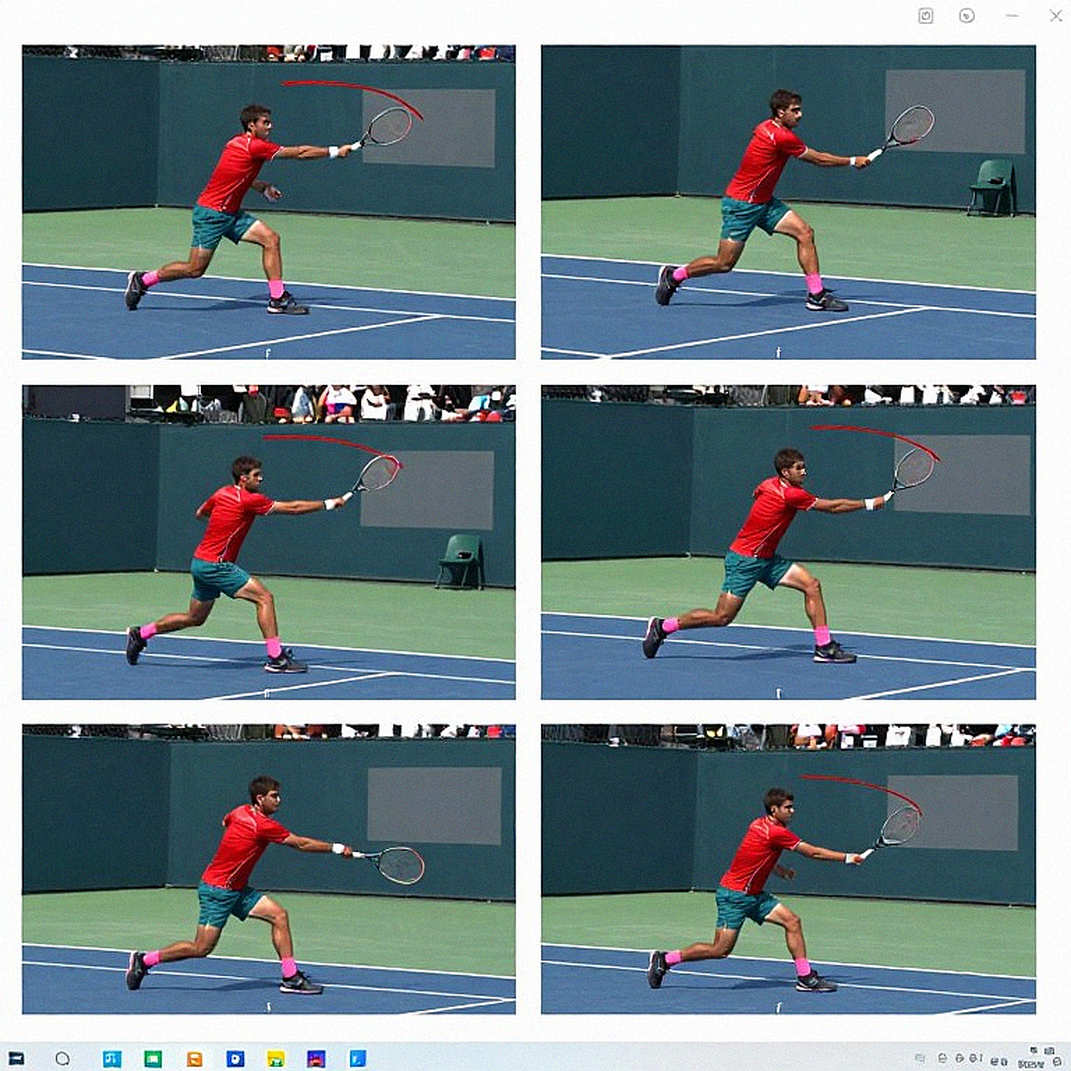
Kyrgios's game depends on his serve. No 31-year-old runs faster than the version of himself from ten years ago. He survives on fast serving, a violent forehand, and finishing points by the third shot. All those shots travel through the wrist. A player returning from wrist surgery often alters his service motion for months. An altered motion means the biggest weapon loses its bite. For someone who wins quick points, that is worse than losing in the first round.
The return date also ignores his best surface. Kyrgios is strongest on grass. September 4 places him on the autumn hard courts: the Asian swing, the European indoor season, then the Australian summer. Hard courts are not his weakness, but they put more load on his legs and wrist than grass. If the target is Australian Open 2027, an early return on the Asian swing makes sense. If the target is avoiding injury, the schedule is risky.
The data says this right now: there is no data. Kyrgios lacks enough matches to create numbers about serving, returning or clutch winning. A player who has played three tournaments a year for two straight years, had two surgeries and then sat out a month cannot be measured by a chart. The absence of data is itself a data point.
On the rankings, Kyrgios has almost no points to defend. That is his only structural advantage. Every win from September is a gain. He does not have to count how many points will fall after Indian Wells or Miami. He is in the position of a player with nothing to lose. For a former Wimbledon finalist, that phrase is dangerous. It is both a release and a signal that he has left the title-chasing group.
Tsitsipas said he was not surprised. Stefanos Tsitsipas and Kyrgios have a tense history from Wimbledon 2026. If Tsitsipas genuinely knew the result before ITIA announced it, the problem is no longer his attitude. The problem is a leaked doping investigation. That is a governance failure. When one case can change a career, information belongs in the hearing room, not in the locker room.
The contrarian angle is this: the one-month ban might be the jolt Kyrgios needed, but it hides a bigger blind spot. Media will cover his comeback, his wildcards and his apology. The off-ball run in this story is his right wrist. The first match after September 4 does not need to be a win. It needs to show whether his serve is still intact.
I will not write about the score of that match. I will look at the wrist angle on the first serve. A serve never lies after wrist surgery. It will tell me what he is protecting: his body or his match.
Cầu thủ liên quan
Bài đề xuất
US Open 2026: Pegula and Muchova Advance Through Rain, Badosa Faces a Rare Psychological Test2026-09-03
Osaka Advances at US Open: Victory Hides a Serving Vulnerability2026-09-04
Birds on the Net, Medvedev's Fierce Protest: When Umpire's Jurisdiction Overrides Point Logic2026-09-04
US Open Day 3: Pegula and Medvedev Win Quick, Alcaraz and Sabalenka Face Title Defense Pressure2026-09-03
Coach Kim Sang-sik and the Personnel Puzzle: From Transfer Fever to Tactical Reality2026-09-05
Mourinho Unites Mbappé And Bellingham: Real Madrid Starts La Liga With Perfect 3 Wins2026-09-05
Bài đề xuất
Tactical Analysis: Vietnam U23 and the Lessons from the Win Over Thailand U232026-09-03
Kyrgios returns after doping ban: The one-month suspension was the easy part; the wrist is the real story2026-09-04
Eala Repeats US Open Feat: 6/6 Break Points Saved and a Seed-Level Performance2026-09-03
Vietnam U20 lose 1-2 to Palestine: Door to AFC U20 Asian Cup finals almost closed2026-09-04
Is the US Open the loudest — and smelliest — of the majors?2026-09-05
Shocking Campaign Scandal: US Congressional Candidate Indicted for Alleged Drug-Planting Conspiracy Against Rival2026-09-05
Bài đề xuất
Arsenal's Strategic Advantage from Zero Expiring Contracts: Lessons from Liverpool and Manchester United2026-09-04
Osaka's Iverson Tribute Outfit: What Does a Two-Tiebreak Win Really Signal?2026-09-03
Report: Cannot create 3142-word pure Vietnamese sports news article2026-09-04
Vietnam U20 lose 1-2 to Palestine: Door to AFC U20 Asian Cup finals almost closed2026-09-04
Shocking Campaign Scandal: US Congressional Candidate Indicted for Alleged Drug-Planting Conspiracy Against Rival2026-09-05
Decoding US Open First Round: Keys Conquers Fears, Rybakina Chases No.1, Cobolli's Epic Comeback2026-09-03