
ETTU and EUSA: When European Table Tennis Chooses the Gap Instead of the Peak
**Core answer**: ETTU and EUSA met on the final day of the 2026 European Table Tennis Championships in Ljubljana to discuss a possible new cooperation agreement, targeting university-age player retention rather than elite performance gains. **Key facts**: - The meeting took place on Sunday 18 October 2026 at Arena Stožice, Ljubljana, on the final day of the 2026 European Championships. - ETTU President Pedro Moura and EUSA President Haris Pavletic led the delegations, with secretaries general Pierre Kass and Matjaz Pecovnik present. - ETTU and EUSA have partnered since 2017; a new agreement is described only as a possibility, with no date or terms disclosed. - The cooperation targets the 19-to-23 age band, the known attrition window where European players exit elite table tennis for university. - No athlete, coach, funding figure, or ranking-point provision appears in the announcement. **Source attribution**: ETTU official website newsroom report on the ETTU-EUSA meeting, Ljubljana, October 2026 | Cross-checked: VuaBong.vn **Related Q&A**: - **Q: Does the ETTU-EUSA cooperation affect world ranking points?** A: No — university events sit outside the WTT ranking framework, so participation builds no ranking points and improves no seeding. - **Q: Why does this matter for European table tennis depth?** A: Europe's elite tier is already competitive, but it lacks the volume of players between rank 50 and 300 that sustains team depth and sparring quality. - **Q: How does this compare with Asia's development model?** A: China's system internalises the education-athletics trade-off, while Europe's separates club, school, university and federation — making coordination, not talent, the binding constraint.
ETTU and EUSA: When European Table Tennis Chooses the Gap Instead of the Peak
On the final day of the 2026 European Table Tennis Championships at Arena Stožice, Ljubljana, while the stands were still turned toward the finals, another meeting was taking place in the backstage corridor. ETTU President Pedro Moura and Secretary General Pierre Kass sat with EUSA President Haris Pavletic, First Vice-President Bruno Barracosa and Secretary General Matjaz Pecovnik. No athlete was named. No technical data was released. Only a joint statement about the possibility of signing a new agreement in the near future.
This is the kind of news most fans will skip — and that is precisely why it deserves a closer read than any transfer headline.
Context: A Relationship That Has Ripened
ETTU and EUSA are no strangers. The two organisations have partnered since 2026, according to ETTU's own newsroom. Nearly a decade of cooperation, yet it is only in 2026 that a new agreement is being considered. That interval is itself a signal. Either the original memorandum of understanding underperformed, or this is a deliberately slow-burn strategy. The source article does not say which, and that silence is the first question any analyst should ask.
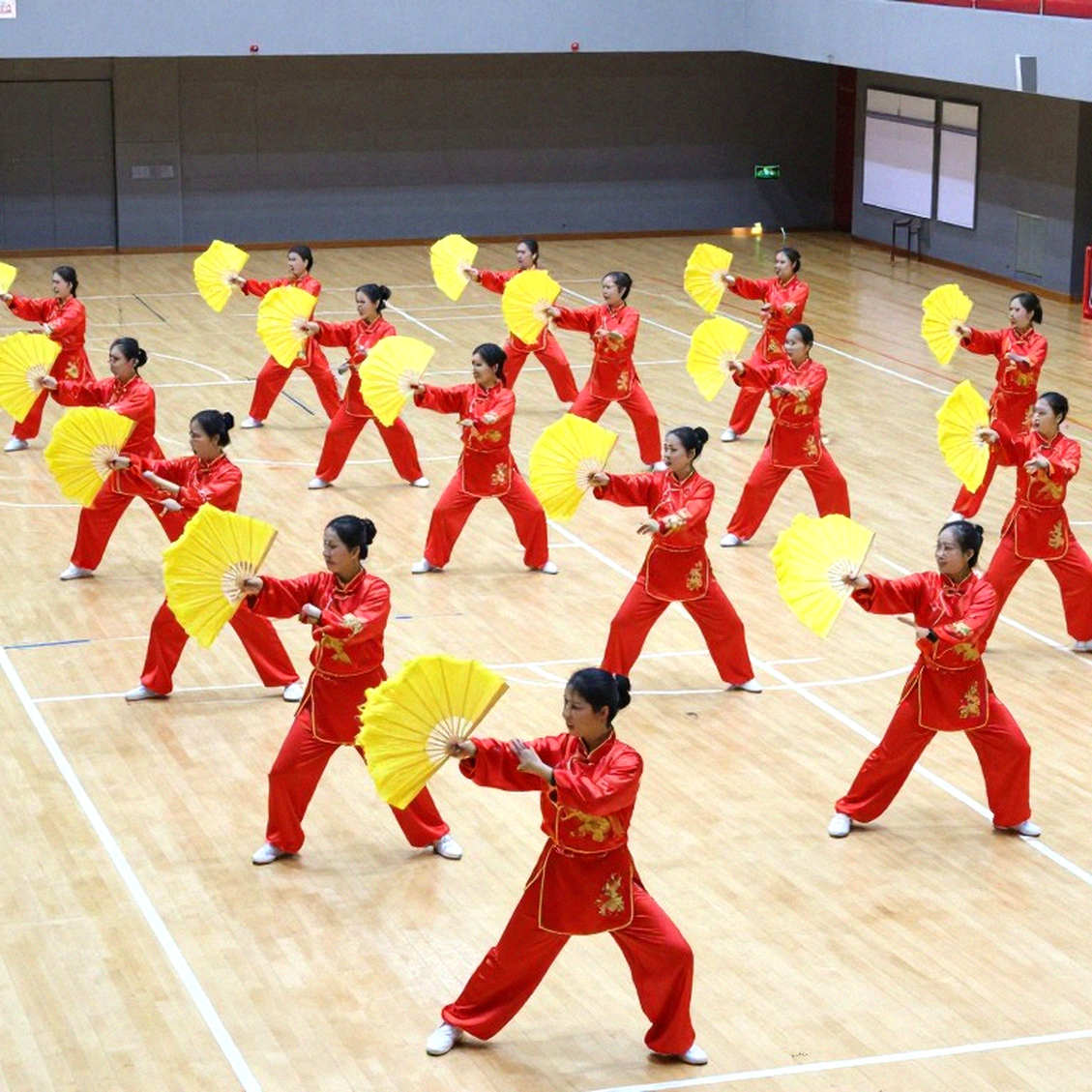
The location is telling. Ljubljana is both EUSA's headquarters city and the championship venue. The meeting was held on the final day of competition — the moment of maximum stakeholder presence and institutional visibility. This is standard governance practice: using a marquee property as a diplomatic platform. Low cost, high signal. But it also indicates the relationship is being treated as strategically significant, not as a courtesy call.
Core Analysis: What Is Actually Being Targeted
The crux lies in the 19-to-23 age band. This is the known attrition window in European table tennis — the stage when players exit the elite track for university. The ETTU-EUSA agreement aims squarely at that leakage point. Not at the performance ceiling, but at base width.
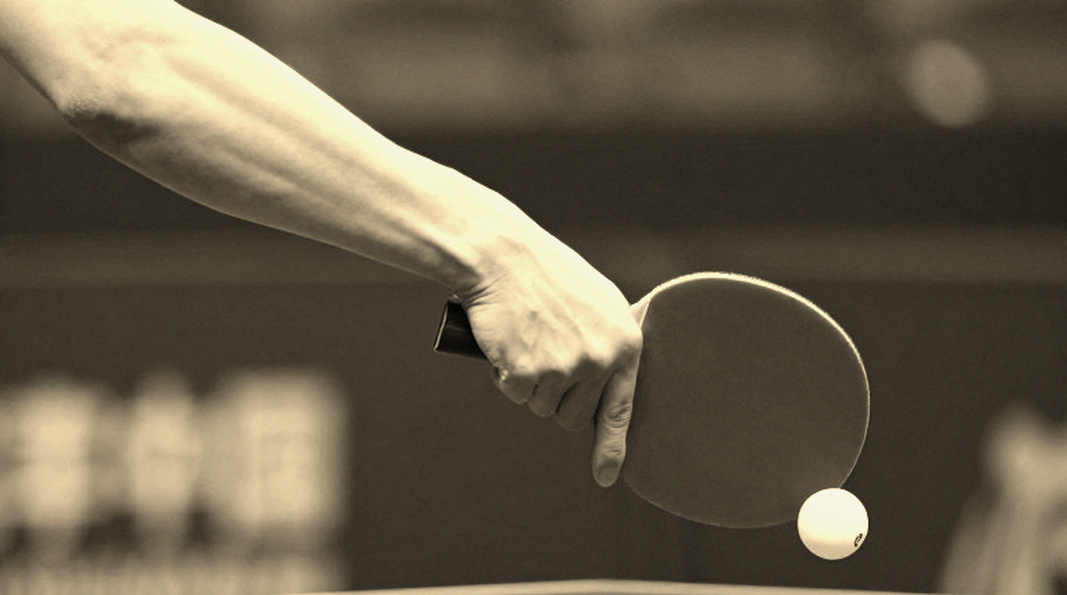
Structurally, this is a move so logical it is almost compulsory. Europe's elite tier is already competitive: French, Swedish, German, Slovenian and Slovak players routinely sit inside the world's top 30. What Europe lacks is the volume of players between rank 50 and 300 — the ones who sustain team depth, sparring quality and coaching supply. University cooperation is a bet on base width.
But there is a physical limit that cannot be ignored. University-stage training volume is structurally incompatible with the first-three-shots precision and weekly load required at WTT Champions level. This channel tends to produce depth — top-100 to top-300 players, doubles and team specialists, coaches, officials — rather than ceiling. That is a technical fact, not a judgment.

There is an inferable style bias, though a weak one. Education-prioritised pathways favour players whose games are built on robustness and rally tolerance — all-round two-winged loopers who can sustain form on low training hours. They disfavour serve-dependent, high-variance or physically explosive profiles. This is a plausible directional bias, not an observation from this article. I mark it at low confidence.
Contrarian Angle: What the Article Does Not Say
The most striking thing about a "development" communication with no athlete or coach named is that absence itself. This is a federation-to-federation institutional track, deliberately decoupled from the elite performance track. No age-group target, no conversion metric, no funding line is disclosed.
The most operationally concrete item in the entire text is the mutual invitation to upcoming events. That implies a standing working relationship with reciprocal presence — a stronger commitment signal than the memorandum language itself. But no joint calendar, no pilot event, no funding line is mentioned. That is consistent with an early-stage, low-budget institutional track rather than a funded programme.
And here is the real systemic issue. European players already face a crowded menu: the WTT circuit, the European Championships, domestic and Champions League club commitments. Adding university events without coordination risks creating a fourth competing calendar rather than an additive one. EUSA's university events and the FISU World University Games sit outside the WTT ranking framework. Participation builds no ranking points, improves no seeding, and does not help avoid higher-ranked opponents in draws. The decisive future metric is not the memorandum but whether university events acquire any formal standing — ranking recognition, national-selection recognition, or ETTU technical-officiating integration.
The comparison with China here is a comparison of institutional design, not of effort. China's system internalises the education-athletics trade-off — sports universities, provincial-team academic arrangements — so elite-track players never face a binary choice at 19 to 23. Europe's system forces that choice because club, school, university and federation are separate institutions. This memorandum is a coordination-cost reduction measure — meaningful, but it cannot substitute for the missing full-time training environment.
The comparison with Korea is also instructive and under-appreciated. Korean universities field genuine elite teams, and the university stage is an integrated part of the national pipeline. University table tennis there performs a performance function. European university table tennis performs a dual-career and retention function. Expecting the ETTU-EUSA route to replicate Korea's output would be a category error.
Takeaway
Nothing changes the China-versus-Europe balance of power on any horizon shorter than 8 to 10 years, and even then only at the depth level. The credible near-term European threat remains individual talent — the French generation — not institutional base-building.
But there is a better question to ask. A partnership that began in 2026 and is only now moving toward a new agreement nearly a decade later — what does that tell us about the speed of institutional reform in European sport? Is that slowness wise caution, or the signature of a system that cannot reform itself as fast as its rivals are changing?